Bond Definition For Law In Wake
Description


Get your form ready online
Our built-in tools help you complete, sign, share, and store your documents in one place.
Make edits, fill in missing information, and update formatting in US Legal Forms—just like you would in MS Word.
Download a copy, print it, send it by email, or mail it via USPS—whatever works best for your next step.
Sign and collect signatures with our SignNow integration. Send to multiple recipients, set reminders, and more. Go Premium to unlock E-Sign.
If this form requires notarization, complete it online through a secure video call—no need to meet a notary in person or wait for an appointment.
We protect your documents and personal data by following strict security and privacy standards.

Make edits, fill in missing information, and update formatting in US Legal Forms—just like you would in MS Word.

Download a copy, print it, send it by email, or mail it via USPS—whatever works best for your next step.

Sign and collect signatures with our SignNow integration. Send to multiple recipients, set reminders, and more. Go Premium to unlock E-Sign.

If this form requires notarization, complete it online through a secure video call—no need to meet a notary in person or wait for an appointment.

We protect your documents and personal data by following strict security and privacy standards.
Looking for another form?







Form popularity
FAQ
Bond N an obligation of any kind ( Numbers Numbers Numbers ). The word means also oppression or affliction ( Psalms 1 ; Phil ). Christian love is the "bond of perfectness" ( Colossians ), and the influences of the Spirit are the "bond of peace" ( Ephesians ).
Unless a judge sets conditions of release, the person remains in jail for the first 48 hours.
Criminal History: If the person arrested has a record, especially for similar offenses, the judge might set a higher bail. If it's their first time, they could get a lower amount. Flight Risk: Judges look at whether the person is likely to skip town and avoid trial.
Noun. something that binds, fastens, or holds together, such as a chain or rope. often plural something that brings or holds people together; tie. a bond of friendship. plural something that restrains or imprisons; captivity or imprisonment.
Reduction of a Magistrate's Power to Set Bond Prior to the change in law, a magistrate could generally set the bond for serious offenses other than capital cases (first degree murder). The new act drastically reduces a magistrate's ability to set conditions of pretrial release on serious charges.
The Pretrial Integrity Act has changed how pretrial release works in North Carolina. If you're arrested for a serious felony, or if you already have pending charges, a judge must now set your bond. This means you might have to wait longer in custody before you can be released.
Bond's Law: The work required to form particles from very large feed is proportional to the square root of the surface-to-volume ratio.
For example, if the judge sets a $5,000.00 standard bail bond, you will remit to the court $500.00. If you plea to any of the charges, you will receive 90% of that deposit back, or $450.00.
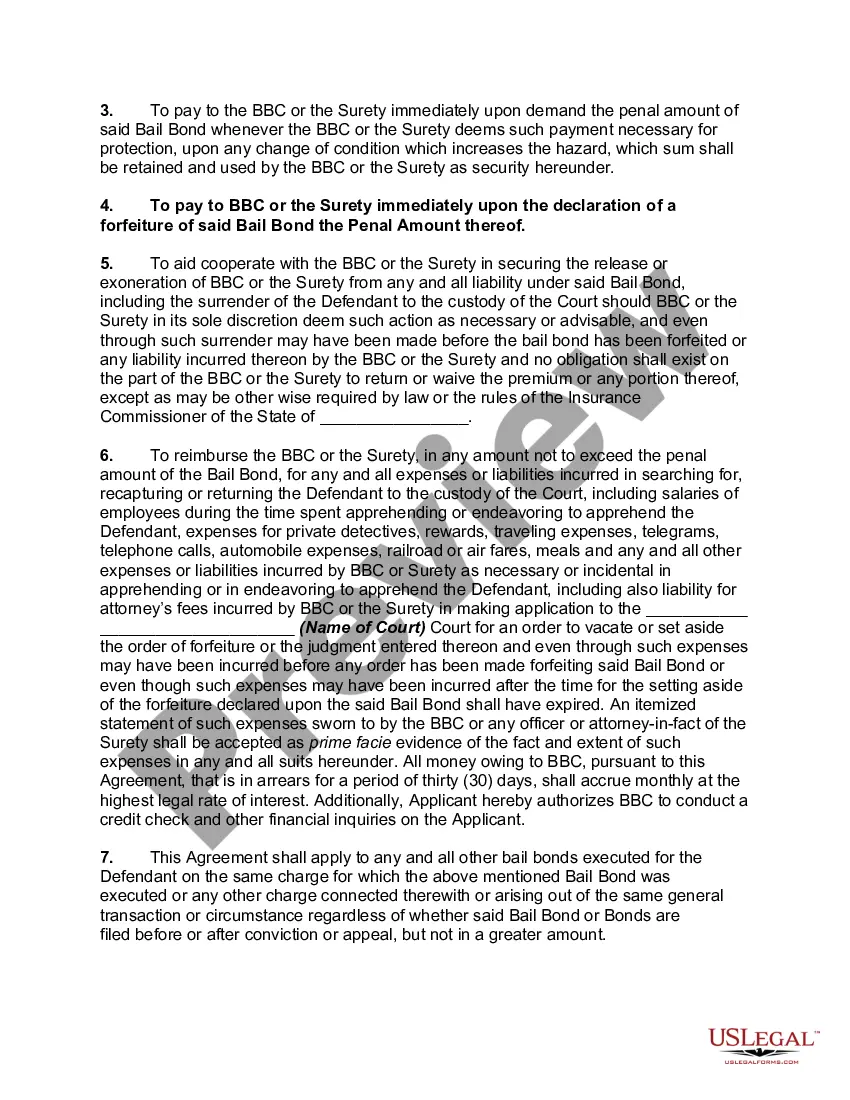
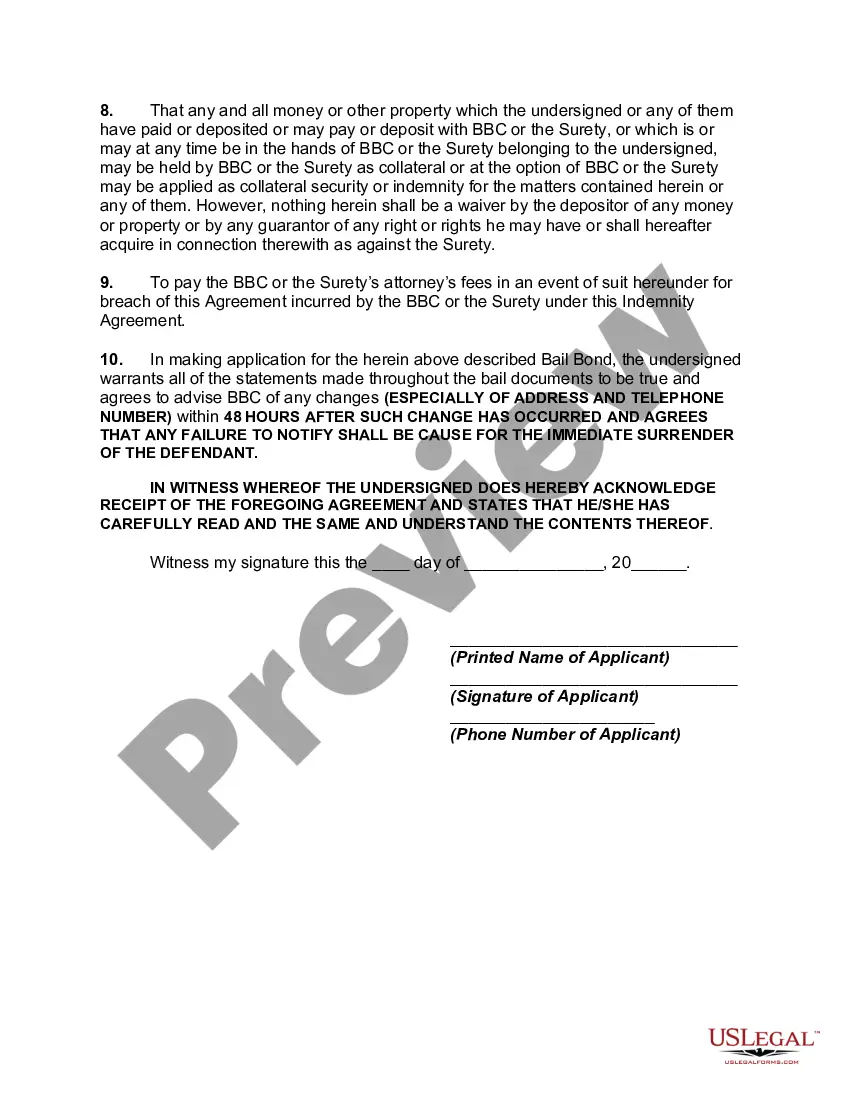
The bond form states the terms that the principal must adhere to. A commercial bond form will usually state the general terms of the bond and may also reference corresponding legal statutes. Contract bond forms reference the corresponding contract. Judicial bonds reference the corresponding case or court order.
By securing a bond from a surety, you are demonstrating your willingness to assume responsibility for any legal/financial issues that might arise as a result of wrongdoing on your part. Another major difference between being insured and being bonded involves reimbursement.
