Bail Bondsman Without Warrant In Nevada
Description


Get your form ready online
Our built-in tools help you complete, sign, share, and store your documents in one place.
Make edits, fill in missing information, and update formatting in US Legal Forms—just like you would in MS Word.
Download a copy, print it, send it by email, or mail it via USPS—whatever works best for your next step.
Sign and collect signatures with our SignNow integration. Send to multiple recipients, set reminders, and more. Go Premium to unlock E-Sign.
If this form requires notarization, complete it online through a secure video call—no need to meet a notary in person or wait for an appointment.
We protect your documents and personal data by following strict security and privacy standards.

Make edits, fill in missing information, and update formatting in US Legal Forms—just like you would in MS Word.

Download a copy, print it, send it by email, or mail it via USPS—whatever works best for your next step.

Sign and collect signatures with our SignNow integration. Send to multiple recipients, set reminders, and more. Go Premium to unlock E-Sign.

If this form requires notarization, complete it online through a secure video call—no need to meet a notary in person or wait for an appointment.

We protect your documents and personal data by following strict security and privacy standards.
Looking for another form?







Form popularity
FAQ
Before giving us a call, make sure you have the following information handy: The full name of the person who was arrested. Where is the person being held for custody (you should include the name of jail, city, and county) The person's booking number.
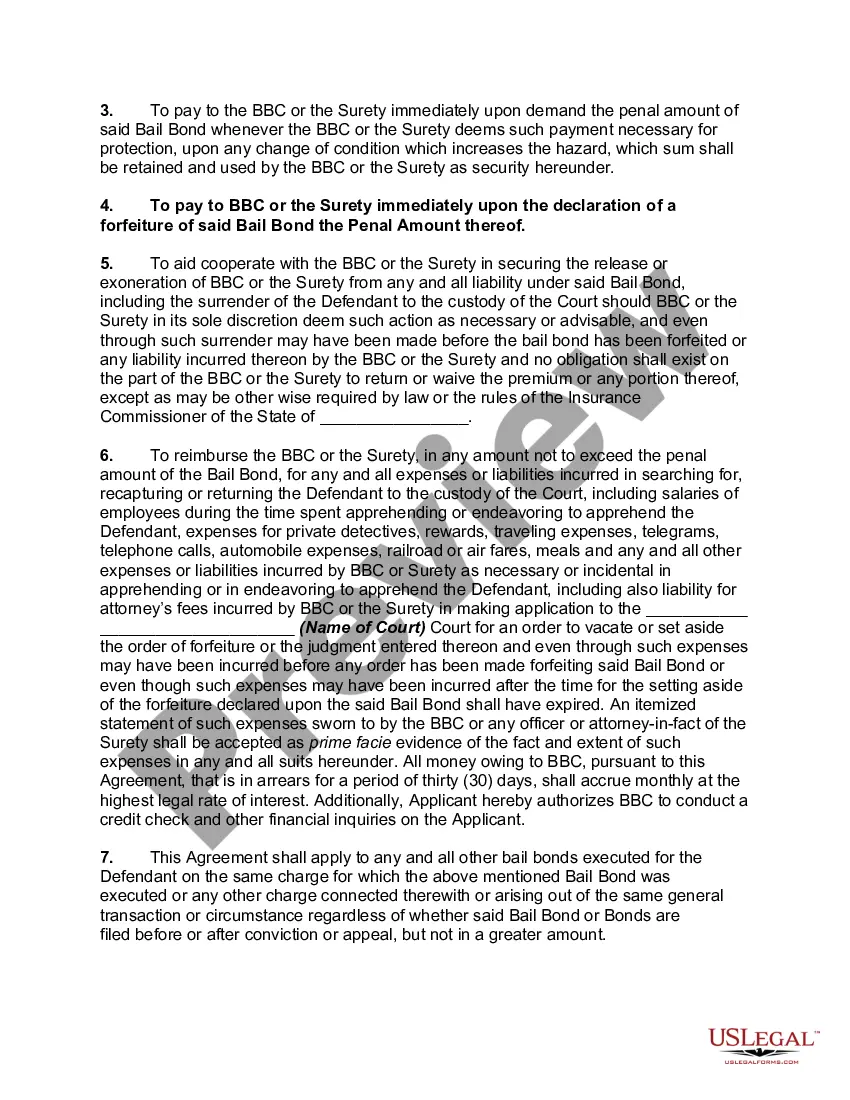
The bail bond agent will need you to sign some paperwork in order for you to secure their services. This usually means paying an amount to the agent, usually a percentage of the total bail amount, and signing off on any collateral for the bond.
A: In California, bail bondsmen, often referred to as bounty hunters, have specific rights under the law, but these rights are not absolute. If someone has skipped bail, a bail bondsman has the authority to apprehend them, but this authority is limited when it comes to entering a private residence.
The bail bond agent will need you to sign some paperwork in order for you to secure their services. This usually means paying an amount to the agent, usually a percentage of the total bail amount, and signing off on any collateral for the bond.
And while some will tell you that you can't remain anonymous, the short answer is actually yes, you can. (But with one major consideration.) The Court is going to need a name and person to return the bond to once the court date has been successfully completed.
In some jurisdictions, the court may also allow you to post a property bond, which will use property that you own as collateral for your conditional release. Unfortunately, though, if your bail amount is high, you may not have the resources to post bail with the court on your own.
Anonymity: Bearer bonds afford their owners a degree of anonymity that few modern financial instruments offer. They are appropriate for any situation that requires utmost discretion—for instance, some sensitive business deals or confidential investigations.
And while some will tell you that you can't remain anonymous, the short answer is actually yes, you can. (But with one major consideration.) The Court is going to need a name and person to return the bond to once the court date has been successfully completed.
