Affidavit Motion Amend Withholding In Texas
Description




Get your form ready online
Our built-in tools help you complete, sign, share, and store your documents in one place.
Make edits, fill in missing information, and update formatting in US Legal Forms—just like you would in MS Word.
Download a copy, print it, send it by email, or mail it via USPS—whatever works best for your next step.
Sign and collect signatures with our SignNow integration. Send to multiple recipients, set reminders, and more. Go Premium to unlock E-Sign.
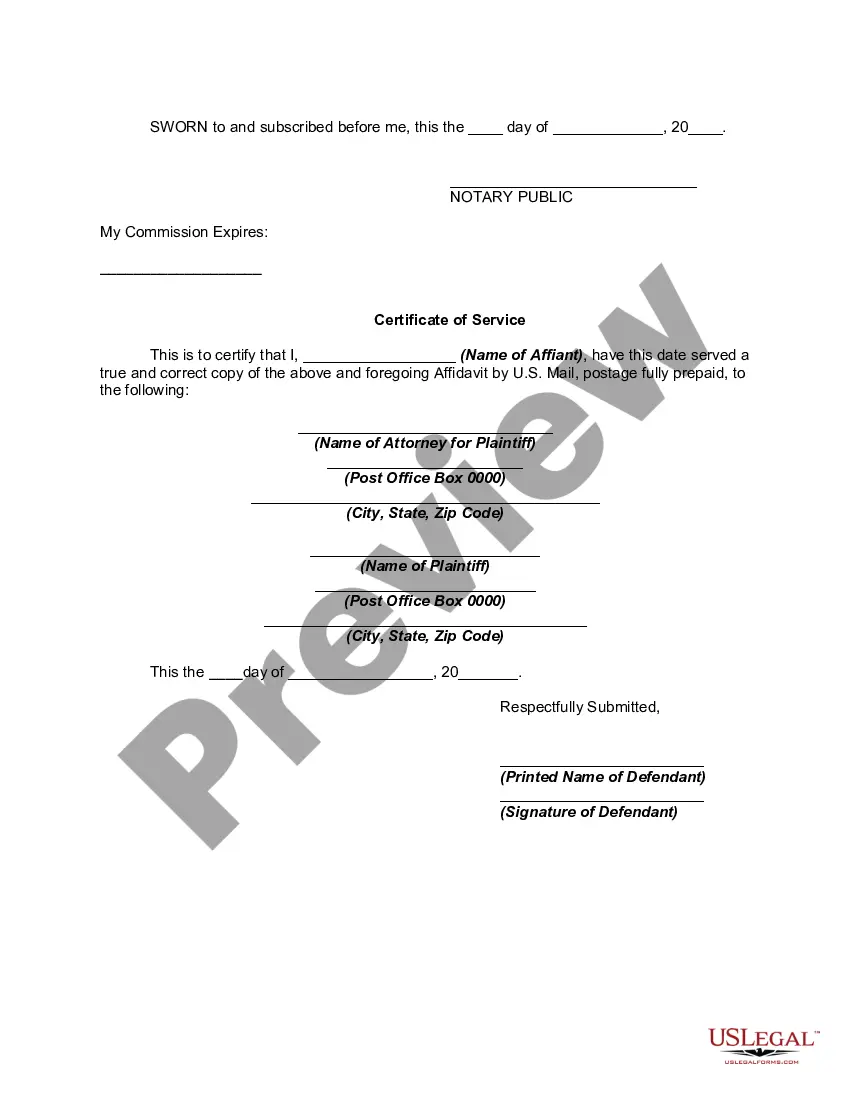
If this form requires notarization, complete it online through a secure video call—no need to meet a notary in person or wait for an appointment.
We protect your documents and personal data by following strict security and privacy standards.

Make edits, fill in missing information, and update formatting in US Legal Forms—just like you would in MS Word.

Download a copy, print it, send it by email, or mail it via USPS—whatever works best for your next step.

Sign and collect signatures with our SignNow integration. Send to multiple recipients, set reminders, and more. Go Premium to unlock E-Sign.

If this form requires notarization, complete it online through a secure video call—no need to meet a notary in person or wait for an appointment.

We protect your documents and personal data by following strict security and privacy standards.
Looking for another form?








Form popularity
FAQ
Although affidavits are considered legal documents, anyone can draft one. As long as it is signed, witnessed, and notarized correctly, the affidavit will be valid. This means that you do not need to ask a lawyer to create an affidavit.
Notarizing an affidavit Once you have filled out the important details on the general affidavit, you must have the document notarized, for which you must appear in person at a notary public in Texas.
The court may allow a pleading to be amended less than 7 days before trial if the amendment will not operate as a surprise to the opposing party. (b)Insufficient Pleadings. A party may file a motion with the court asking that another party be required to clarify a pleading.
In order to provide a statement for an affidavit, an affiant must simply be willing to sign or eSign the statement in the presence of a third-party, commissioned notary public. This must of course be done in ance with all applicable state laws.
Rule 91a - Dismissal of Baseless Causes of Action 91a. 1 Motion and Grounds. Except in a case brought under the Family Code or a case governed by Chapter 14 of the Texas Civil Practice and Remedies Code, a party may move to dismiss a cause of action on the grounds that it has no basis in law or fact.
General Affidavits must be signed in front of a notary public. A notary must verify your identification before you sign the document. Make sure to bring ID (like a driver's license or other form of identification) for the notary before you sign the affidavit.
A party may file an amended pleading after it files its summary judgment motion or response. A summary judgment proceeding is considered a “trial” with respect to filing amended pleadings ing to Texas Rule of Civil Procedure 63, the rule for calculating pertinent time periods.
An attorney may withdraw from representing a party only upon written motion for good cause shown.
The counteraffidavit must be made by a person who is qualified, by knowledge, skill, experience, training, education, or other expertise, to testify in contravention of all or part of any of the matters contained in the initial affidavit.
