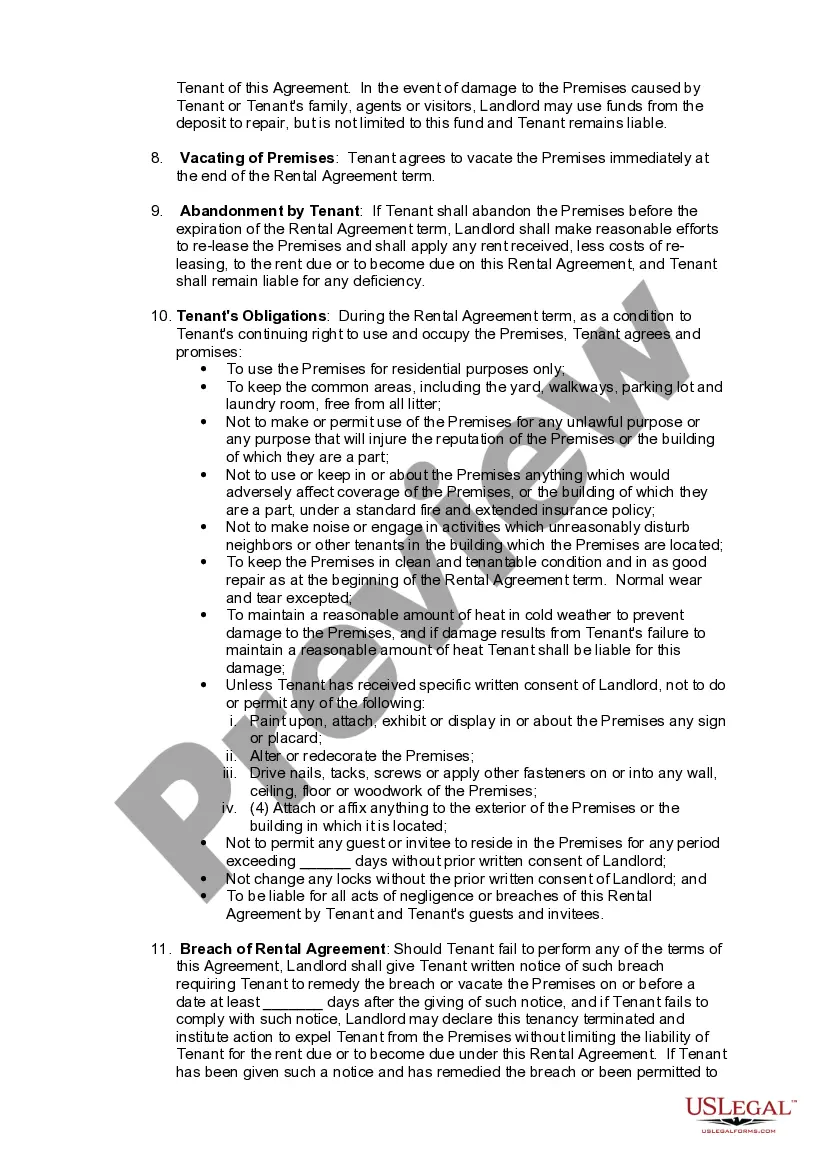
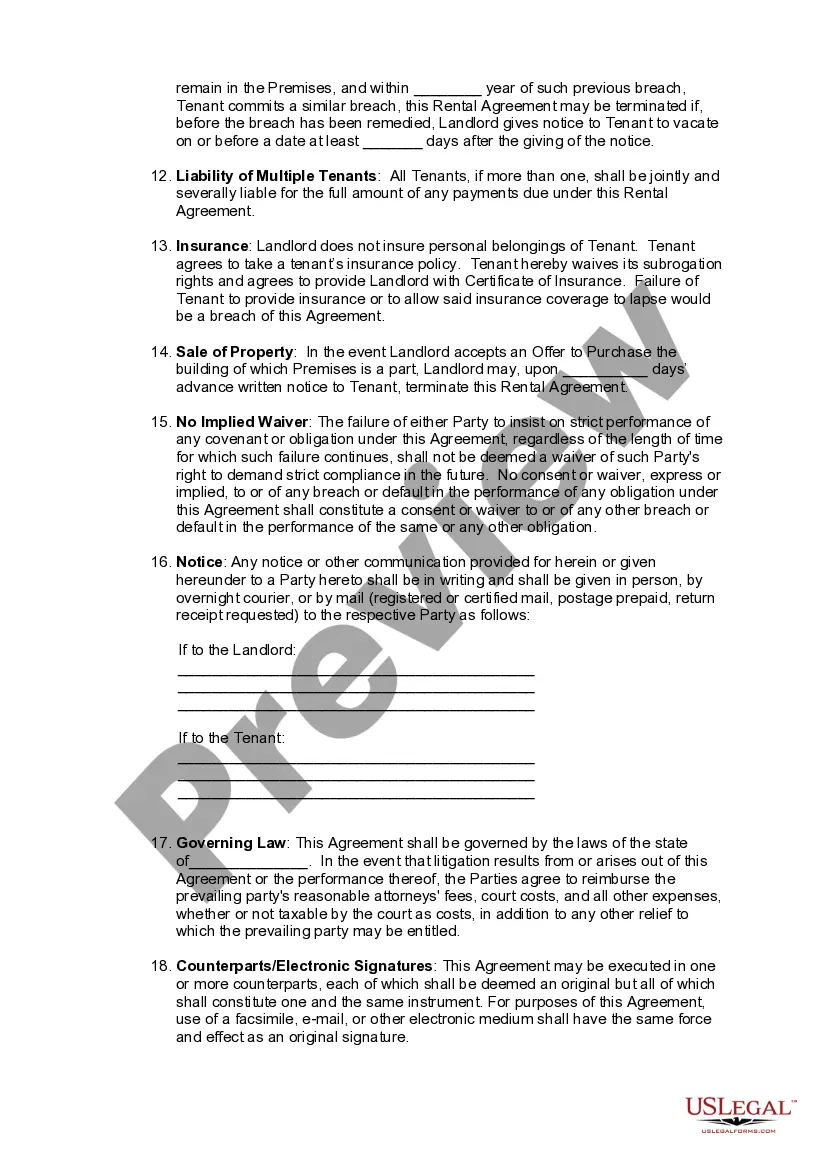
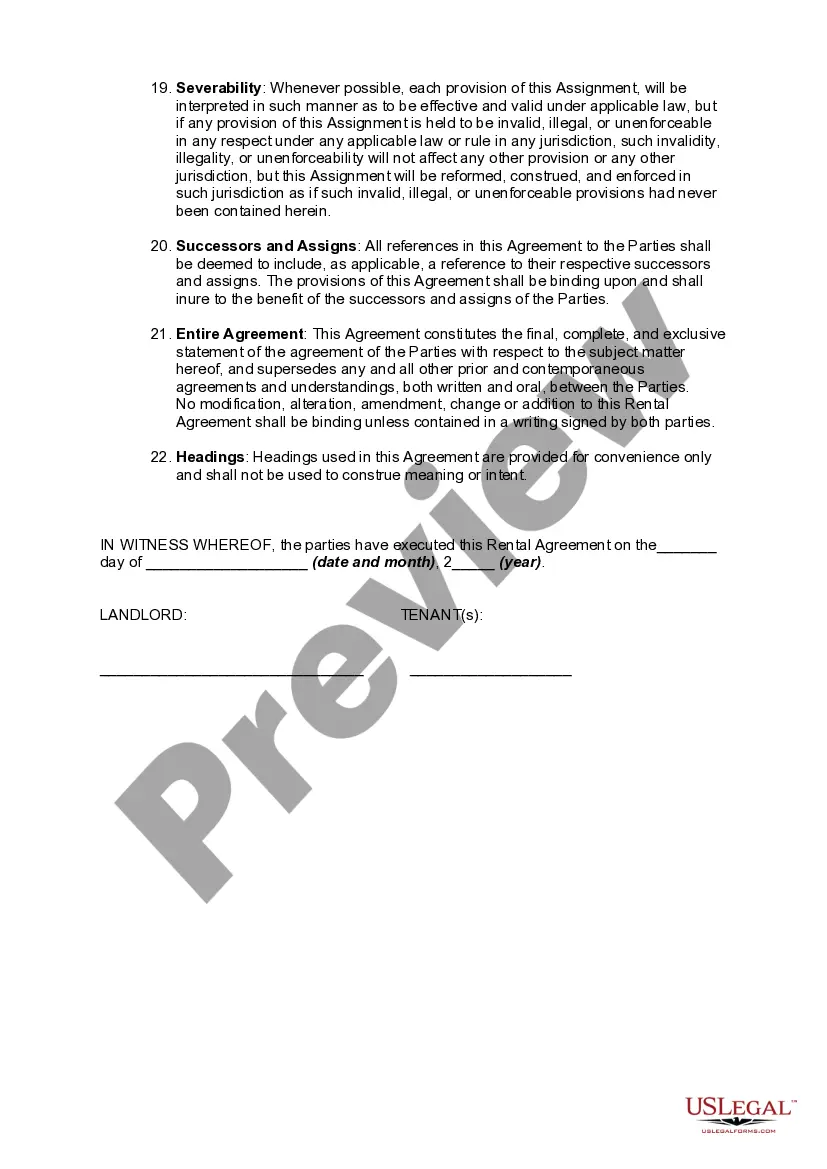
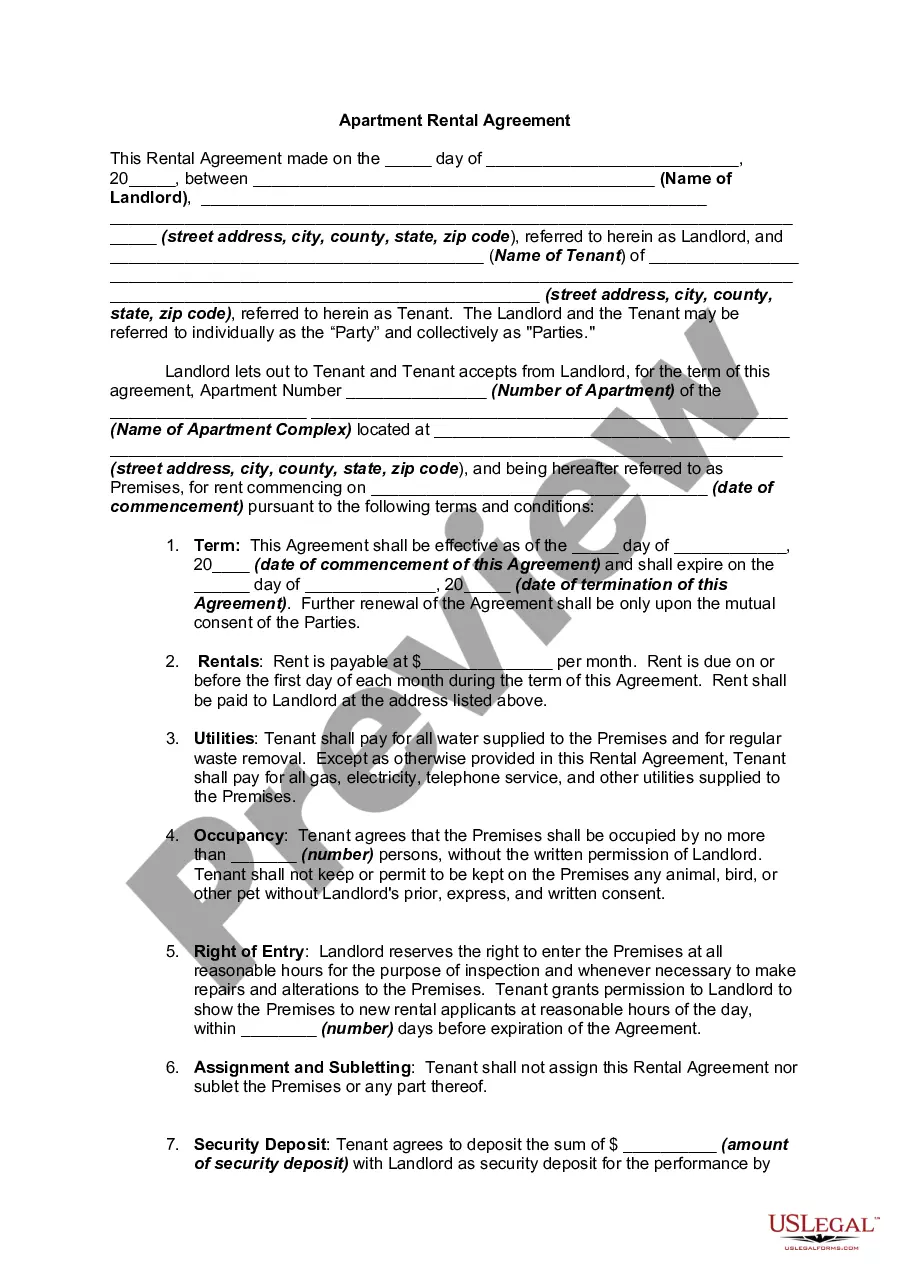
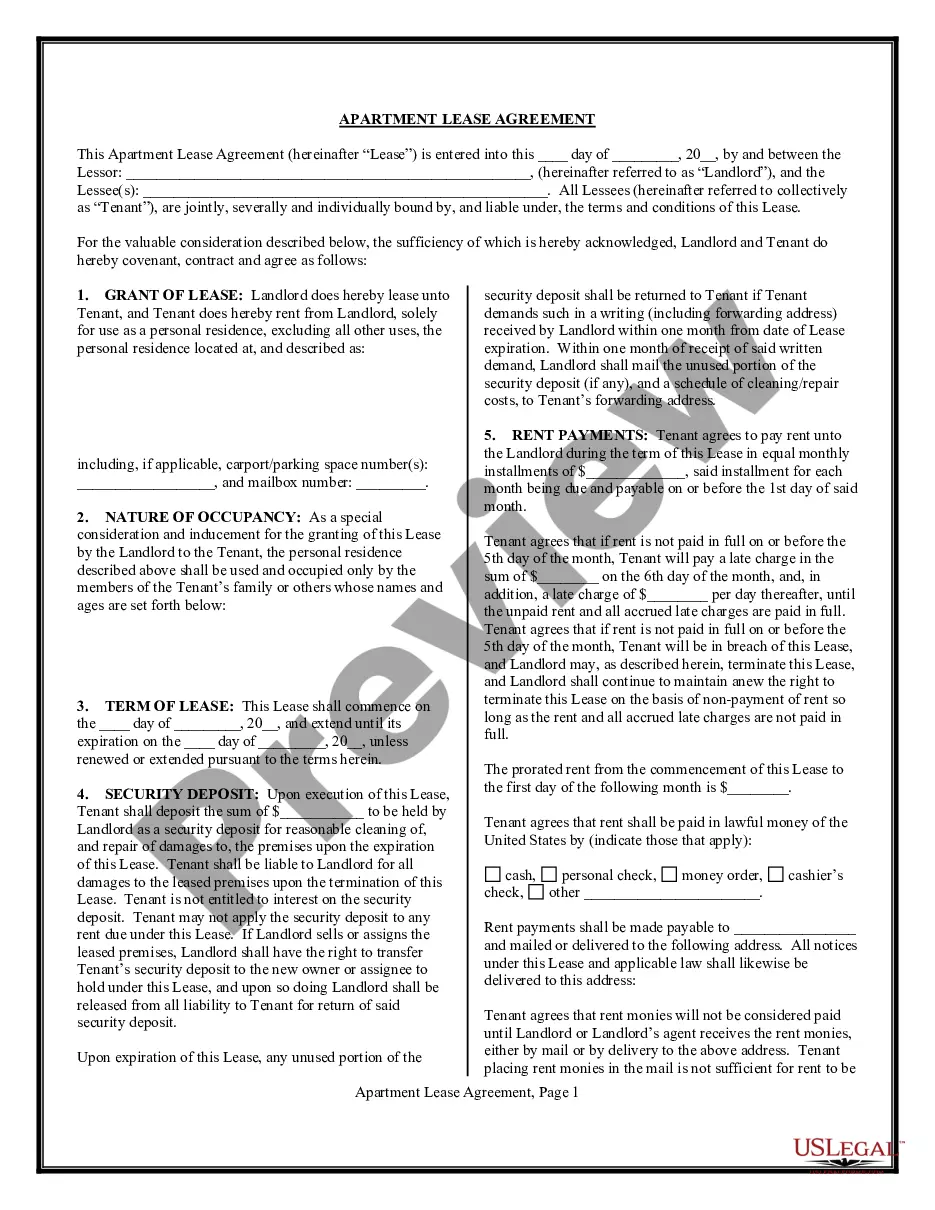
Apartment Lease For In Ohio
Description

Get your form ready online
Our built-in tools help you complete, sign, share, and store your documents in one place.
Make edits, fill in missing information, and update formatting in US Legal Forms—just like you would in MS Word.
Download a copy, print it, send it by email, or mail it via USPS—whatever works best for your next step.
Sign and collect signatures with our SignNow integration. Send to multiple recipients, set reminders, and more. Go Premium to unlock E-Sign.
If this form requires notarization, complete it online through a secure video call—no need to meet a notary in person or wait for an appointment.
We protect your documents and personal data by following strict security and privacy standards.

Make edits, fill in missing information, and update formatting in US Legal Forms—just like you would in MS Word.

Download a copy, print it, send it by email, or mail it via USPS—whatever works best for your next step.

Sign and collect signatures with our SignNow integration. Send to multiple recipients, set reminders, and more. Go Premium to unlock E-Sign.

If this form requires notarization, complete it online through a secure video call—no need to meet a notary in person or wait for an appointment.

We protect your documents and personal data by following strict security and privacy standards.
Looking for another form?

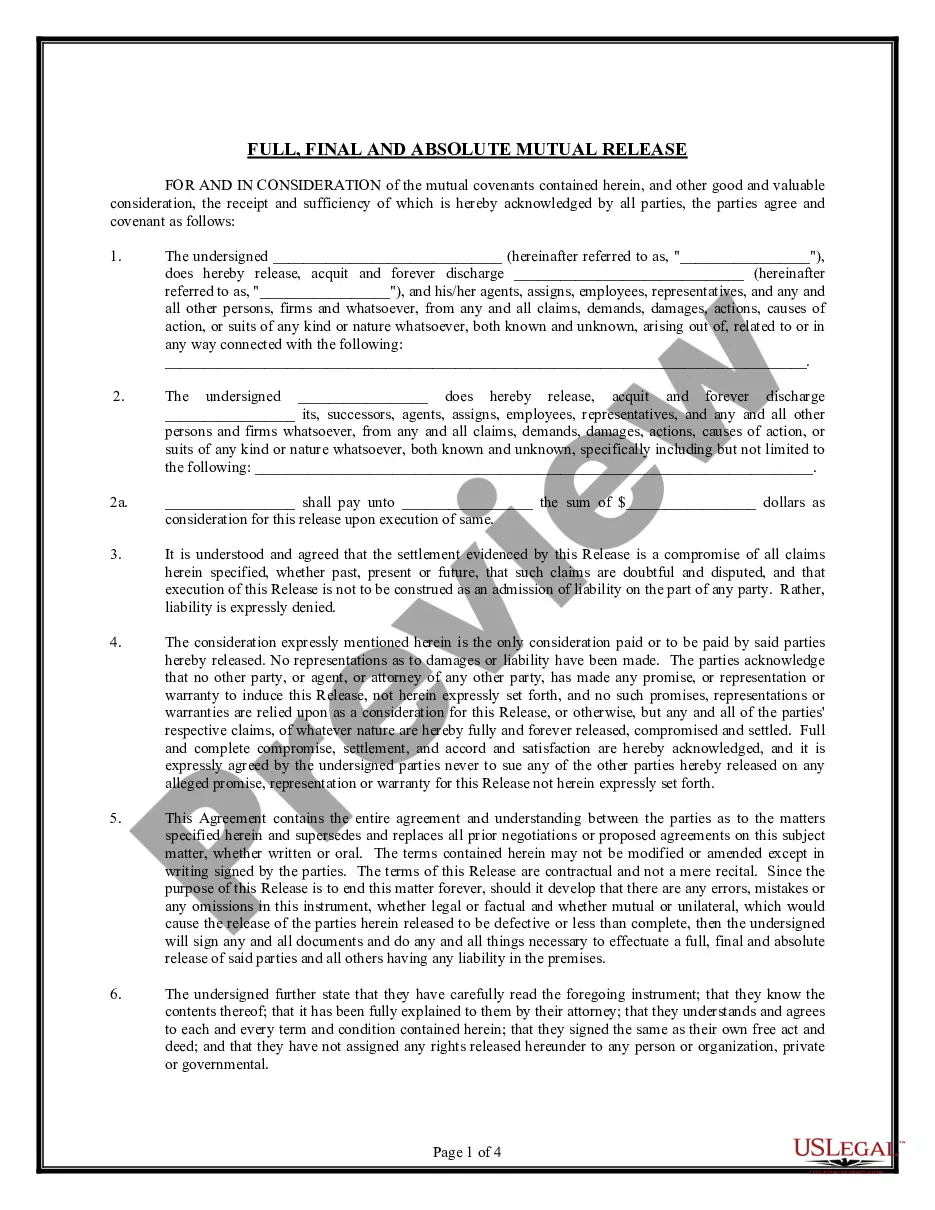







Form popularity
FAQ
Renting, especially on a short-term basis, can sometimes come with higher monthly costs due to the increased flexibility it offers the landlord. For instance, a studio apartment for rent on a month-to-month basis might be more expensive per month than the same apartment under a lease agreement.
Housing (rent or mortgage) should not be more than 1/3 of your income before taxes. If you work full time (40 hours) at $12 per hour, that's $2000 per month, so you shouldn't spend more than $667 per month on housing. That's definitely going to restrict where you can live.
Renting, especially on a short-term basis, can sometimes come with higher monthly costs due to the increased flexibility it offers the landlord. For instance, a studio apartment for rent on a month-to-month basis might be more expensive per month than the same apartment under a lease agreement.
tomonth lease agreement offers flexibility. It allows either party to modify the lease terms or terminate the contract with appropriate notice. This type of lease is ideal for tenants or landlords seeking flexible arrangements. Ohio lease agreements must comply with local laws and regulations.
Also, a lease is the best choice if a specific business needs an item all year. Renting is the best choice, nevertheless, if there isn't such a demand. Due to its flexibility, most consumers choose renting over leasing when given the choice. The tenant is not subject to any important regulations and rules.
Longer leases are best for situations where you and any roommates know you want to stay in the apartment for a year or more. Ideally, you're already familiar with the neighborhood and have a stable work or school situation. Shorter leases or month-to-month leases are better for renters who need a bit more flexibility.
Renting an apartment isn't as easy as waltzing in and saying “I'll take it!”—particularly in today's competitive rental market. With many prospective tenants to choose from, landlords can be picky, and they will prioritize applicants with a track record of paying off debts and respecting their neighbors and community.
Consider a Lease Co-Signer or Guarantor While we live in the land of entrepreneurs, pulling yourself up by your bootstraps, and “can-do” attitudes, it's okay to ask for help. A guarantor or co-signer on a lease for a rental space will often allow those who cannot provide proof of income with an opportunity to rent.
Technically, there's no set minimum credit score to lease a car. Dealerships have their own underwriting minimums that vary from company to company. Even though there's no official minimum score, most vehicle leasing companies accept a score of 680 or higher.
In general, a landlord will look for a credit score that is at least “good,” which is generally in the range of 670 to 739. However, that can vary by landlord or property manager, as well as the location in which you're renting.
