Apartment Lease Format In Bronx
Description

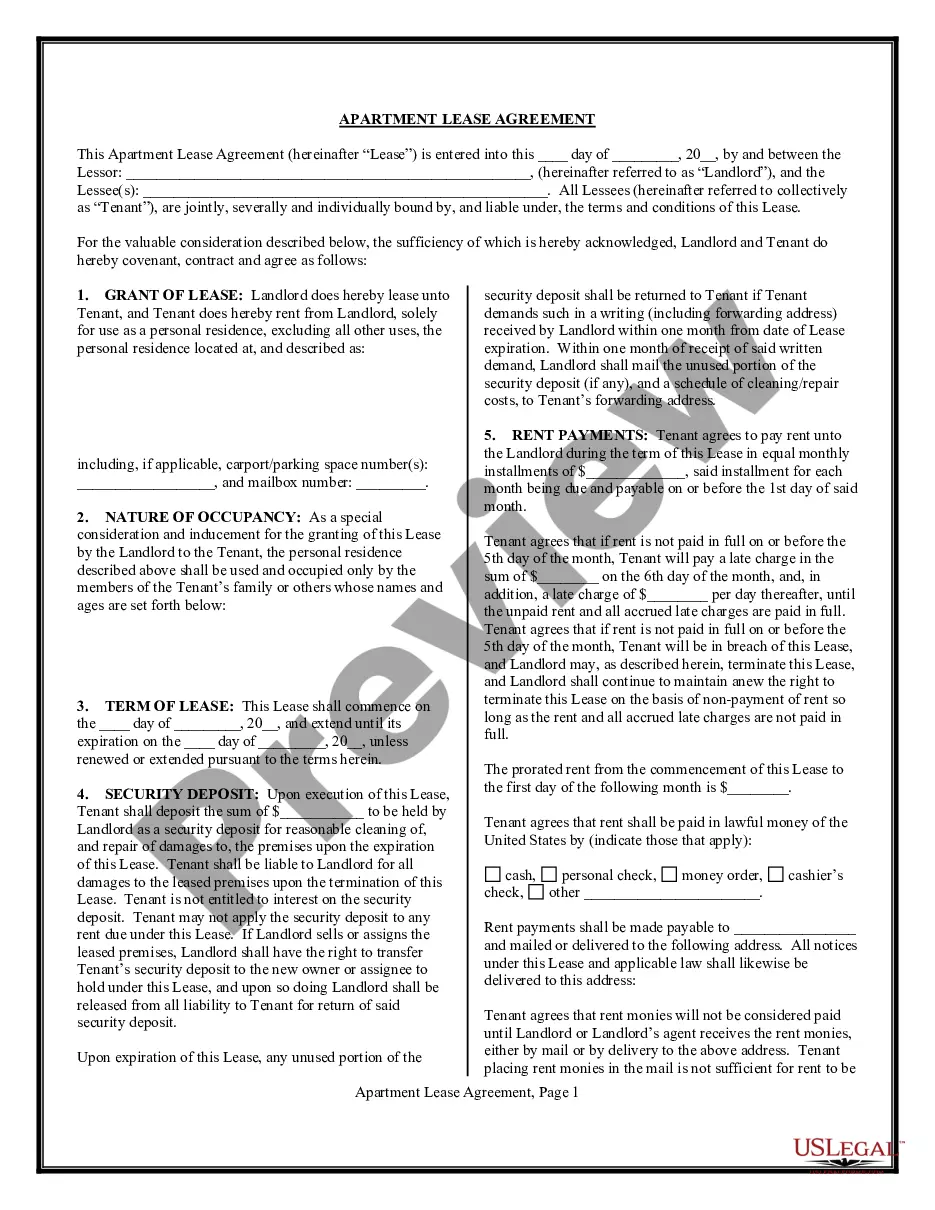
Get your form ready online
Our built-in tools help you complete, sign, share, and store your documents in one place.
Make edits, fill in missing information, and update formatting in US Legal Forms—just like you would in MS Word.
Download a copy, print it, send it by email, or mail it via USPS—whatever works best for your next step.
Sign and collect signatures with our SignNow integration. Send to multiple recipients, set reminders, and more. Go Premium to unlock E-Sign.
If this form requires notarization, complete it online through a secure video call—no need to meet a notary in person or wait for an appointment.
We protect your documents and personal data by following strict security and privacy standards.

Make edits, fill in missing information, and update formatting in US Legal Forms—just like you would in MS Word.

Download a copy, print it, send it by email, or mail it via USPS—whatever works best for your next step.

Sign and collect signatures with our SignNow integration. Send to multiple recipients, set reminders, and more. Go Premium to unlock E-Sign.

If this form requires notarization, complete it online through a secure video call—no need to meet a notary in person or wait for an appointment.

We protect your documents and personal data by following strict security and privacy standards.
Looking for another form?




Form popularity
FAQ
Go To Your Landlord or Management Company Not only is the person or company you signed the lease with the most likely to have a copy for themselves, many states legally require landlords to provide tenants a copy of the lease.
Renting, especially on a short-term basis, can sometimes come with higher monthly costs due to the increased flexibility it offers the landlord. For instance, a studio apartment for rent on a month-to-month basis might be more expensive per month than the same apartment under a lease agreement.
It is possible to draft your own lease agreement, but you are leaving yourself open to issues.
Renting an apartment isn't as easy as waltzing in and saying “I'll take it!”—particularly in today's competitive rental market. With many prospective tenants to choose from, landlords can be picky, and they will prioritize applicants with a track record of paying off debts and respecting their neighbors and community.
Start by noting the basic identifying information: List the date, property address, and tenant details. Proceed room by room: Document each item in every room, including its condition. Be thorough and include all elements like walls, floors, ceilings, fixtures, and any appliances or furniture.
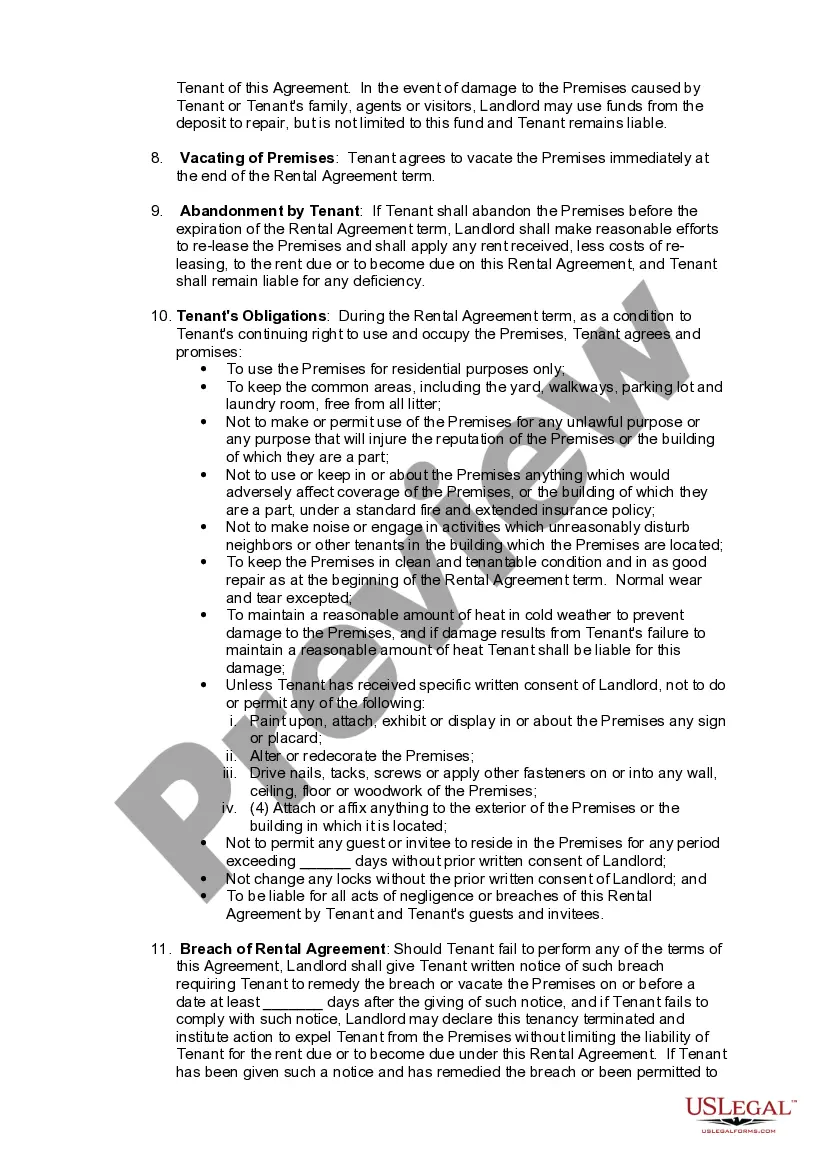
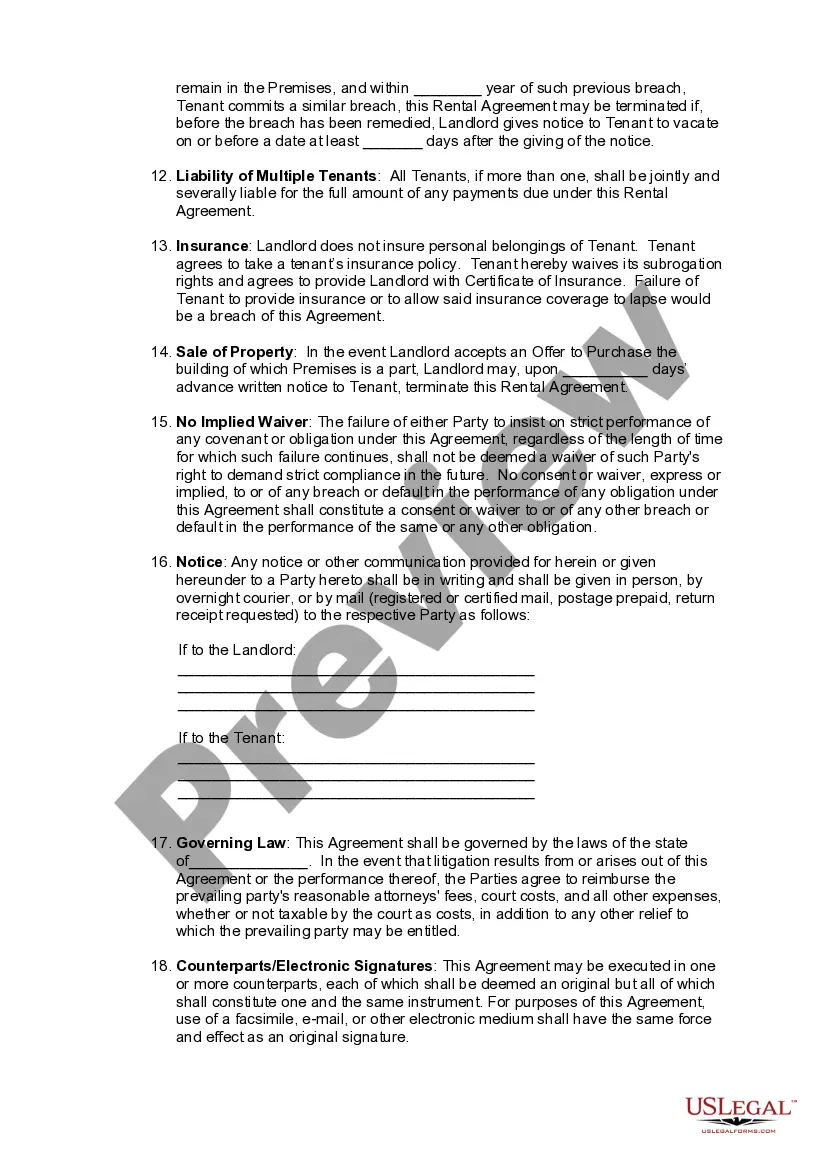
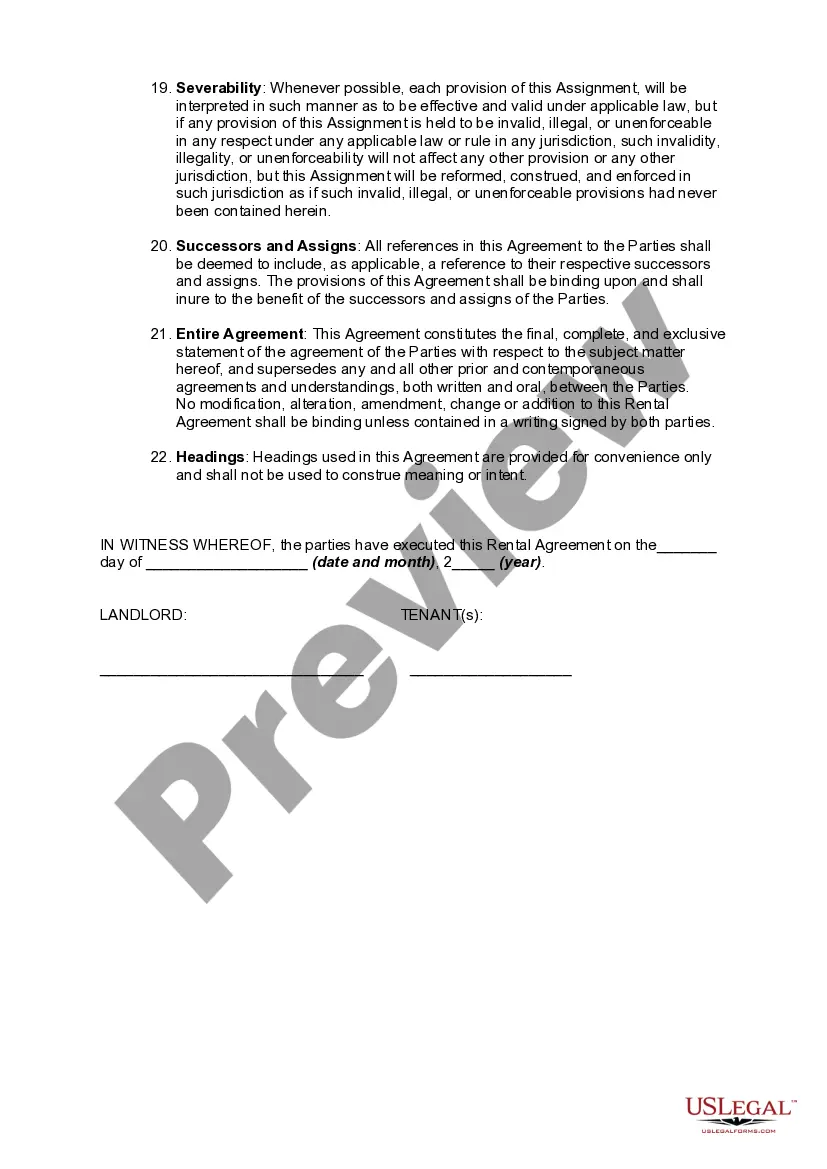
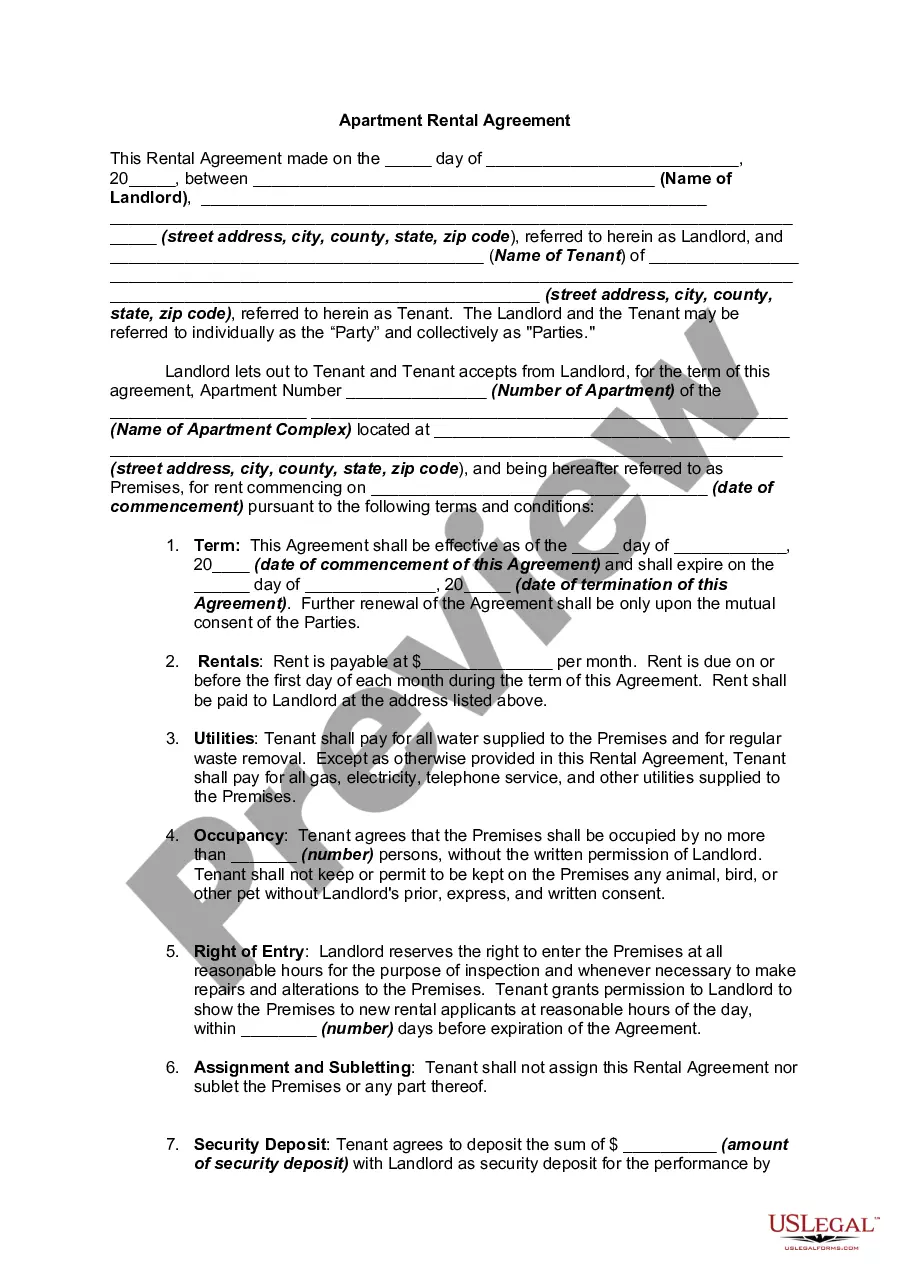
A New York standard residential lease agreement is a form that allows a landlord and tenant to enter into a legally binding arrangement for leasing residential space. The term “standard” means a fixed term that usually lasts for a one (1) year period but can be for any time period agreed by the parties.
The information that must be reported on an inventory and condition form includes: the address of the property; a list of all items in the property; a description of the condition of all items; a list of any damage or missing items; any items that need to be repaired or replaced; the date the inventory was taken; the ...
The report should also document the condition of internal features like walls, ceilings, floors, windows, and doors, noting any existing damage or wear and tear.
Here's a list of standard fields that you should include in your lease agreement: Tenant information. Include each tenant's full name and contact information. Rental property description. Security deposit. Monthly rent amount. Utilities. Lease term. Policies. Late fees.
Explanation: When you're conditionally approved for an apartment, it means the landlord or property management company believes you could be a good tenant but still needs to verify some information.
