No Rights No Wrongs
Description


Get your form ready online
Our built-in tools help you complete, sign, share, and store your documents in one place.
Make edits, fill in missing information, and update formatting in US Legal Forms—just like you would in MS Word.
Download a copy, print it, send it by email, or mail it via USPS—whatever works best for your next step.
Sign and collect signatures with our SignNow integration. Send to multiple recipients, set reminders, and more. Go Premium to unlock E-Sign.
If this form requires notarization, complete it online through a secure video call—no need to meet a notary in person or wait for an appointment.
We protect your documents and personal data by following strict security and privacy standards.

Make edits, fill in missing information, and update formatting in US Legal Forms—just like you would in MS Word.

Download a copy, print it, send it by email, or mail it via USPS—whatever works best for your next step.

Sign and collect signatures with our SignNow integration. Send to multiple recipients, set reminders, and more. Go Premium to unlock E-Sign.

If this form requires notarization, complete it online through a secure video call—no need to meet a notary in person or wait for an appointment.

We protect your documents and personal data by following strict security and privacy standards.
Looking for another form?








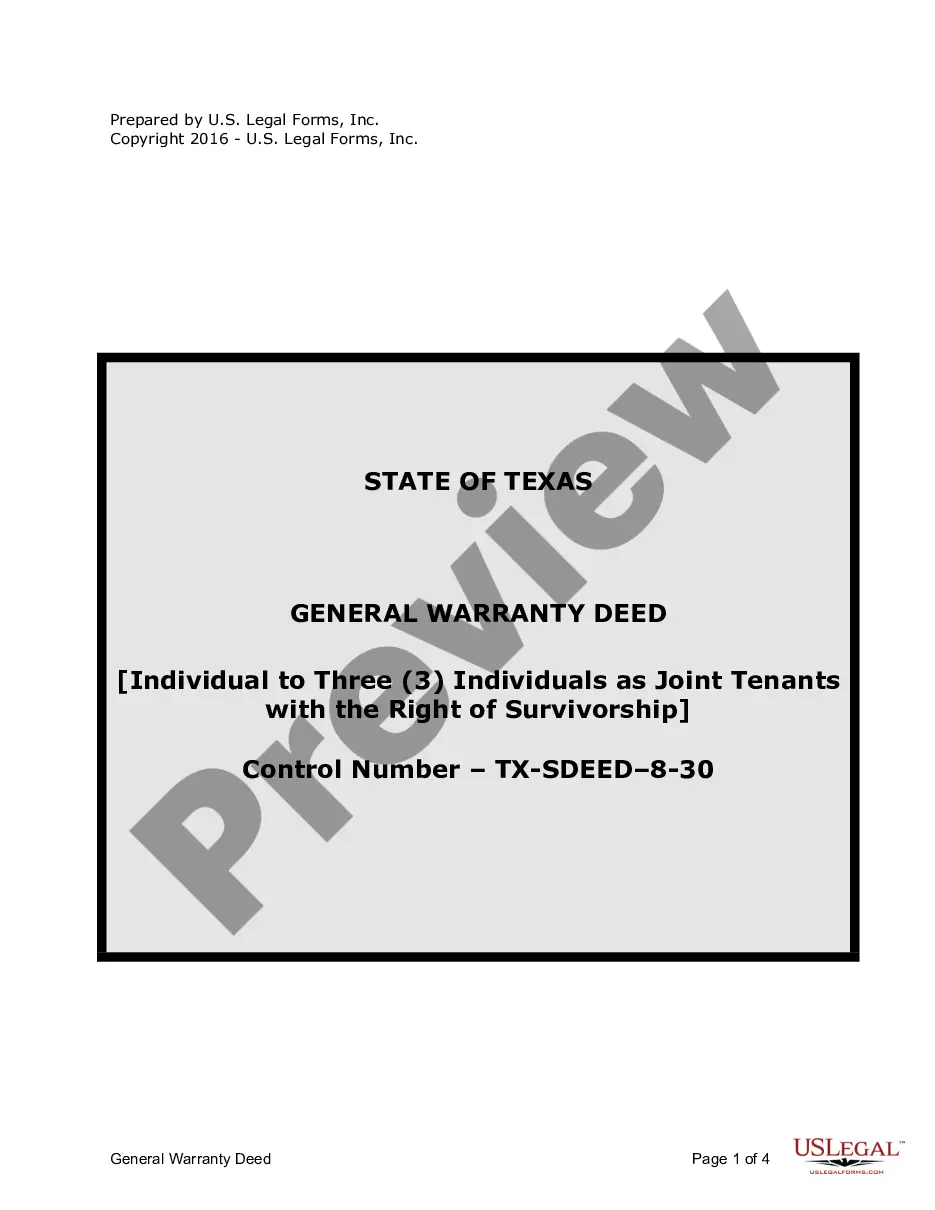
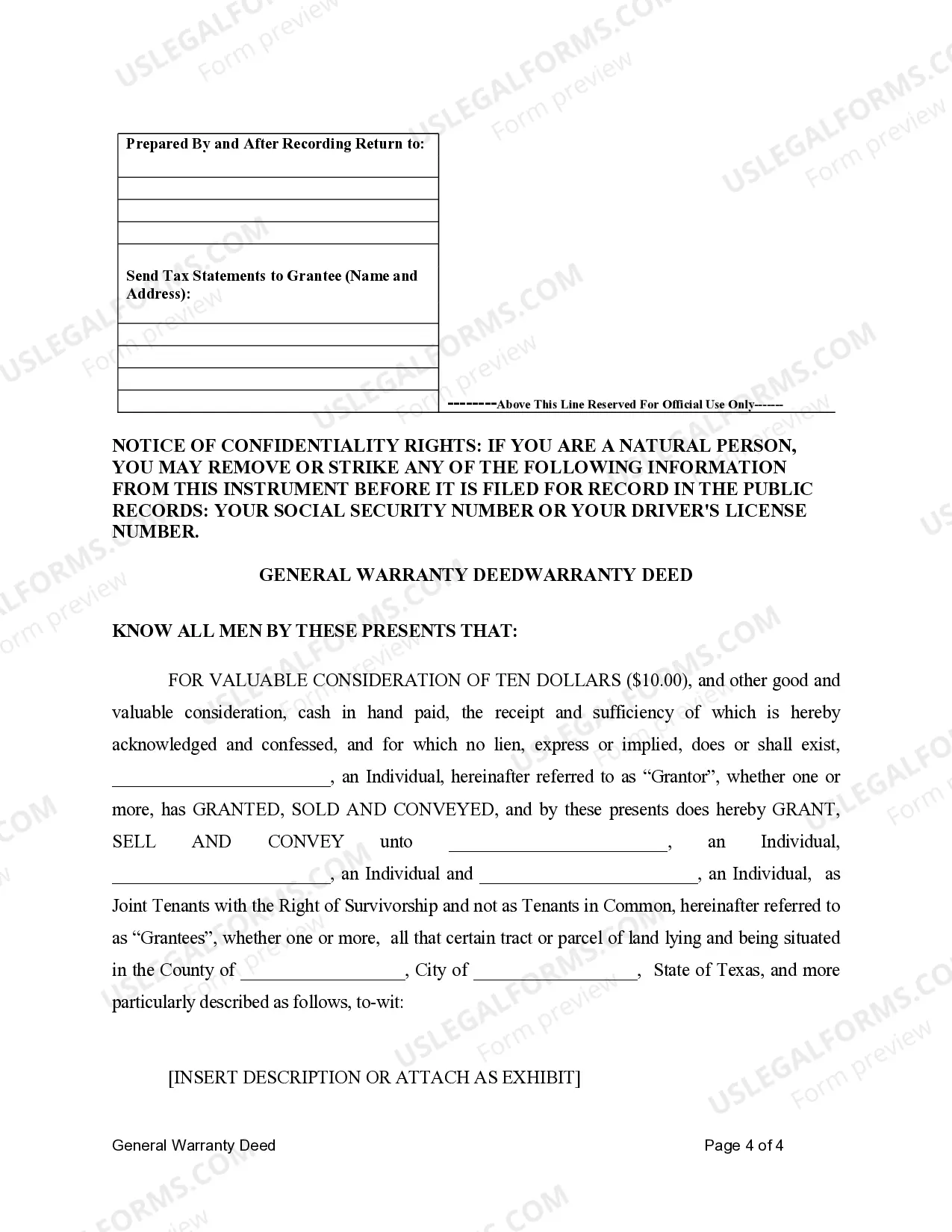
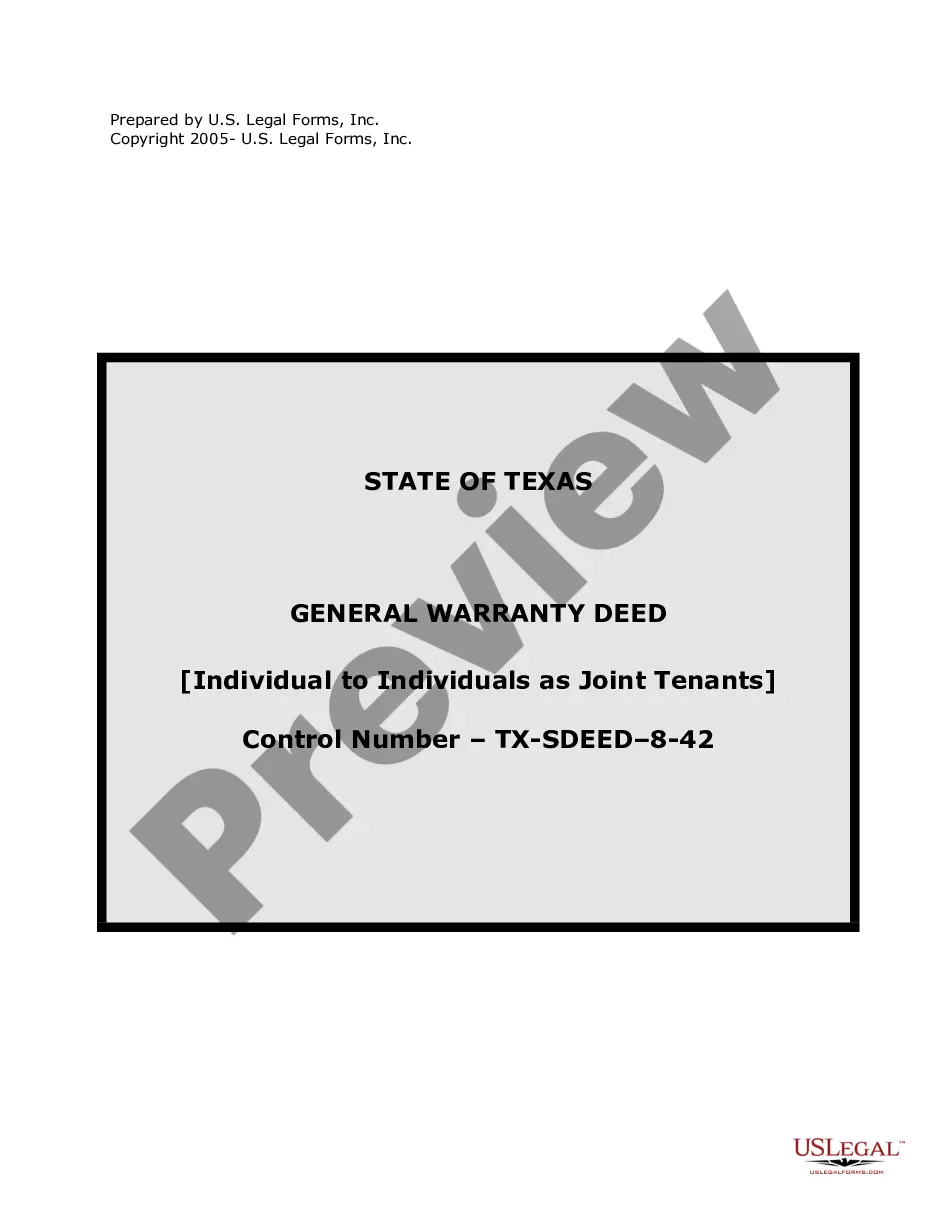
How to fill out Texas General Warranty Deed For Individual To Three (3) Individuals As Joint Tenants With Rights Of Survivorship?
- Log in to your existing US Legal Forms account or create a new one if you're a first-time user.
- Browse the online library of over 85,000 forms and check the preview mode to find the document best suited for your needs.
- If your initial choice doesn't meet your requirements, utilize the Search tab to explore other available templates.
- Select the desired form and click on the Buy Now button, then choose your preferred subscription plan.
- Complete the purchase by entering your payment details using a credit card or PayPal.
- After your transaction, download the form to your device and access it anytime under the My Forms section of your account.
Utilizing US Legal Forms ensures you have access to a robust collection of legal documents, empowering you to make informed decisions while avoiding legal pitfalls. Whether you're dealing with contracts, agreements, or other legal necessities, this platform supports you every step of the way.
Start your journey with US Legal Forms today and take the guesswork out of legal documentation. Sign up now and empower yourself with the right tools!
Form popularity
FAQ
To terminate a father's rights, it typically requires court intervention and proof that termination is in the child's best interest. Factors may include abandonment, abuse, or neglect by the father. This process can be legally complex, so having guidance through platforms like US Legal Forms can simplify the required paperwork and steps involved. On this journey, remember there are no rights, no wrongs—just your focus on achieving what's best for your child.
Yes, keeping a child away from the other parent can negatively impact your custody situation. Courts typically frown upon parental alienation and will assess these actions when making custody decisions. It’s important to encourage a healthy relationship between your child and the other parent unless there are genuine safety concerns. Ultimately, when considering custody, remember there are no rights, no wrongs; it’s about fostering a loving environment for your child.
While it is not mandatory to have a lawyer, navigating a custody case without legal representation can be risky. Courts generally favor party representation as it ensures proper presentation of the case and adherence to legal protocols. Without a lawyer, you may miss critical opportunities to advocate for your rights effectively. Ultimately, in custody matters, remember that there are no rights, no wrongs—only the pursuit of what is best for your child.
During a custody battle, it's crucial to maintain a respectful tone and avoid making inflammatory statements. Don't speak negatively about the other parent in front of your child, as this can be viewed unfavorably by the court. Instead, focus on promoting a positive environment and prioritizing your child's well-being. In custody matters, remember that there are no rights, no wrongs, just your child's best interest.
In New York, parental rights can be terminated through a formal legal process initiated by filing a petition in family court. This process often involves showing evidence that the parent is unfit, engages in neglect, or poses harm to the child. Having legal assistance can help ensure that you navigate the complexities of this sensitive matter. Remember, when it comes to parental rights, there are no rights, no wrongs—just the best interests of the child.
Reading your rights is essential as it informs you of the protections you have under the law. This knowledge is particularly important in legal contexts, such as during an arrest. Understanding your rights allows you to avoid self-incrimination and ensures you are treated fairly. Ultimately, by grasping your rights, you promote the idea that without rights, there are indeed no wrongs.
Rights can go wrong when they are misinterpreted or violated due to ignorance or intent. Historical cases show that failure to recognize and uphold certain rights leads to injustice and societal unrest. By learning from past mistakes, individuals can advocate for the rightful application of laws. This understanding aligns with the principle of 'no rights no wrongs,' highlighting the critical importance of protecting rights.
Having all your rights is crucial for maintaining personal freedom and ensuring equality. Each right serves a purpose in protecting you and allowing you to participate actively in society. When every individual possesses their rights, it fosters a culture of respect and justice. Thus, upholding all rights helps emphasize that without rights, there can be no wrongs.
Yes, knowing your rights is essential for every individual. When you are aware of your rights, you can defend yourself against potential abuses. It empowers you to make informed decisions, whether in everyday situations or during legal encounters. Remember, 'no rights no wrongs' emphasizes the importance of protecting your rights for a just society.
Knowing your rights allows you to navigate complex legal environments confidently. It ensures you understand what protections the law provides and how to exercise them. When individuals grasp their rights, they contribute to a society where justice prevails. This understanding reinforces the idea that in the absence of rights, there are no wrongs.