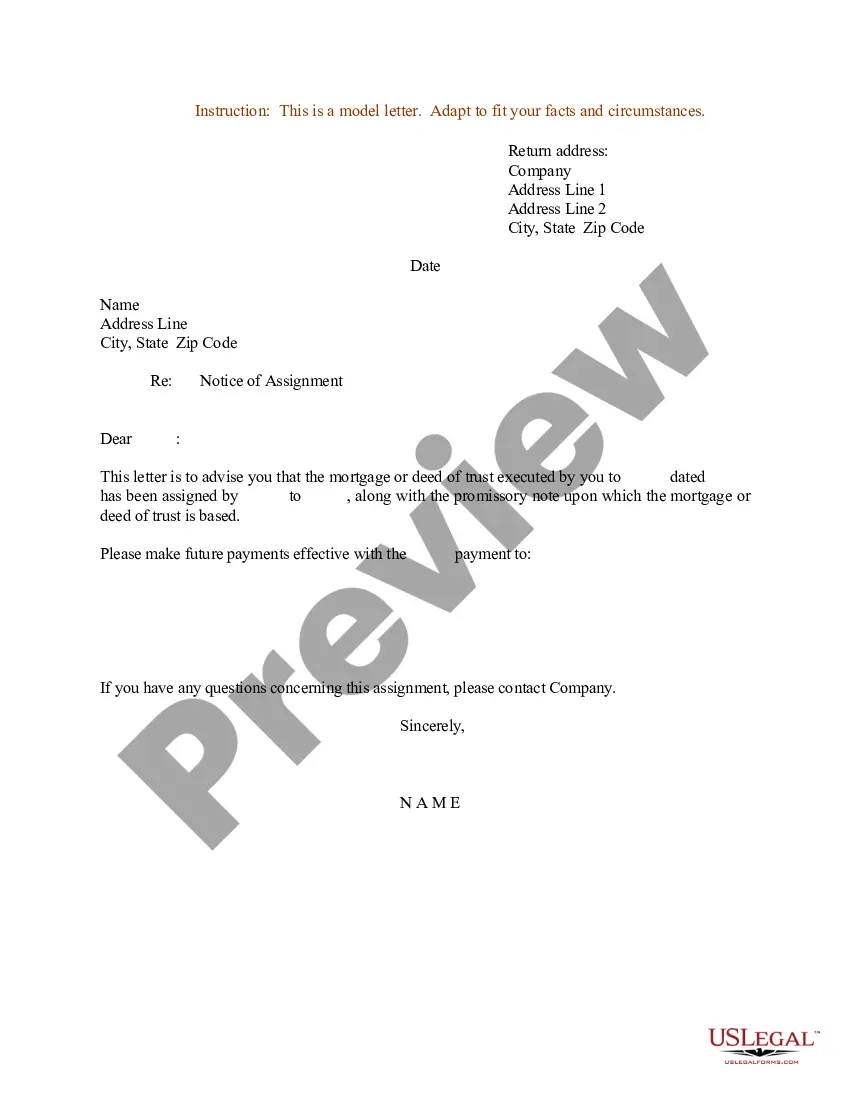
Mortgage Holder Lender With Mortgage
Description
Get your form ready online
Our built-in tools help you complete, sign, share, and store your documents in one place.
Make edits, fill in missing information, and update formatting in US Legal Forms—just like you would in MS Word.
Download a copy, print it, send it by email, or mail it via USPS—whatever works best for your next step.
Sign and collect signatures with our SignNow integration. Send to multiple recipients, set reminders, and more. Go Premium to unlock E-Sign.
If this form requires notarization, complete it online through a secure video call—no need to meet a notary in person or wait for an appointment.
We protect your documents and personal data by following strict security and privacy standards.

Make edits, fill in missing information, and update formatting in US Legal Forms—just like you would in MS Word.

Download a copy, print it, send it by email, or mail it via USPS—whatever works best for your next step.

Sign and collect signatures with our SignNow integration. Send to multiple recipients, set reminders, and more. Go Premium to unlock E-Sign.

If this form requires notarization, complete it online through a secure video call—no need to meet a notary in person or wait for an appointment.

We protect your documents and personal data by following strict security and privacy standards.
Looking for another form?





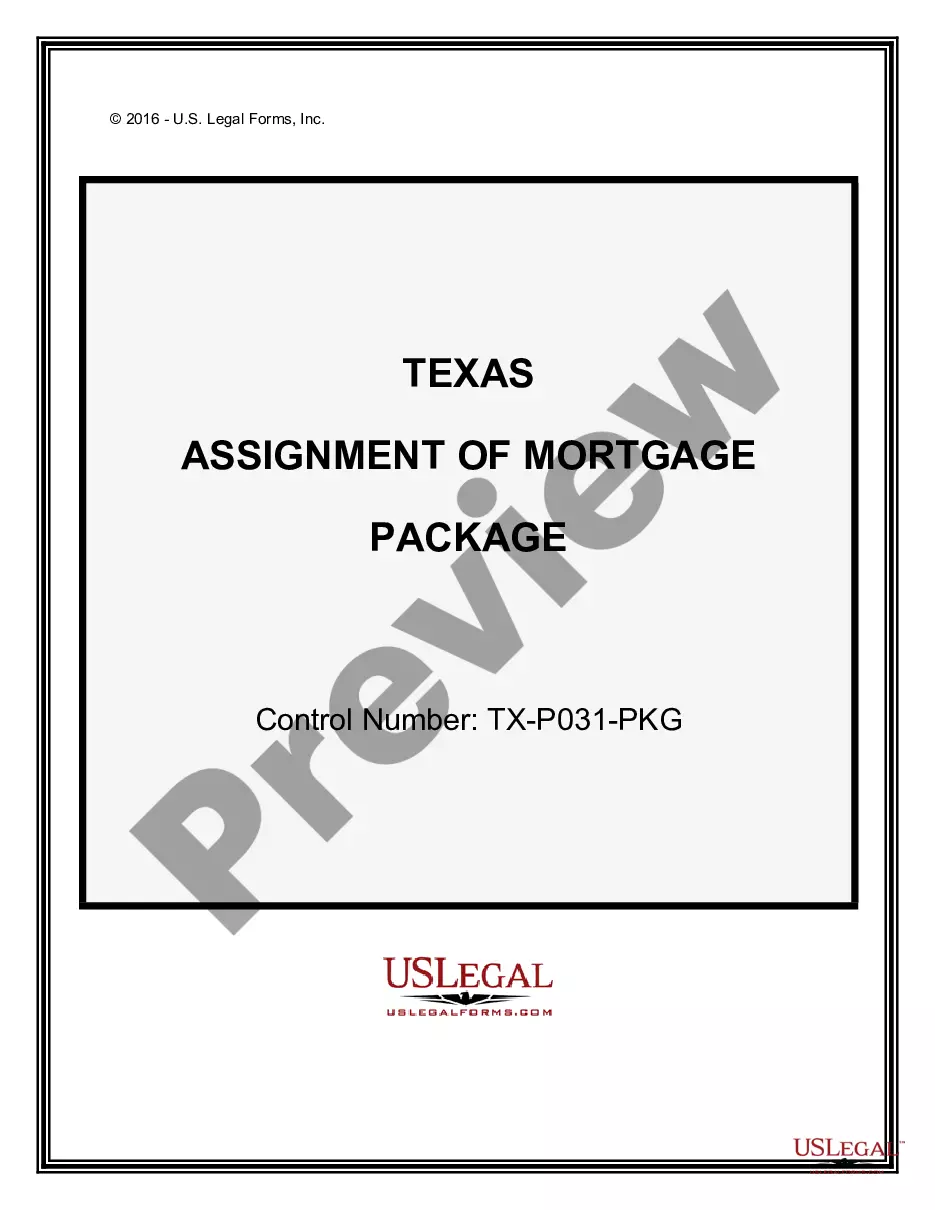
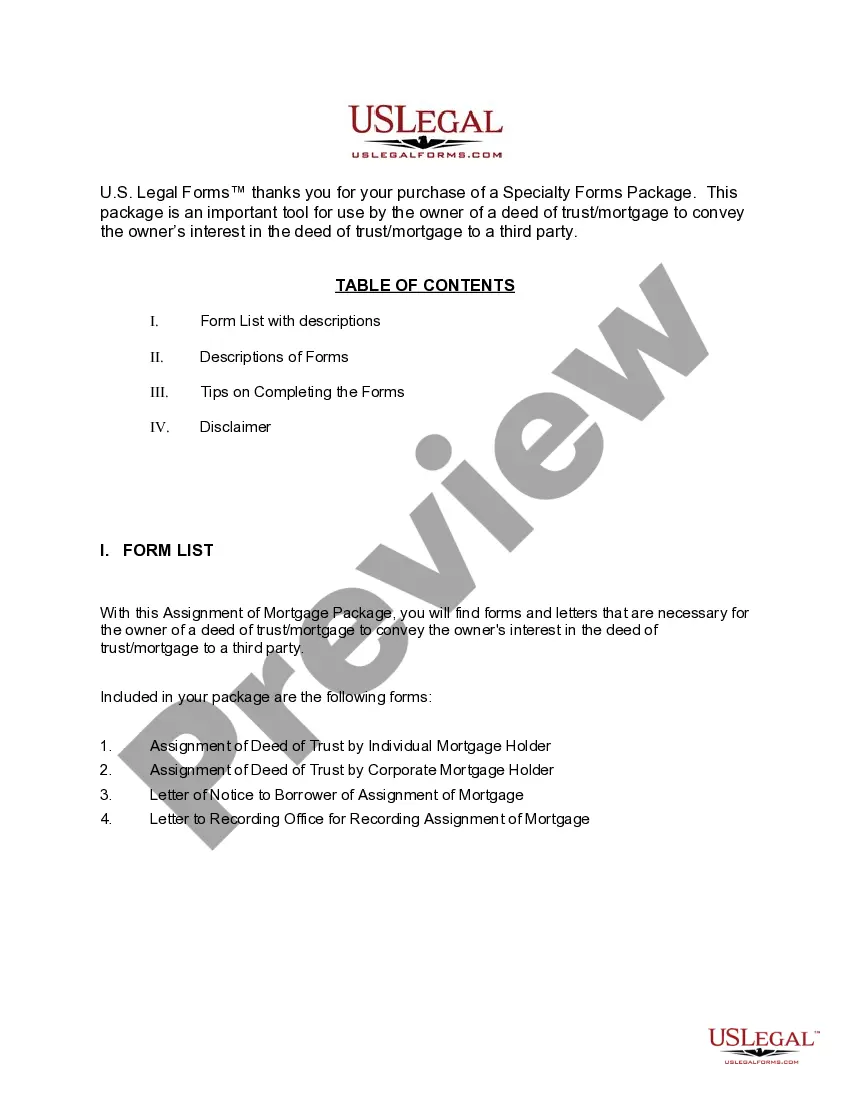
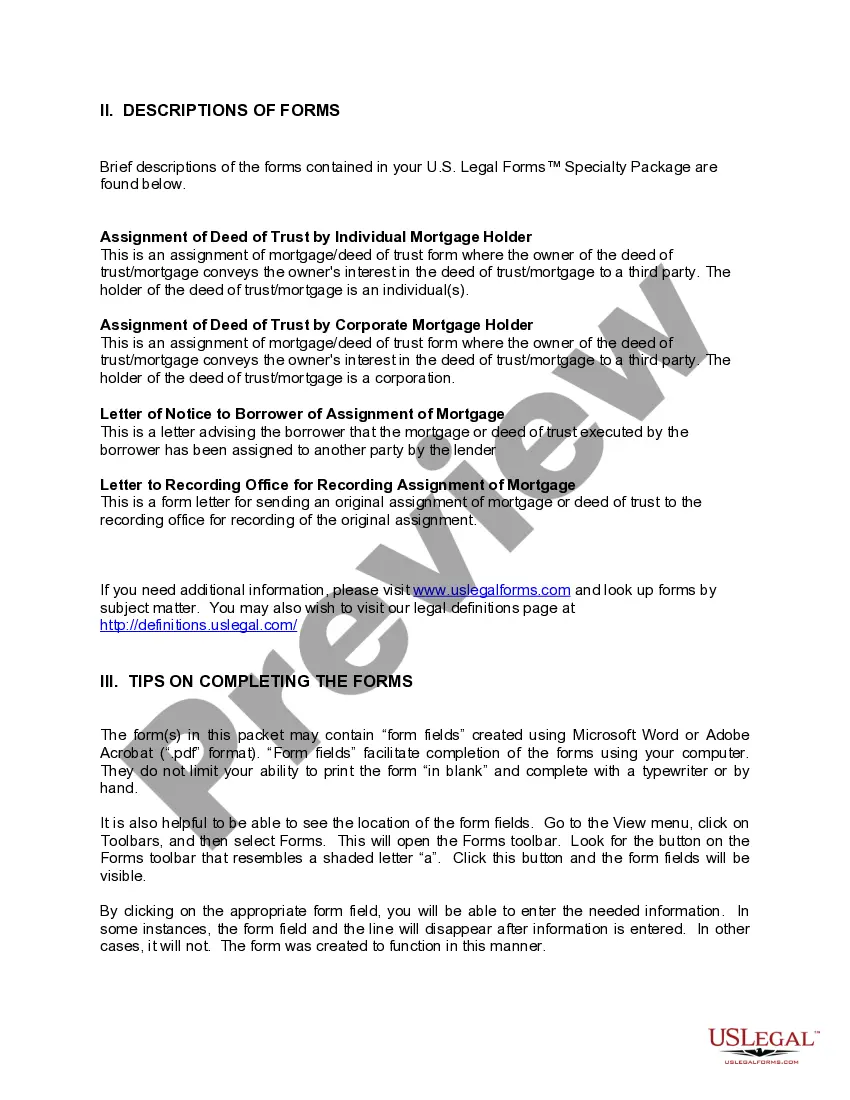
How to fill out Texas Assignment Of Mortgage Package?
The Loan Provider Mortgage With Mortgage you observe on this page is a reusable official framework composed by skilled attorneys in adherence with national and local regulations.
For over 25 years, US Legal Forms has supplied individuals, entities, and legal professionals with more than 85,000 validated, state-specific documents for any business and personal circumstance.
Subscribe to US Legal Forms to have certified legal templates for all of life's situations at your fingertips.
- Search for the document you require and examine it.
- Browse through the example you queried and preview it or review the document description to ensure it meets your requirements. If it does not, utilize the search feature to obtain the correct one. Click Buy Now when you have found the template you seek.
- Register and Log In.
- Choose the pricing package that fits you and create an account. Use PayPal or a credit card to complete a swift payment. If you already possess an account, Log In and review your subscription to continue.
- Obtain the editable template.
- Pick the format you desire for your Loan Provider Mortgage With Mortgage (PDF, DOCX, RTF) and download the example onto your device.
- Finalize and endorse the document.
- Print the template to fill it out manually. Alternatively, employ an online multi-functional PDF editor to swiftly and accurately complete and sign your form with an electronic signature.
- Download your paperwork one more time.
- Utilize the same document again whenever necessary. Access the My documents tab in your account to redownload any previously acquired forms.
Form popularity
FAQ
Yes, a private lender must issue a 1098 form if they receive $600 or more in interest payments during the tax year. This form reports mortgage interest and assists borrowers in preparing their tax returns. It is essential for the borrower to accurately report deductions associated with the mortgage. Therefore, if you're working with a mortgage holder lender with mortgage, ensure they provide you with the necessary documentation for your finances.
One of the most commonly reported complaints in mortgage lending involves ambiguous fees and charges. Borrowers often find it confusing to understand why certain fees are applied. Transparency is crucial, and many borrowers express frustration when they feel misinformed about their terms. To avoid such issues, consider dealing with a reliable mortgage holder lender with mortgage who ensures clear communication.
The holder of a mortgage is typically the lender that retains the mortgage note and has the right to enforce repayment. This can be a bank, credit union, or other financial institution. Understanding that this mortgage holder lender with mortgage holds significant rights is vital for any homeowner. Their role impacts your financial responsibilities, especially in terms of payments and legal obligations.
Yes, you can engage in owner financing even if there is an existing mortgage on the property. However, it is crucial to notify your mortgage holder lender with mortgage, as they may have specific rules regarding this scenario. They generally want to know that the original mortgage remains in good standing. Proper communication can help you successfully navigate this path to ensure compliance.
The original lender was the first mortgage holder. Often the original lender will package and sell mortgage loans to other companies. The mortgage holder owns your mortgage but may contract with a mortgage servicer empowered to handle the day-to-day challenges associated with managing your mortgage.
The "lender" is the financial institution that loaned you the money. The lender owns the loan and is also called the "note holder" or "holder." Sometime later, the lender might sell the mortgage debt to another entity, which then becomes the new loan owner (holder).
Example 1. Mr. McGillicuddy purchases a home and takes out a mortgage with the Bank. The Bank is the mortgage holder.
The mortgage owner, also referred to the mortgage holder or note holder, is the entity that owns your loan. They have the legal right to enforce the loan agreement, which consists of a promissory note and a security interest or deed of trust.
The "lender" is the financial institution that loaned you the money. The lender owns the loan and is also called the "note holder" or "holder." Sometime later, the lender might sell the mortgage debt to another entity, which then becomes the new loan owner (holder).