Texas Rules Of Civil Procedure 106 With Comments
Description
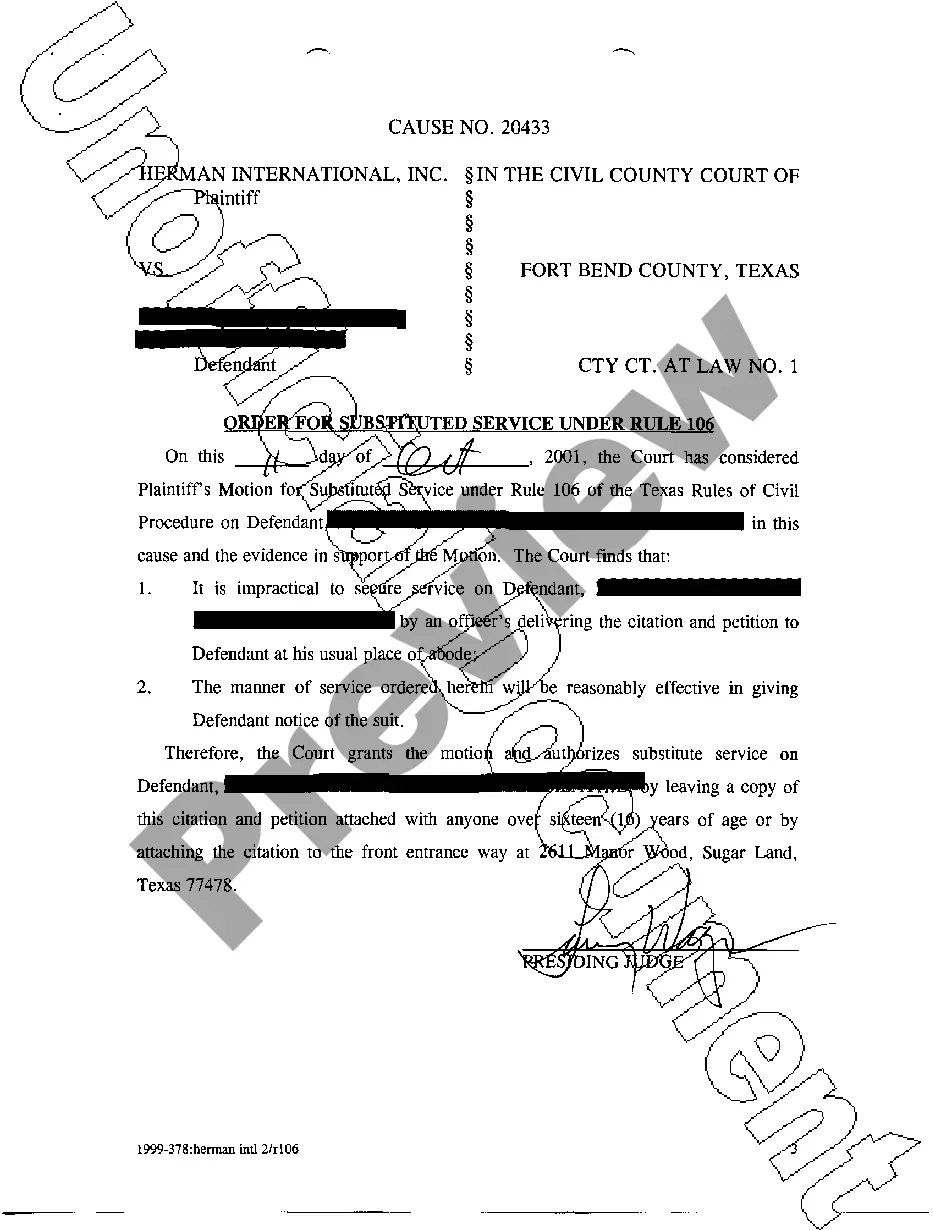
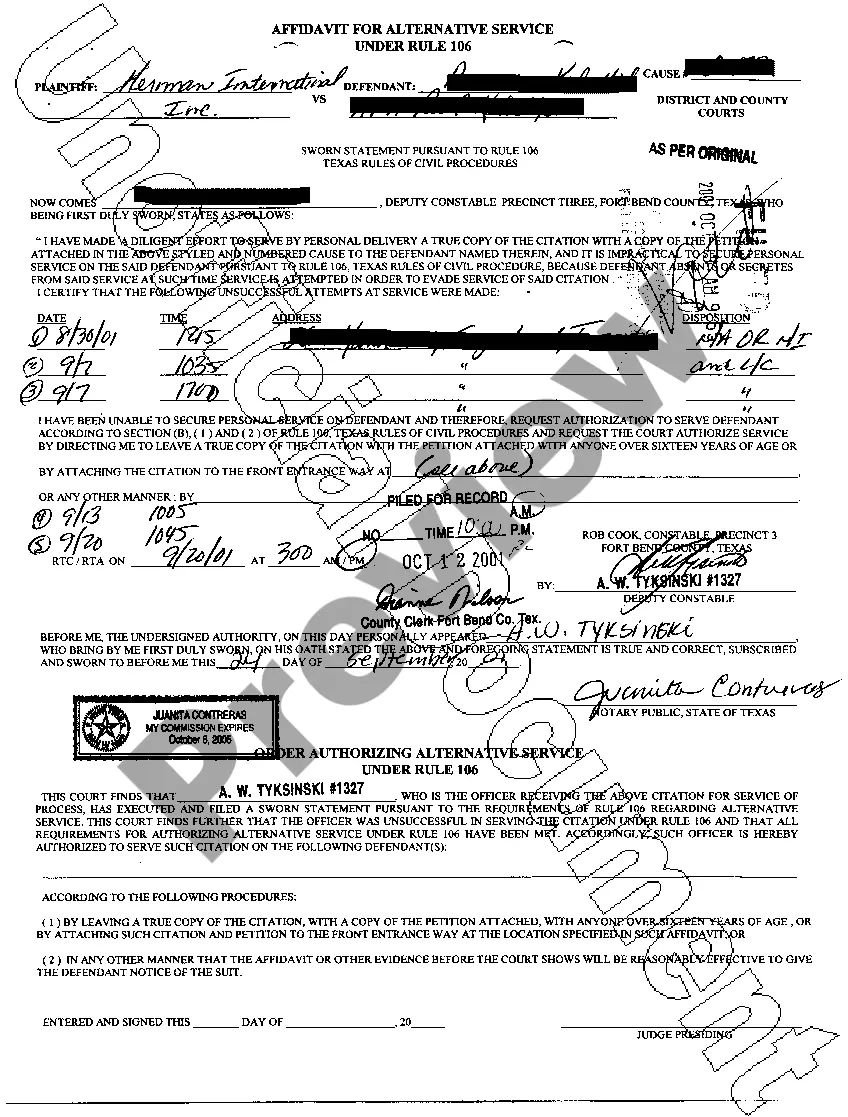
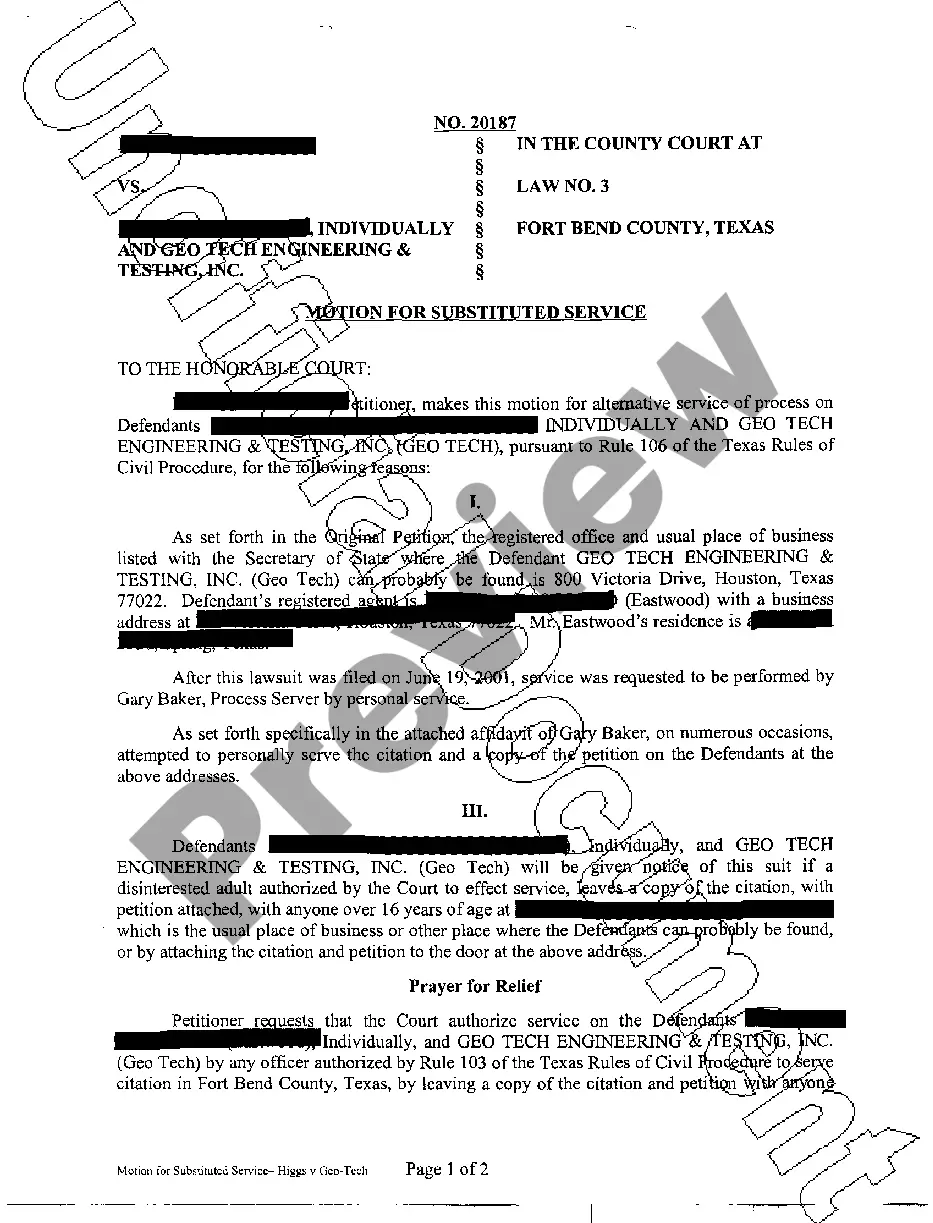


How to fill out Texas Order Of Substituted Service Under Rule 106?
The Texas Rules Of Civil Procedure 106 With Comments you see on this page is a multi-usable formal template drafted by professional lawyers in accordance with federal and regional laws. For more than 25 years, US Legal Forms has provided individuals, businesses, and legal professionals with more than 85,000 verified, state-specific forms for any business and personal occasion. It’s the fastest, easiest and most reliable way to obtain the documents you need, as the service guarantees the highest level of data security and anti-malware protection.
Getting this Texas Rules Of Civil Procedure 106 With Comments will take you just a few simple steps:
- Search for the document you need and review it. Look through the sample you searched and preview it or review the form description to verify it suits your requirements. If it does not, use the search bar to find the correct one. Click Buy Now when you have located the template you need.
- Subscribe and log in. Opt for the pricing plan that suits you and register for an account. Use PayPal or a credit card to make a prompt payment. If you already have an account, log in and check your subscription to proceed.
- Obtain the fillable template. Choose the format you want for your Texas Rules Of Civil Procedure 106 With Comments (PDF, Word, RTF) and download the sample on your device.
- Fill out and sign the document. Print out the template to complete it by hand. Alternatively, utilize an online multi-functional PDF editor to rapidly and accurately fill out and sign your form with a valid.
- Download your papers again. Utilize the same document once again whenever needed. Open the My Forms tab in your profile to redownload any earlier downloaded forms.
Subscribe to US Legal Forms to have verified legal templates for all of life’s circumstances at your disposal.
Form popularity
FAQ
Under Rule 106 of the Federal Rules of Evidence, when an incomplete writing or recorded statement is introduced in a trial by one party, the adverse party may require the introduction of any other parts or any other writing or recorded statement which ought, in fairness, to be considered contemporaneously with the ...
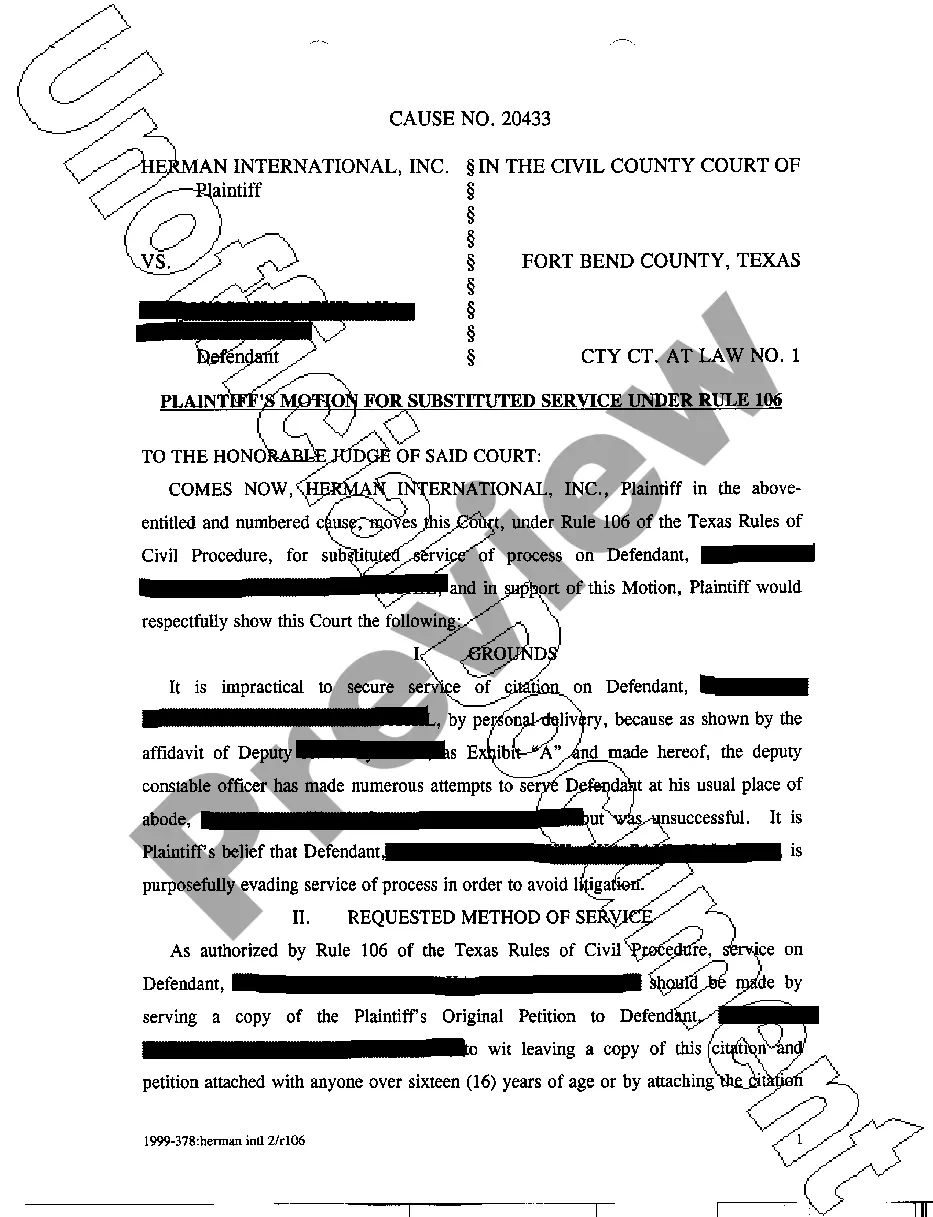
Rule 106 - Method of Service (a) Unless the citation or court order otherwise directs, the citation must be served by: (1) delivering to the defendant, in person, a copy of the citation, showing the delivery date, and of the petition; or (2) mailing to the defendant by registered or certified mail, return receipt ...
U.S. v. Branch, 91 F. 3d 699 (5th Cir. 1996) [holding that the ?rule of completeness,? is to permit contemporaneous introduction of recorded statements that place in context other writings admitted into evidence which, viewed alone, may be misleading];
To file online, go to E-File Texas ( ) [11] and follow the instructions. To file in person, take your answer (and copies) to the district clerk's office in the county where the plaintiff filed the case. At the clerk's office: Turn in your answer form (and copies).
Evid. 106. If a party introduces all or part of a writing or recorded statement, an adverse party may introduce, at that time, any other part-or any other writing or recorded statement-that in fairness ought to be considered at the same time.