Tx Tenant Eviction For Nuisance
Description
Get your form ready online
Our built-in tools help you complete, sign, share, and store your documents in one place.
Make edits, fill in missing information, and update formatting in US Legal Forms—just like you would in MS Word.
Download a copy, print it, send it by email, or mail it via USPS—whatever works best for your next step.
Sign and collect signatures with our SignNow integration. Send to multiple recipients, set reminders, and more. Go Premium to unlock E-Sign.
If this form requires notarization, complete it online through a secure video call—no need to meet a notary in person or wait for an appointment.
We protect your documents and personal data by following strict security and privacy standards.

Make edits, fill in missing information, and update formatting in US Legal Forms—just like you would in MS Word.

Download a copy, print it, send it by email, or mail it via USPS—whatever works best for your next step.

Sign and collect signatures with our SignNow integration. Send to multiple recipients, set reminders, and more. Go Premium to unlock E-Sign.

If this form requires notarization, complete it online through a secure video call—no need to meet a notary in person or wait for an appointment.

We protect your documents and personal data by following strict security and privacy standards.
Looking for another form?





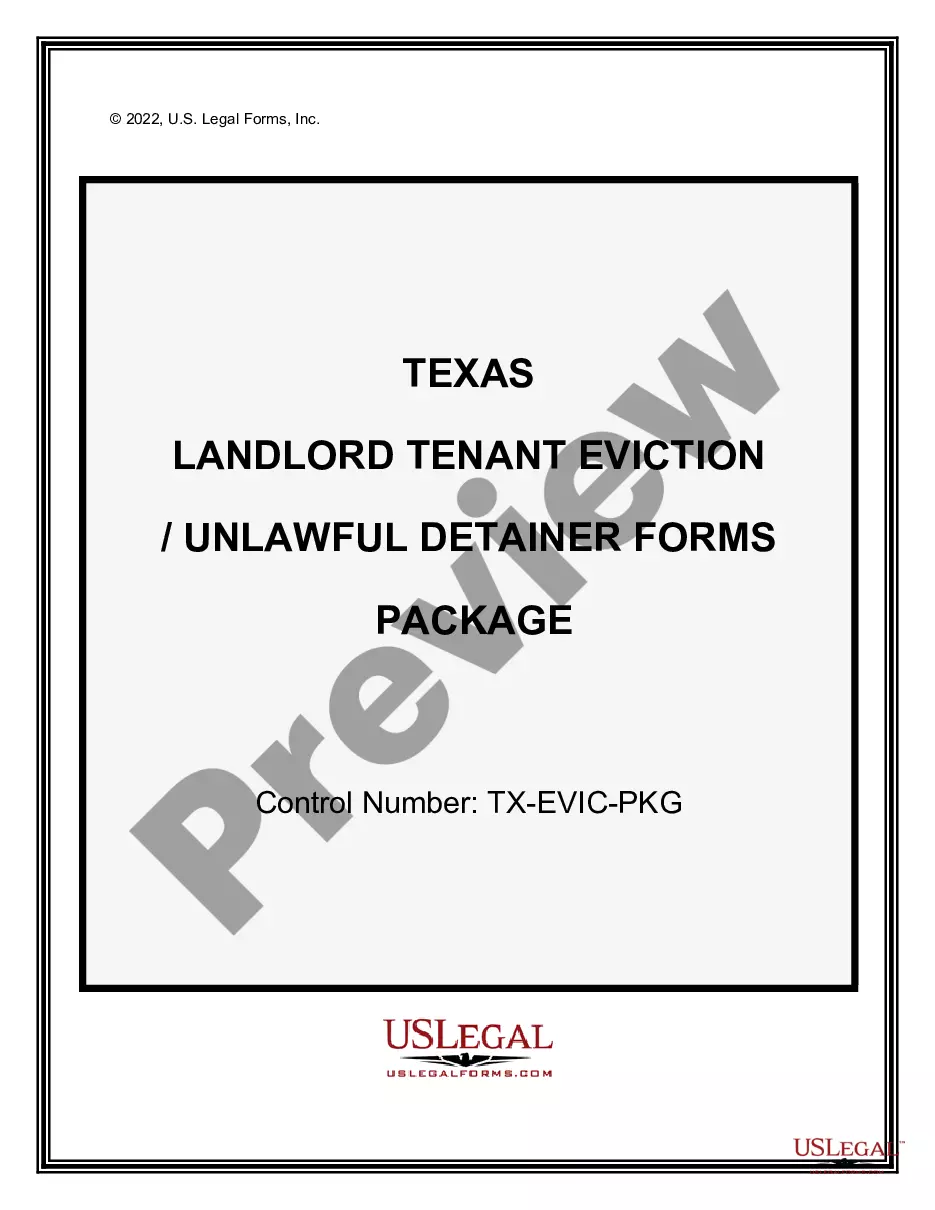
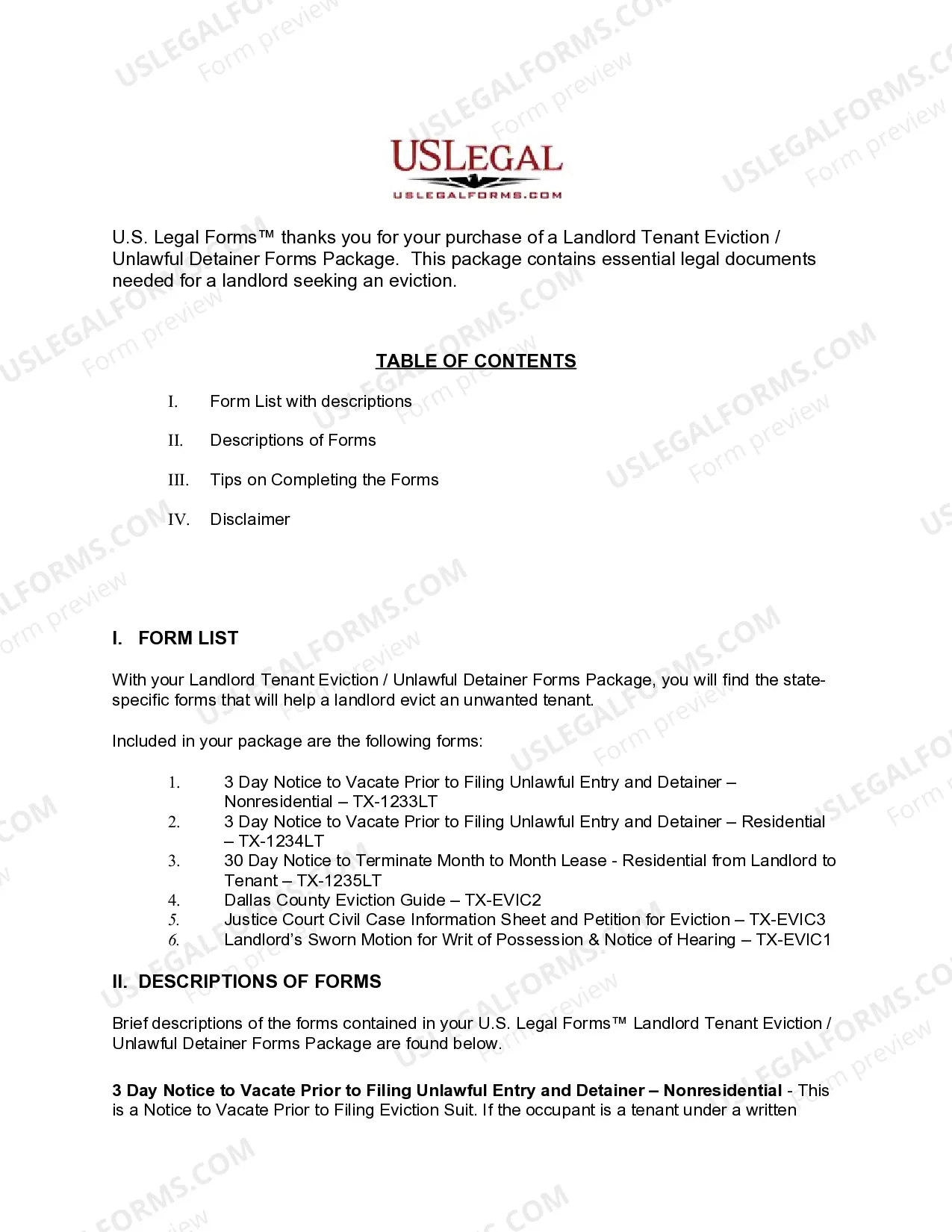
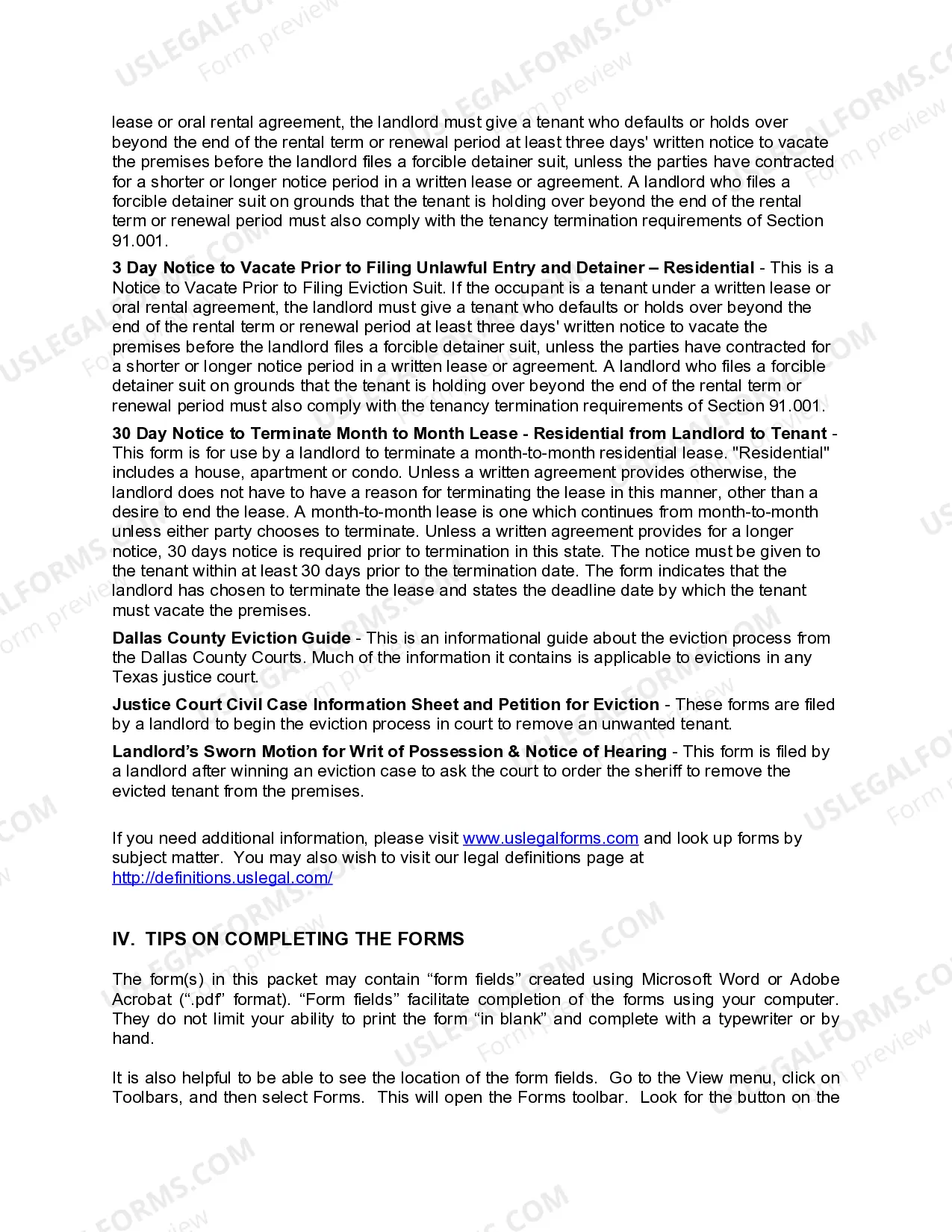
How to fill out Texas Landlord Tenant Eviction / Unlawful Detainer Forms Package?
The Tx Tenant Eviction For Nuisance displayed on this webpage is a reusable official template crafted by experienced attorneys in accordance with federal and state regulations.
For over 25 years, US Legal Forms has supplied individuals, businesses, and legal practitioners with more than 85,000 validated, state-specific documents for any commercial and personal circumstance. It is the quickest, simplest, and most reliable method to acquire the paperwork you require, as the service ensures the utmost data security and anti-malware safeguards.
Select the format you prefer for your Tx Tenant Eviction For Nuisance (PDF, DOCX, RTF) and download the sample to your device.
- Search for the document you require and examine it.
- Browse through the example you looked for and preview it or review the form description to confirm it aligns with your requirements. If it does not, utilize the search feature to identify the appropriate one. Click Buy Now once you have found the template you want.
- Register and Log In.
- Choose the pricing plan that meets your needs and create an account. Use PayPal or a credit card to make a swift payment. If you already have an account, Log In and review your subscription to proceed.
- Acquire the editable template.
Form popularity
FAQ
Even if a person can't pay currently, judgments can be enforced for 20 years if the person's financial state improves during that time.
Pay the full judgment within the time ordered If you don't pay the amount required even though you're able to, you may be held in contempt of court and imprisoned or given additional costs. Pay the full amount directly to the other party (the "judgment creditor") unless the magistrate has ordered otherwise.
Can the execution in a summary process case expire? Yes. The execution must be used within 3 months. The monetary part of the execution is valid for 20 years.
Time limits on filing claims Generally, a claim based on a contract or a consumer protection law must be brought within 6 years, and a claim resulting from negligence or intentional harm must be brought within 3 years, but there are exceptions.
The court may at any time allow any claim or answer to be amended as justice may require. No discovery shall be allowed except upon good cause shown. Service of witness summonses shall be in ance with the Massachusetts Rules of Civil Procedure.
No Attorney Required: You can speak on your own behalf in Small Claims Court and you do not need an attorney to bring a small claims case in Massachusetts, though you are permitted to retain an attorney if you wish.
Notice of Judgment and Order Form An exact amount of money that the defendant must pay to the plaintiff within 30 days of the date of judgment, unless a previous payment plan has been worked out.