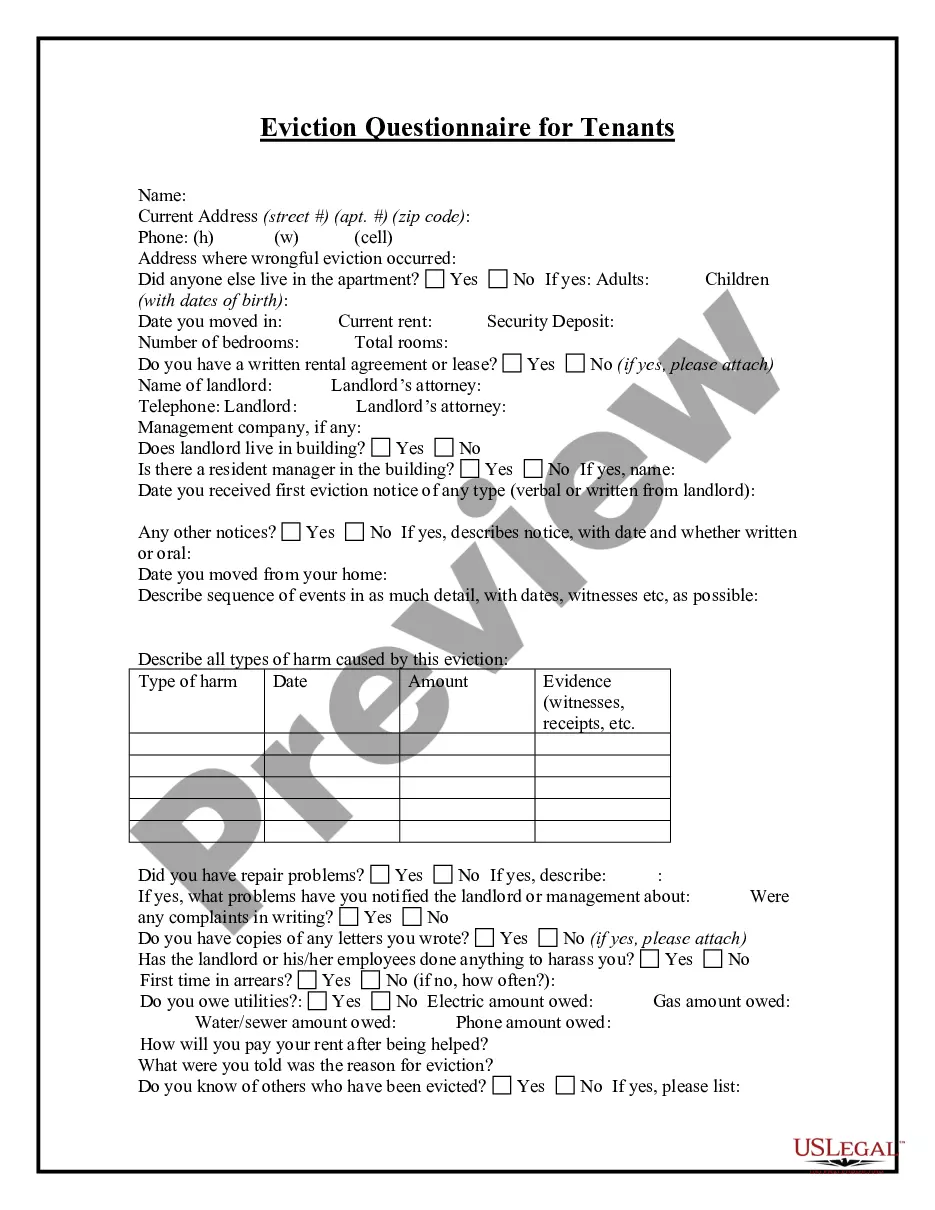
Texas Tenant Eviction With Tenant
Description
Get your form ready online
Our built-in tools help you complete, sign, share, and store your documents in one place.
Make edits, fill in missing information, and update formatting in US Legal Forms—just like you would in MS Word.
Download a copy, print it, send it by email, or mail it via USPS—whatever works best for your next step.
Sign and collect signatures with our SignNow integration. Send to multiple recipients, set reminders, and more. Go Premium to unlock E-Sign.
If this form requires notarization, complete it online through a secure video call—no need to meet a notary in person or wait for an appointment.
We protect your documents and personal data by following strict security and privacy standards.

Make edits, fill in missing information, and update formatting in US Legal Forms—just like you would in MS Word.

Download a copy, print it, send it by email, or mail it via USPS—whatever works best for your next step.

Sign and collect signatures with our SignNow integration. Send to multiple recipients, set reminders, and more. Go Premium to unlock E-Sign.

If this form requires notarization, complete it online through a secure video call—no need to meet a notary in person or wait for an appointment.

We protect your documents and personal data by following strict security and privacy standards.
Looking for another form?






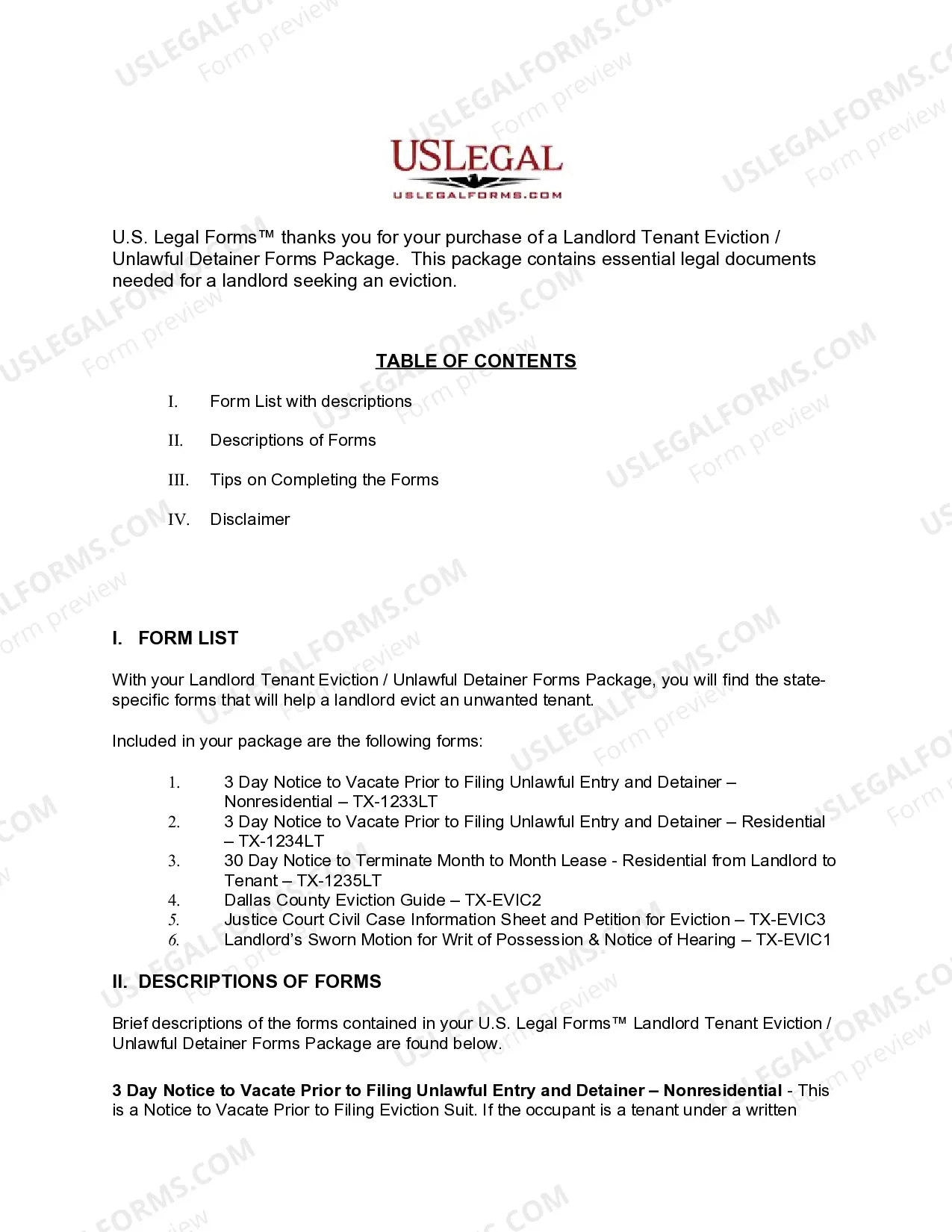
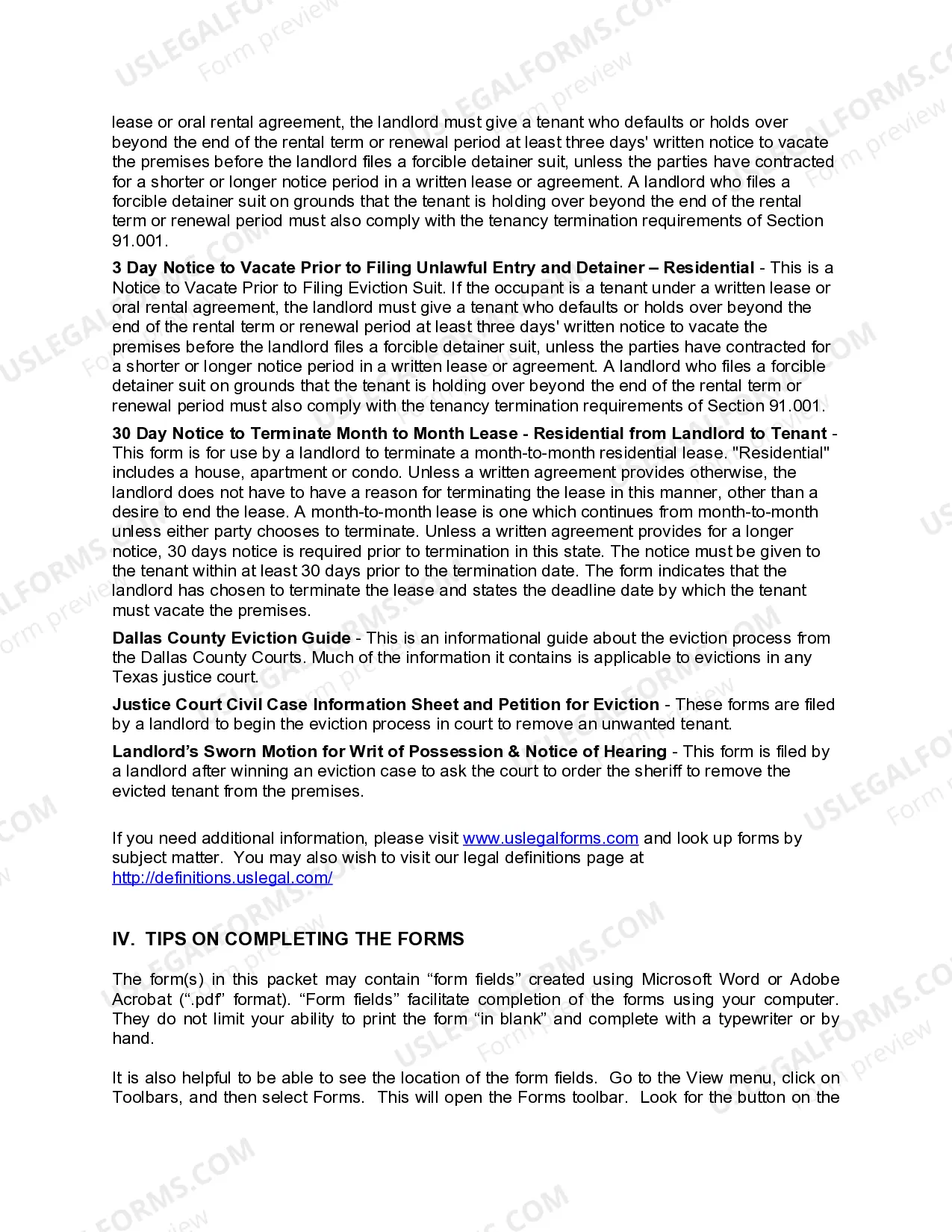
How to fill out Texas Landlord Tenant Eviction / Unlawful Detainer Forms Package?
- Log in to your US Legal Forms account if you are a returning user. Ensure your subscription is active and proceed to download the required template.
- If you're new, start by reviewing the available templates in Preview mode. This ensures you select the form that matches your specific needs and conforms to local regulations.
- Search for additional templates if necessary. If the form doesn't meet your requirements, use the Search tool to find alternatives.
- Purchase your selected form by clicking the Buy Now button and choosing a subscription plan. You will need to create an account to gain access.
- Complete your purchase by entering your payment information through your preferred method, such as credit card or PayPal.
- Download your completed form to your device. You can access it anytime from the My Forms section of your profile.
In conclusion, US Legal Forms provides essential tools for anyone involved in Texas tenant eviction processes. Its user-friendly platform ensures that legal documents can be prepared quickly and accurately, empowering you to manage your affairs confidently.
Take the first step today and explore the benefits of US Legal Forms to streamline your eviction process.
Form popularity
FAQ
The speed of a tenant eviction in Texas depends on various factors, including court schedules and legal requirements. Generally, the entire process can take several weeks to months. Landlords must follow proper procedures to ensure compliance with Texas law, or risk delays. Seeking professional advice can help expedite the process and secure a favorable outcome.
Yes, you can be evicted for having someone live with you if your lease prohibits additional occupants. When tenants violate lease terms, landlords may pursue eviction to ensure compliance. Always review your lease agreement for any restrictions regarding additional residents. If you face potential eviction, platforms like uslegalforms can provide insights into your rights.
After serving an eviction notice in Texas, a landlord usually gives a tenant three days to move out. This timeframe allows tenants a brief opportunity to relocate. However, it's important to check your lease, as specific terms may influence your timeline. Being informed about your rights ensures you are better prepared during a Texas tenant eviction.
Typically, a tenant in Texas has three days to vacate after receiving an eviction notice. However, if you hold a lease agreement, different terms may apply. It is crucial to review your lease to understand your specific rights and timeframes during a Texas tenant eviction. The uslegalforms platform can provide valuable resources for understanding these documents.
No, a landlord cannot evict a tenant immediately in Texas. The eviction process involves several steps, including providing a notice to vacate and waiting for a court decision. Rushing to evict a tenant without following these procedures can lead to legal complications. If you are facing this situation, consulting with legal experts can provide clarity and support.
In Texas, a landlord cannot evict a tenant without a court order. The law requires landlords to follow proper legal procedures when pursuing a tenant eviction. This means the landlord must file an eviction lawsuit and obtain a judgment before removing a tenant. Understanding these processes can help you navigate your rights effectively.
The timeframe to evict a tenant in Texas typically ranges from a few weeks to a couple of months. After you file the eviction lawsuit, the court will schedule a hearing, usually within a few weeks. If the judge rules in your favor, the tenant may have a short period to move out. Utilizing uSlegalforms can streamline the process and help you understand the specific timelines involved in your situation.
The fastest way to evict a tenant in Texas involves providing proper notice, filing for eviction, and securing a court date promptly. After the court grants an eviction order, you can coordinate with the local authorities for enforcement. Streamlining this process can make for an efficient Texas tenant eviction. Utilizing services like UsLegalForms can assist in navigating the paperwork and timelines effectively.
If someone refuses to leave your house in Texas, your best step is to provide a written eviction notice. Should they continue to stay despite this, you will need to file an eviction lawsuit in your local court. This legal action is part of the Texas tenant eviction process and helps enforce your rights as a property owner. For clarity on documentation and processes, consider using UsLegalForms.
Yes, you can evict a family member from your house in Texas, just as you would any tenant. However, it is important to follow the proper legal procedures and give appropriate notice. Avoiding informal arrangements can prevent misunderstandings. A legal approach ensures that you conduct the Texas tenant eviction correctly and respectfully.