Eviction Forms Form For Family Member
Description
Get your form ready online
Our built-in tools help you complete, sign, share, and store your documents in one place.
Make edits, fill in missing information, and update formatting in US Legal Forms—just like you would in MS Word.
Download a copy, print it, send it by email, or mail it via USPS—whatever works best for your next step.
Sign and collect signatures with our SignNow integration. Send to multiple recipients, set reminders, and more. Go Premium to unlock E-Sign.
If this form requires notarization, complete it online through a secure video call—no need to meet a notary in person or wait for an appointment.
We protect your documents and personal data by following strict security and privacy standards.

Make edits, fill in missing information, and update formatting in US Legal Forms—just like you would in MS Word.

Download a copy, print it, send it by email, or mail it via USPS—whatever works best for your next step.

Sign and collect signatures with our SignNow integration. Send to multiple recipients, set reminders, and more. Go Premium to unlock E-Sign.

If this form requires notarization, complete it online through a secure video call—no need to meet a notary in person or wait for an appointment.

We protect your documents and personal data by following strict security and privacy standards.
Looking for another form?








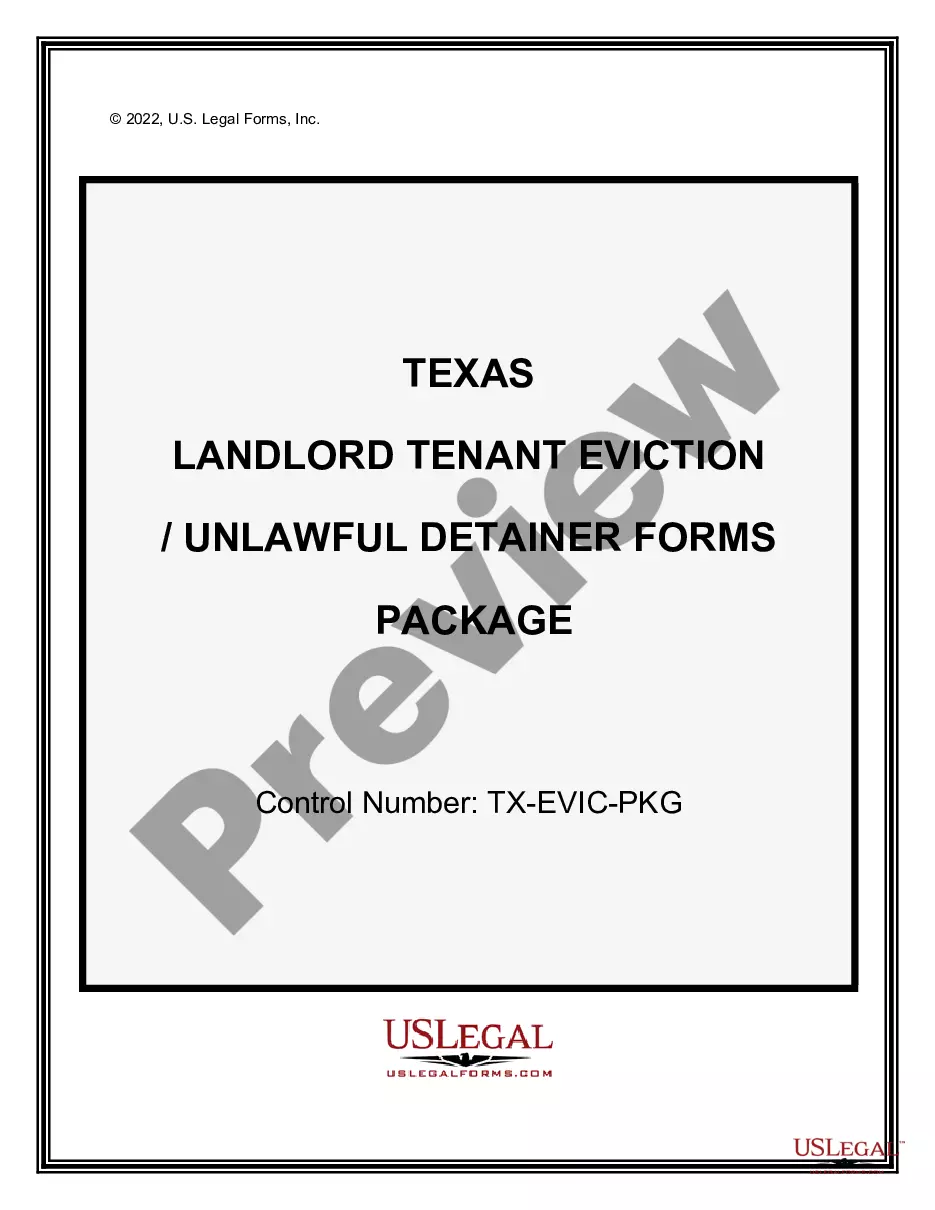
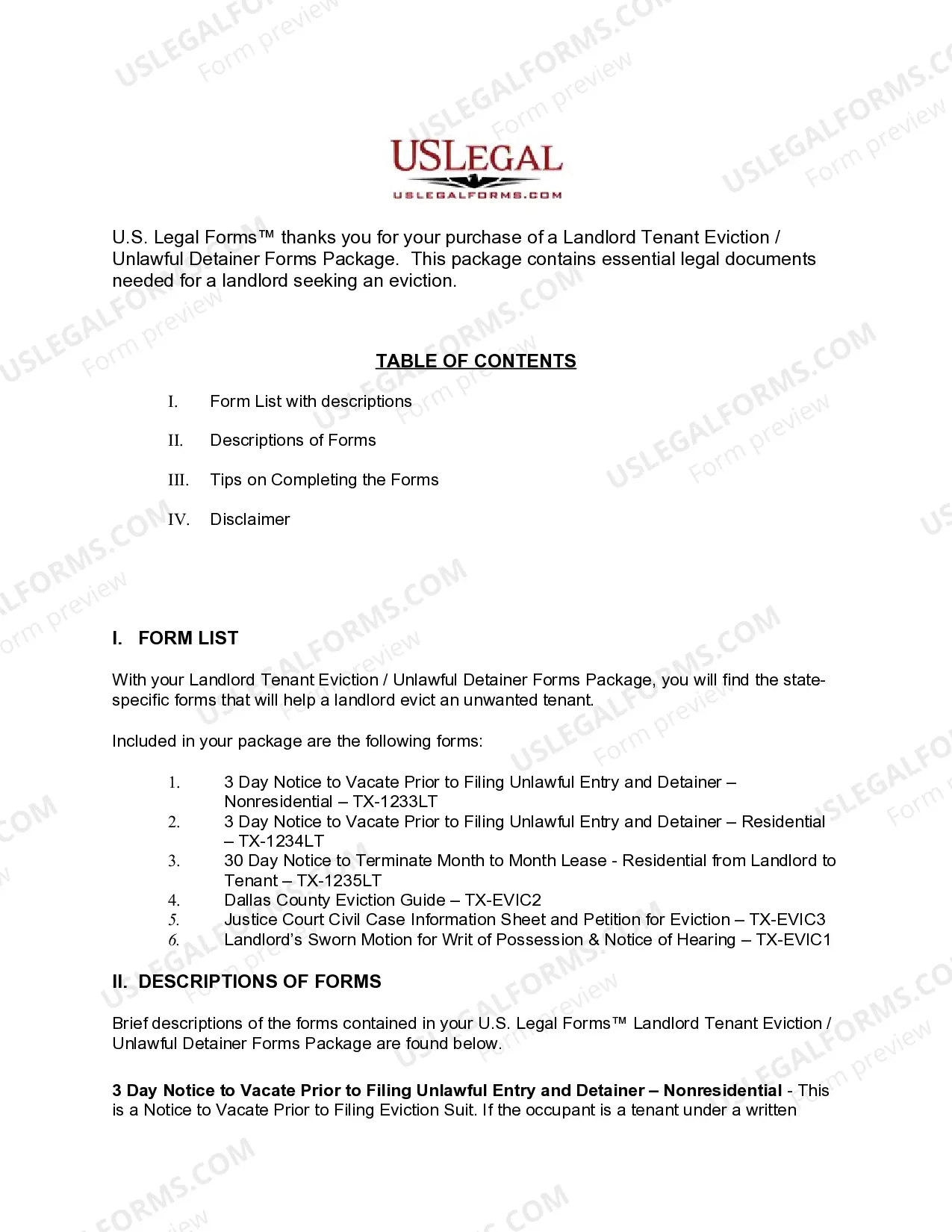
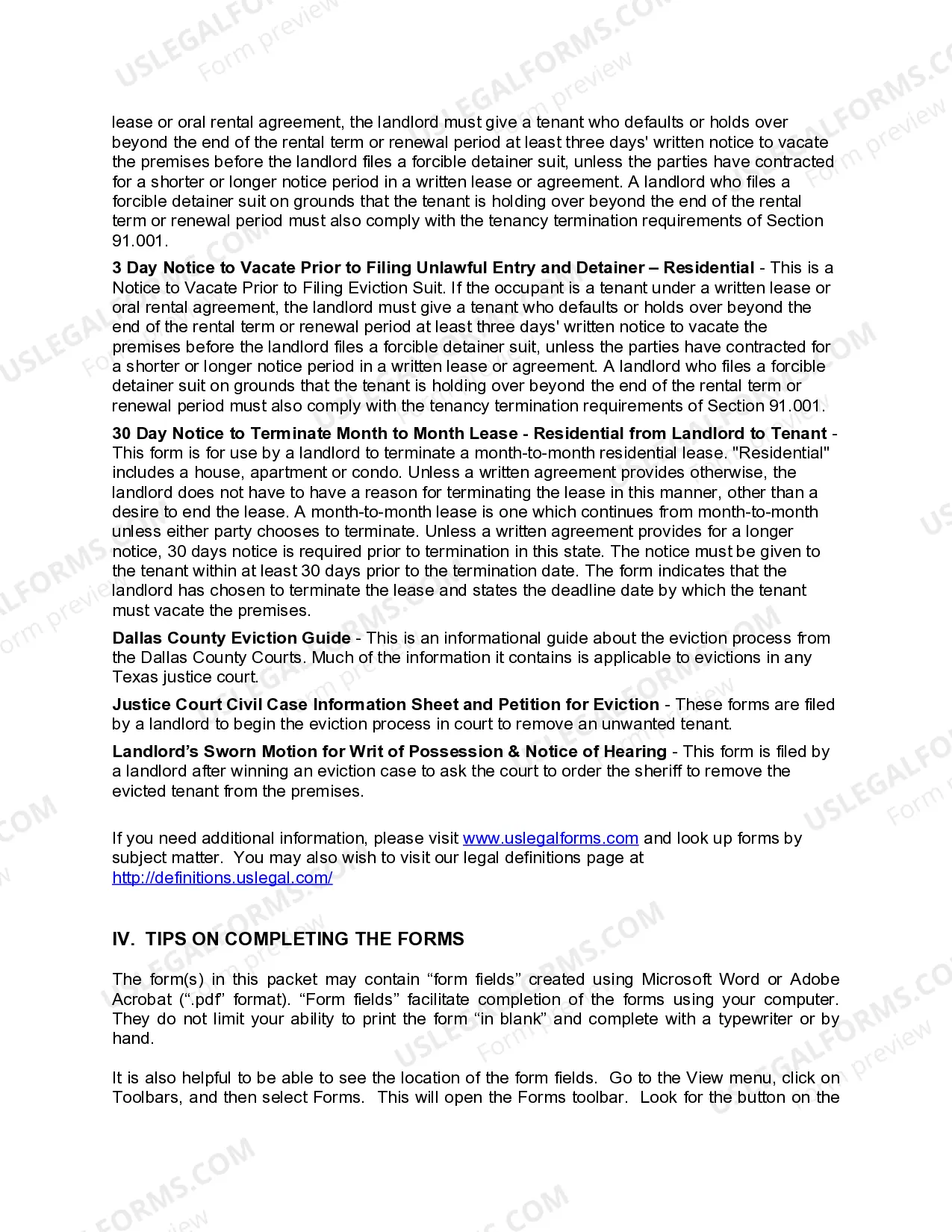
How to fill out Texas Landlord Tenant Eviction / Unlawful Detainer Forms Package?
Creating legal documents from the ground up can occasionally be daunting.
Certain situations may require extensive research and significant financial investment.
If you’re searching for a more straightforward and cost-effective method of preparing Eviction Forms for Family Members or any other documents without unnecessary obstacles, US Legal Forms is always available to assist you.
Our digital library of over 85,000 current legal documents encompasses nearly every facet of your financial, legal, and personal matters.
However, before jumping straight into downloading the Eviction Forms for Family Members, take note of these recommendations: Review the document preview and descriptions to ensure you’ve located the document you need. Verify that the form you select meets the requirements of your state and county. Choose the most suitable subscription option for acquiring the Eviction Forms for Family Members. Download the form, then complete, certify, and print it. US Legal Forms is well-regarded, boasting over 25 years of expertise. Join us now and simplify your form-filling experience!
- With just a few clicks, you can promptly acquire state- and county-specific forms meticulously assembled for you by our legal experts.
- Utilize our platform whenever you require dependable and trustworthy services to swiftly find and download the Eviction Forms for Family Members.
- If you're already familiar with our services and have set up an account, just Log In to your account, select the form, and download it or retrieve it at any time via the My documents tab.
- Don’t have an account? No worries. Setting it up and exploring the library only takes a few minutes.
Form popularity
FAQ
You can evict a tenant in California to move in a family member, but this requires adherence to specific legal procedures. You must provide proper notice and valid reasons for the eviction. To ensure compliance and to streamline the process, consider using Eviction forms for family member, which can guide you through the necessary steps.
The parents give him legal written notice to vacate that conforms to their state law. Then, if he doesn't leave, they file an eviction suit. After they win, they take the writ to the sheriff. The sheriff will forcibly remove him.
You can either evict them with or without cause. If you evict with cause, this means they are in breach of the contract. Some examples of being in breach of the contract include not paying rent, violating pet policies, and damage to the property. If this is the case, you need to give them a three-day notice to vacate.
Some examples of being in breach of the contract include not paying rent, violating pet policies, and damage to the property. If this is the case, you need to give them a three-day notice to vacate. If they do not move out in that time, you can file an eviction lawsuit with the court.
Going to court Head to the Justice of the Peace Court that serves the county in which you reside (a ?J.P. Court,? in Texas lawyer lingo). Fill out a petition for eviction, a case information sheet, and a military status affidavit. The latter two documents need to be notarized. File these with the court.
If there's no lease, and no agreement to pay rent, you can just give them a ?Notice to Quit? that says: ?I hereby demand immediate possession of the premises at (your address).? If they still don't leave, you must then take step 2 of any eviction case?a court case.