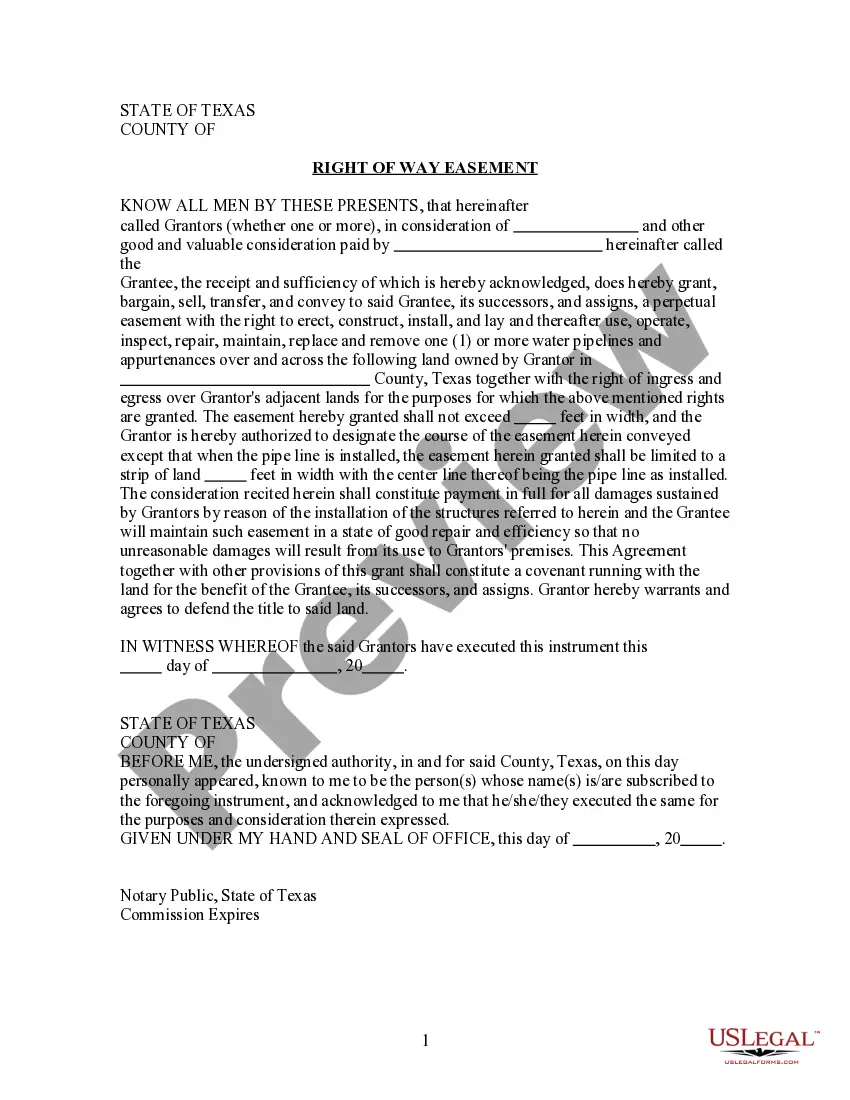
Water Line Easement Rights Without Permit
Description
Get your form ready online
Our built-in tools help you complete, sign, share, and store your documents in one place.
Make edits, fill in missing information, and update formatting in US Legal Forms—just like you would in MS Word.
Download a copy, print it, send it by email, or mail it via USPS—whatever works best for your next step.
Sign and collect signatures with our SignNow integration. Send to multiple recipients, set reminders, and more. Go Premium to unlock E-Sign.
If this form requires notarization, complete it online through a secure video call—no need to meet a notary in person or wait for an appointment.
We protect your documents and personal data by following strict security and privacy standards.

Make edits, fill in missing information, and update formatting in US Legal Forms—just like you would in MS Word.

Download a copy, print it, send it by email, or mail it via USPS—whatever works best for your next step.

Sign and collect signatures with our SignNow integration. Send to multiple recipients, set reminders, and more. Go Premium to unlock E-Sign.

If this form requires notarization, complete it online through a secure video call—no need to meet a notary in person or wait for an appointment.

We protect your documents and personal data by following strict security and privacy standards.
Looking for another form?

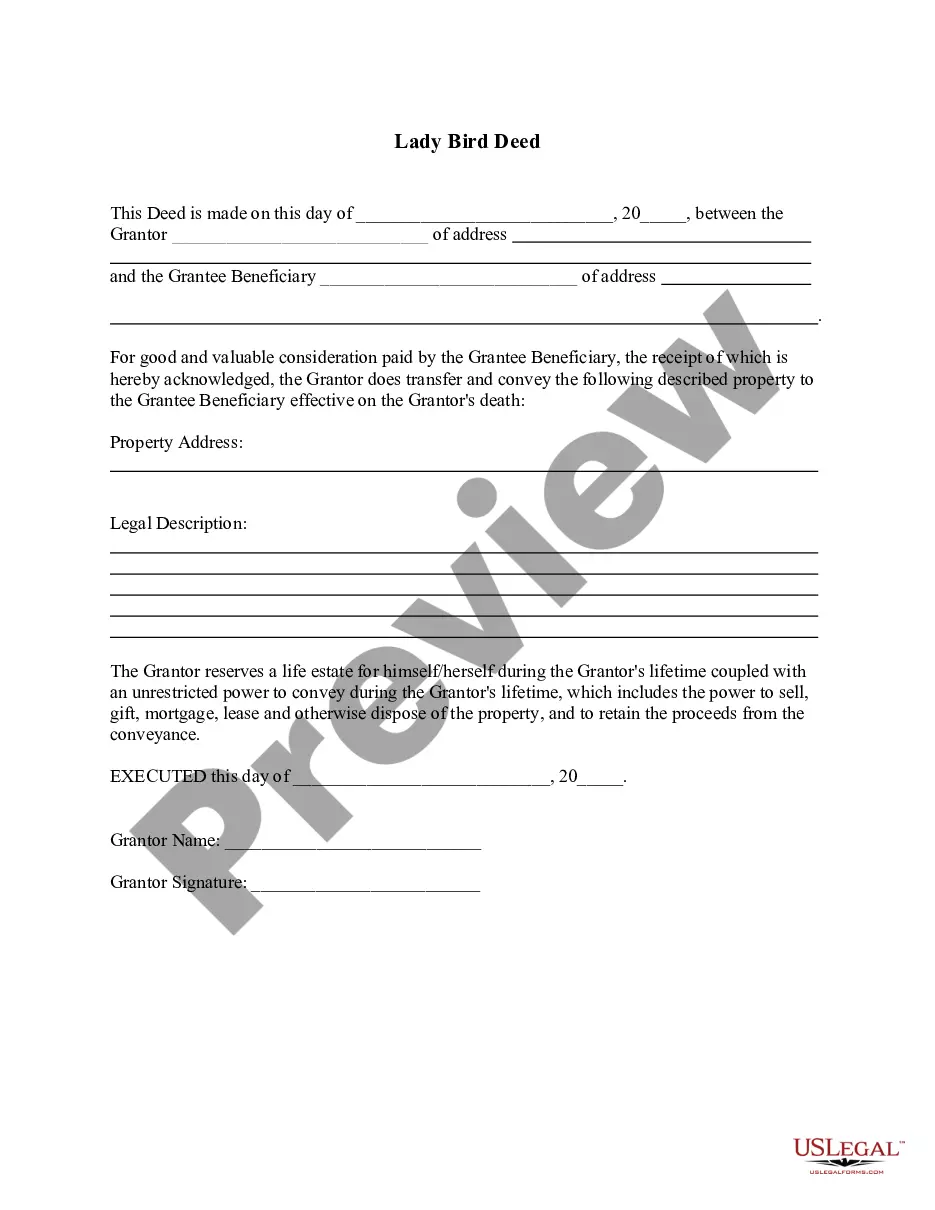

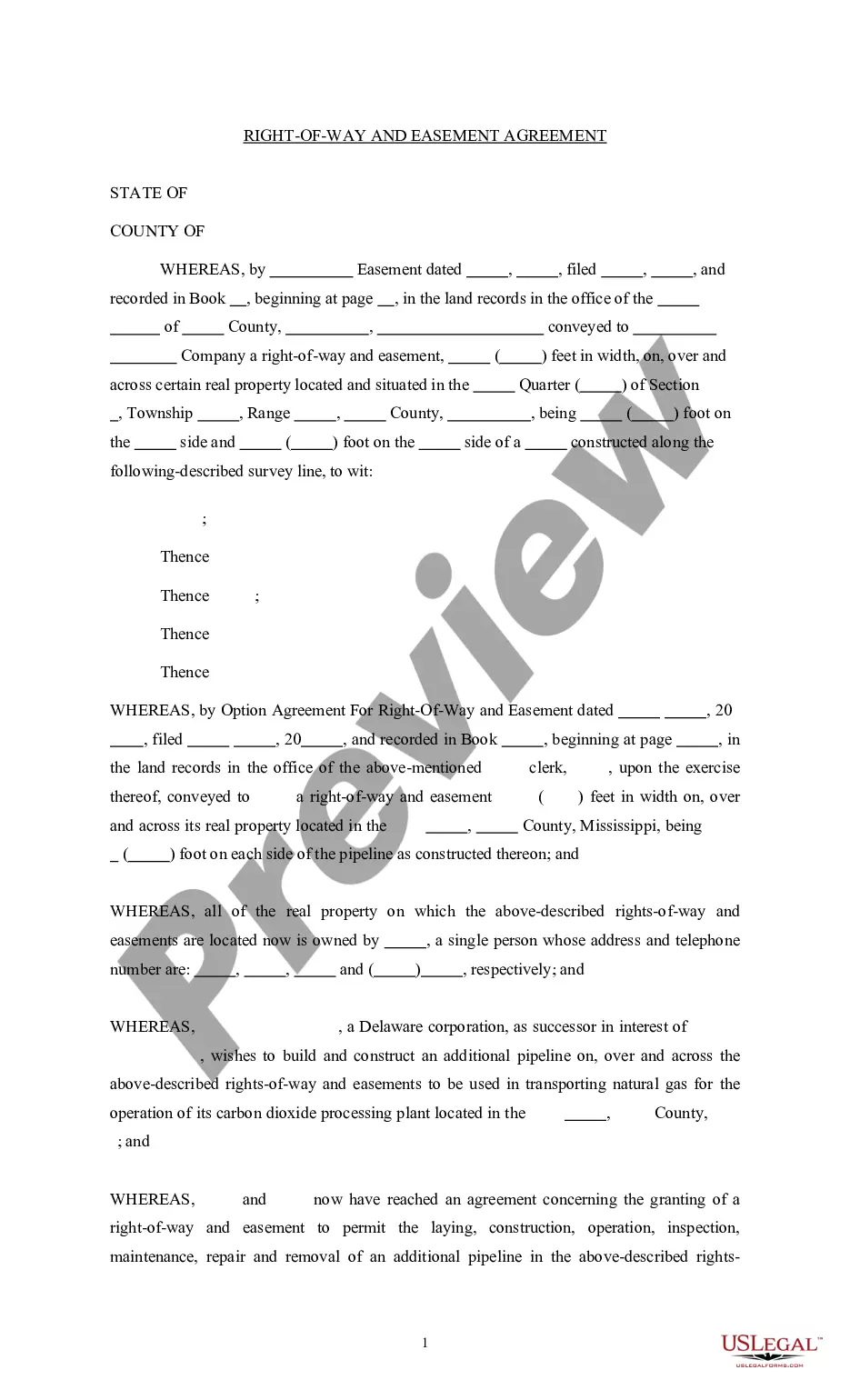
How to fill out Texas Right Of Way Easement For Water Pipeline Or Pipelines?
It’s clear that you cannot become a legal expert instantly, nor can you swiftly learn how to draft Water Line Easement Rights Without Permit without a particular set of expertise.
Drafting legal documents is a lengthy undertaking that necessitates specialized education and skills.
So why not entrust the creation of the Water Line Easement Rights Without Permit to the experts.
You can regain access to your documents via the My documents tab whenever you wish. If you’re a current client, you can simply Log In and locate and download the template from the same tab.
Regardless of the reasons for your documentation—be it financial, legal, or personal—our website has everything you need. Try US Legal Forms today!
- Locate the document you require using the search bar at the top of the webpage.
- View it (if this option is available) and examine the accompanying description to determine if Water Line Easement Rights Without Permit is what you seek.
- Restart your search if you require a different document.
- Create a complimentary account and select a subscription plan to purchase the document.
- Select Buy now. After completing the payment, you can download the Water Line Easement Rights Without Permit, complete it, print it, and send or mail it to the relevant individuals or organizations.
Form popularity
FAQ
Water rights are not classified as easements, though they can share similarities. Water rights grant legal access to water resources, while easements allow access to land for specific uses. Knowing the difference is essential for understanding your water line easement rights without permit. For detailed guidance, platforms like uslegalforms can help you navigate these legal definitions.
The three common types of easements are appurtenant, in gross, and prescriptive. Appurtenant easements benefit a specific piece of land, in gross easements benefit an individual rather than a property, and prescriptive easements arise through prolonged use without permission. Understanding these types can clarify your water line easement rights without permit. If you're unsure, consider seeking help from legal professionals.
Water rights can sometimes function like easements, particularly when they allow access to water sources on another property. However, they are distinct legal concepts. It’s essential to identify how your water line easement rights without permit apply in your situation to avoid potential conflicts. Legal advice can provide a clearer understanding of these nuances.
No, a right and an easement are not the same. A right often refers to the legal entitlement to use a resource, while an easement specifically grants permission to use another person's property for a certain purpose. Understanding the distinction can help you navigate your water line easement rights without permit more effectively. Always seek legal guidance for clarity on your specific situation.
In California, easements must be established through clear agreements or implied by usage. The owner of the easement has the right to use a portion of another person's property for a specific purpose, such as accessing water lines. It’s important to know your water line easement rights without permit to avoid disputes with neighboring property owners. Consulting with a legal expert can help clarify these rules further.
Typically, the property owner holds the water rights associated with their land. However, these rights can vary based on state laws and local regulations. In some cases, water rights can be sold or transferred separately from the property itself. Understanding your water line easement rights without permit is crucial for managing these rights effectively.
To fill out an easement form, start by collecting the necessary information about the properties involved, including addresses and legal descriptions. Clearly state the rights being granted, the purpose of the easement, and any pertinent conditions. After both parties review and agree on the terms, ensure that the form is signed and properly recorded. Utilizing uslegalforms can help streamline this process and clarify your water line easement rights without permit.
The requirements for an easement generally include a clear description of the property, the specific rights being granted, and the purpose of the easement. Both parties must agree to the terms, and it often must be in writing to be enforceable. Furthermore, understanding your water line easement rights without permit can aid in establishing these agreements. Using legal resources can help ensure compliance with local laws.
In Minnesota, easements function as legal agreements that allow one party to use another's property for a specific purpose, such as water lines. These agreements typically remain in effect until they are revoked or expire. It's essential to define the terms clearly to avoid disputes later. Being informed about your water line easement rights without permit can help you navigate this process effectively.
Obtaining water rights in Oregon can be a complex process, as it involves various legal and regulatory requirements. Applicants must demonstrate beneficial use and may need to navigate permits and applications. While it may seem challenging, understanding your water line easement rights without permit can help clarify the situation. Consulting legal resources or experts can provide additional clarity.