Fair Credit Reporting Act Texas With Background Checks
Description
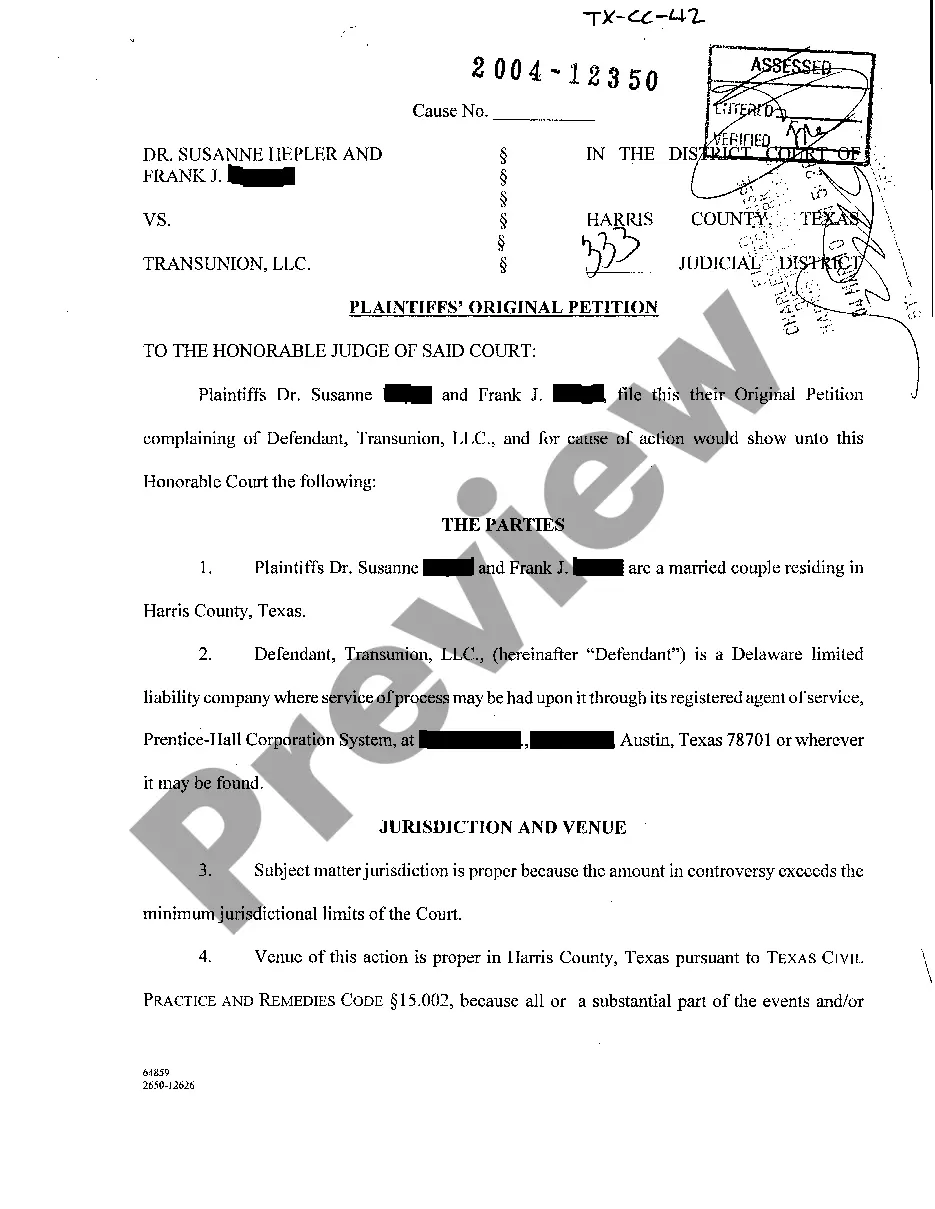
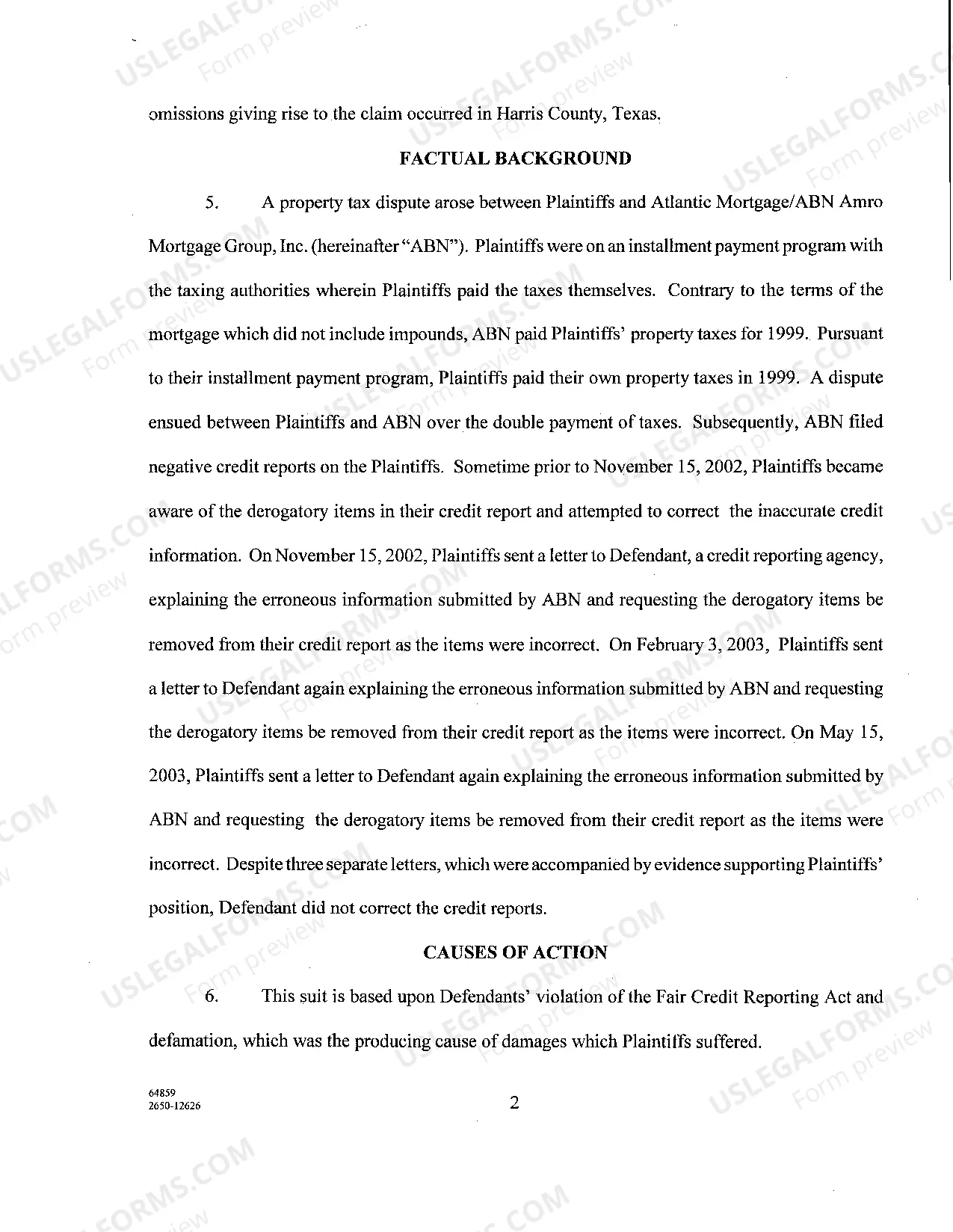
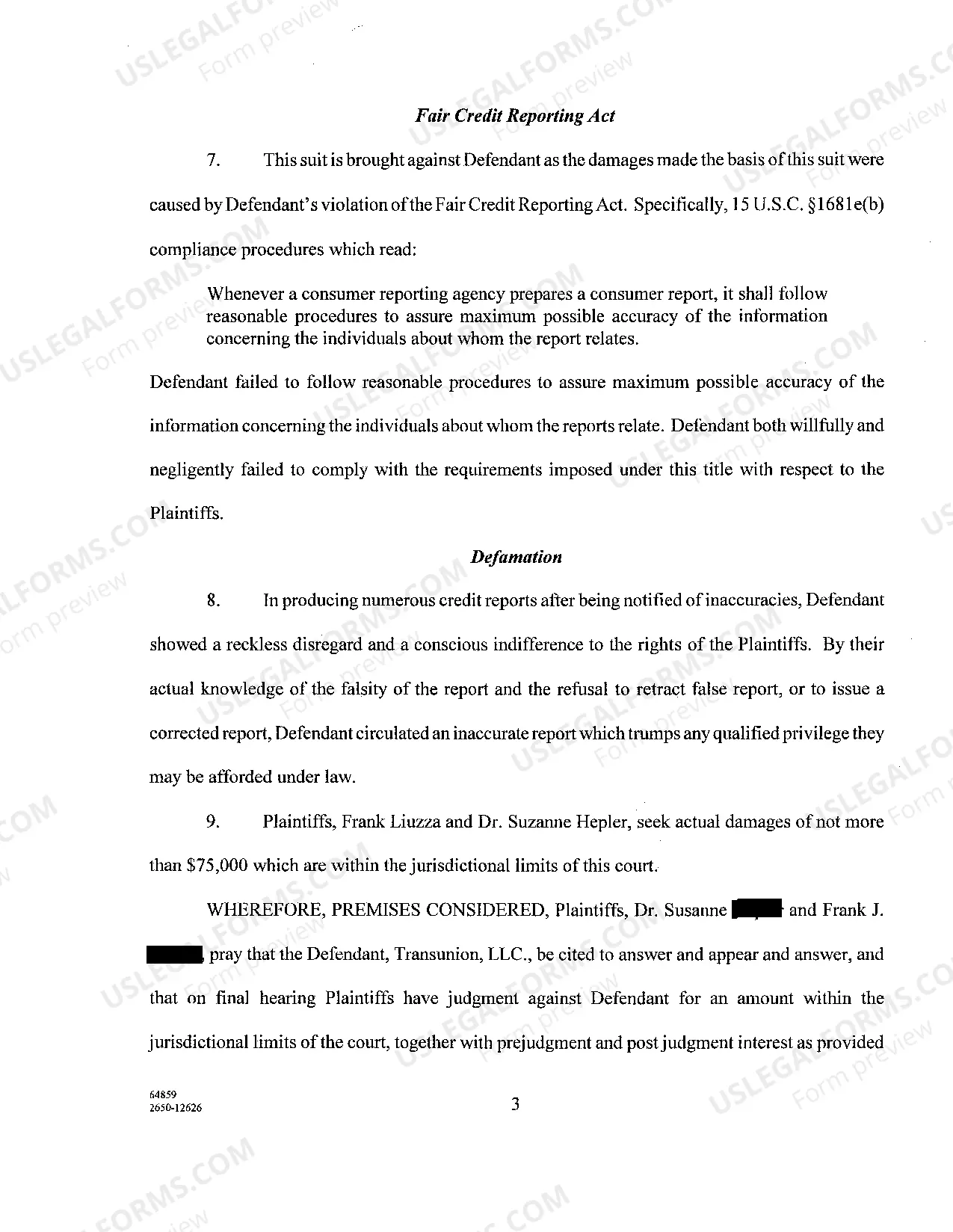
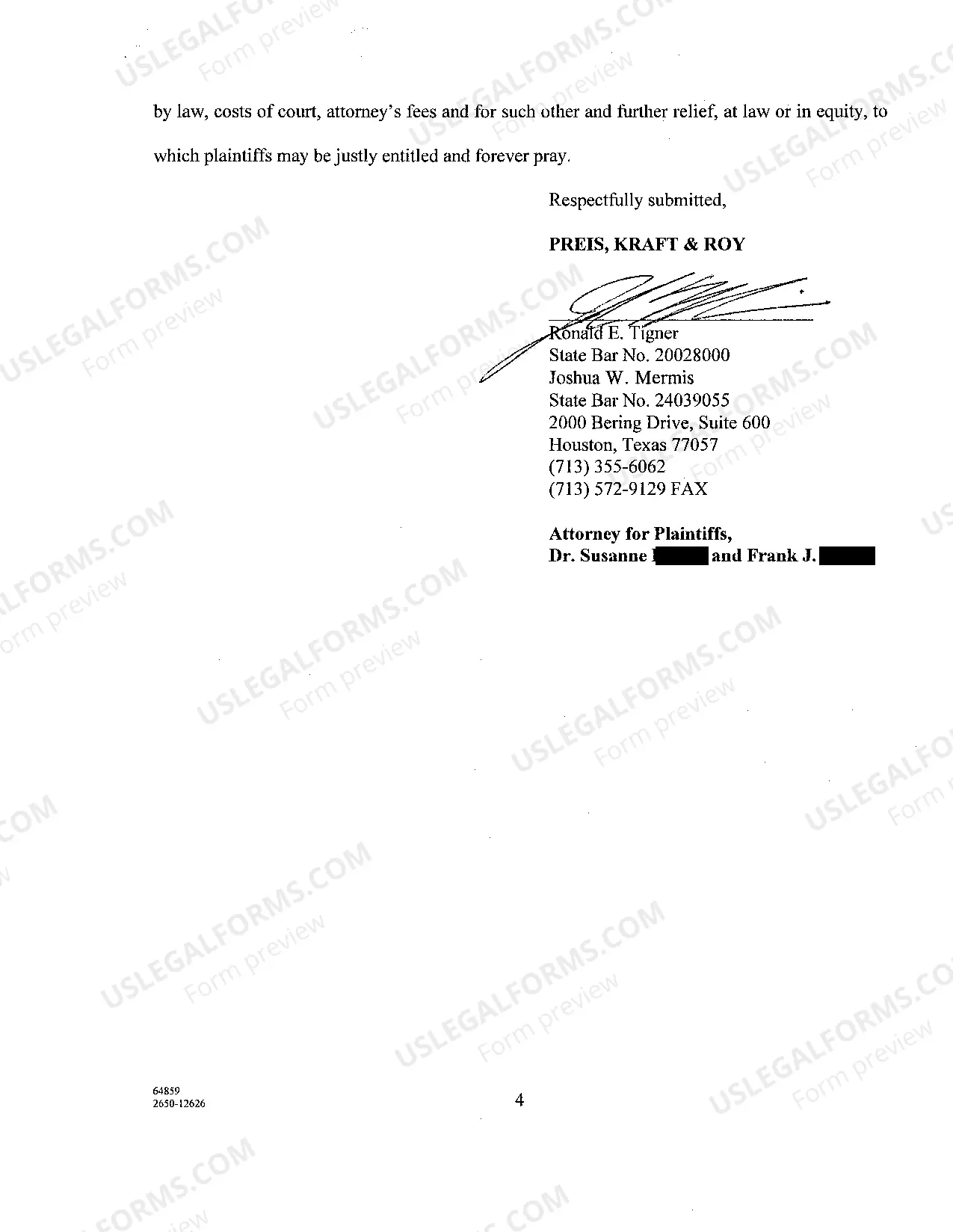
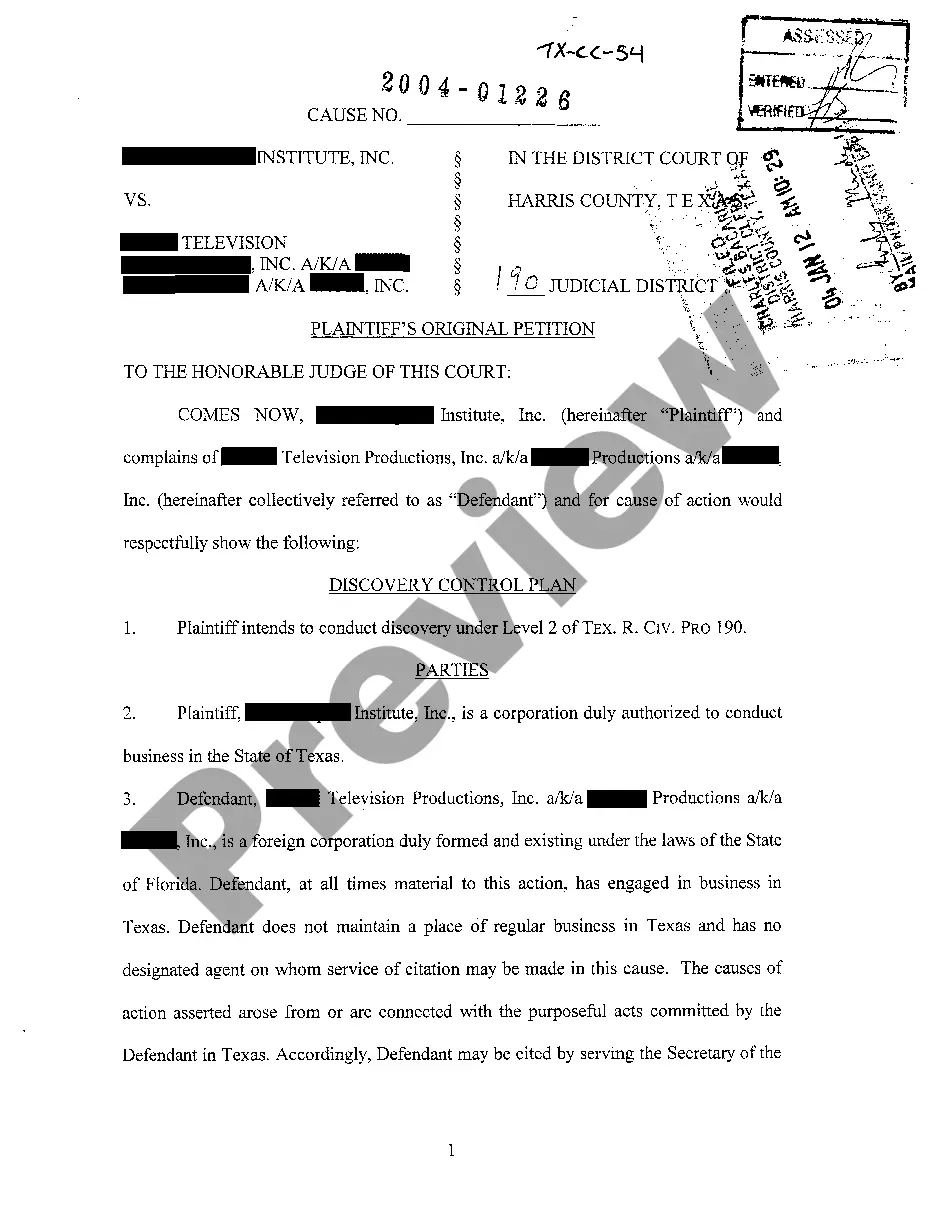










How to fill out Texas Plaintiff's Original Petition Regarding Fair Credit Reporting Act?
How to locate official legal documents that align with your state laws and complete the Fair Credit Reporting Act Texas With Background Checks without hiring a lawyer.
Numerous online services provide templates to address various legal matters and requirements. However, determining which of the accessible samples meet both your specific needs and legal standards may take some time.
US Legal Forms is a trustworthy platform that assists you in finding legal documents crafted in accordance with the latest updates in state law, helping you save costs on legal support.
If you do not have an account with US Legal Forms, then follow the guide below: Review the page you've opened and confirm whether the form meets your requirements.
- US Legal Forms is not just an ordinary web directory.
- It comprises over 85k validated templates for various business and personal situations.
- All documents are categorized by area and state to expedite your searching process.
- Additionally, it incorporates robust solutions for PDF editing and eSignature, allowing users with a Premium subscription to effortlessly complete their documents online.
- It requires minimal time and effort to obtain the necessary documents.
- If you already possess an account, sign in and verify that your subscription is currently active.
- Download the Fair Credit Reporting Act Texas With Background Checks by clicking the related button next to the file name.
Form popularity
FAQ
Yes, you can be denied a job due to bad credit, particularly if the role involves financial duties or trustworthiness. Employers must follow the Fair Credit Reporting Act Texas with background checks and inform you if your credit history affects their hiring decision. This transparency allows you to learn from the situation and improve your financial standing.
There is no universal minimum credit score required for employment, as this varies by employer and industry. Some employers might set their standards, while others might focus on the overall context of your credit history. Remember, the Fair Credit Reporting Act Texas with background checks ensures your right to understand how your credit history impacts your job application.
To run a Texas background check, you can use the Texas Department of Public Safety's online services or third-party platforms. These sources provide comprehensive information, including criminal records and financial history. You may also explore USLegalForms for resources that simplify obtaining background check reports and understanding the Fair Credit Reporting Act Texas with background checks.
Yes, bad credit can affect your job prospects, especially in positions that require financial responsibility. Employers may view your credit report as a reflection of your reliability. Under the Fair Credit Reporting Act Texas with background checks, employers must inform you if they decide not to hire you based on your credit history, giving you insight into the decision.
A level 2 background check in Texas typically reviews records for the past seven years. This includes criminal history and other significant information, per the standards set by the Fair Credit Reporting Act Texas with background checks. Understanding these limits empowers you to manage your history more effectively during job applications.
To work in a school in Texas, certain disqualifying factors include felony convictions, specific misdemeanor charges, and a marked lack of professional qualifications. Schools heavily rely on background checks under the Fair Credit Reporting Act Texas with background checks to safeguard student welfare. It's crucial for applicants to be aware of these guidelines when seeking employment in educational settings.
Several types of information can show up on a Texas background check, including criminal records, credit reports, employment history, and education verification. The specifics depend on the depth of the check being conducted. Utilizing tools that align with the Fair Credit Reporting Act Texas with background checks helps make the process fair and accurate.
Background checks are indeed legal in Texas, but there are regulations in place. Under the Fair Credit Reporting Act Texas with background checks, employers must obtain your consent before conducting a check. This ensures transparency and allows you the opportunity to understand what information may be disclosed about you.
Yes, in Texas, employers can consider your credit history when making hiring decisions. However, under the Fair Credit Reporting Act Texas with background checks, they must inform you if they use your credit report against you. It's important to note that employers typically only check credit reports for jobs that require financial responsibility, not for every position.
In Texas, several factors can disqualify someone from being a caregiver. These include a history of criminal activity, especially violence or abuse, and certain health-related issues that may affect caregiving ability. The Fair Credit Reporting Act Texas with background checks plays a key role in reviewing applicants to ensure they meet the necessary standards for this vital position.
