Texas Squatter Law
Description
Get your form ready online
Our built-in tools help you complete, sign, share, and store your documents in one place.
Make edits, fill in missing information, and update formatting in US Legal Forms—just like you would in MS Word.
Download a copy, print it, send it by email, or mail it via USPS—whatever works best for your next step.
Sign and collect signatures with our SignNow integration. Send to multiple recipients, set reminders, and more. Go Premium to unlock E-Sign.
If this form requires notarization, complete it online through a secure video call—no need to meet a notary in person or wait for an appointment.
We protect your documents and personal data by following strict security and privacy standards.

Make edits, fill in missing information, and update formatting in US Legal Forms—just like you would in MS Word.

Download a copy, print it, send it by email, or mail it via USPS—whatever works best for your next step.

Sign and collect signatures with our SignNow integration. Send to multiple recipients, set reminders, and more. Go Premium to unlock E-Sign.

If this form requires notarization, complete it online through a secure video call—no need to meet a notary in person or wait for an appointment.

We protect your documents and personal data by following strict security and privacy standards.
Looking for another form?








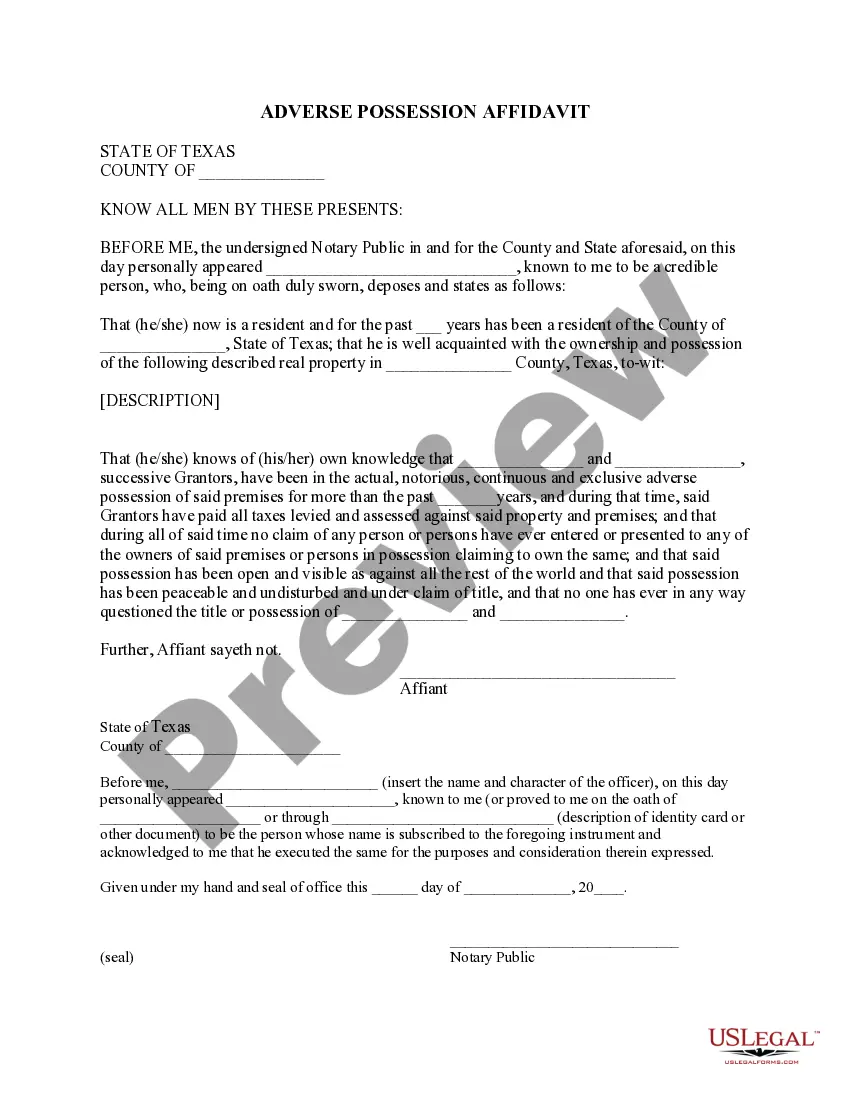
How to fill out Texas Adverse Possession Affidavit - Squatters Rights?
- If you’re a returning user, log into your account and check your subscription status. Ensure it's valid to proceed.
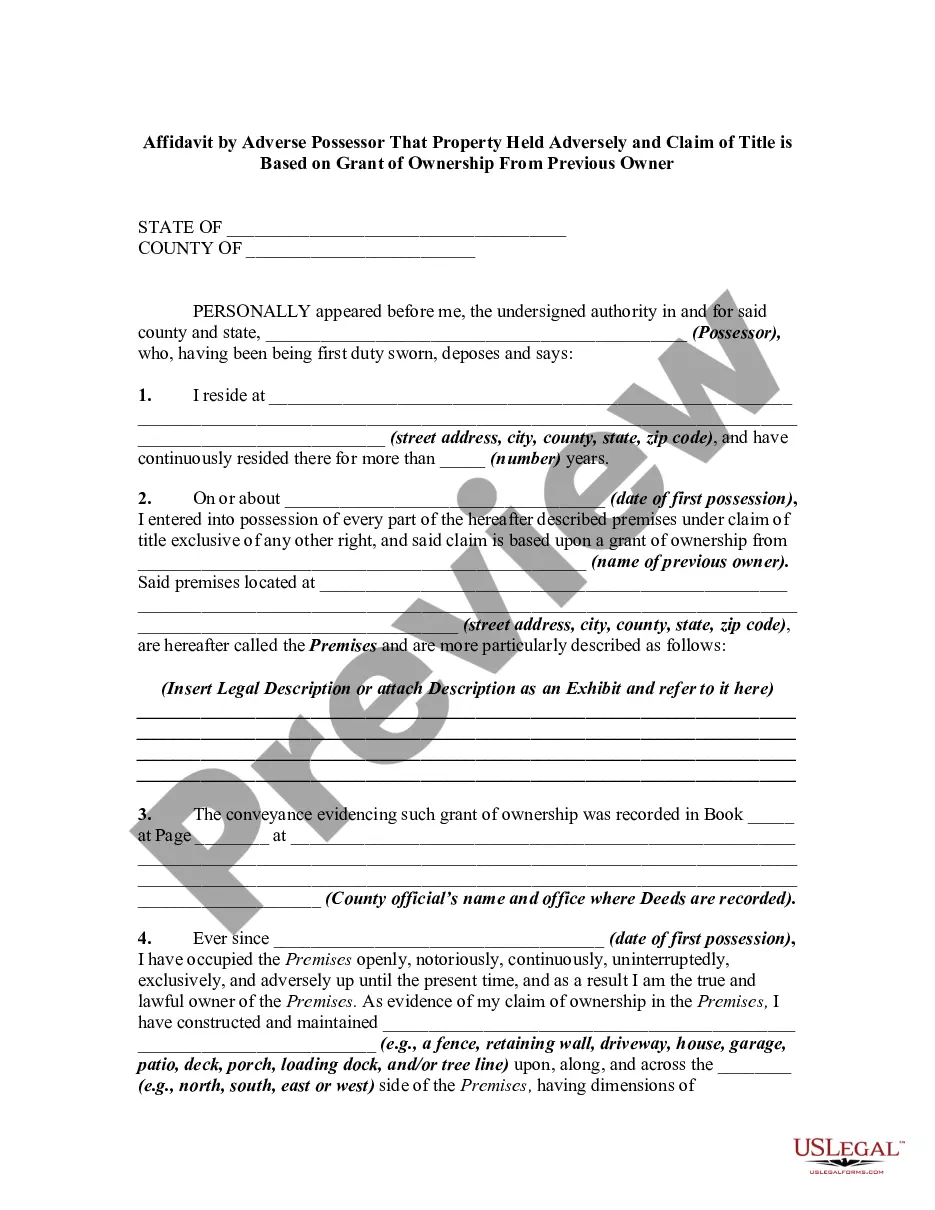
- For new users, start by checking the Preview mode and form description of the Texas squatter law template to confirm it meets your local requirements.
- If the template doesn't suit your needs, utilize the Search tab to explore other options that may be a better fit.
- Once you've selected the appropriate document, click the Buy Now button and choose your desired subscription plan. You’ll need to register an account to unlock full access.
- Complete your purchase by entering your payment details via credit card or PayPal.
- After payment, download your document. You can always access it later through the My Forms section.
With US Legal Forms, you gain access to over 85,000 editable and fillable legal forms, more than any competitor offers at a similar price. Our platform not only saves you time but enhances your understanding of legal matters.
Empower yourself with the right legal tools today. Start using US Legal Forms to navigate Texas squatter law efficiently!
Form popularity
FAQ
To potentially gain legal ownership of a house in Texas through squatter rights, you generally must occupy the property for at least 10 years, as outlined in the Texas squatter law. The key factor is that your occupancy must be open, notorious, and without the property owner's permission. It’s crucial to maintain good documentation of your occupancy. For those navigating these complex legal waters, uslegalforms can provide valuable resources and guidance.
In Texas, the shortest time for squatters to claim rights is typically around 10 years under the Texas squatter law. This period allows trespassers to gain ownership of a property through continuous and undisputed possession. However, the specifics can vary depending on individual circumstances. It’s essential to understand the legal nuances, as squatters must meet certain requirements to establish their rights.
In Texas, an individual may be regarded as a squatter after occupancy without permission from the property owner begins. This typically occurs when a person enters and resides in a property with no lease agreement or consent. While there isn’t a specific duration defined to label someone as a squatter, establishing continuous occupancy over a specific time is essential for asserting rights. Therefore, it’s important to understand the implications of the Texas squatter law.
Forcibly removing a squatter is generally not permitted under the Texas squatter law. Property owners must legally evict squatters through the judicial process, which involves filing an eviction lawsuit. Attempting to physically remove the squatter can lead to legal repercussions for the property owner. Following legal procedures ensures that your rights—and the rights of the squatter—are respected.
Under the Texas squatter law, the minimum time required to establish squatters rights is typically ten years. This time frame mandates that you occupy the property continually, without permission from the rightful owner. You should actively demonstrate your possession during this period by maintaining and residing in the property. Understanding this timeframe can greatly impact your claim, so make sure to keep comprehensive records.
To claim squatters rights in Texas under the Texas squatter law, you must occupy the property openly, continuously, and without the permission of the owner. First, ensure that you have lived in the property for a specific duration, which complies with state guidelines. Document your residency by keeping records of your presence, utilities, and personal belongings on the property. Lastly, you may need to file a claim in order to formalize your rights.
Becoming a squatter in Texas generally requires continuous possession of a property for a specific period, often around 10 years, according to Texas squatter law. It's important to occupy the property openly and without hiding your presence. Many factors can influence this timeline, such as ownership disputes and previous property claims. Seeking legal guidance can provide clarity on how to navigate this process effectively.
Yes, you can remove a squatter from your property in Texas, but you must follow legal procedures as set forth in Texas squatter law. Self-help evictions, such as changing locks or using force, are illegal. Instead, start by serving a formal eviction notice and, if necessary, file for eviction in court. Understanding the legal process ensures a smoother eviction and protects your rights as a property owner.
To establish squatters rights in Texas, you must meet specific conditions outlined by Texas squatter law. These include continuous, open, and notorious possession of the property without the owner's permission. Additionally, paying property taxes may strengthen your claim to squatters rights. Always consider reaching out to legal resources for assistance in navigating these requirements.
In Texas, using deadly force against a squatter is generally not justified unless you genuinely believe your life is in immediate danger. Texas squatter law emphasizes peaceful eviction rather than self-defense against trespassers. Instead of resorting to violence, it's advisable to consult legal experts who can guide you through the eviction processes. Understanding your rights can help protect your property more effectively.