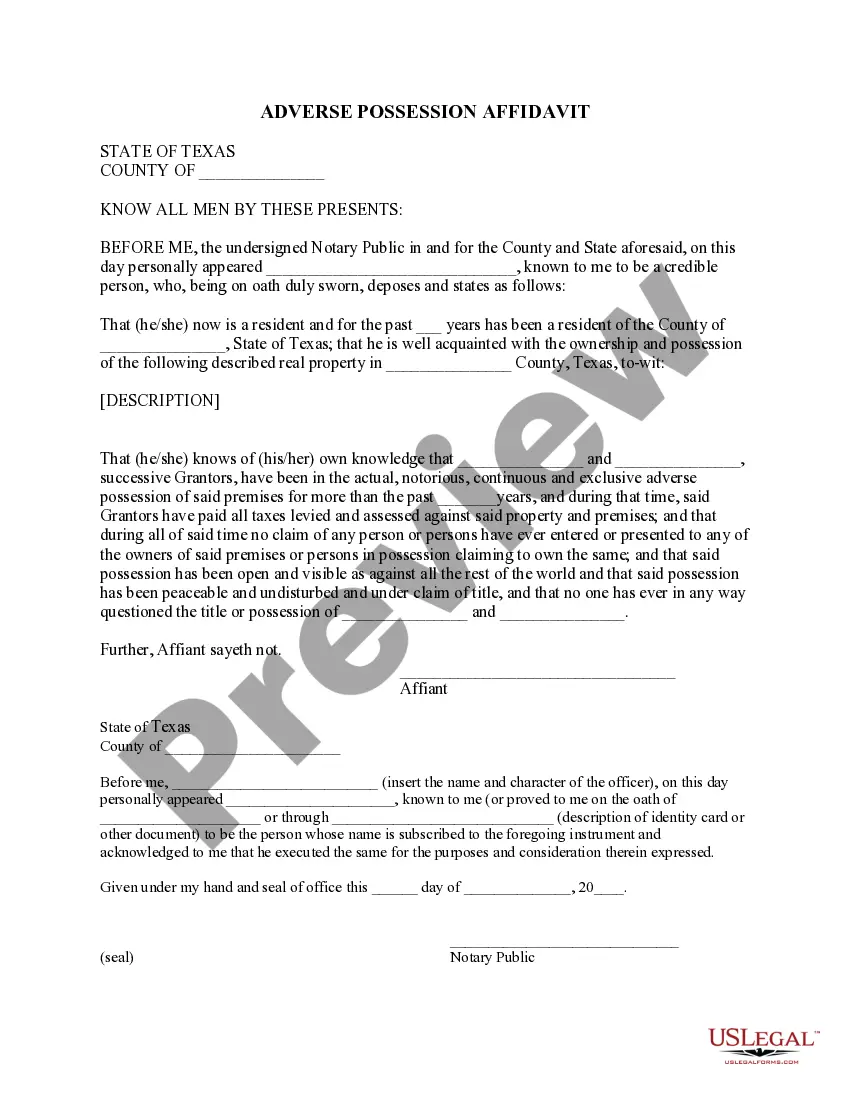
Squatters Rights Texas With A Landlord
Description
Get your form ready online
Our built-in tools help you complete, sign, share, and store your documents in one place.
Make edits, fill in missing information, and update formatting in US Legal Forms—just like you would in MS Word.
Download a copy, print it, send it by email, or mail it via USPS—whatever works best for your next step.
Sign and collect signatures with our SignNow integration. Send to multiple recipients, set reminders, and more. Go Premium to unlock E-Sign.
If this form requires notarization, complete it online through a secure video call—no need to meet a notary in person or wait for an appointment.
We protect your documents and personal data by following strict security and privacy standards.

Make edits, fill in missing information, and update formatting in US Legal Forms—just like you would in MS Word.

Download a copy, print it, send it by email, or mail it via USPS—whatever works best for your next step.

Sign and collect signatures with our SignNow integration. Send to multiple recipients, set reminders, and more. Go Premium to unlock E-Sign.

If this form requires notarization, complete it online through a secure video call—no need to meet a notary in person or wait for an appointment.

We protect your documents and personal data by following strict security and privacy standards.
Looking for another form?

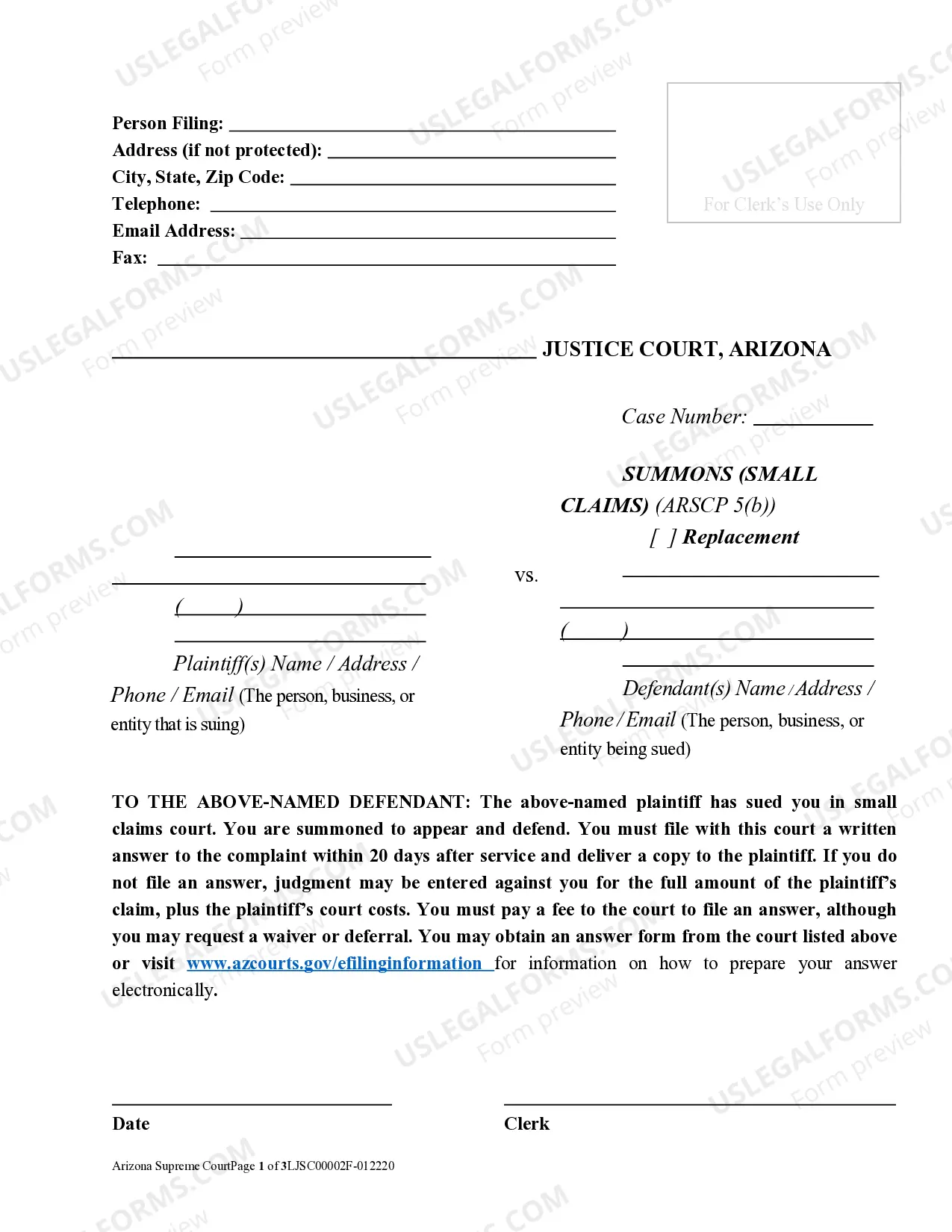

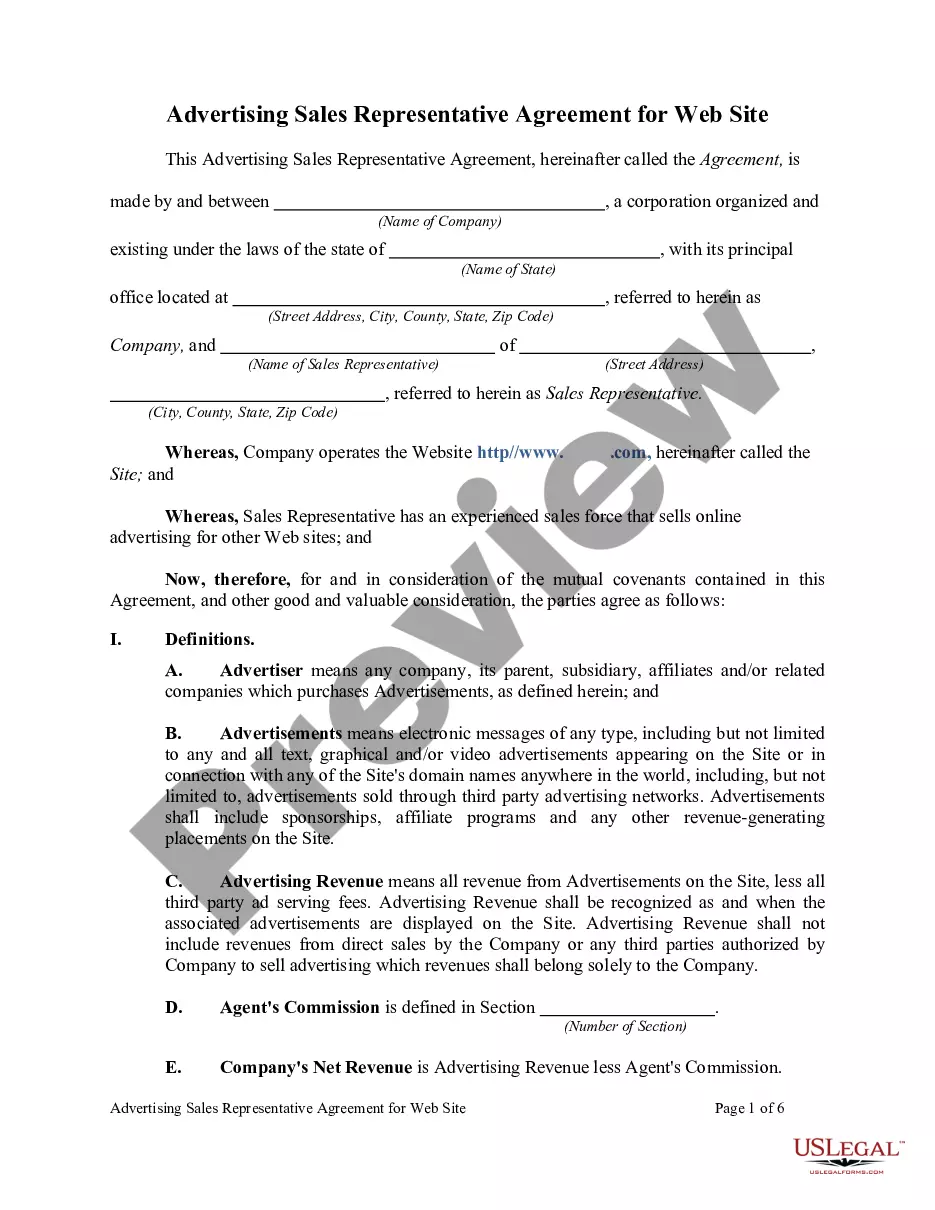






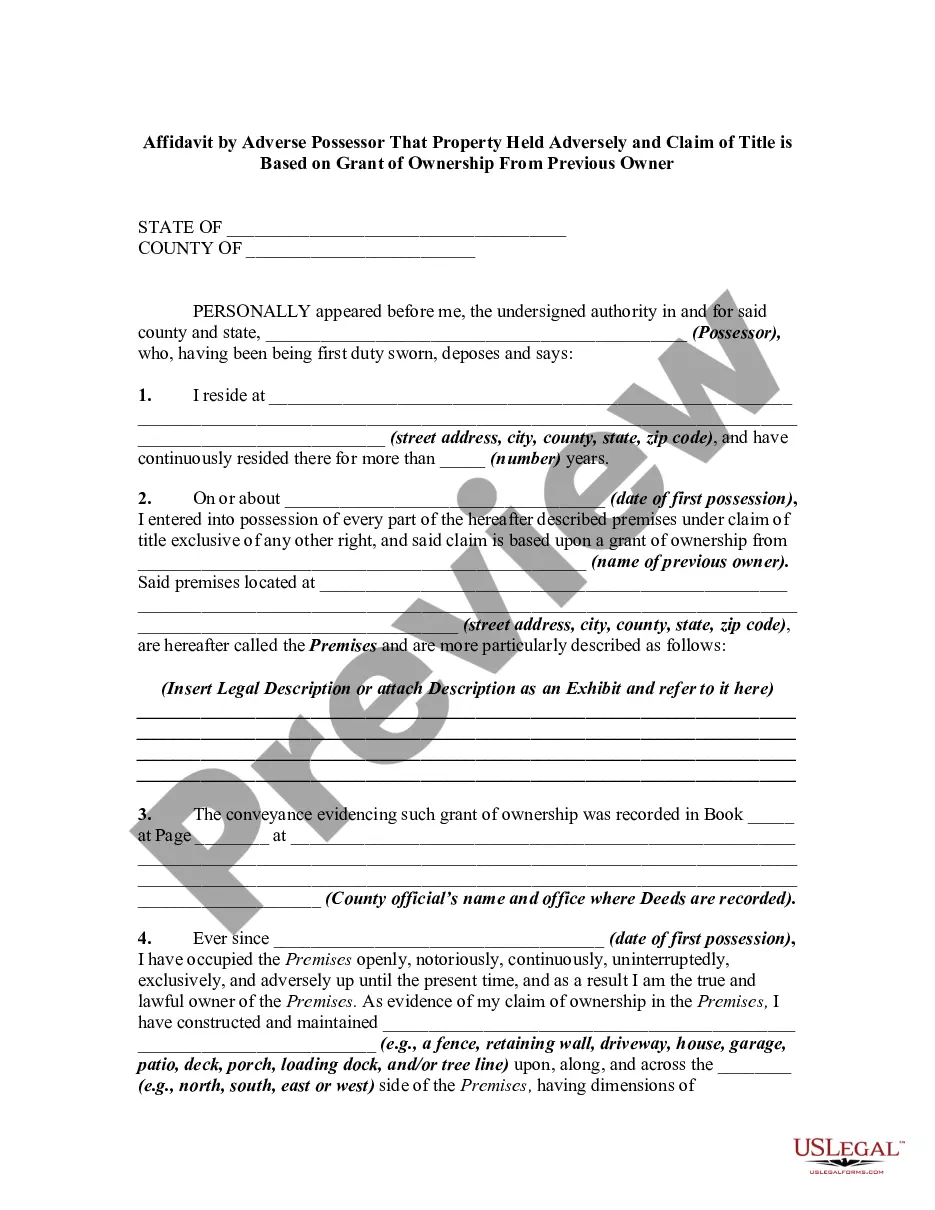
How to fill out Texas Adverse Possession Affidavit - Squatters Rights?
- Log in to your US Legal Forms account if you are a returning user to access your templates. Make sure your subscription is active; if not, renew it according to your plan.
- For first-time users, explore the legal forms available in the preview mode. Verify the chosen document meets your requirements as per local jurisdiction.
- If revisions are needed or the correct document isn't found, utilize the Search function for alternatives. Ensure it accurately addresses your situation.
- Purchase the required document by clicking 'Buy Now' and selecting a subscription plan that fits your needs. Create an account to unlock full access to the library.
- Complete your payment using your credit card or PayPal, ensuring a smooth transaction process.
- Download your selected form to your device. You can find it later in the 'My Forms' section of your profile for future reference.
US Legal Forms offers a robust collection of forms, surpassing competitors in both quality and quantity, making it an excellent choice for those needing legal documentation.
By using US Legal Forms, you can confidently handle squatters rights and other legal matters. Take the first step towards securing your property rights today!
Form popularity
FAQ
To claim squatters rights in Texas, you must occupy the property openly, continuously, and without the owner's consent for at least ten years. It's important to keep evidence of your possession, such as utility bills, to strengthen your claim. This process involves proving that you’ve occupied the land as if you owned it, which can sometimes require legal support. USLegalForms provides resources to assist anyone looking to navigate this process more effectively.
A person is typically considered a squatter in Texas when they occupy someone else's property without permission for a certain period, which is generally ten years for establishing rights. Before that period, they may simply be viewed as trespassers, lacking legal claim to the property. It’s essential for property owners to monitor their property and take action when unauthorized occupation occurs. Services offered by USLegalForms can guide landlords in the proper steps to secure their property.
The shortest time to claim squatters rights in Texas is generally around ten years, as this is the statutory period required for adverse possession. However, exceptions may exist depending on certain situations, including previous owner agreements or specific legal actions. If squatters have established their residency under certain circumstances, their rights may be stronger despite a shorter period of occupation. For landlords facing potential squatters, tools available through USLegalForms can assist in addressing these rights effectively.
In Texas, it typically takes a minimum of ten years of continuous, open, and notorious possession for an individual to establish squatters rights. However, this timeframe can vary based on specific circumstances, such as the property’s ownership and any legal disputes. It's crucial for property owners to stay vigilant and protect their interests, as the longer someone occupies the property without permission, the stronger their claim becomes. Utilizing resources like USLegalForms can help landlords better understand and navigate these complexities.
To evict a squatter in Texas, start by confirming their status as a squatter, ensuring they do not have a legal right to occupy your property. Next, provide a written notice to vacate, giving them three days to leave. If they ignore your notice, file an eviction lawsuit in your local court. Remember, understanding squatters rights in Texas with a landlord helps you navigate this process effectively, and platforms like USLegalForms can provide the necessary legal documents to support your case.
To claim squatters rights in Texas, a person must openly occupy a property, demonstrate continuous possession for 10 years, and have the intent to possess the property. Additionally, the possession must be hostile, meaning it is without the owner's permission. Understanding these criteria is crucial, and platforms like USLegalForms can provide valuable resources to ensure you comply with Texas laws.
In Texas, a squatter may claim legal rights after occupying a property for at least 10 years without the owner's permission. This period is known as adverse possession. However, it's essential to meet specific legal criteria to claim these rights. Consulting with a legal expert can help you navigate these requirements effectively.
The eviction process for squatters in Texas typically takes several weeks to months, depending on various factors. After filing the necessary court documents, a hearing will be scheduled, during which you must present evidence of your ownership. If you win the case, you will obtain a judgment, allowing for the squatter's removal. It's important to prepare thoroughly, and services like USLegalForms can aid in compiling the required documentation.
Yes, as a landlord, you can remove a squatter from your property in Texas, but you must do so legally. This involves providing proper notice and initiating eviction proceedings through the court system. Trying to forcibly remove a squatter without following these steps can lead to legal complications. Utilizing a resource like USLegalForms can help you understand the eviction process.
In Texas, using deadly force against a squatter is not recommended. The law generally focuses on peaceful eviction rather than violence. Instead, it is important to follow proper legal processes for getting a squatter removed from your property. You may want to seek legal advice if you find yourself in such a situation.