Squatters Rights For 30 Days
Description
Get your form ready online
Our built-in tools help you complete, sign, share, and store your documents in one place.
Make edits, fill in missing information, and update formatting in US Legal Forms—just like you would in MS Word.
Download a copy, print it, send it by email, or mail it via USPS—whatever works best for your next step.
Sign and collect signatures with our SignNow integration. Send to multiple recipients, set reminders, and more. Go Premium to unlock E-Sign.
If this form requires notarization, complete it online through a secure video call—no need to meet a notary in person or wait for an appointment.
We protect your documents and personal data by following strict security and privacy standards.

Make edits, fill in missing information, and update formatting in US Legal Forms—just like you would in MS Word.

Download a copy, print it, send it by email, or mail it via USPS—whatever works best for your next step.

Sign and collect signatures with our SignNow integration. Send to multiple recipients, set reminders, and more. Go Premium to unlock E-Sign.

If this form requires notarization, complete it online through a secure video call—no need to meet a notary in person or wait for an appointment.

We protect your documents and personal data by following strict security and privacy standards.
Looking for another form?

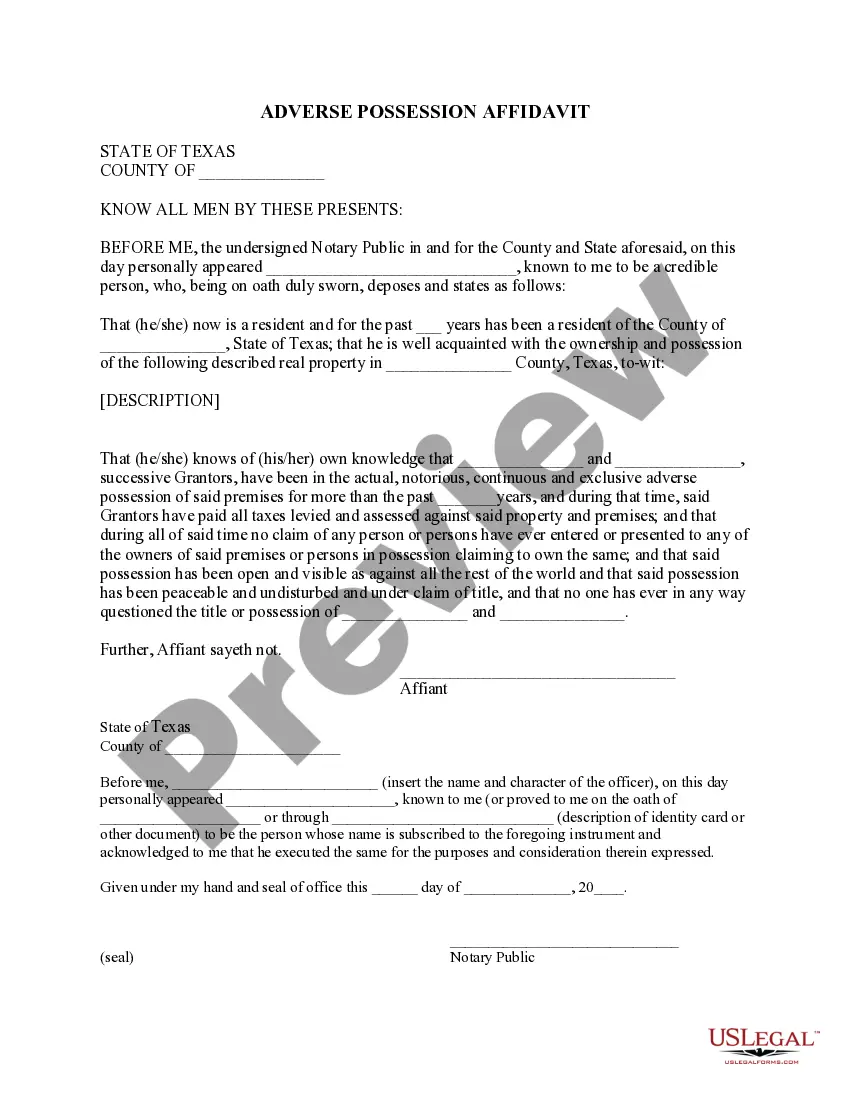
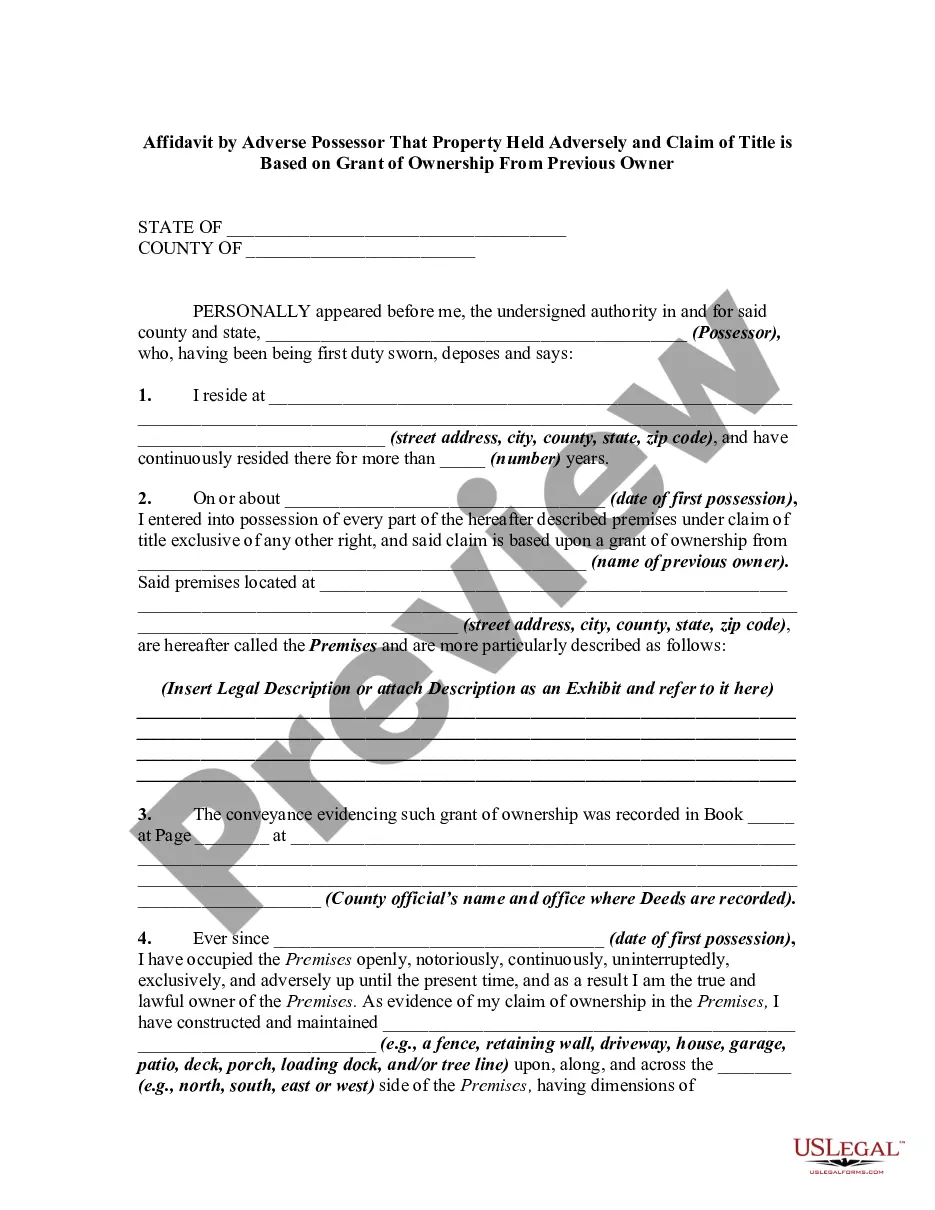
How to fill out Texas Adverse Possession Affidavit - Squatters Rights?
- If you have previously used US Legal Forms, log into your account to download the necessary form template. Ensure your subscription remains active; if not, renew it based on your payment plan.
- For new users, begin by reviewing the Preview mode and the form descriptions to confirm you select a document that fits your needs and complies with local jurisdiction requirements.
- If necessary, use the Search tab to find alternative templates. If you believe you’ve found the right one, continue on to the next step.
- Proceed to purchase the document. Click the Buy Now button and choose your desired subscription plan. Creating an account is essential to access the library’s offerings.
- Complete your order by entering your credit card information or utilizing your PayPal account to finalize payment.
- Once your payment is processed, download your form to your device. You can find it anytime in the My Forms section of your profile.
In conclusion, US Legal Forms simplifies the process of obtaining essential legal documentation for squatters rights for 30 days. With over 85,000 editable forms and the option for expert assistance, you can ensure that your documents are both precise and legally sound.
Start today by accessing US Legal Forms for all your legal document needs!
Form popularity
FAQ
Using lethal force against a squatter in Texas is not advisable and can lead to severe legal consequences. Texas law does allow property owners to defend their property, but lethal force is only permissible under extreme circumstances of immediate threat to life. It's crucial to understand that the best way to handle squatters is through legal means rather than violence.
To remove a squatter in Texas, property owners must follow legal procedures, as simply kicking out a squatter can lead to legal repercussions. Eviction is the proper route, requiring specific steps to ensure compliance with state laws. Utilizing a platform like USLegalForms can provide the necessary legal documents and guidance to navigate this process.
Yes, squatters do have rights in Illinois, similar to many other states. If a person occupies a property without permission for a designated period, they may gain certain legal protections. Being informed about squatters rights for 30 days can help property owners understand their responsibilities and potential legal routes for removal.
In Texas, a squatter can claim rights after occupying a property for a specific time frame, often up to 30 days. This period varies based on the circumstances and can lead to legal challenges for property owners. Knowing the limits of squatters rights empowers homeowners to take preventive measures and protect their property.
Changing the locks on a squatter in Texas can be problematic and may not be a legal solution. If a squatter has established residency, simply changing the locks does not guarantee removal. It’s important to understand the legal process surrounding this situation, as it may involve eviction proceedings to ensure compliance with state laws.
In Texas, squatter's rights refer to the legal protections granted to individuals who occupy a property without the owner's permission. If a squatter resides in a property for a certain period, they may establish legal rights, potentially allowing them to stay for up to 30 days. Understanding these rights is crucial for property owners who wish to protect their investments and avoid complications.
The time it takes to acquire squatters rights in the US varies by state, with many requiring continuous residence for several years before legal claims can be made. If you are interested in squatters rights for 30 days, it's important to know that this duration may not typically lead to legal ownership rights. Some states might allow for shorter periods of possession but may still require additional legal action. Using resources from USLegalForms can help you understand the specific requirements and processes for establishing squatters rights effectively.
While laws differ across the United States, some states are known for having more lenient squatter rights, such as California and Texas, where squatters can often claim rights after a relatively shorter time. If you're looking to establish squatters rights for 30 days, understanding the specific legal landscape of your chosen state is crucial. It is advisable to check local property laws, as they can have significant implications on your situation. Utilizing platforms like USLegalForms can provide comprehensive insights into the easiest states for squatters rights.
Yes, Michigan has established squatter rights under its laws, allowing individuals to claim ownership of a property if they occupy it without the owner's permission for a certain period, typically for 15 years. However, if you are considering claiming squatters rights for 30 days, you should consult local laws and regulations as they may vary. It's essential to understand the legal procedures involved and how they can affect property ownership. Resources like USLegalForms can guide you through the intricacies of squatter rights in Michigan.
Recently, changes have been implemented in Michigan’s squatters laws that reinforce property owners' rights. The law emphasizes the importance of timely eviction procedures to curb long-term squatter claims. However, squatters can still establish rights if they stay longer than 30 days. Staying informed through resources like US Legal Forms can keep you updated on these regulations and provide support.