Adverse Possession Florida
Description
Get your form ready online
Our built-in tools help you complete, sign, share, and store your documents in one place.
Make edits, fill in missing information, and update formatting in US Legal Forms—just like you would in MS Word.
Download a copy, print it, send it by email, or mail it via USPS—whatever works best for your next step.
Sign and collect signatures with our SignNow integration. Send to multiple recipients, set reminders, and more. Go Premium to unlock E-Sign.
If this form requires notarization, complete it online through a secure video call—no need to meet a notary in person or wait for an appointment.
We protect your documents and personal data by following strict security and privacy standards.

Make edits, fill in missing information, and update formatting in US Legal Forms—just like you would in MS Word.

Download a copy, print it, send it by email, or mail it via USPS—whatever works best for your next step.

Sign and collect signatures with our SignNow integration. Send to multiple recipients, set reminders, and more. Go Premium to unlock E-Sign.

If this form requires notarization, complete it online through a secure video call—no need to meet a notary in person or wait for an appointment.

We protect your documents and personal data by following strict security and privacy standards.
Looking for another form?

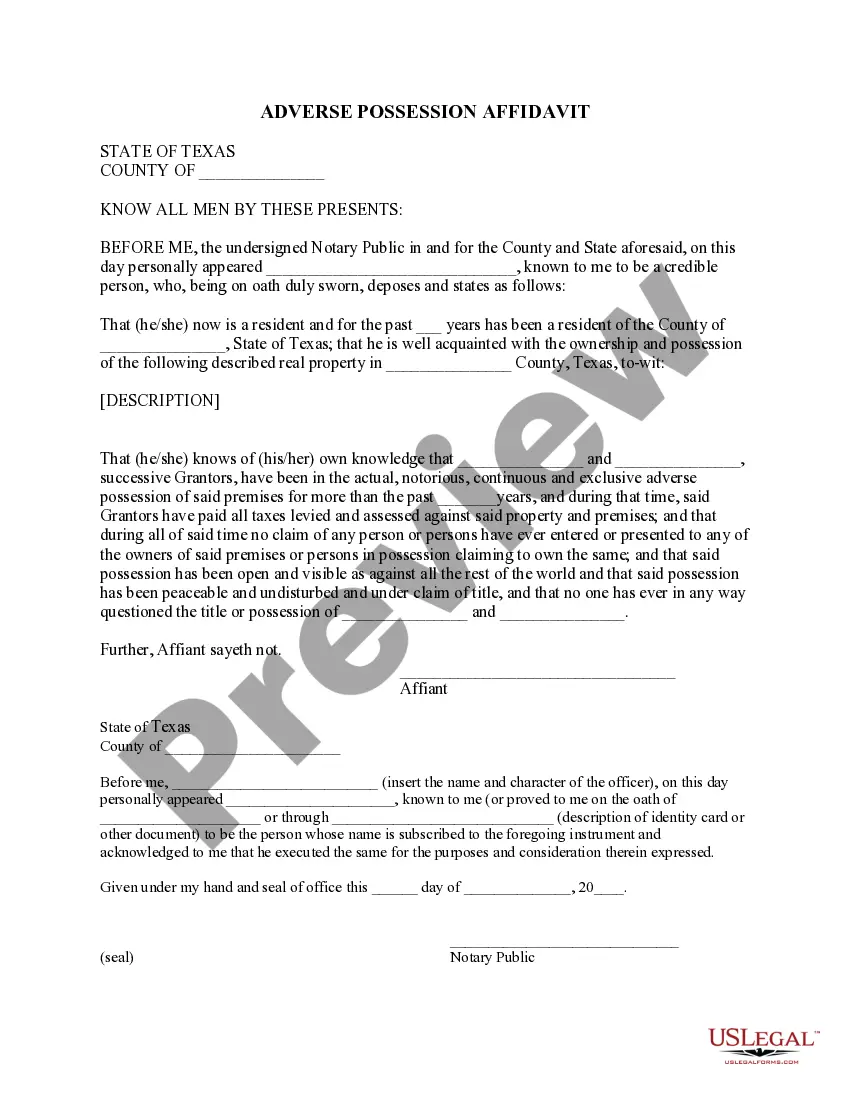
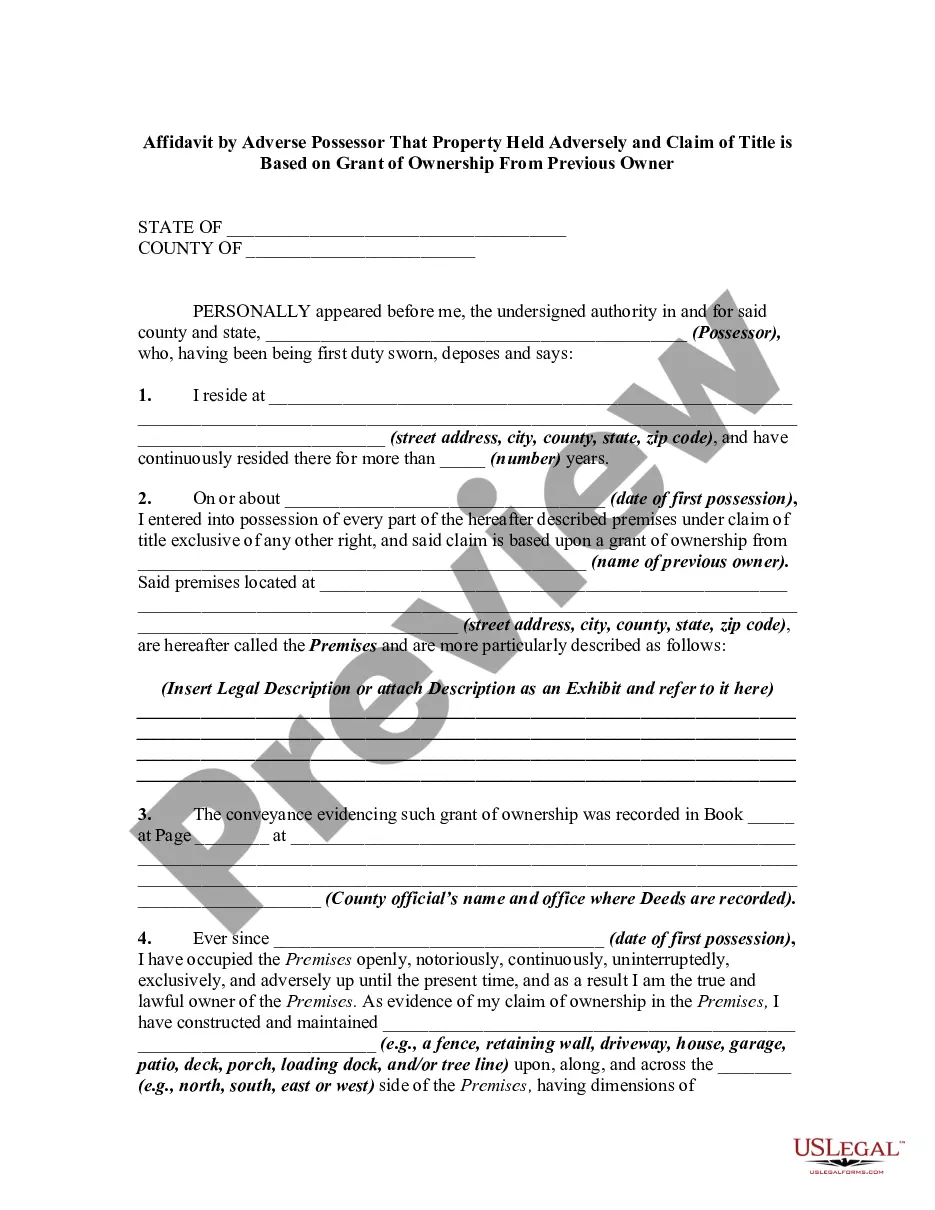
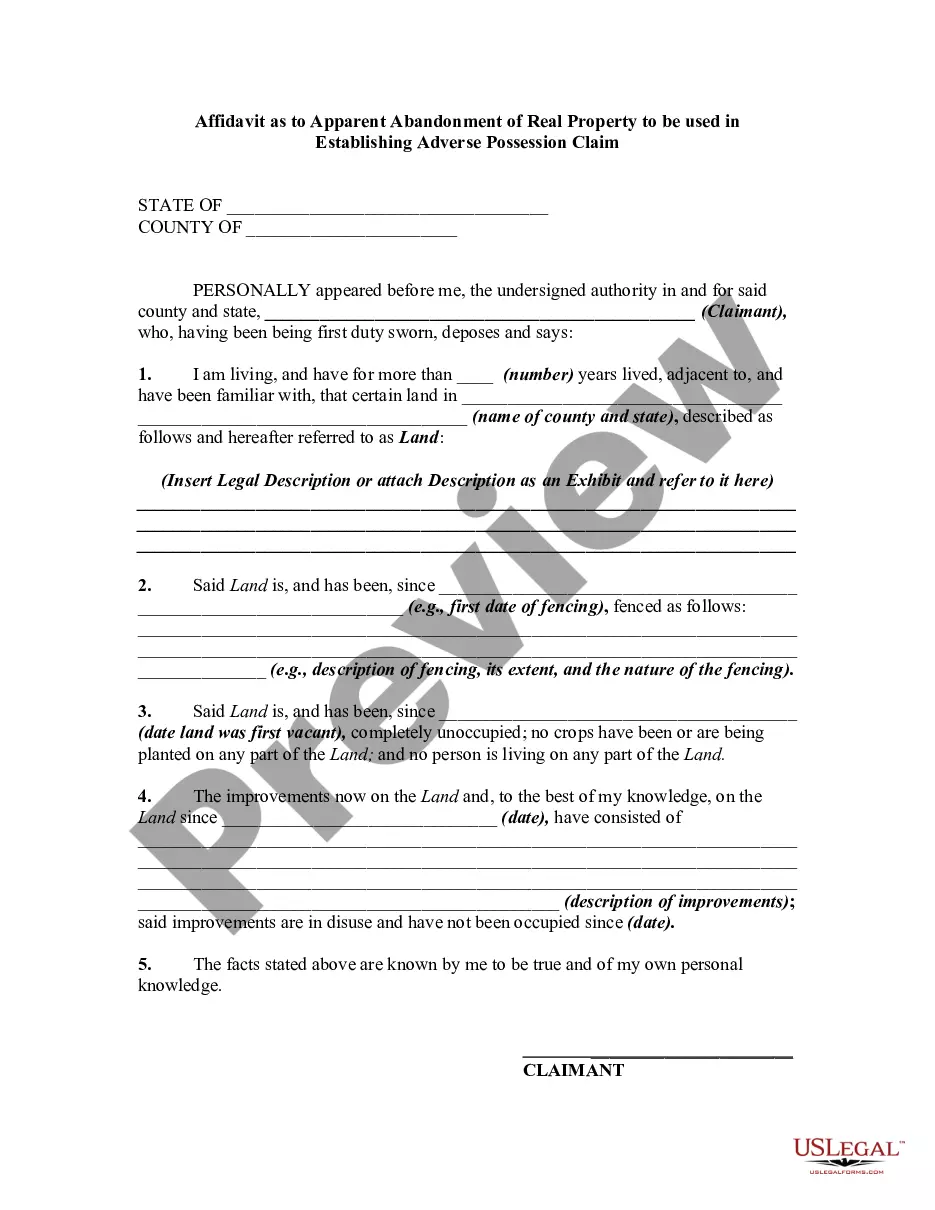
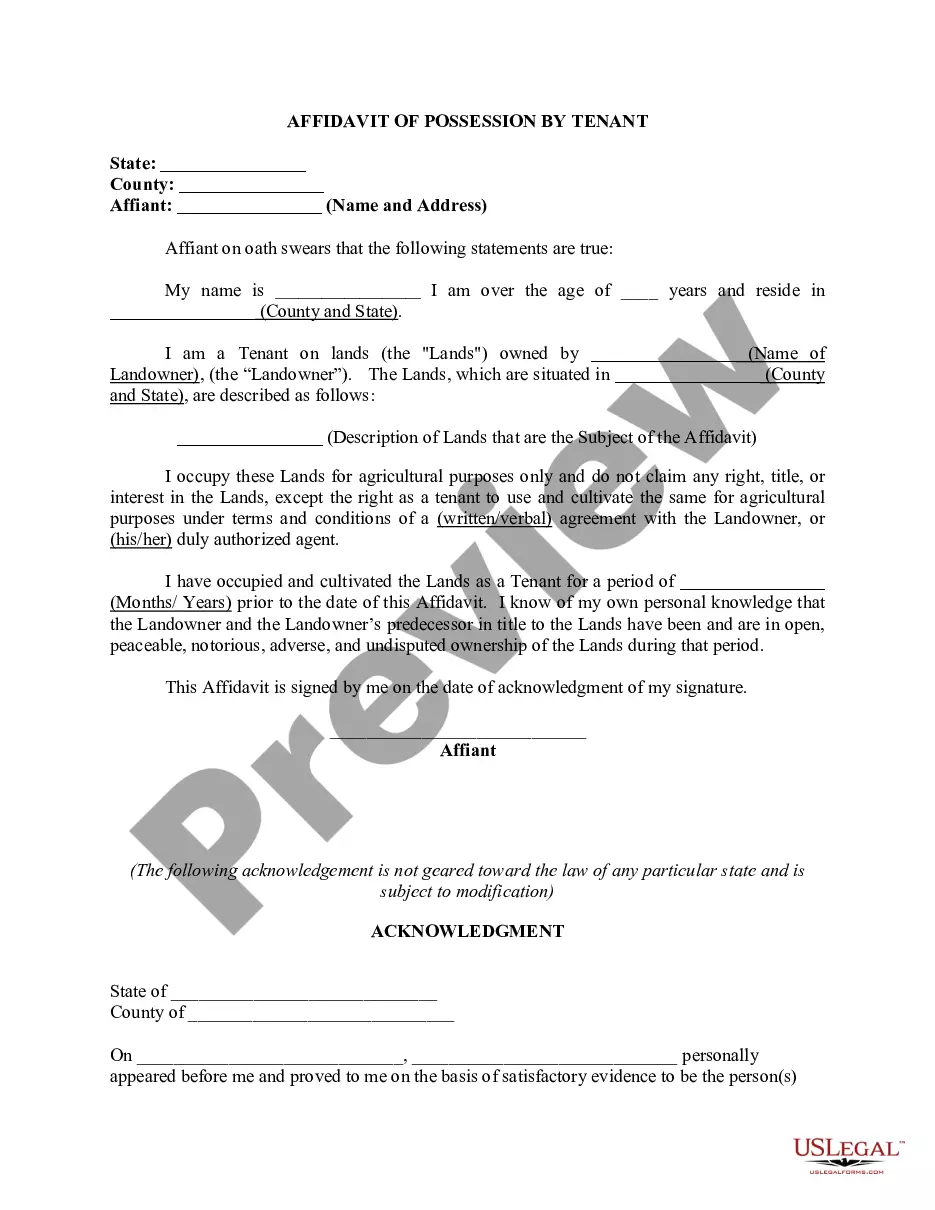
How to fill out Texas Adverse Possession Affidavit - Squatters Rights?
- Log in to your US Legal Forms account if you are a returning user. Ensure your subscription is current to access the required templates.
- For new users, start by previewing the available forms related to adverse possession in Florida. Carefully verify that the selected form meets your local jurisdiction's criteria.
- If you don't find the right template, utilize the search feature to locate alternative forms that suit your needs.
- Once you find the appropriate document, click on the Buy Now button and select a subscription plan that fits your needs. Create an account for full access.
- Complete the purchase process by entering your payment information, either via credit card or PayPal.
- After purchasing, download your selected form to your device. You can access it later in the My Forms section of your account whenever necessary.
In conclusion, US Legal Forms offers a vast library of over 85,000 editable legal documents, making it an invaluable resource for both individuals and attorneys. The service not only streamlines the process of acquiring legal forms but also ensures access to expert assistance, enabling users to create precise and compliant documents.
Start your journey towards securing your property rights today by visiting US Legal Forms and accessing the resources you need!
Form popularity
FAQ
Filing an adverse possession claim in Florida involves submitting your claim to the appropriate court along with required documentation like proof of residency and evidence of improvements. It is crucial to follow the specific process outlined in Florida law, including notifying the property owner and waiting the required time frame. To streamline your filing, consider using platforms like US Legal Forms, which provide templates and guidance tailored to adverse possession in Florida.
In Florida, adverse possession without color of title requires that you openly occupy the property for a statutory period, which is typically seven years. During this time, you must demonstrate exclusive, continuous use of the land, without the owner's permission. Additionally, you must provide proof of your residency and improvements made on the property to strengthen your claim for adverse possession.
To file for adverse possession in Florida, you must complete a detailed application to your local property appraiser or court. Next, gather evidence to prove your continuous and open use of the property, demonstrating that you occupy it as an owner would. It's essential to understand Florida's specific requirements and timelines for adverse possession to ensure your claim is valid.
In Minnesota, the period required for adverse possession is typically 15 years, longer than the seven years in Florida. During this time, the claimant must meet specific criteria, including actual and continuous possession of the property. Each state has unique laws regarding adverse possession, so understanding your local regulations is essential. US Legal Forms offers detailed information and forms to assist you in navigating these laws.
An example of adverse possession in Florida occurs when someone occupies an unused piece of land without the owner's permission for the required period. For instance, suppose a person builds a fence and maintains a garden on an empty plot for seven years. In that case, they might have a claim to that land. Such examples help illustrate how users can assert their rights through adverse possession, and US Legal Forms can provide necessary documents to support your claim.
Yes, adverse possession in Florida can transfer to a new owner when the property is sold. If you successfully claim adverse possession, that claim becomes valid even if the property changes hands. New owners would need to respect existing claims to the property, which underscores the importance of understanding adverse possession laws. Consulting resources from US Legal Forms can clarify how this works for your specific situation.
To record adverse possession in Florida, you must meet specific legal requirements. First, you need to occupy the property openly and continuously for a certain period, typically seven years in Florida. Additionally, you must file a lawsuit or provide a notice of your claim to the property owner. Using US Legal Forms, you can find the necessary templates and guidance to help you through this process effectively.
The 7 year law in Florida refers to the timeframe required for an individual to claim adverse possession. Under this law, you must possess the property openly and continuously for seven years without obtaining permission from the true owner. This provision is crucial for asserting your right to the property, and understanding this law can empower you to navigate the process effectively. US Legal Forms provides valuable resources to help you with the necessary documentation and legal guidelines related to adverse possession in Florida.
To successfully claim adverse possession in Florida, you must demonstrate specific elements. First, your possession must be actual, meaning you physically occupy the property. Second, it's necessary for your possession to be open and notorious, allowing others to see your use of the land. Additionally, your possession should be continuous and without the owner's permission for at least seven years, establishing the claim of adverse possession in Florida.
Proving adverse possession in Florida involves demonstrating that you meet the required conditions established by law. You'll need to provide evidence of your physical occupation, your intent to claim ownership, and the length of time you've occupied the property. Documentation, such as photographs, tax records, or witness statements, can support your case. Depending on the complexity, seeking guidance from USLegalForms can streamline the process and help you establish your claim.