Texas Deed Form Without Warranty
Description
Get your form ready online
Our built-in tools help you complete, sign, share, and store your documents in one place.
Make edits, fill in missing information, and update formatting in US Legal Forms—just like you would in MS Word.
Download a copy, print it, send it by email, or mail it via USPS—whatever works best for your next step.
Sign and collect signatures with our SignNow integration. Send to multiple recipients, set reminders, and more. Go Premium to unlock E-Sign.
If this form requires notarization, complete it online through a secure video call—no need to meet a notary in person or wait for an appointment.
We protect your documents and personal data by following strict security and privacy standards.

Make edits, fill in missing information, and update formatting in US Legal Forms—just like you would in MS Word.

Download a copy, print it, send it by email, or mail it via USPS—whatever works best for your next step.

Sign and collect signatures with our SignNow integration. Send to multiple recipients, set reminders, and more. Go Premium to unlock E-Sign.

If this form requires notarization, complete it online through a secure video call—no need to meet a notary in person or wait for an appointment.

We protect your documents and personal data by following strict security and privacy standards.
Looking for another form?


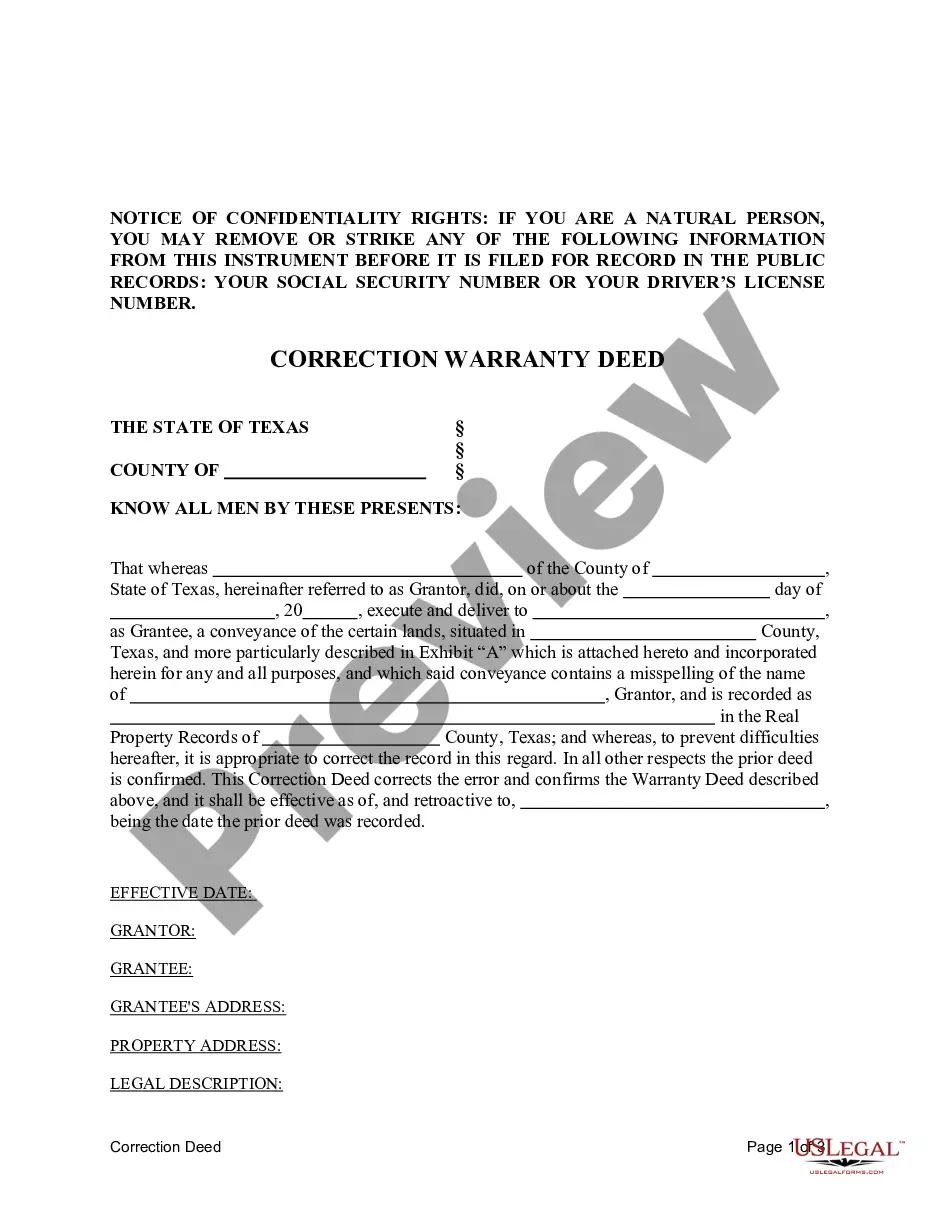
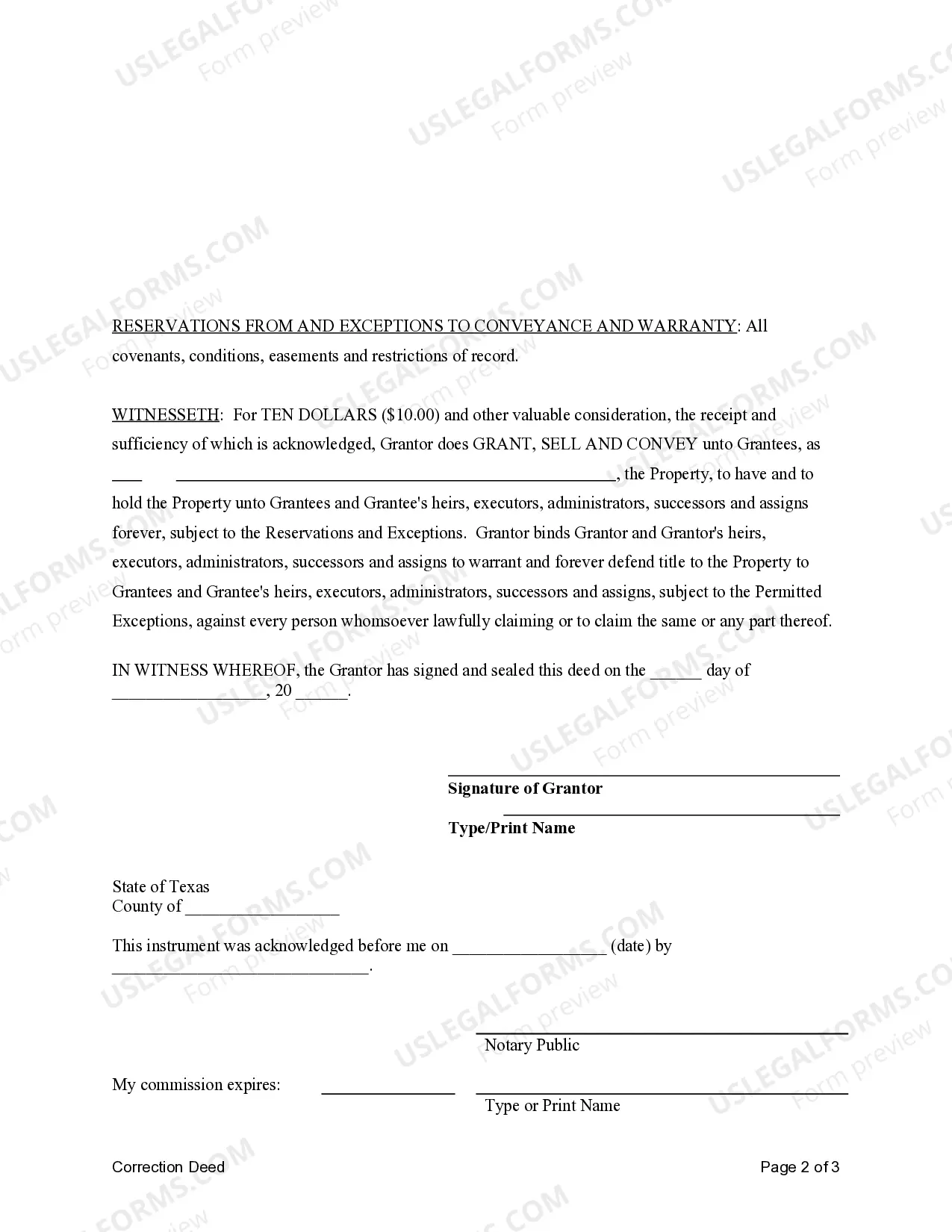
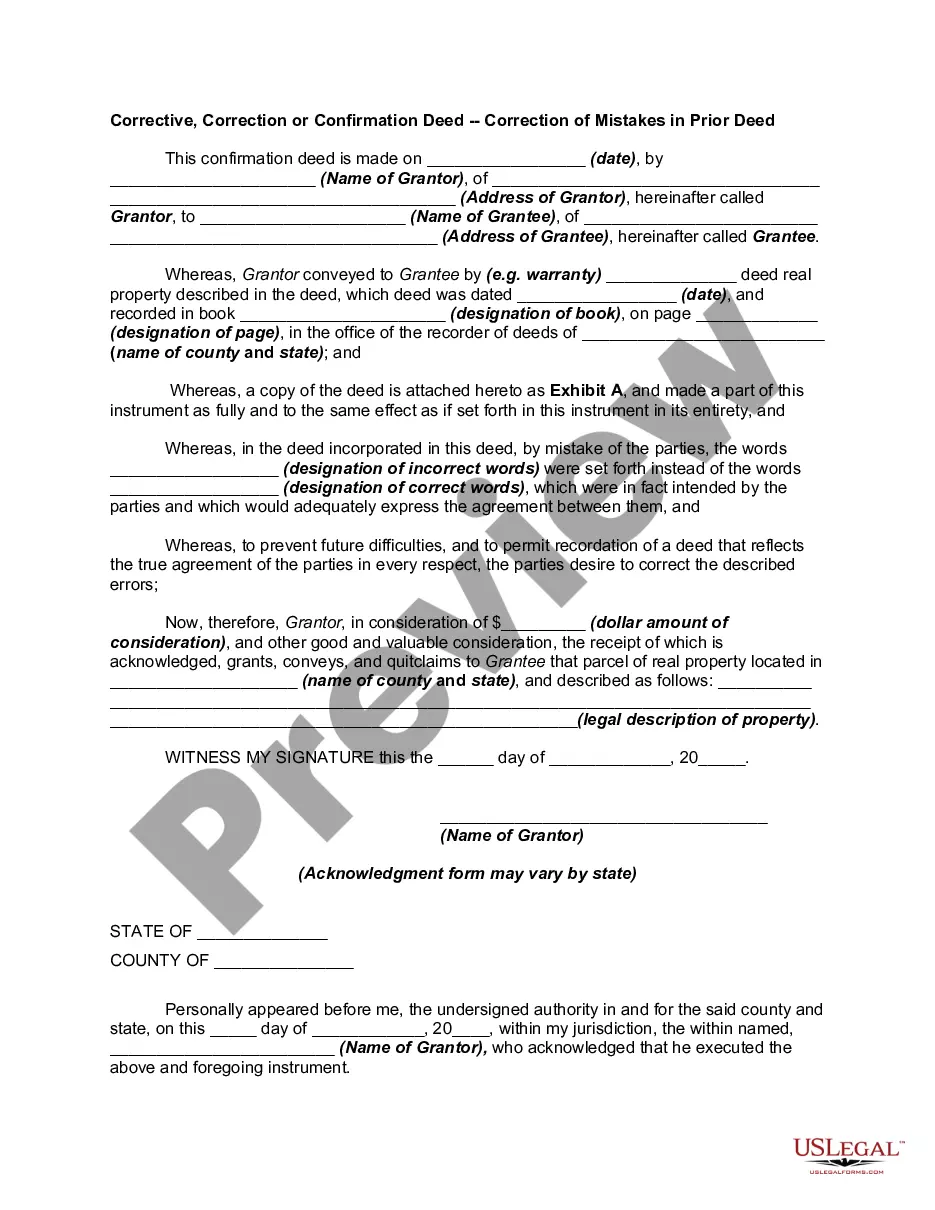
How to fill out Texas Correction Warranty Deed?
Acquiring legal document examples that adhere to federal and state regulations is crucial, and the internet presents a variety of choices to select from.
However, what is the purpose of wasting time searching for the suitable Texas Deed Form Without Warranty example online when the US Legal Forms digital library already consolidates such templates in one location.
US Legal Forms is the largest online legal repository with more than 85,000 fillable templates created by attorneys for any professional and personal situation.
Examine the template using the Preview feature or through the text outline to confirm it meets your needs. Search for another example using the search bar at the top of the page if needed. Click Buy Now once you’ve found the correct form and choose a subscription plan. Create an account or Log In and complete the payment with PayPal or a credit card. Select the appropriate format for your Texas Deed Form Without Warranty and download it. All documents accessed through US Legal Forms are reusable. To re-download and fill out previously saved forms, visit the My documents section in your profile. Take advantage of the most extensive and user-friendly legal documentation service!
- They are easy to navigate with all documents categorized by state and intended use.
- Our experts stay updated with changes in legislation, ensuring that your form is current and compliant when acquiring a Texas Deed Form Without Warranty from our site.
- Obtaining a Texas Deed Form Without Warranty is quick and straightforward for both existing and new users.
- If you already possess an account with an active subscription, Log In and save the document example you require in the appropriate format.
- If you are new to our platform, follow the steps outlined below.
Form popularity
FAQ
The main difference between a deed and a warranty deed in Texas lies in the level of protection offered to the buyer. A warranty deed provides assurances that the title is clear, while a deed without warranty does not offer such guarantees. This distinction affects the buyer's rights and the seller's liabilities. If you need clarity in your transaction, a Texas deed form without warranty from US Legal Forms can be a helpful resource.
A deed without warranty means the seller transfers property without any guarantees about the title's condition. Essentially, it limits the seller's liability for any future claims against the property. This type of deed can be beneficial in transactions where the buyer accepts the risk of title issues. For a reliable Texas deed form without warranty, check out the resources available at US Legal Forms.
Yes, you can create your own warranty deed in Texas, but it is essential to ensure that it meets specific legal requirements. While templates are available, the language used must clearly convey the intent of the parties involved. Utilizing a Texas deed form without warranty can simplify the process and ensure compliance with state laws. Consider using US Legal Forms for a user-friendly template.
A warranty deed guarantees that the seller holds clear title to the property and has the right to sell it. In contrast, a Texas deed form without warranty does not provide such guarantees, meaning the buyer accepts the property in its current condition without assurances from the seller. This type of deed can be beneficial in certain situations, especially when buyers are aware of potential risks. Using a Texas deed form without warranty can help streamline transactions, particularly in informal sales.
As a property owner and grantor, you can obtain a warranty deed for the transfer of real estate through a local realtor's office, or with an online search for a template. To make the form legally binding, you must sign it in front of a notary public.
Texas deeds without warranty It conveys title to the buyer, but there's no warranty against any defects in the title. Thus, a buyer can't sue a seller who used a deed without warranty for any defect in title that appears later on.
A warranty deed is a legal real estate document that protects the buyer and ensures that the seller holds a clear title to the property, has no outstanding liens or mortgages, and there will be no future claim to the title of the property.
Quitclaim deeds do not contain any implied warranties or covenants. Under a quitclaim deed, the grantor simply transfers its whole interest in the described real estate, but makes no covenant or representation that the grantor in fact has any interest in the subject property.
A deed without warranty is a deed that conveys title but with no warranty against any problems with the title. A buyer who later discovers the presence of easements or problems with the title cannot sue the seller. Deeds without a warranty offer no protection for buyers, but they may be useful in limited circumstances.