Texas Separation
Description


Get your form ready online
Our built-in tools help you complete, sign, share, and store your documents in one place.
Make edits, fill in missing information, and update formatting in US Legal Forms—just like you would in MS Word.
Download a copy, print it, send it by email, or mail it via USPS—whatever works best for your next step.
Sign and collect signatures with our SignNow integration. Send to multiple recipients, set reminders, and more. Go Premium to unlock E-Sign.
If this form requires notarization, complete it online through a secure video call—no need to meet a notary in person or wait for an appointment.
We protect your documents and personal data by following strict security and privacy standards.

Make edits, fill in missing information, and update formatting in US Legal Forms—just like you would in MS Word.

Download a copy, print it, send it by email, or mail it via USPS—whatever works best for your next step.

Sign and collect signatures with our SignNow integration. Send to multiple recipients, set reminders, and more. Go Premium to unlock E-Sign.

If this form requires notarization, complete it online through a secure video call—no need to meet a notary in person or wait for an appointment.

We protect your documents and personal data by following strict security and privacy standards.
Looking for another form?
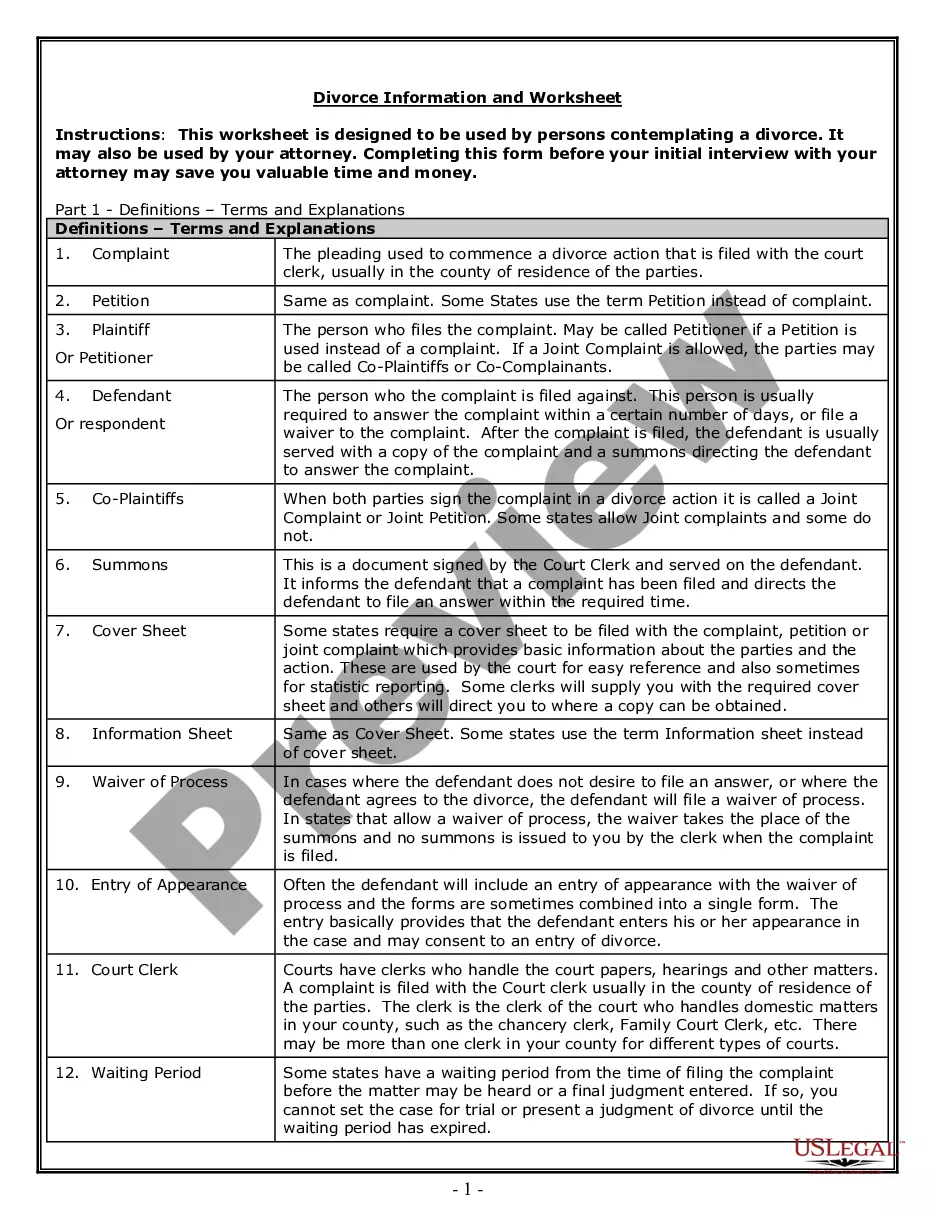
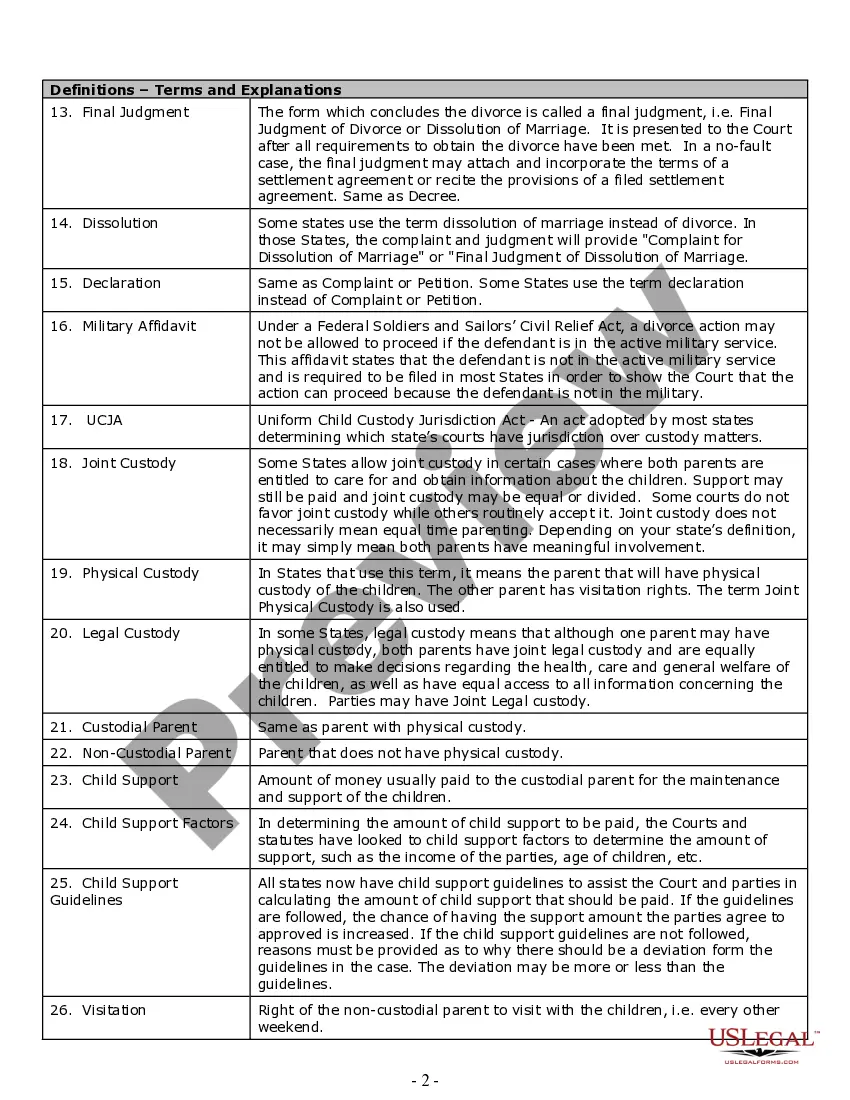
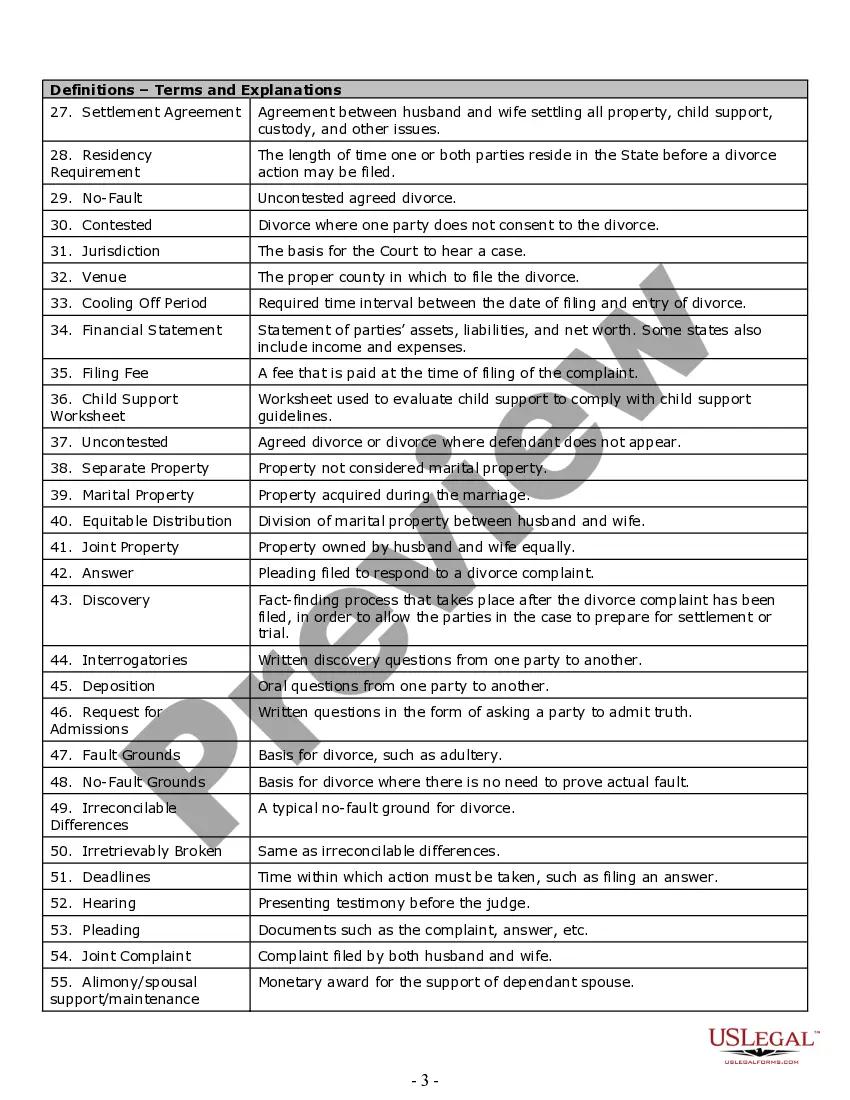
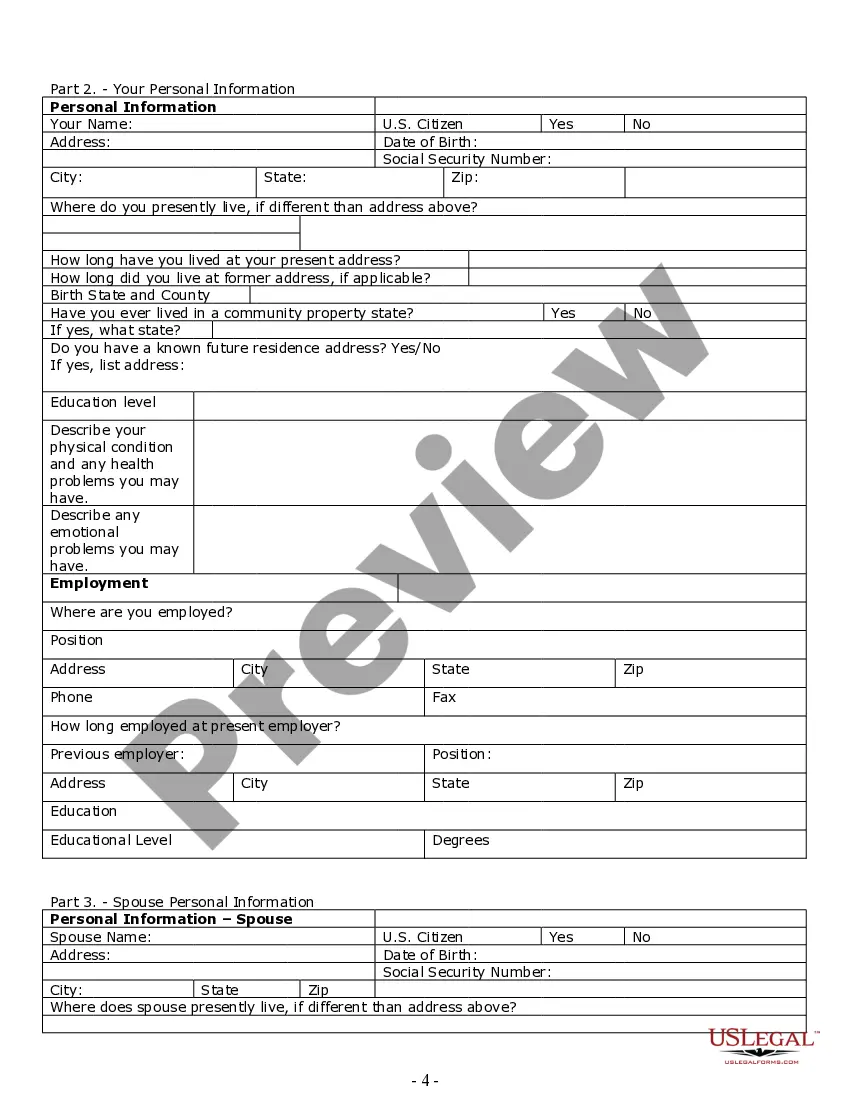
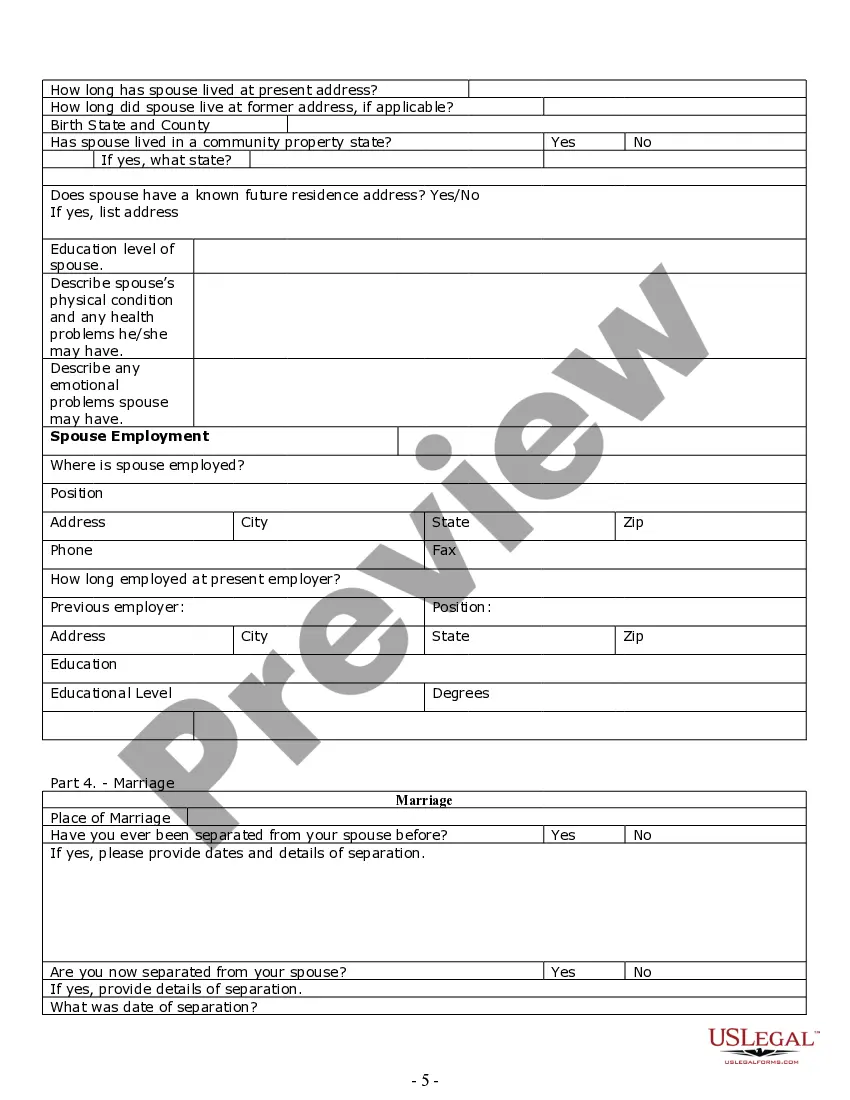
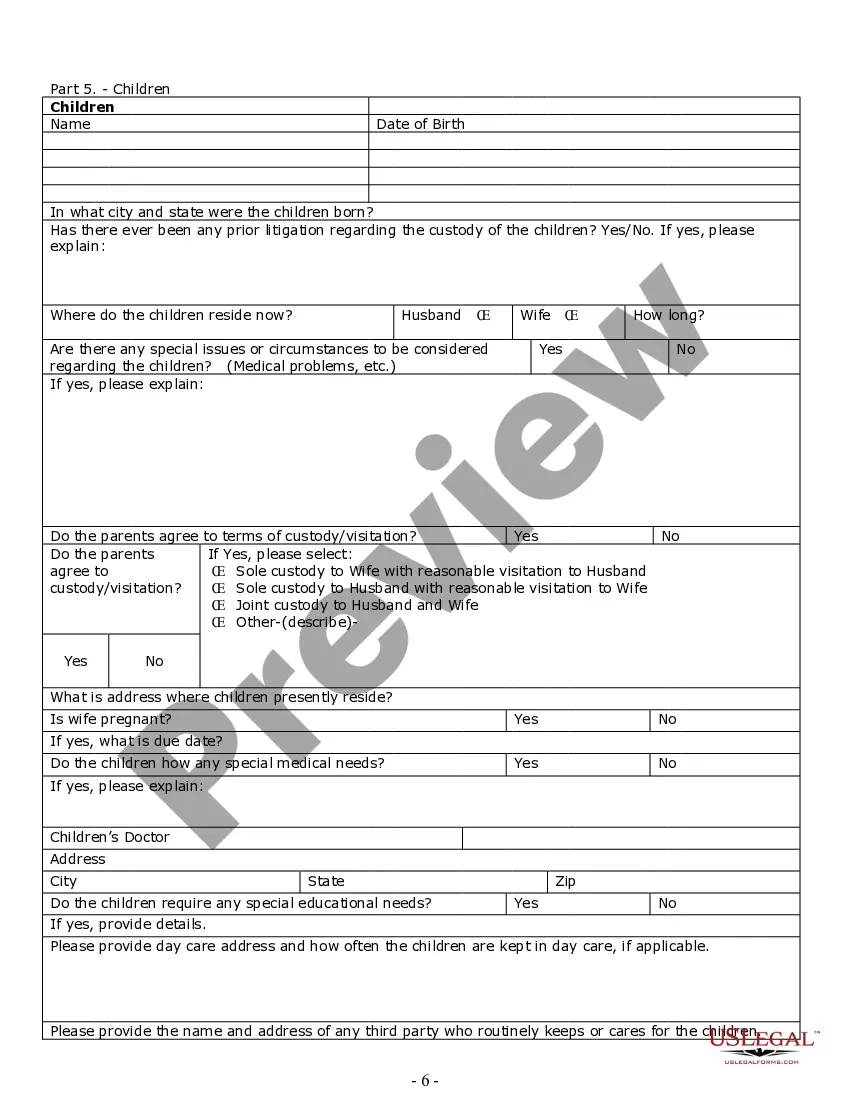
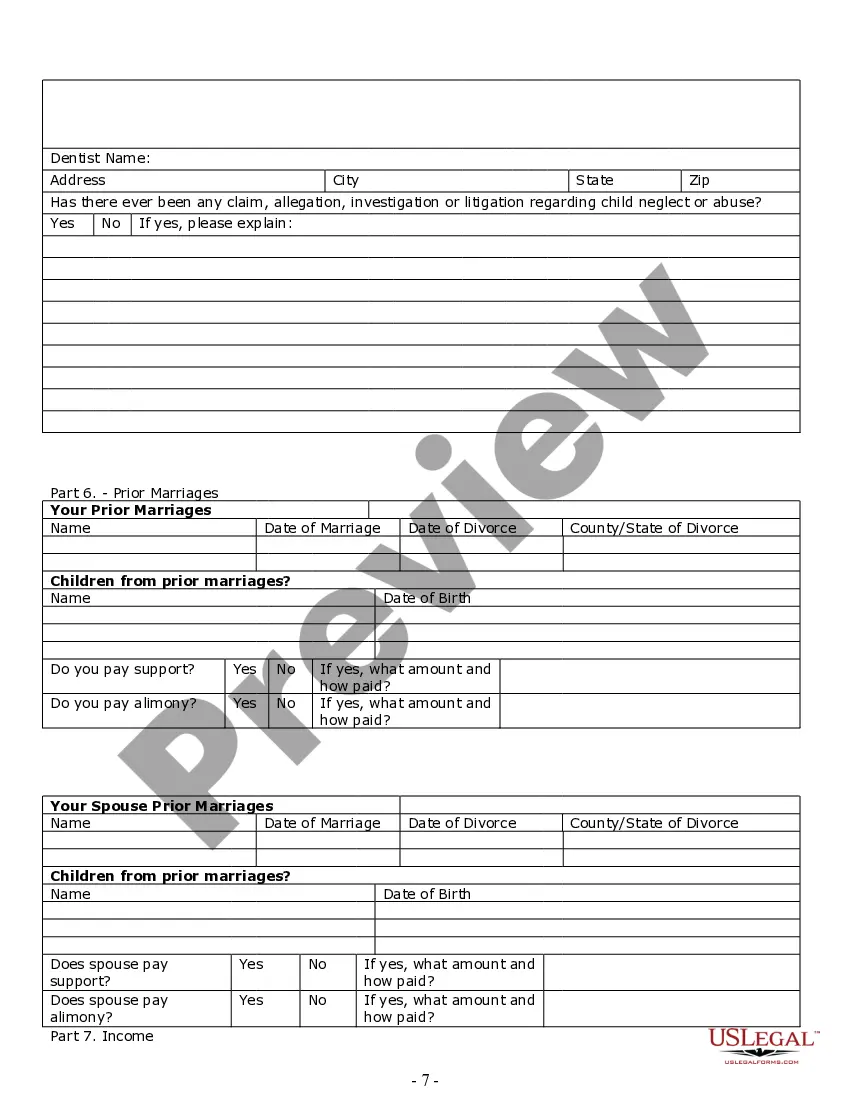
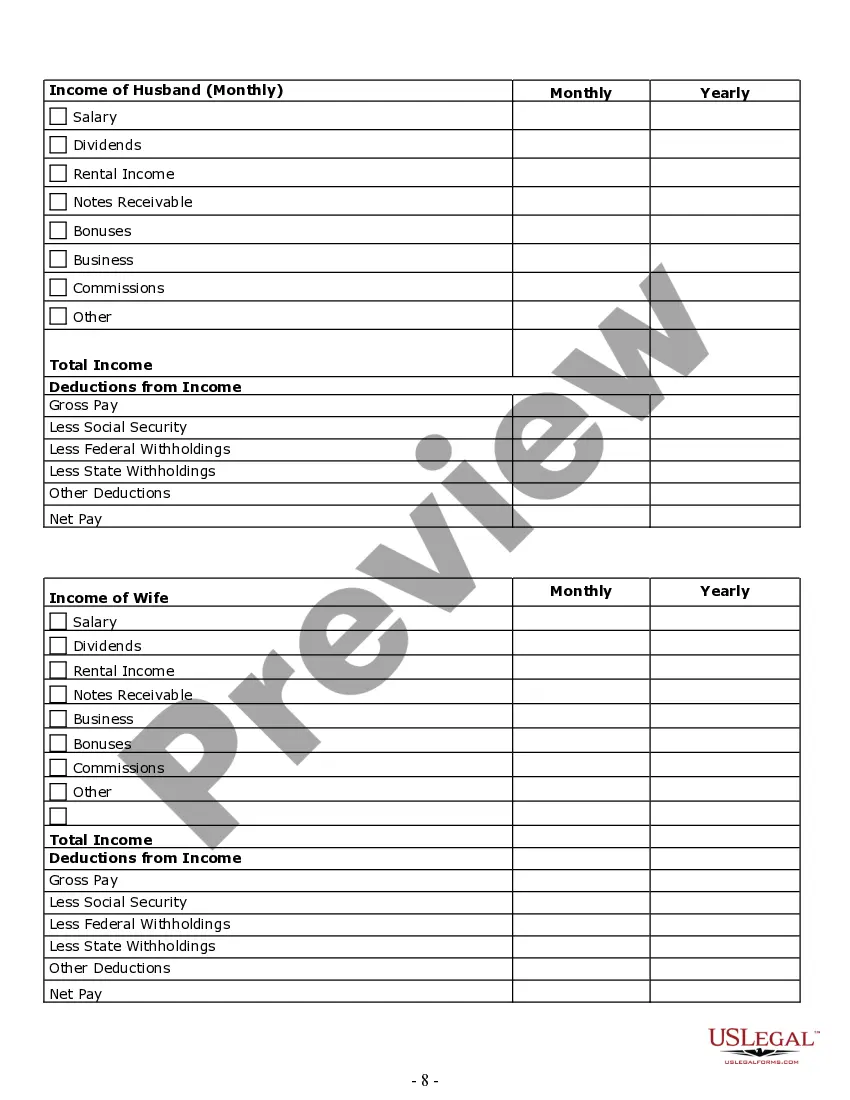
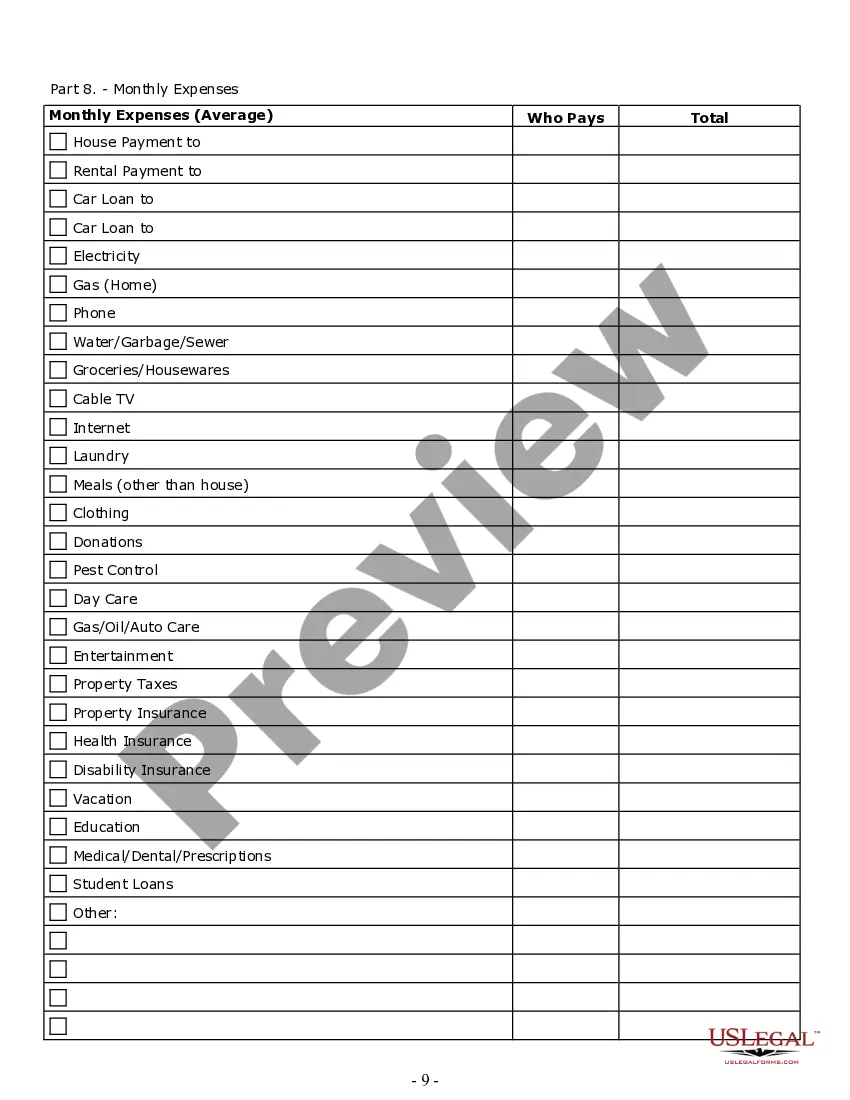
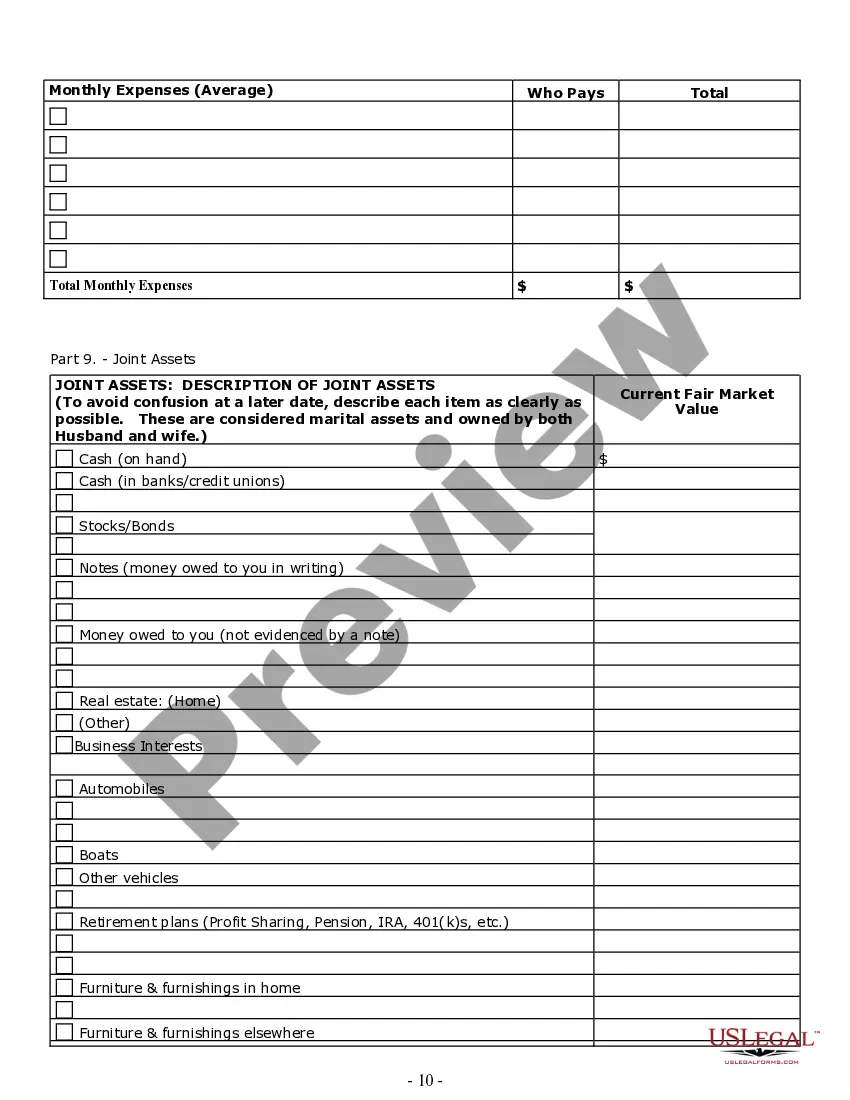
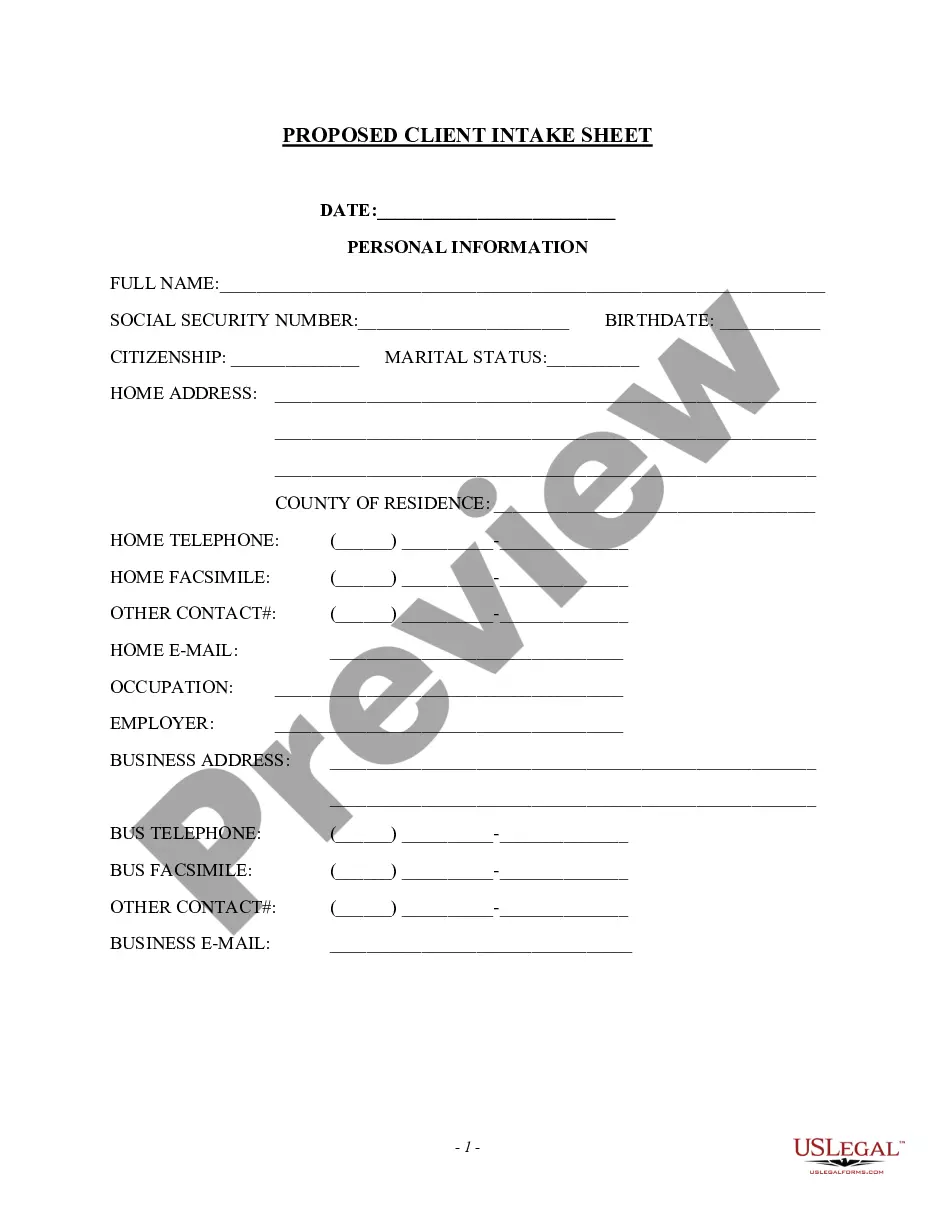
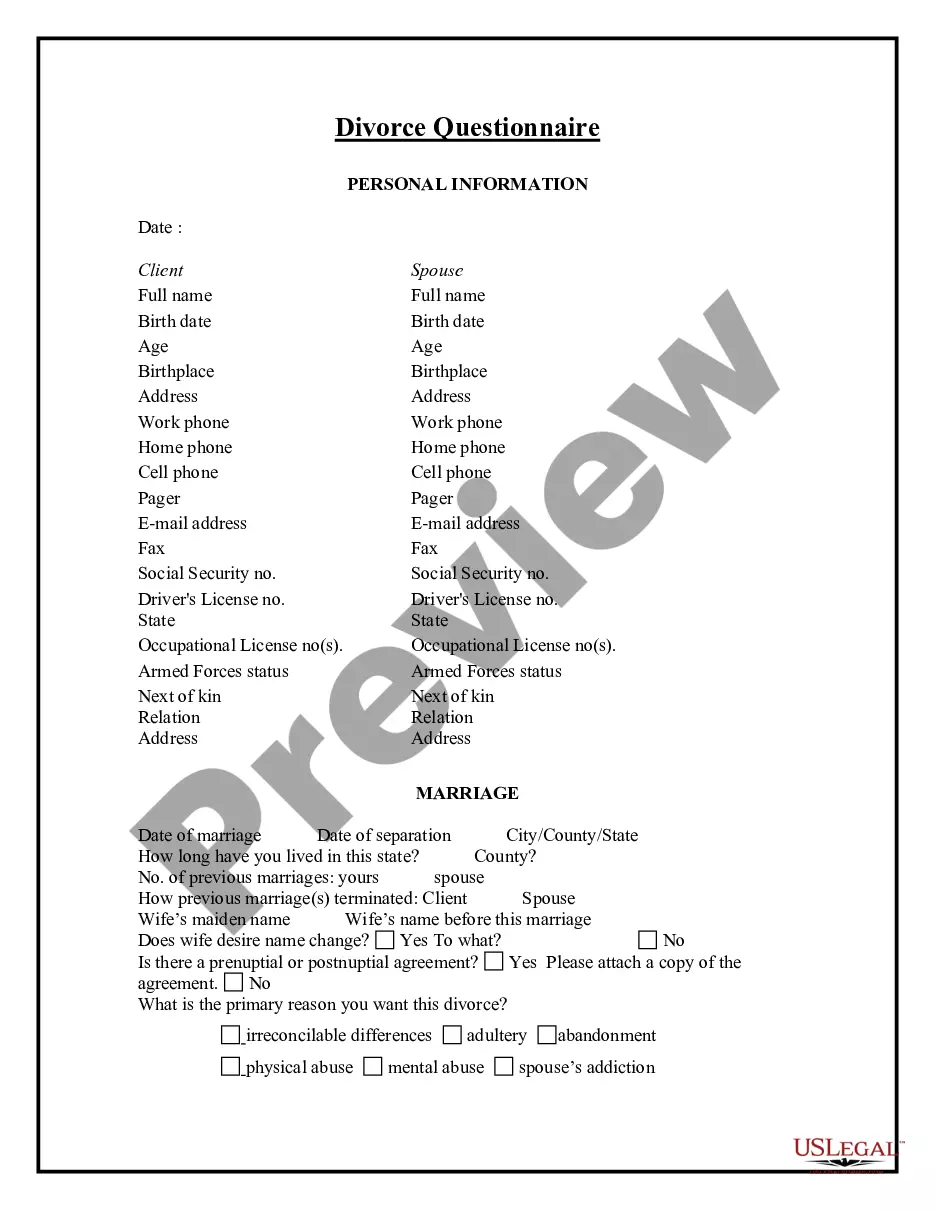
How to fill out Texas Divorce Worksheet And Law Summary For Contested Or Uncontested Case Of Over 25 Pages - Ideal Client Interview Form?
- If you're an existing user, log into your account and select the required form. Ensure your subscription is active; renew if necessary based on your plan.
- For first-time users, start by exploring the Preview mode and read the form description carefully to confirm it meets your requirements and adheres to local jurisdiction laws.
- If you find that the chosen form isn't suitable, use the Search feature at the top to discover alternative templates that match your needs.
- To purchase the document, click the Buy Now button and select your desired subscription plan. An account registration is necessary for accessing the document library.
- Complete your transaction by entering your payment details; options include credit card or PayPal.
- Lastly, download the form to your device so you can fill it out easily later. You can also access it anytime in the My Forms section of your profile.
US Legal Forms empowers individuals and legal professionals alike with quick access to a comprehensive collection of legal documents. With a robust library of over 85,000 fillable and editable legal forms, you're guaranteed to find what you need.
Don't hesitate! Start your journey towards obtaining precisely crafted legal documents with ease today.
Form popularity
FAQ
In Texas, support obligations may arise during separation if there are children or if one spouse struggles financially. While there is no automatic legal requirement for spousal support during separation, couples can negotiate support agreements. Legal documentation can make these agreements clearer and enforceable, something you might consider with resources from US Legal Forms.
In Texas, you can remain separated for any length of time, but the divorce process must be initiated to legally end the marriage. Many couples choose to stay separated for months or years before filing for divorce. Eventually, it's crucial to address your marital status formally if you want to protect your interests.
If you separate and choose not to divorce, you remain legally married, which may complicate future relationships or financial matters. You might face challenges regarding property or child custody without a legal decree. It is often beneficial to consider formalizing your separation to prevent future disputes.
In Texas, you do not need to go to court to achieve a legal separation, as it is not an official legal status. However, if you want to formalize any agreements regarding child custody or property division, file for a divorce or create a separation agreement through legal means. Platforms like US Legal Forms offer easy resources for this.
Legally speaking, Texas does not have a formal separation status. However, living apart with a mutual agreement on finances and child custody can serve as a form of separation. Documenting your agreement is sensible to avoid potential disputes in the future.
In Texas, property division during a divorce is based on the principle of community property, but not everything is split exactly 50/50. Courts consider various factors, including each spouse’s needs and contributions. Discussing these issues ahead of time can help you negotiate a more favorable outcome if you decide to separate first.
Texas separation is not officially recognized in law. However, couples can agree to live apart and manage property and finances independently. It is important to define the terms of your separation to protect your rights, especially regarding assets or children, so consider using legal tools via platforms like US Legal Forms.
In Texas, legal separation does not have a set time frame like a divorce. You can be separated as long as you both agree to it, but typical periods are around 6 months to a year. Keep in mind, separation does not finalize any property division or custody arrangements, which require formal court proceedings.
To request a separation, you must file a petition with the Texas court detailing your request and proposed terms. This document should include information about asset division and child custody if applicable. Using resources like US Legal Forms can streamline this process by providing the necessary templates and legal guidance.
Yes, Texas law requires a mandatory waiting period of 60 days from the date the divorce petition is filed. This cooling-off period encourages couples to reconsider their decision and allows time to work out agreements. After this period, you can proceed with finalizing your divorce.