Deed Correction Form Format
Description

Get your form ready online
Our built-in tools help you complete, sign, share, and store your documents in one place.
Make edits, fill in missing information, and update formatting in US Legal Forms—just like you would in MS Word.
Download a copy, print it, send it by email, or mail it via USPS—whatever works best for your next step.
Sign and collect signatures with our SignNow integration. Send to multiple recipients, set reminders, and more. Go Premium to unlock E-Sign.
If this form requires notarization, complete it online through a secure video call—no need to meet a notary in person or wait for an appointment.
We protect your documents and personal data by following strict security and privacy standards.

Make edits, fill in missing information, and update formatting in US Legal Forms—just like you would in MS Word.

Download a copy, print it, send it by email, or mail it via USPS—whatever works best for your next step.

Sign and collect signatures with our SignNow integration. Send to multiple recipients, set reminders, and more. Go Premium to unlock E-Sign.

If this form requires notarization, complete it online through a secure video call—no need to meet a notary in person or wait for an appointment.

We protect your documents and personal data by following strict security and privacy standards.
Looking for another form?
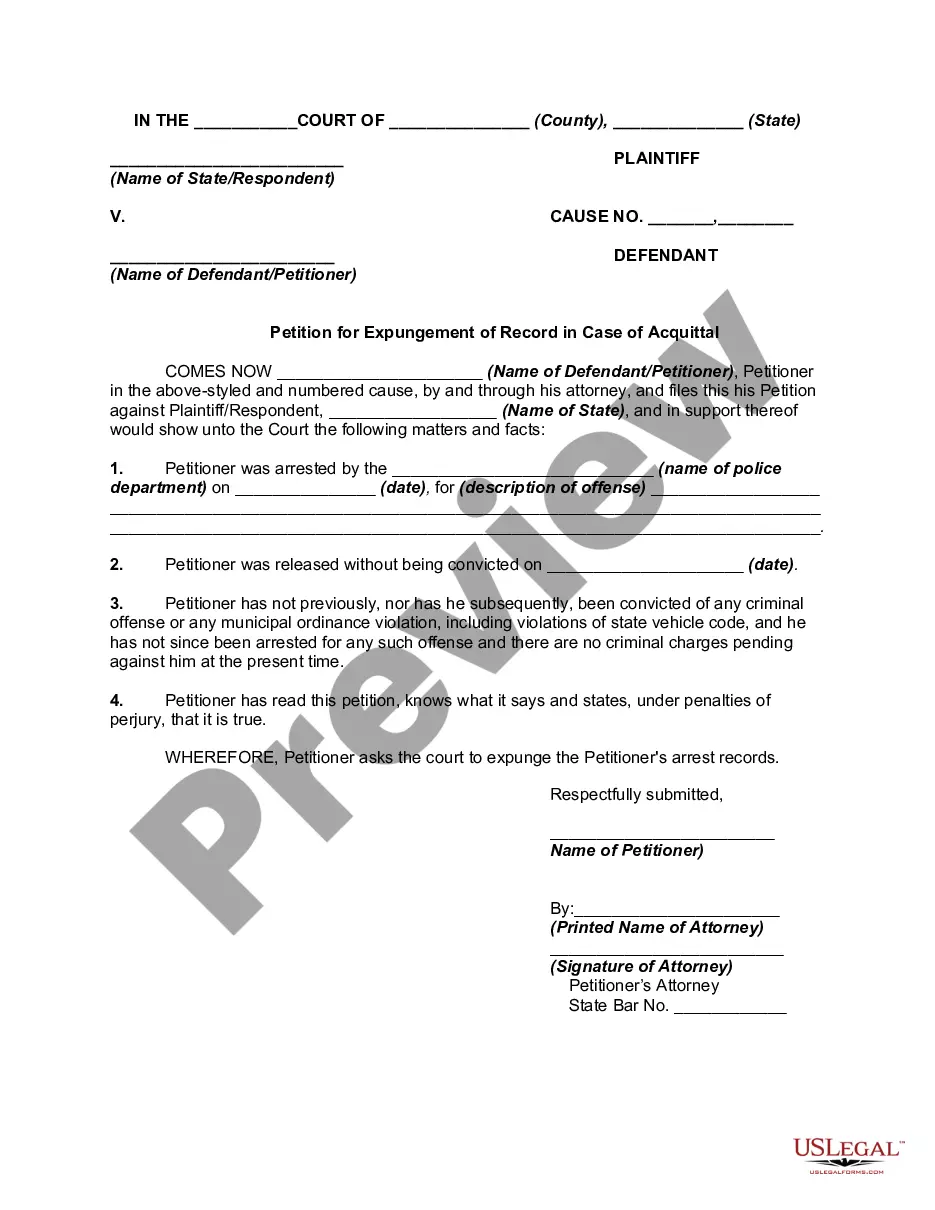



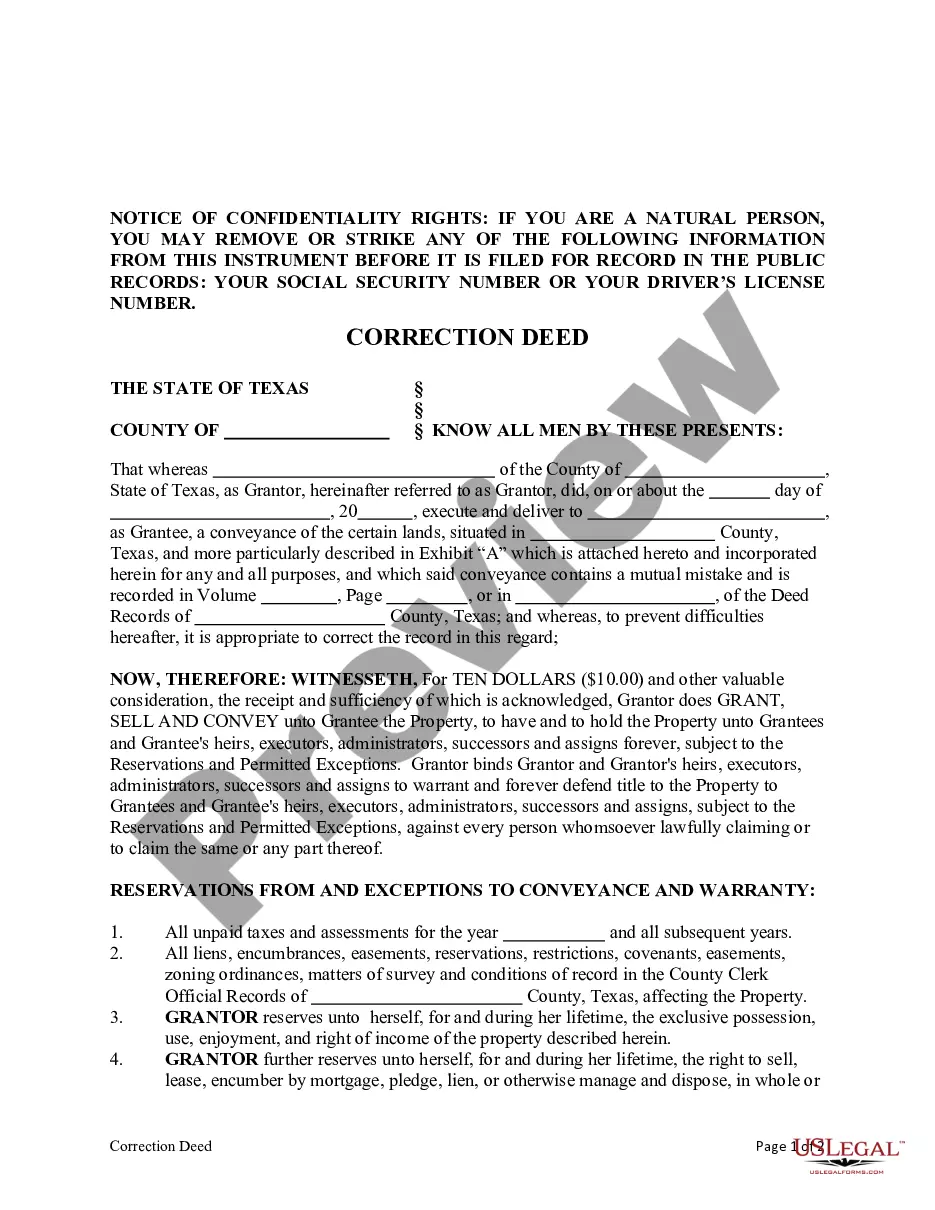
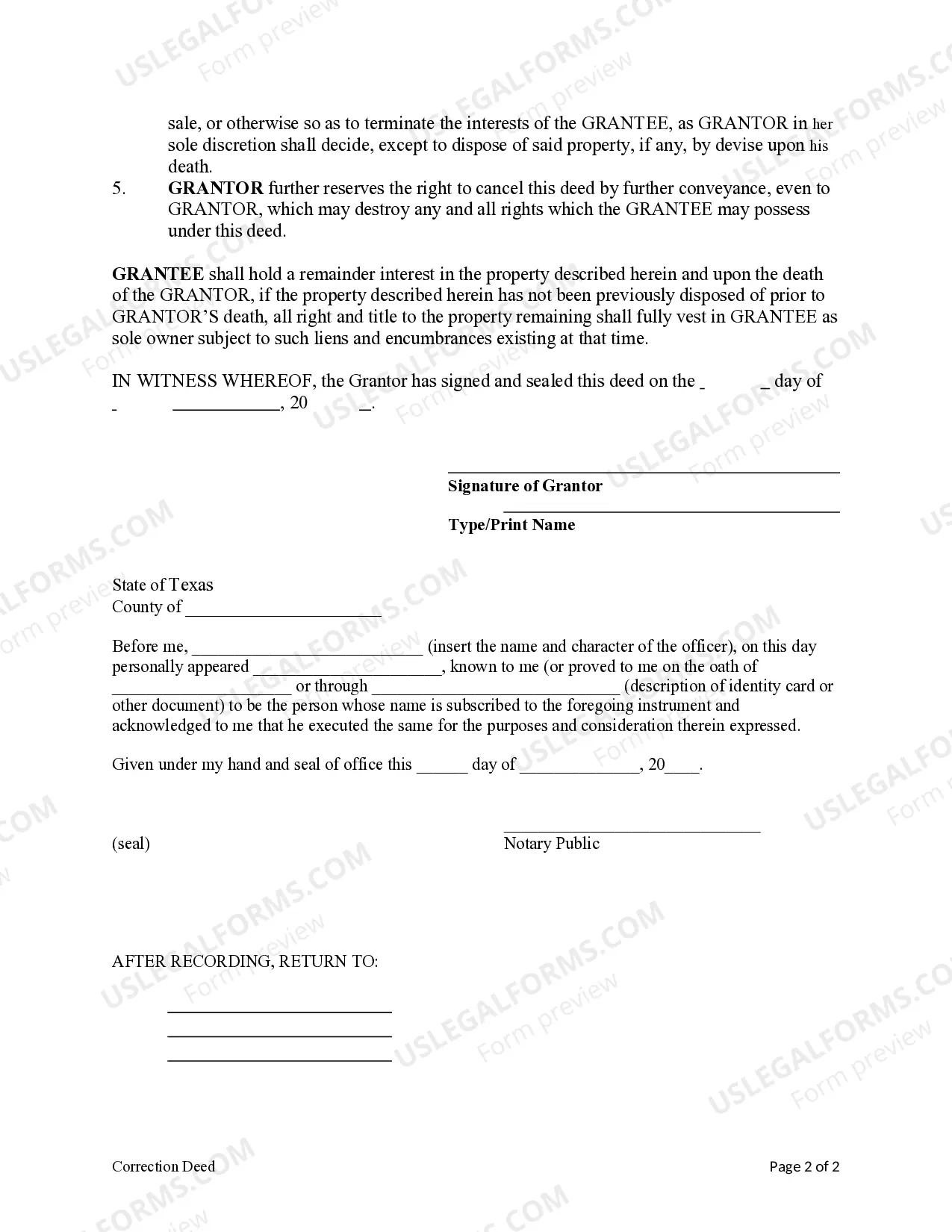
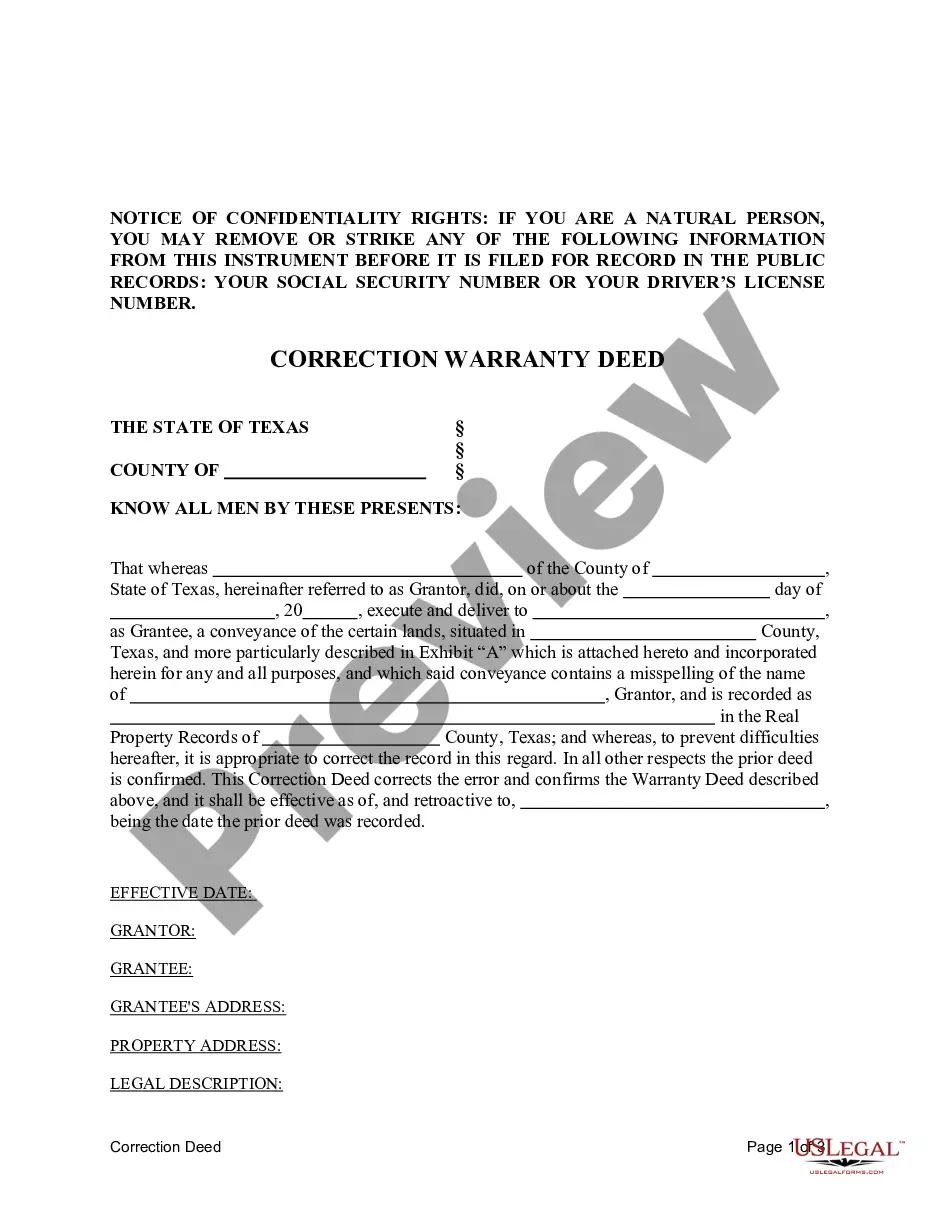
How to fill out Texas Correction Deed - Prior Deed From An Individual To An Individual?
The Deed Correction Form Format displayed on this page is a versatile legal template created by expert attorneys in accordance with national and local laws. For over 25 years, US Legal Forms has supplied individuals, organizations, and legal practitioners with over 85,000 validated, state-specific documents for any business and personal situation. It’s the fastest, most straightforward, and most reliable method to acquire the paperwork you require, as the service ensures the highest level of data privacy and anti-virus safeguards.
Acquiring this Deed Correction Form Format will involve just a few easy steps.
Subscribe to US Legal Forms to have authenticated legal templates for all of life's situations readily available.
- Search for the document you need and examine it. Browse through the file you looked for and preview it or check the form description to confirm it meets your needs. If it doesn’t, use the search feature to find the right one. Click Buy Now when you locate the template you’re looking for.
- Create an account and Log In. Choose the subscription plan that fits you and set up an account. Use PayPal or a credit card for a quick transaction. If you already have an account, Log In and check your subscription to continue.
- Acquire the fillable template. Select the format you prefer for your Deed Correction Form Format (PDF, DOCX, RTF) and save the document on your device.
- Fill out and sign the document. Print the template to complete it by hand. Alternatively, use an online multifunctional PDF editor to quickly and accurately fill out and sign your form with an eSignature.
- Redownload your documents as needed. Use the same document again whenever required. Access the My documents section in your profile to redownload any previously purchased forms.
Form popularity
FAQ
Yes, you can change the deed to your house without hiring a lawyer. By using a deed correction form format, you can complete the necessary paperwork yourself. It's essential to follow your state’s requirements for signing and recording the deed. Many users find that US Legal Forms offers easy-to-follow guidance and templates, making the process straightforward and efficient.
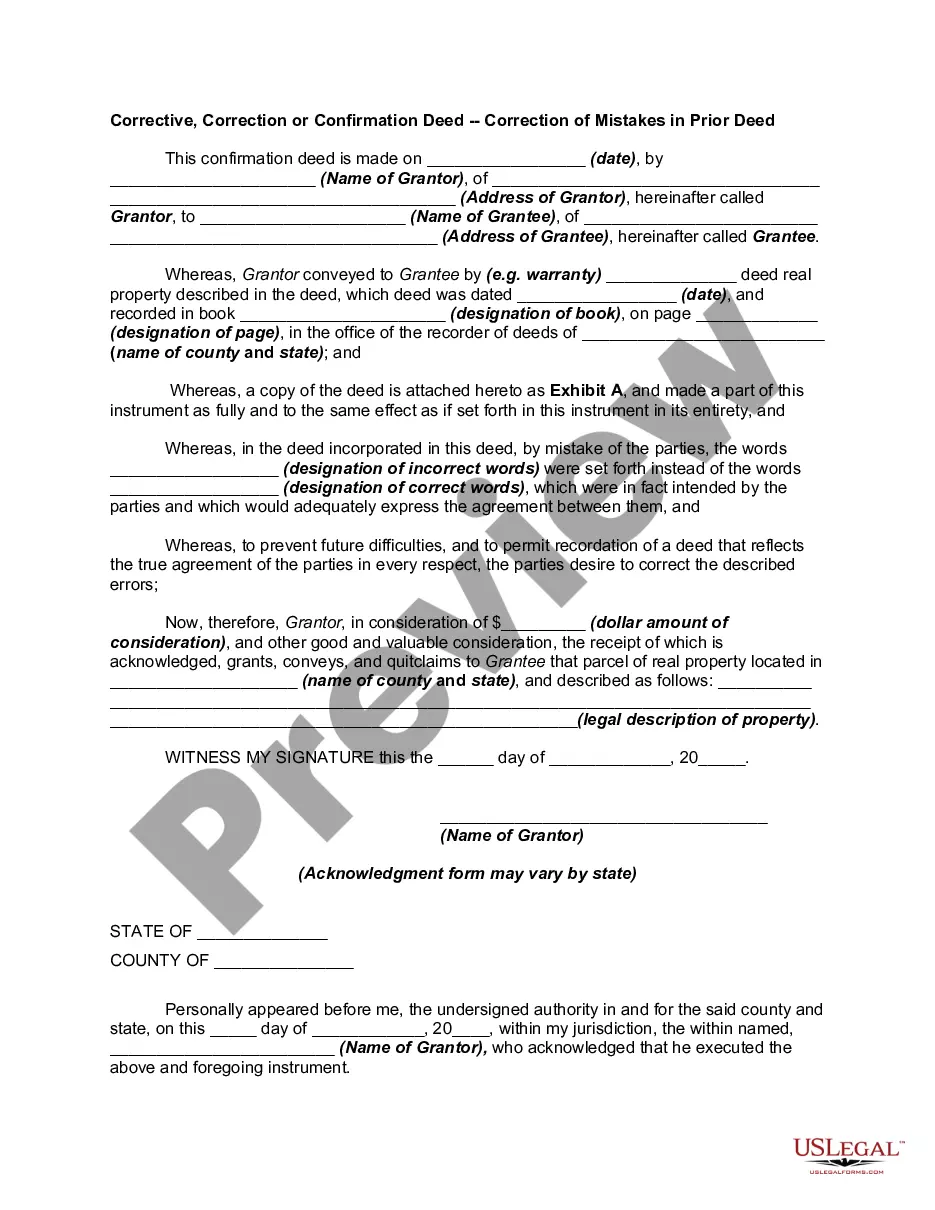
To amend a deed, you need to prepare a deed correction form format that clearly outlines the changes you want to make. This document should include the original deed information and specify the corrections. Once completed, you must sign the form and have it notarized before recording it with your local county clerk's office. Utilizing platforms like US Legal Forms can simplify this process, providing you with the correct templates to ensure compliance.
An Affidavit of correction usually requires notarization to validate the document and establish its authenticity. This process helps confirm that the content of the affidavit is accurate and that it was duly executed. When preparing your Affidavit of correction, use the deed correction form format to ensure all details are correctly presented. You can find helpful templates on US Legal Forms to facilitate this process.
Yes, a correction deed typically needs to be notarized to be legally binding. Notarization serves to verify the identities of the signers and to ensure the document is executed properly. Following the deed correction form format is crucial, as it outlines the required steps for notarization. US Legal Forms provides resources to help you navigate this process smoothly.
The deed frequently used to correct errors is known as a corrective deed. This document serves to clarify or rectify mistakes made in a previously recorded deed. It is vital to use the correct deed correction form format to ensure that all necessary information is included. For convenience, you can find templates and instructions on platforms like US Legal Forms.
A corrective deed in New Jersey is a legal document used to amend a previous deed that contains errors or inaccuracies. This type of deed is essential for maintaining the integrity of property records. The corrective deed must be executed in the same manner as the original deed and should follow the deed correction form format to ensure compliance. US Legal Forms offers easy access to templates that simplify the drafting of corrective deeds.
To make a correction on a legal document, you should first identify the specific errors that need correction. Then, use the appropriate deed correction form format to outline the changes clearly. It's important to ensure that the corrected document is signed and dated by the relevant parties. Utilizing platforms like US Legal Forms can streamline this process, providing you with the right templates and guidance.
In New Jersey, you are not legally required to hire a lawyer to transfer a deed. However, enlisting professional help can be beneficial, especially if you are unfamiliar with the deed correction form format or the local laws. A lawyer can guide you through the process, ensuring that all documents are properly completed and filed. If you prefer a DIY approach, using resources like US Legal Forms can equip you with the necessary templates and instructions for a smooth transaction.
To complete a deed, start by gathering all necessary information, including the names of the parties involved, a clear description of the property, and the date of the transaction. Next, use the correct deed correction form format to ensure accuracy and legal compliance. You should then sign the document in front of a notary public, and finally, file the deed with your local county office to make it official. Utilizing platforms like US Legal Forms can simplify this process by providing you with pre-drafted templates that adhere to your state's requirements.