Deed Correction Form For Income Tax
Description

Get your form ready online
Our built-in tools help you complete, sign, share, and store your documents in one place.
Make edits, fill in missing information, and update formatting in US Legal Forms—just like you would in MS Word.
Download a copy, print it, send it by email, or mail it via USPS—whatever works best for your next step.
Sign and collect signatures with our SignNow integration. Send to multiple recipients, set reminders, and more. Go Premium to unlock E-Sign.
If this form requires notarization, complete it online through a secure video call—no need to meet a notary in person or wait for an appointment.
We protect your documents and personal data by following strict security and privacy standards.

Make edits, fill in missing information, and update formatting in US Legal Forms—just like you would in MS Word.

Download a copy, print it, send it by email, or mail it via USPS—whatever works best for your next step.

Sign and collect signatures with our SignNow integration. Send to multiple recipients, set reminders, and more. Go Premium to unlock E-Sign.

If this form requires notarization, complete it online through a secure video call—no need to meet a notary in person or wait for an appointment.

We protect your documents and personal data by following strict security and privacy standards.
Looking for another form?






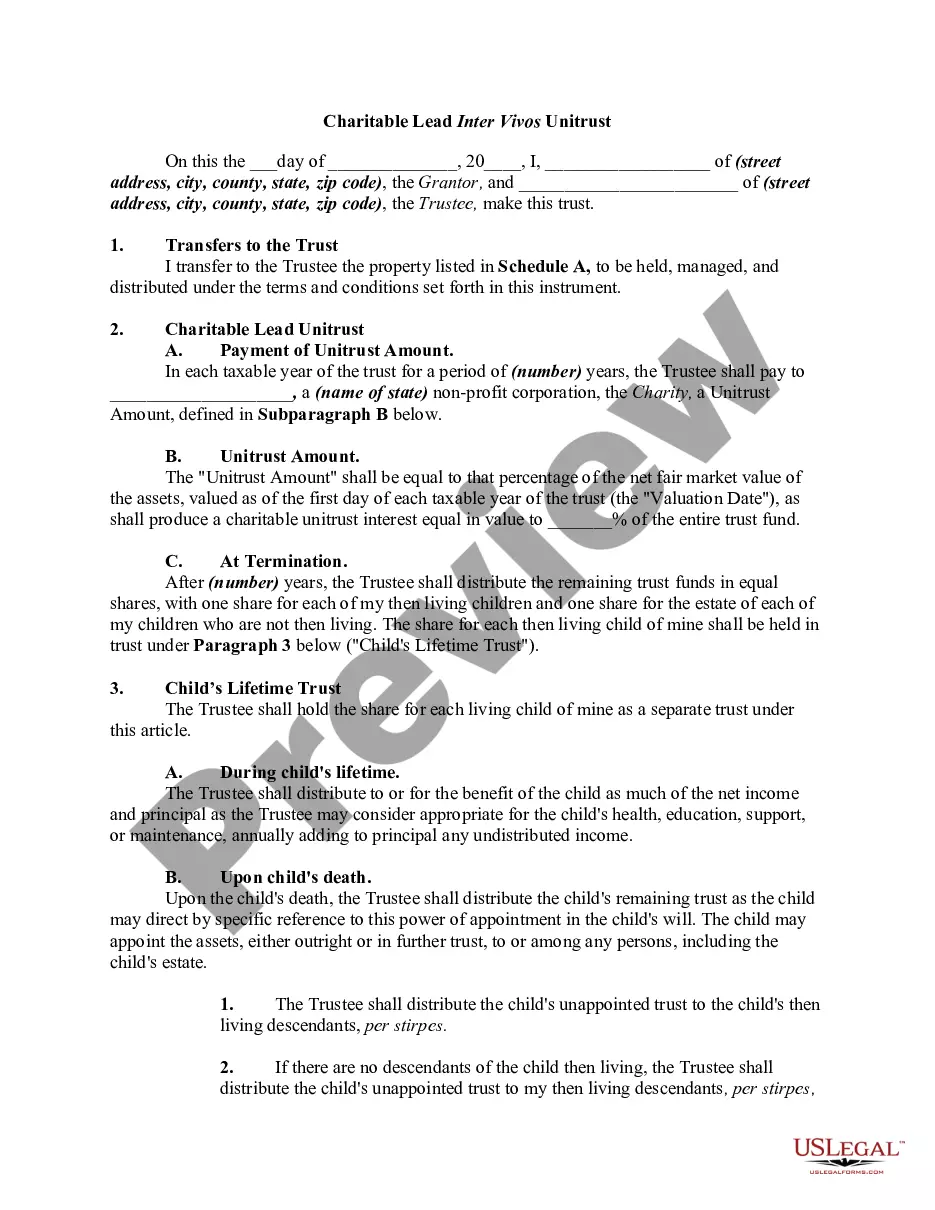



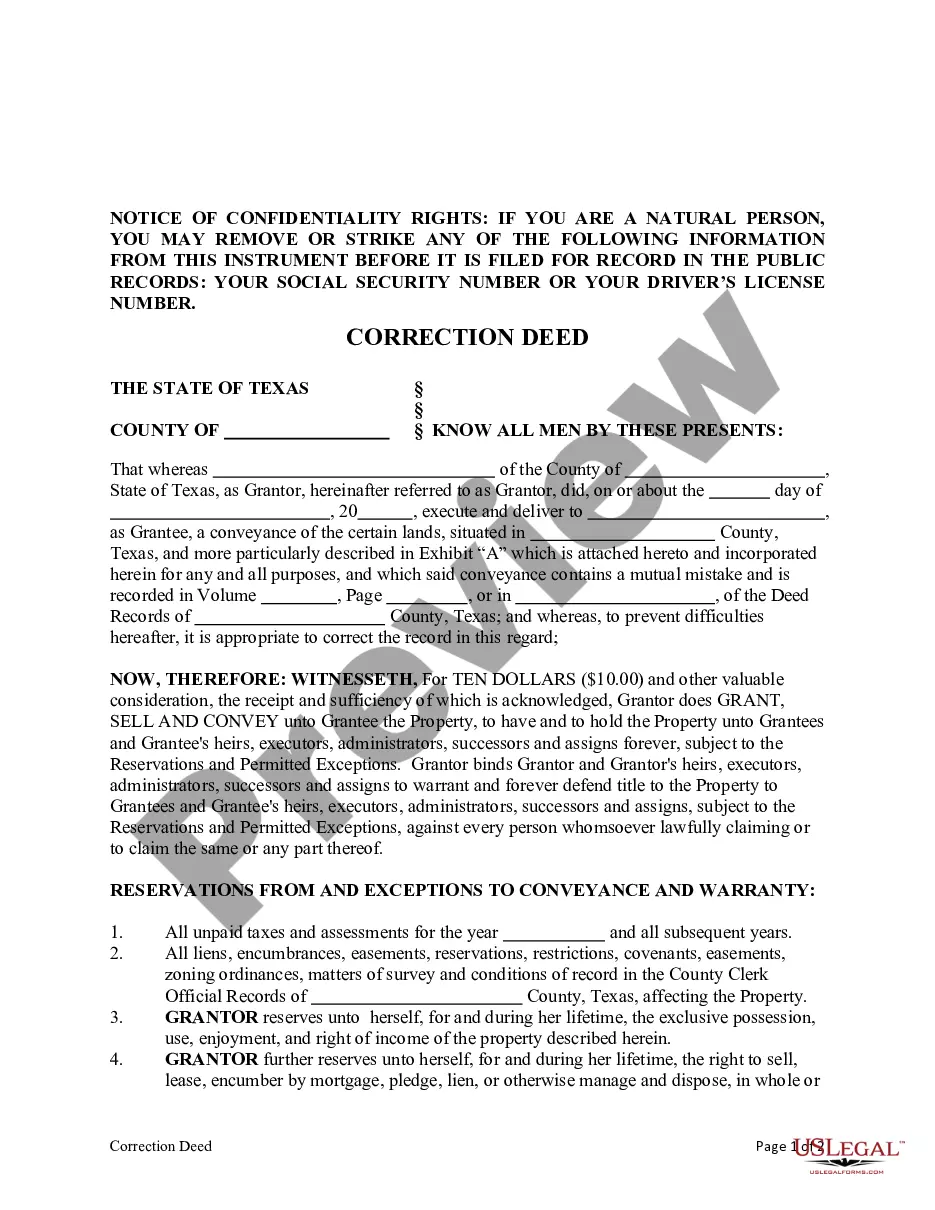
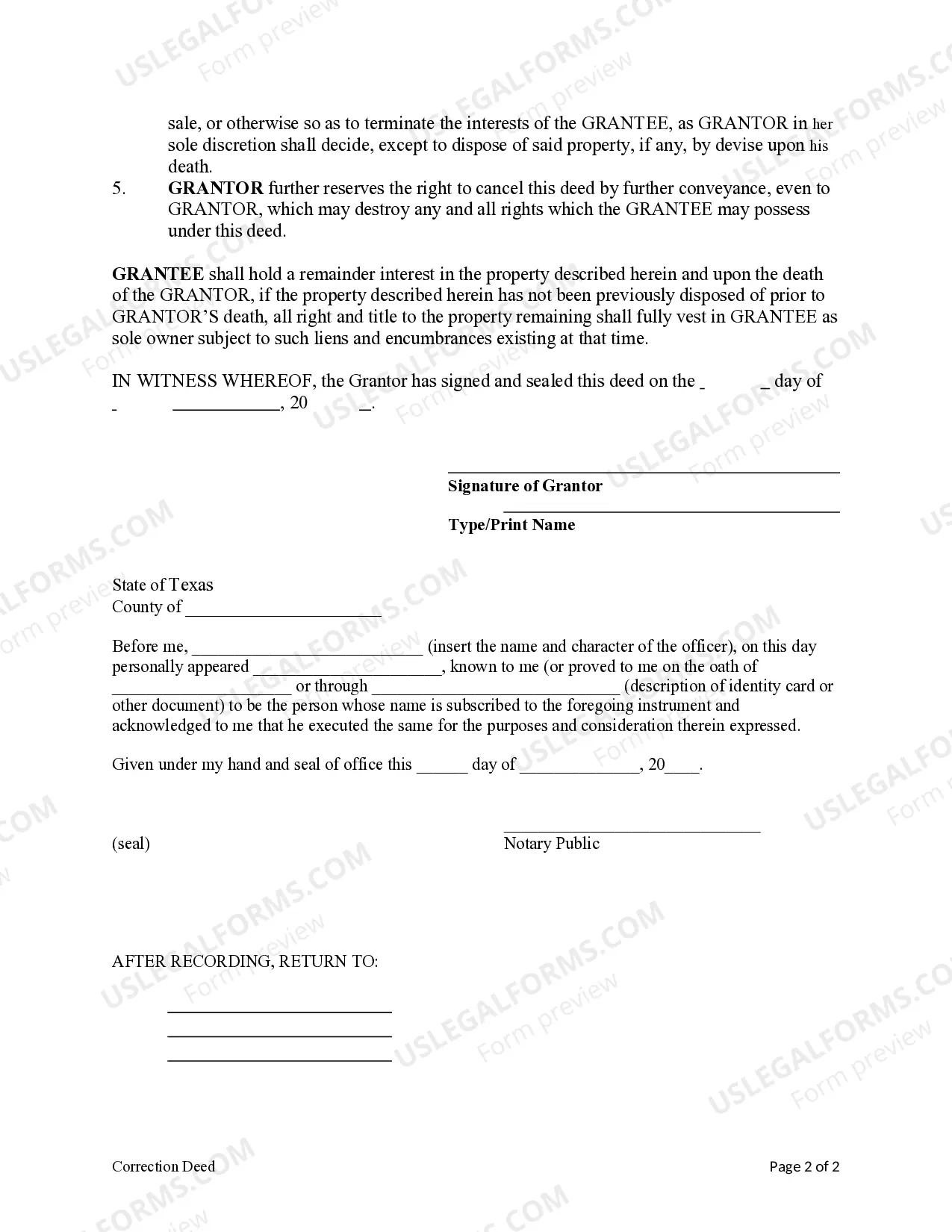
How to fill out Texas Correction Deed - Prior Deed From An Individual To An Individual?
It’s widely known that you cannot become a legal expert instantly, nor can you easily learn how to swiftly prepare the Deed Correction Form For Income Tax without possessing a specialized skill set.
Drafting legal documents is a lengthy task that demands specific training and expertise. So why not entrust the creation of the Deed Correction Form For Income Tax to the professionals.
With US Legal Forms, one of the most extensive libraries of legal templates, you can discover everything from court filings to templates for internal corporate correspondence. We recognize how crucial compliance and adherence to federal and local statutes and regulations are. That’s why, on our site, all templates are tailored to specific locations and kept current.
You can access your documents again from the My documents section at any time. If you’re an existing customer, you can simply Log In and find and download the template from the same section.
Regardless of the purpose of your documents—whether financial, legal, or personal—our platform has you covered. Give US Legal Forms a try today!
- Locate the form you require by utilizing the search bar at the top of the page.
- View it (if this option is available) and read the accompanying description to determine if the Deed Correction Form For Income Tax is what you need.
- Restart your search if you require a different form.
- Create a free account and choose a subscription plan to purchase the form.
- Click Buy now. Once the payment is finalized, you can obtain the Deed Correction Form For Income Tax, fill it out, print it, and send or mail it to the appropriate individuals or organizations.
Form popularity
FAQ
Yes, a correction deed generally requires notarization to be legally effective. Notarizing the document adds a layer of protection against potential disputes over the deed's validity. When you complete a deed correction form for income tax, ensure that you have it notarized so that it is accepted by local authorities and serves its intended purpose.
Yes, deed transfers can be reported to the IRS, especially if they involve a change in ownership that may affect tax obligations. It is crucial to understand how these transfers impact your income tax situation. Using a deed correction form for income tax can help ensure that all necessary information is accurately reported and compliant with IRS regulations.
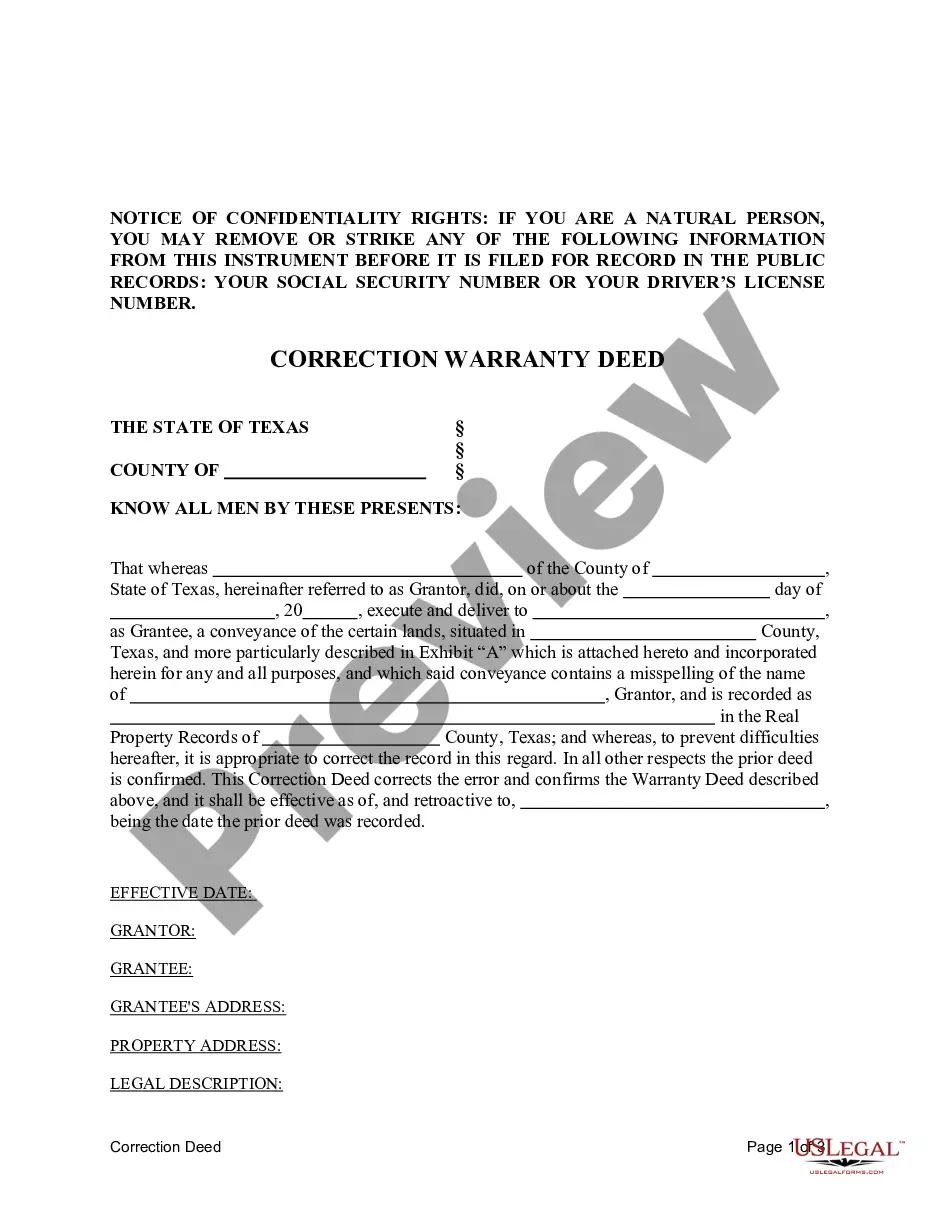
A corrective deed in New Jersey is a legal document used to rectify errors in a previously recorded deed. This may include mistakes in the property description or the names of the property owners. Utilizing a deed correction form for income tax can help clarify ownership and ensure that all records are accurate, thereby preventing tax complications.
Yes, an Affidavit of correction typically needs to be notarized. Notarization provides a level of authenticity and legal validity to the document. When you complete a deed correction form for income tax, ensuring it is notarized helps to avoid potential disputes and ensures the document is recognized by relevant authorities.
Filling out an income tax declaration form requires accurate reporting of your income and deductions. Start by gathering all necessary financial documents, such as W-2s and 1099s. When you include information from a deed correction form for income tax, make sure to reflect any changes that affect your tax liability. Using resources from USLegalForms can help guide you through the process, ensuring your form is correctly completed.
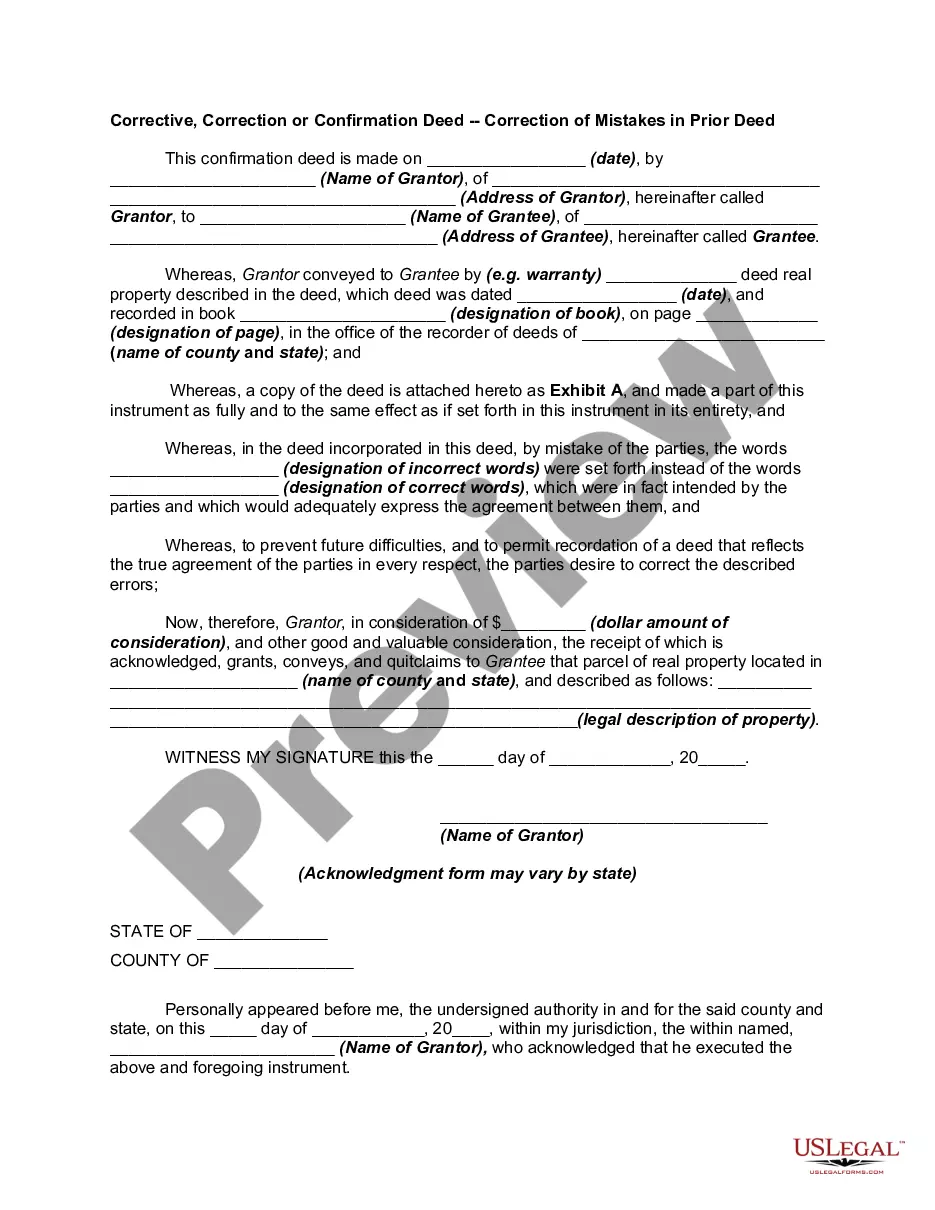
Completing a Scrivener's affidavit involves detailing the mistakes made in a legal document and clarifying the intended terms. You should clearly identify the error and provide the correct information. Utilizing a deed correction form for income tax can streamline this process, ensuring that your affidavit aligns with tax requirements. By following the guidelines on platforms like USLegalForms, you can efficiently create a compliant affidavit.
A corrective deed is commonly used to fix errors in property documents. This deed allows you to amend mistakes in the original deed without needing a full re-issuance. By using a deed correction form for income tax, you ensure that your tax records accurately reflect your property ownership. This is important for maintaining compliance and avoiding potential tax issues.