Correction Deed Form Texas For Elderly
Description

Get your form ready online
Our built-in tools help you complete, sign, share, and store your documents in one place.
Make edits, fill in missing information, and update formatting in US Legal Forms—just like you would in MS Word.
Download a copy, print it, send it by email, or mail it via USPS—whatever works best for your next step.
Sign and collect signatures with our SignNow integration. Send to multiple recipients, set reminders, and more. Go Premium to unlock E-Sign.
If this form requires notarization, complete it online through a secure video call—no need to meet a notary in person or wait for an appointment.
We protect your documents and personal data by following strict security and privacy standards.

Make edits, fill in missing information, and update formatting in US Legal Forms—just like you would in MS Word.

Download a copy, print it, send it by email, or mail it via USPS—whatever works best for your next step.

Sign and collect signatures with our SignNow integration. Send to multiple recipients, set reminders, and more. Go Premium to unlock E-Sign.

If this form requires notarization, complete it online through a secure video call—no need to meet a notary in person or wait for an appointment.

We protect your documents and personal data by following strict security and privacy standards.
Looking for another form?






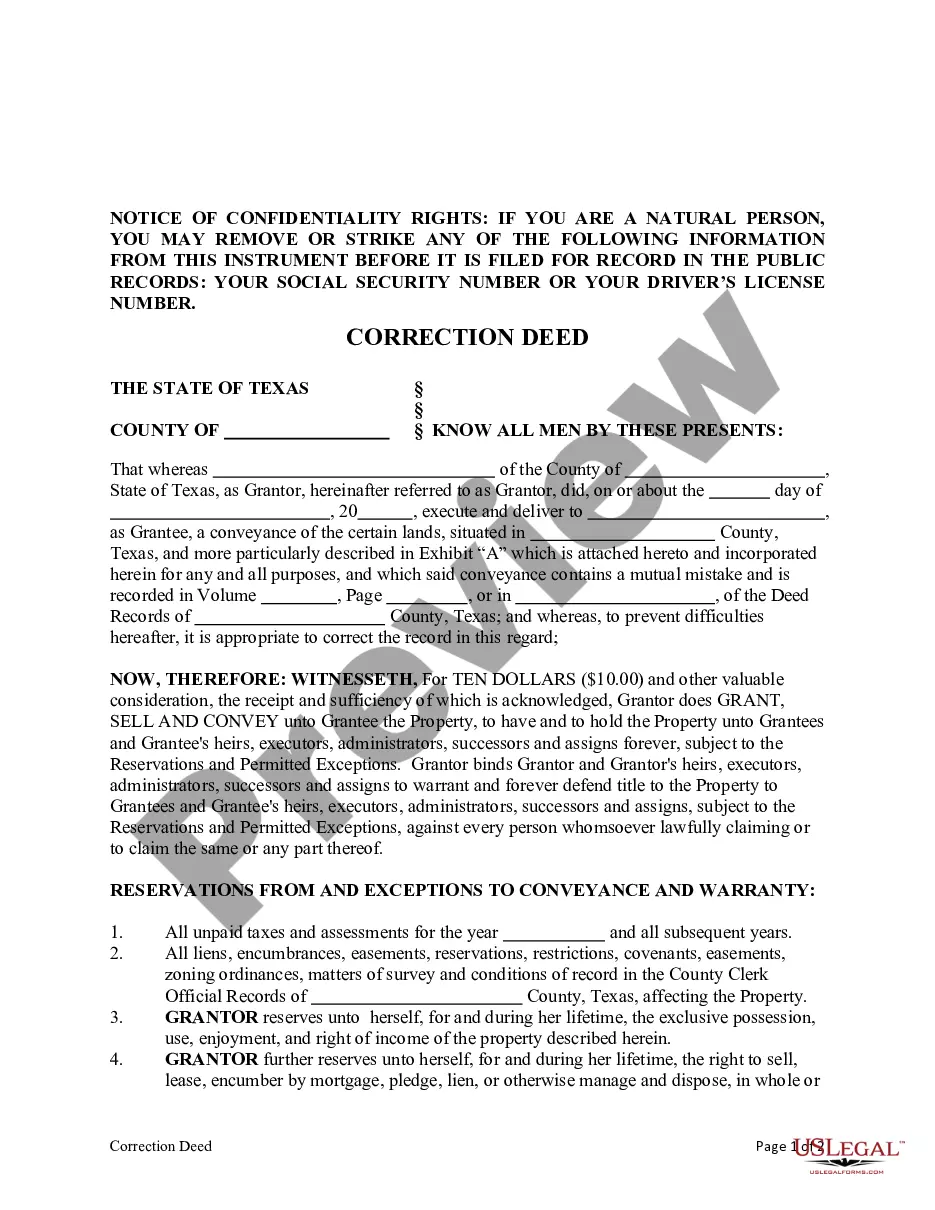
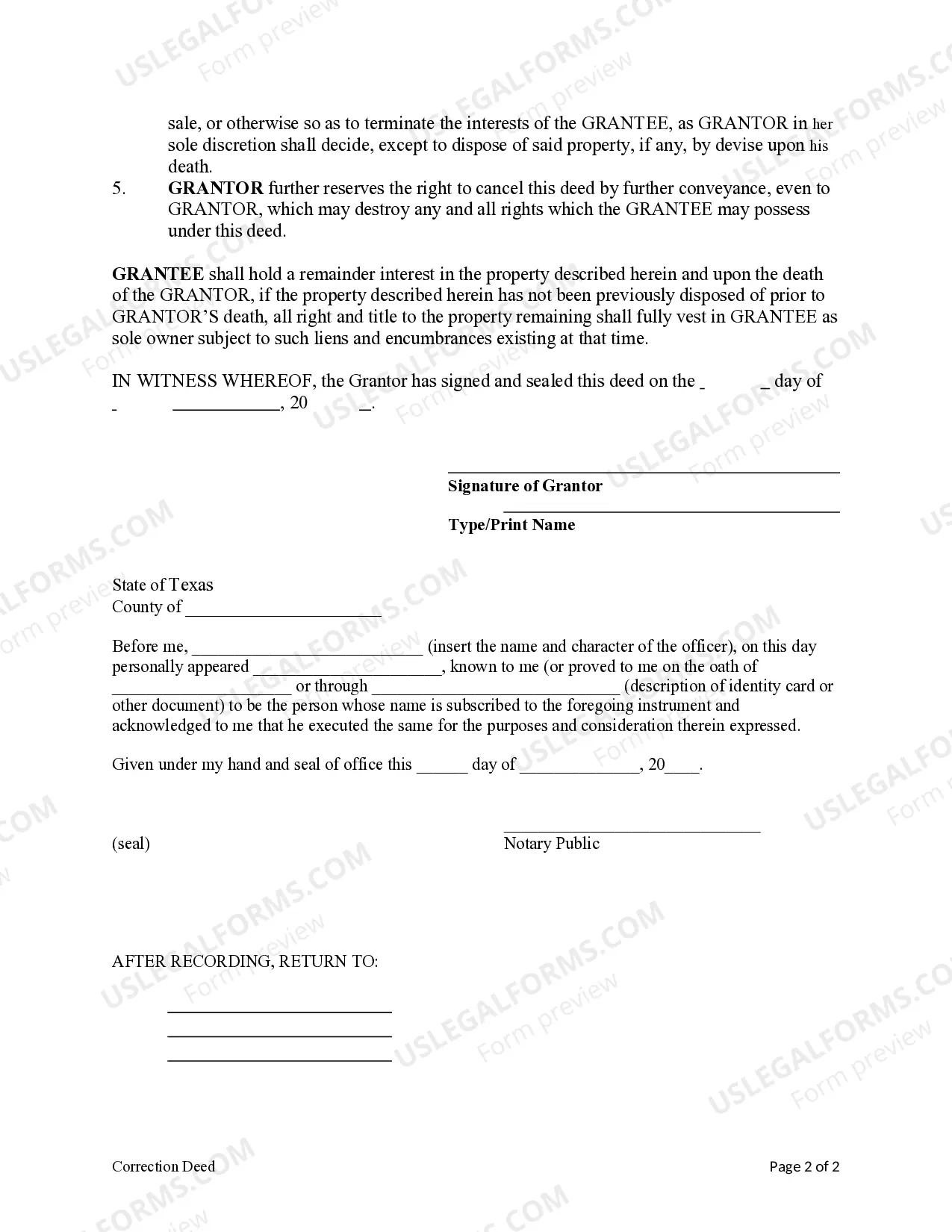
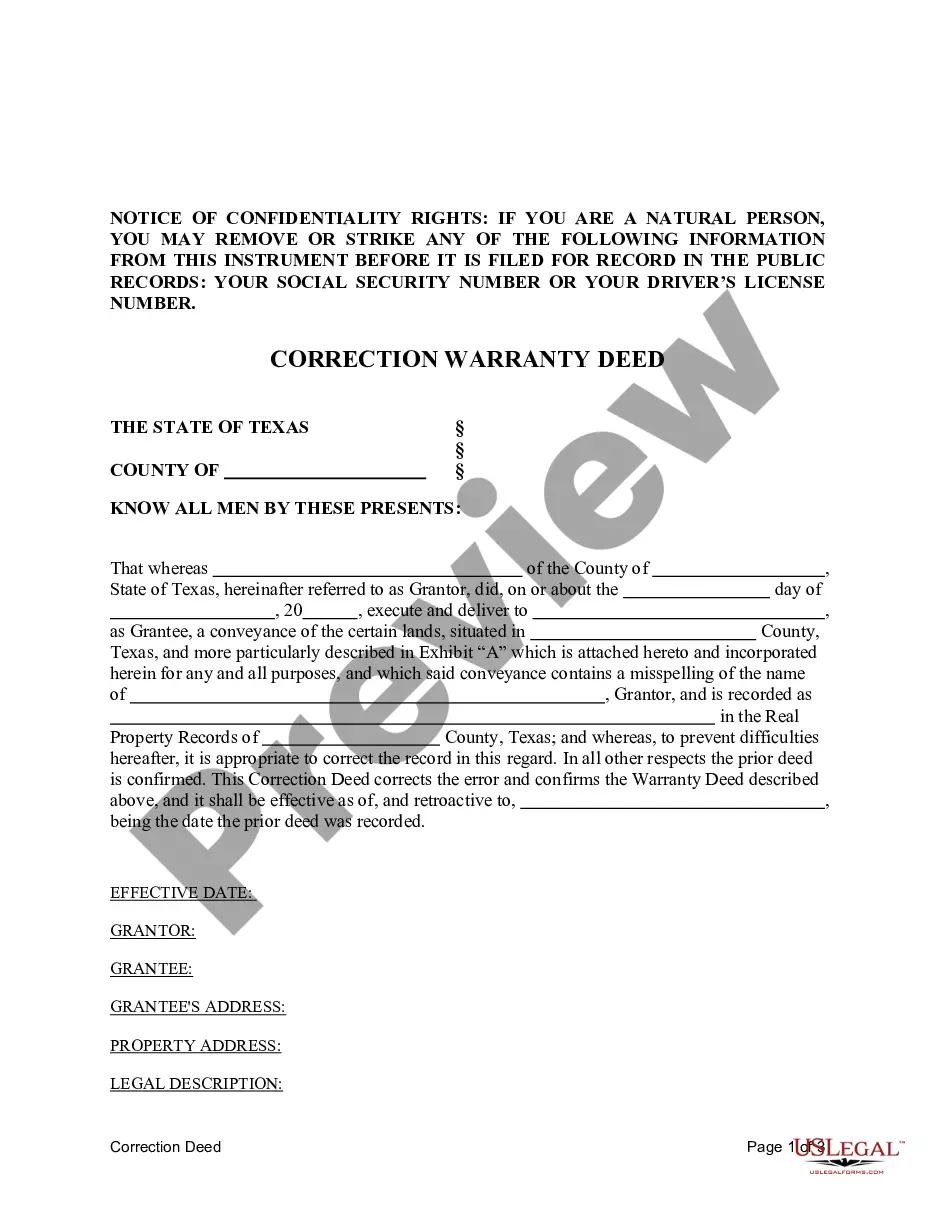
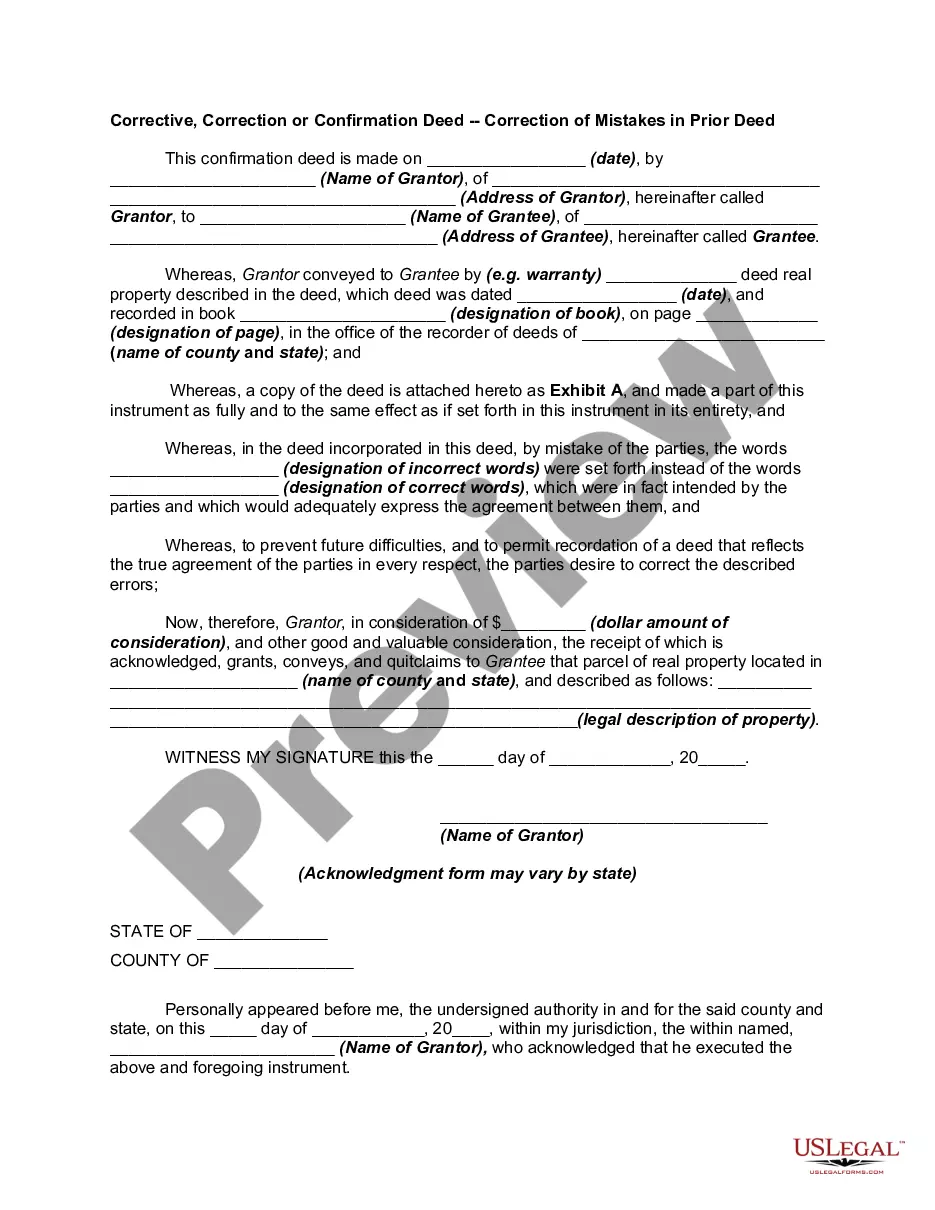
How to fill out Texas Correction Deed - Prior Deed From An Individual To An Individual?
Handling legal documents can be exasperating, even for the most seasoned professionals.
When you are in search of a Correction Deed Form Texas For Seniors and lack the time to dedicate to finding the right and current version, the process can be anxiety-inducing.
If you possess a membership, Log In to your US Legal Forms account, look for the form, and download it.
Check the My documents tab to view the documents you have previously downloaded, as well as to organize your folders as you prefer.
Leverage the US Legal Forms web library, backed by 25 years of experience and reliability. Transform your daily document management into a simple and user-friendly experience today.
- Confirm it is the correct form by previewing it and reviewing its details.
- Ensure that the template is permissible in your state or county.
- Click Buy Now once you are prepared.
- Choose a monthly subscription option.
- Select the format you desire, and Download, fill out, eSign, print, and send your document.
- Utilize cutting-edge tools to complete and oversee your Correction Deed Form Texas For Seniors.
- Access a wealth of articles, guides, and materials pertinent to your circumstances and requirements.
- Save time and effort searching for the documents you require, using US Legal Forms' sophisticated search and Preview feature to find Correction Deed Form Texas For Seniors and obtain it.
Form popularity
FAQ
In Texas, the property owner or an authorized representative can file a correction deed. This includes individuals who hold the title to the property and wish to amend any errors. If you need assistance, consider using a service like USLegalForms, which provides easy access to correction deed form Texas for elderly, ensuring the process is straightforward and compliant with local laws.
To obtain a deed correction, you will need to fill out a correction deed form Texas for elderly that accurately reflects the necessary changes. Make sure to gather any supporting documentation that may be required. After completing the form, sign it and have it notarized. Then, submit it to the appropriate local authorities to finalize the correction.
To correct a name on a deed in Texas, you need to complete a correction deed form. This form should include the correct name and the original details of the deed. After filling out the correction deed form Texas for elderly, you must sign it in front of a notary public. Finally, file the corrected deed with the county clerk's office to ensure it is legally recognized.
Transfers of real property must be in writing and notarized. Deeds should be recorded in the county where the property is located. To ensure a legal change to the property title, you'll want the services of an attorney. A qualified attorney will prepare and file the real estate transfer deed.
A correction deed, also known as a confirmatory or corrective deed, is a legal document used to fix errors on a property title that is recorded. Property owners can use this special type of deed to amend common errors such as misspellings, incomplete names, and other missing information.
A rectification deed is recognised under Section 17 of the Indian Registration Act, 1908 and is a perfectly legal way to correct errors in legal documents. The deed must be registered, to become legally valid.
A General Warranty Deed or Special Warranty Deed may be used, however, the most common deed used after a divorce is a Special Warranty Deed. The spouse whose name is to be removed from the title will need to sign the deed in front of any notary. This can be done anywhere in the world.