Possessory Conservator In Texas
Description
Get your form ready online
Our built-in tools help you complete, sign, share, and store your documents in one place.
Make edits, fill in missing information, and update formatting in US Legal Forms—just like you would in MS Word.
Download a copy, print it, send it by email, or mail it via USPS—whatever works best for your next step.
Sign and collect signatures with our SignNow integration. Send to multiple recipients, set reminders, and more. Go Premium to unlock E-Sign.
If this form requires notarization, complete it online through a secure video call—no need to meet a notary in person or wait for an appointment.
We protect your documents and personal data by following strict security and privacy standards.

Make edits, fill in missing information, and update formatting in US Legal Forms—just like you would in MS Word.

Download a copy, print it, send it by email, or mail it via USPS—whatever works best for your next step.

Sign and collect signatures with our SignNow integration. Send to multiple recipients, set reminders, and more. Go Premium to unlock E-Sign.

If this form requires notarization, complete it online through a secure video call—no need to meet a notary in person or wait for an appointment.

We protect your documents and personal data by following strict security and privacy standards.
Looking for another form?





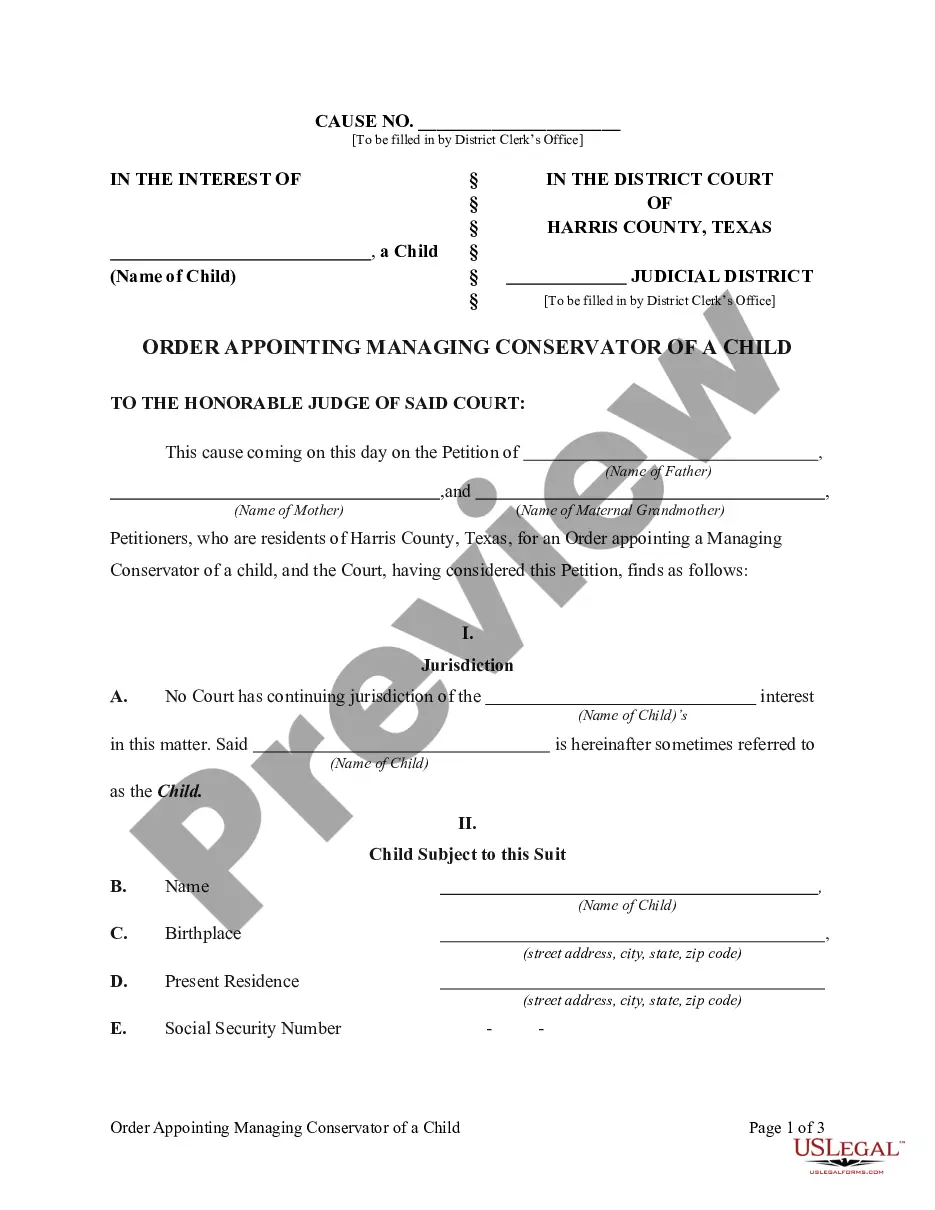
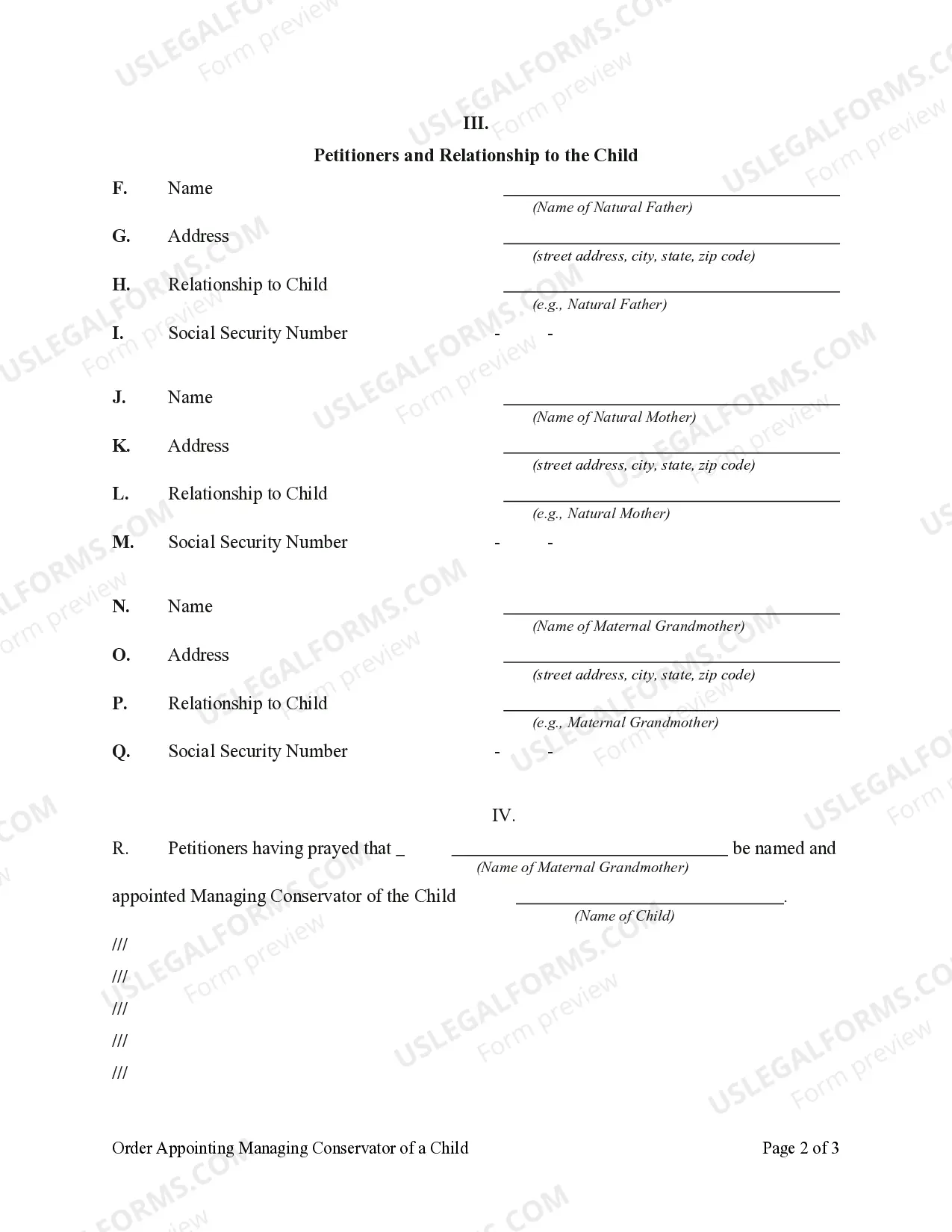
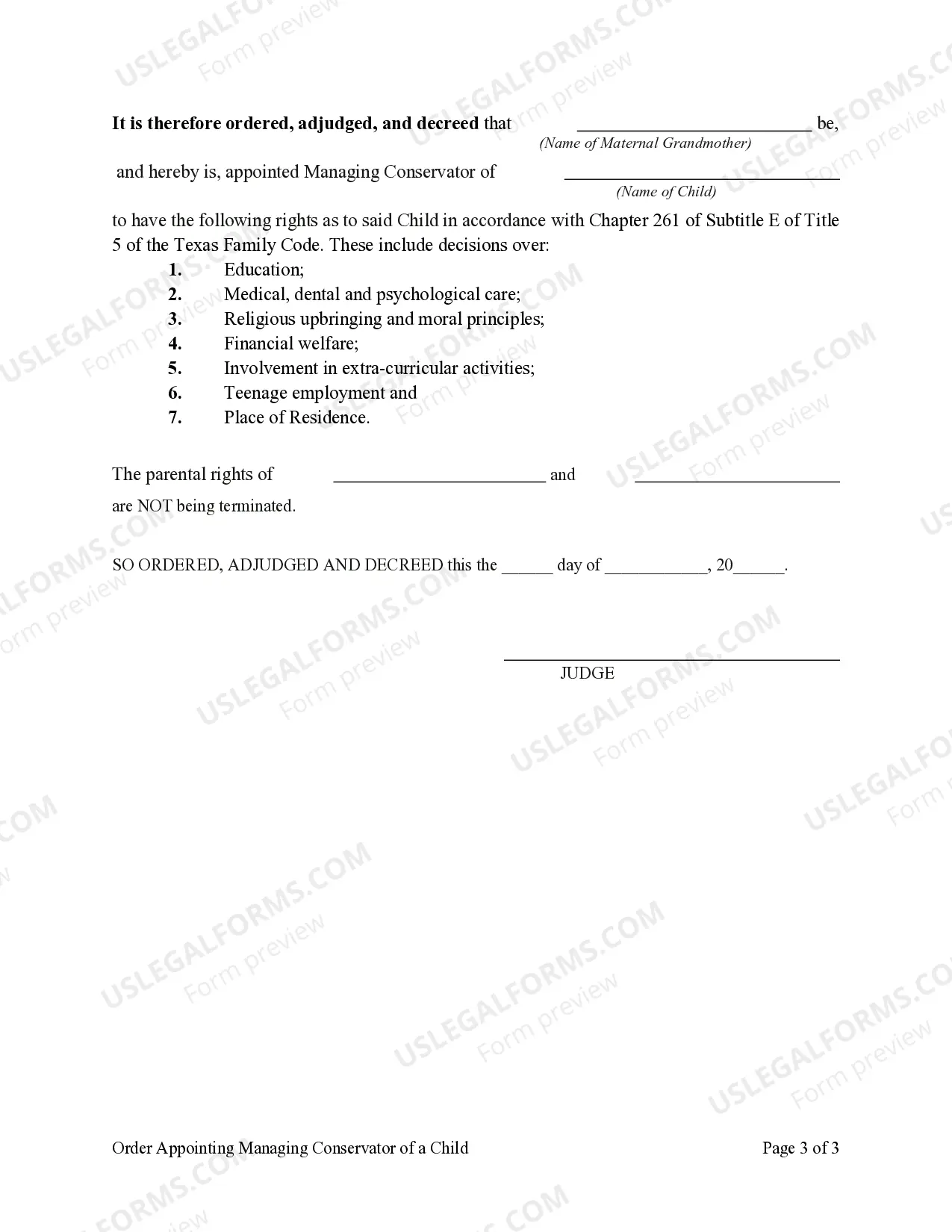
How to fill out Texas Order Appointing Managing Conservator Of A Child?
Obtaining legal document examples that adhere to federal and state regulations is crucial, and the web provides numerous choices to select from.
However, what is the advantage of spending time searching for the appropriate Possessory Conservator In Texas example online if the US Legal Forms online library already compiles such templates in one location.
US Legal Forms is the largest online legal repository featuring over 85,000 editable templates created by attorneys for any business and personal scenario.
Examine the template using the Preview option or through the text description to confirm it fulfills your needs.
- They are simple to navigate with all documents categorized by state and intended use.
- Our experts keep up with legal updates, ensuring that your form is current and compliant when acquiring a Possessory Conservator In Texas from our platform.
- Securing a Possessory Conservator In Texas is straightforward and rapid for both existing and new users.
- If you already possess an account with a valid subscription, Log In and save the document sample you need in your desired format.
- If you are a newcomer to our site, follow the steps below.
Form popularity
FAQ
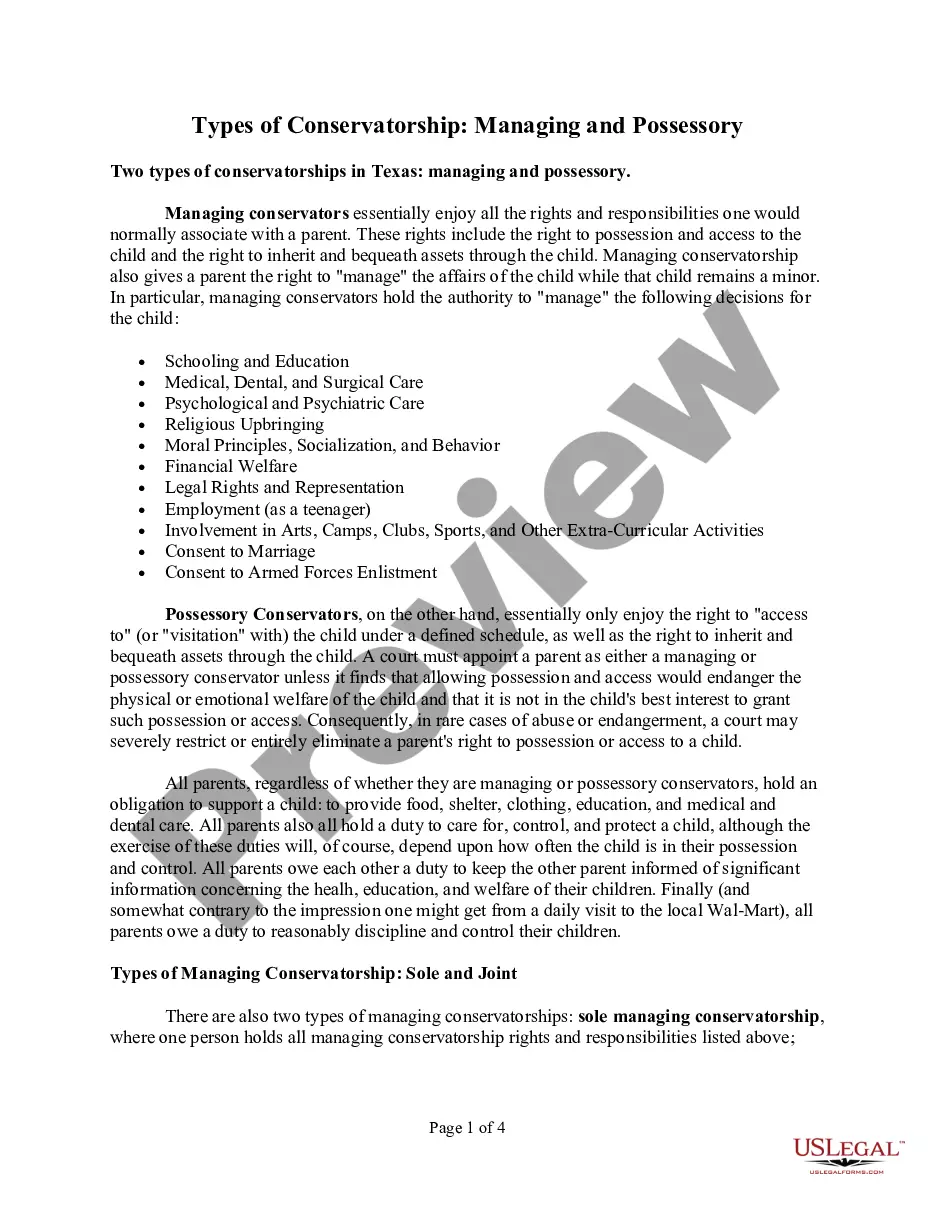
Possessory conservatorship in Texas refers to the arrangement where a parent has the right to possess and spend time with their child without holding decision-making power. This legal status allows the parent to engage in the child’s life meaningfully while respecting the decisions made by the managing conservator. Understanding this concept is vital for parents in custody disputes. Utilize USLegalForms to access helpful documents and insights about possessory conservatorship.
A possessory conservator in Texas has specific rights, including the right to visitation and the ability to participate in significant life events of the child. However, they do not have the authority to make major decisions affecting the child’s life. This role emphasizes the importance of maintaining a relationship while adhering to the decisions made by the managing conservator. To further explore your rights and responsibilities, USLegalForms offers valuable resources tailored to possessory conservators.
The primary difference between a managing conservator and a possessory conservator in Texas lies in their responsibilities and authority. The managing conservator has the legal right to make decisions regarding the child's education, health care, and general welfare, while the possessory conservator primarily focuses on visitation and maintaining a relationship with the child. Understanding these distinctions helps parents effectively plan their custody arrangements. Resources from USLegalForms can help guide you through this process.
A possessory conservator in Texas is a parent who has the right to spend time with their child but does not have decision-making authority regarding the child's upbringing. This designation allows the possessory conservator to maintain a meaningful relationship with the child while the managing conservator makes significant decisions. Understanding this role is crucial for parents navigating custody arrangements. USLegalForms can provide you with templates and information to clarify these roles.
Obtaining sole conservatorship in Texas can be challenging, as the court prioritizes the best interests of the child. You must demonstrate that sole conservatorship is necessary for the child's well-being, which often involves presenting evidence of your ability to provide a stable environment. Additionally, the other parent may contest your request, adding complexity to the process. To navigate these challenges effectively, consider using USLegalForms to access resources tailored to your situation.
In Texas, a Power of Attorney (POA) does not need to be filed with the court to be valid. However, it is advisable to keep the document accessible, as it may need to be presented when acting on behalf of the principal. Understanding the implications of a POA is crucial, especially in situations involving possessory conservatorship in Texas. USLegalForms offers guidance and templates to ensure that your POA is correctly drafted and compliant with Texas laws.
When parents cannot reach an agreement regarding child custody in Texas, the court may intervene to establish a possessory conservator arrangement. The judge will consider the best interests of the child, which may involve appointing one parent as the managing conservator and the other as the possessory conservator. This legal framework ensures that both parents have a role in the child's life, while also providing structure. Utilizing resources like USLegalForms can help you understand and navigate these legal processes more effectively.
In 2025, Texas will implement new child support laws that aim to better address the needs of children and custodial parents. This legislation will include updated guidelines for calculating support, which may affect the responsibilities of possessory conservators in Texas. It is crucial for parents to stay informed about these changes to understand their rights and obligations. For detailed information and assistance, platforms like US Legal Forms can help you navigate the legal landscape.
Yes, you can file for guardianship without a lawyer in Texas, but it is a complex process. Understanding the requirements and paperwork is essential, especially when it comes to matters like becoming a possessory conservator in Texas. While some individuals choose to navigate this alone, consulting with a legal professional can provide clarity and ensure that all necessary steps are followed. Consider using resources like US Legal Forms to access the correct forms and guidance.