Texas Excess Hearing Purchase For Conversion
Description
Get your form ready online
Our built-in tools help you complete, sign, share, and store your documents in one place.
Make edits, fill in missing information, and update formatting in US Legal Forms—just like you would in MS Word.
Download a copy, print it, send it by email, or mail it via USPS—whatever works best for your next step.
Sign and collect signatures with our SignNow integration. Send to multiple recipients, set reminders, and more. Go Premium to unlock E-Sign.
If this form requires notarization, complete it online through a secure video call—no need to meet a notary in person or wait for an appointment.
We protect your documents and personal data by following strict security and privacy standards.

Make edits, fill in missing information, and update formatting in US Legal Forms—just like you would in MS Word.

Download a copy, print it, send it by email, or mail it via USPS—whatever works best for your next step.

Sign and collect signatures with our SignNow integration. Send to multiple recipients, set reminders, and more. Go Premium to unlock E-Sign.

If this form requires notarization, complete it online through a secure video call—no need to meet a notary in person or wait for an appointment.

We protect your documents and personal data by following strict security and privacy standards.
Looking for another form?








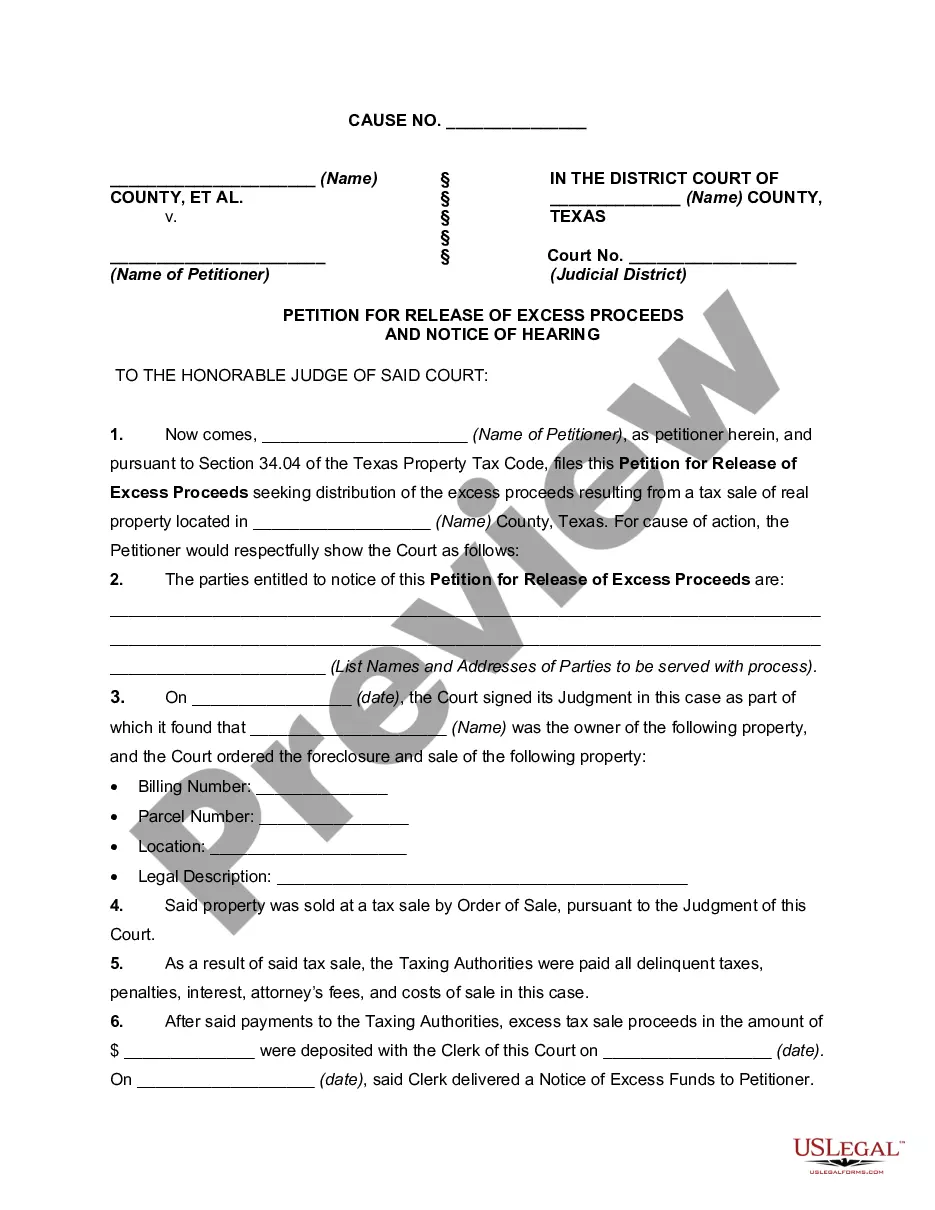
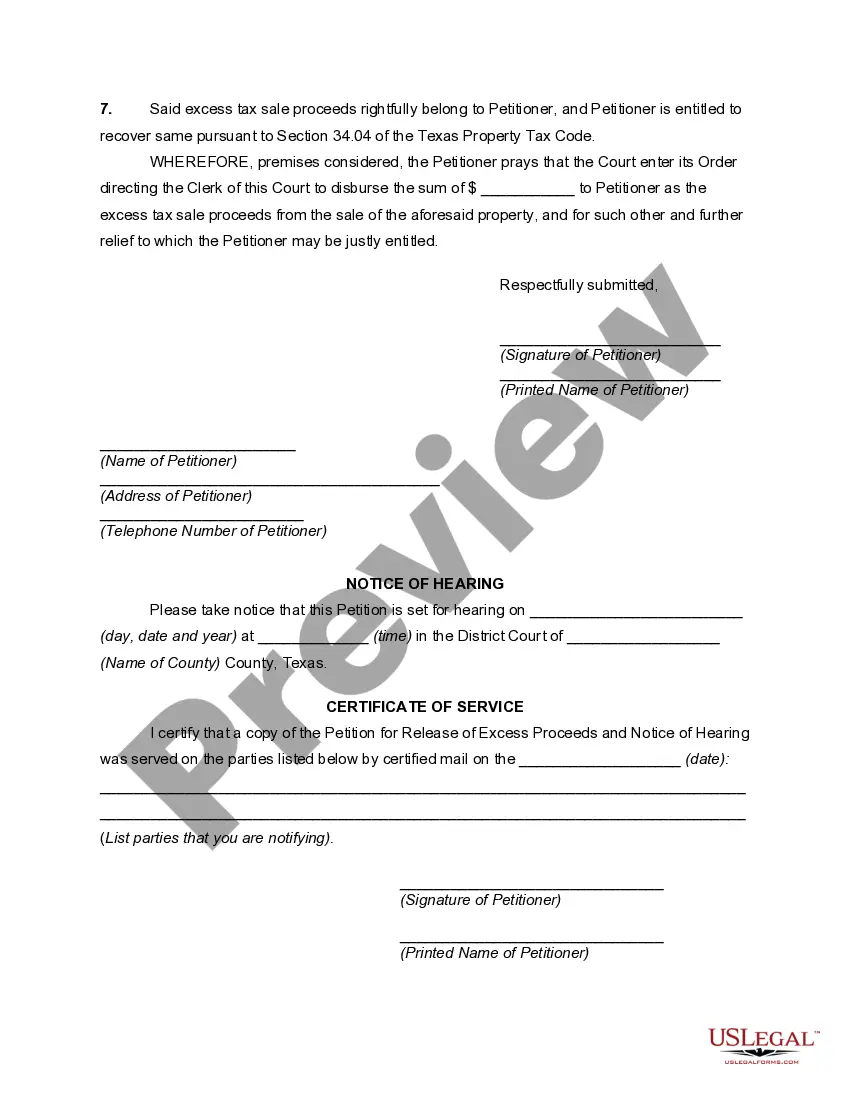
How to fill out Texas Petition For Release Of Excess Proceeds And Notice Of Hearing?
- For returning users, log in to your account and download your desired form by selecting the 'Download' button.
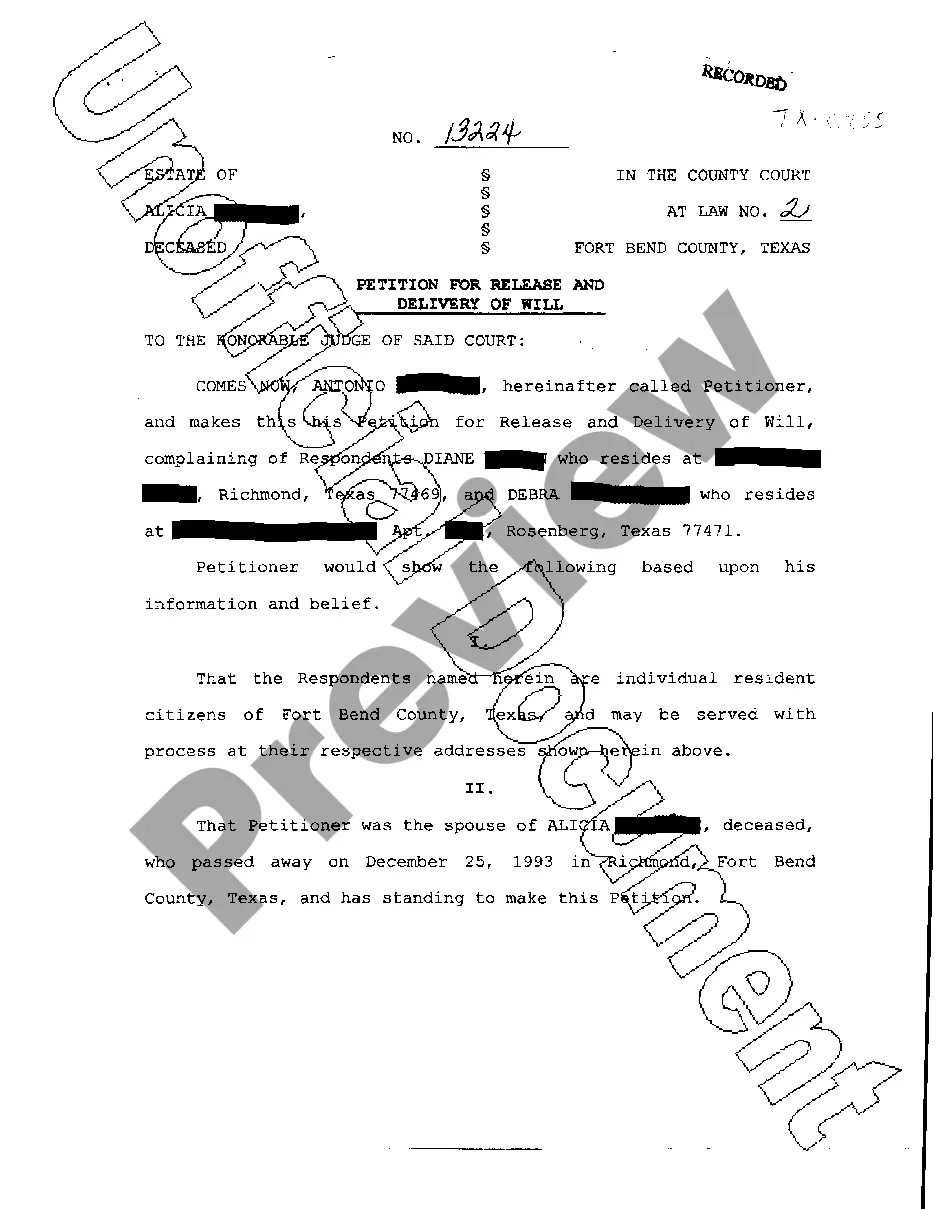
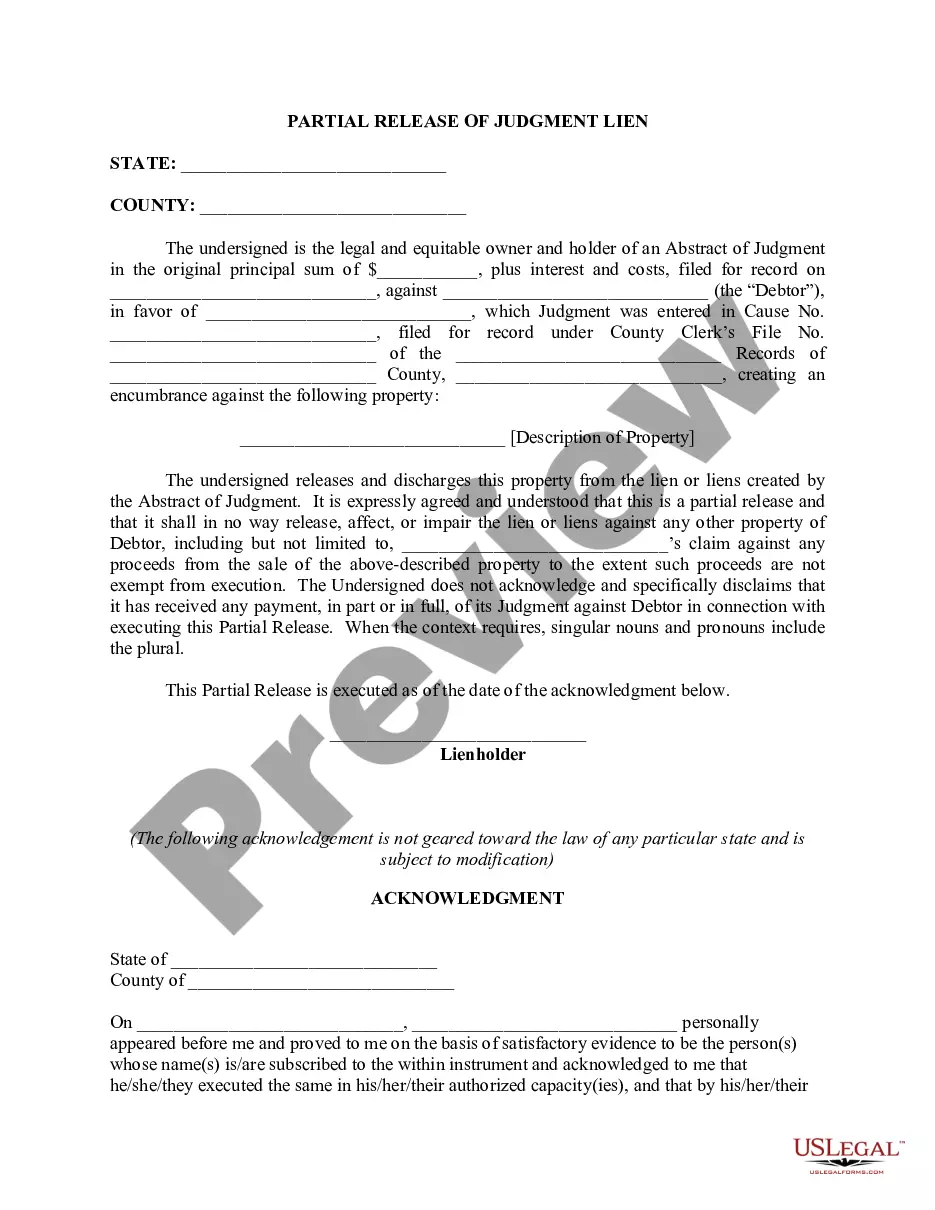
- If you're new to US Legal Forms, start by browsing the Preview mode and description of the form to ensure it meets your local requirements.
- Utilize the Search feature for alternatives if the selected template doesn't meet your needs; finding the right form is crucial.
- Once you've found the appropriate document, click the 'Buy Now' button and choose a subscription plan that fits your needs.
- Complete your purchase by providing payment details via credit card or PayPal.
- Download the completed form and access it anytime through the 'My Forms' section in your profile.
By utilizing US Legal Forms, users gain access to an extensive library of over 85,000 customizable legal forms, fortified with the expertise of premium specialists to ensure accuracy and compliance.
Experience the convenience and reliability of US Legal Forms today! Start securing your legal documents efficiently.
Form popularity
FAQ
In general, surplus funds from a foreclosure can have tax implications, particularly if the funds represent gain. The IRS may consider these proceeds as income, and it’s important to consult a tax professional to understand your specific situation. Tax regulations can be complex, and having accurate information is crucial to avoid any pitfalls. By using resources available through US Legal Forms, you can access guidance to clarify your tax obligations concerning surplus funds.
Excess proceeds from a foreclosure sale in Texas are held for the benefit of the former homeowner. If there are surplus funds after satisfying the mortgage debt, those funds will be available for the previous owner to claim. However, if no claim is made, these funds may eventually be transferred to the state as unclaimed property. To avoid losing your rightful proceeds, it’s wise to act quickly, and leveraging US Legal Forms can simplify the claims process.
Filing for excess proceeds in Texas involves preparing a formal claim that outlines the details surrounding the foreclosure sale. Typically, you must submit your claim to the court in which the foreclosure took place. Make sure to include all necessary supporting documents, including proof of identity and ownership of the property. Resources from US Legal Forms can guide you through the required steps for filing your claim effectively.
Excess funds realized at a foreclosure sale in Texas primarily belong to the former owner of the property. If the property sold for more than the outstanding debt, the extra funds are intended for the previous owner. To claim these funds, former owners must follow the appropriate legal procedures established by Texas law. Using platforms like US Legal Forms can assist you in understanding your rights related to these funds.
In Texas, the law regarding excess proceeds indicates that any surplus funds from a foreclosure auction belong to the previous owner of the property. This law ensures that former homeowners have a way to reclaim funds they might still be entitled to. It’s crucial to understand these laws if you're dealing with excess proceeds, as they dictate how much you may recover after a foreclosure sale. Consulting legal resources, such as US Legal Forms, can provide valuable insights into the legal specifics.
Claiming surplus from a foreclosure in Texas involves submitting a claim to the appropriate court or county office handling the foreclosure sale. You'll need to gather relevant documents such as proof of ownership and any court documents about the sale. The process may vary based on your specific situation, but being organized can streamline the process. US Legal Forms provides templates and guidance to help you navigate your claim smoothly.
To recover your surplus funds in Texas, you first need to identify if any funds remain after a foreclosure sale or auction. You can find details about your surplus funds on the county's public records or by contacting them directly. Once you've confirmed the existence of these funds, you may need to file a claim to initiate the recovery process. Utilizing the right resources, like the US Legal Forms platform, can simplify this process and help ensure you take the correct steps.