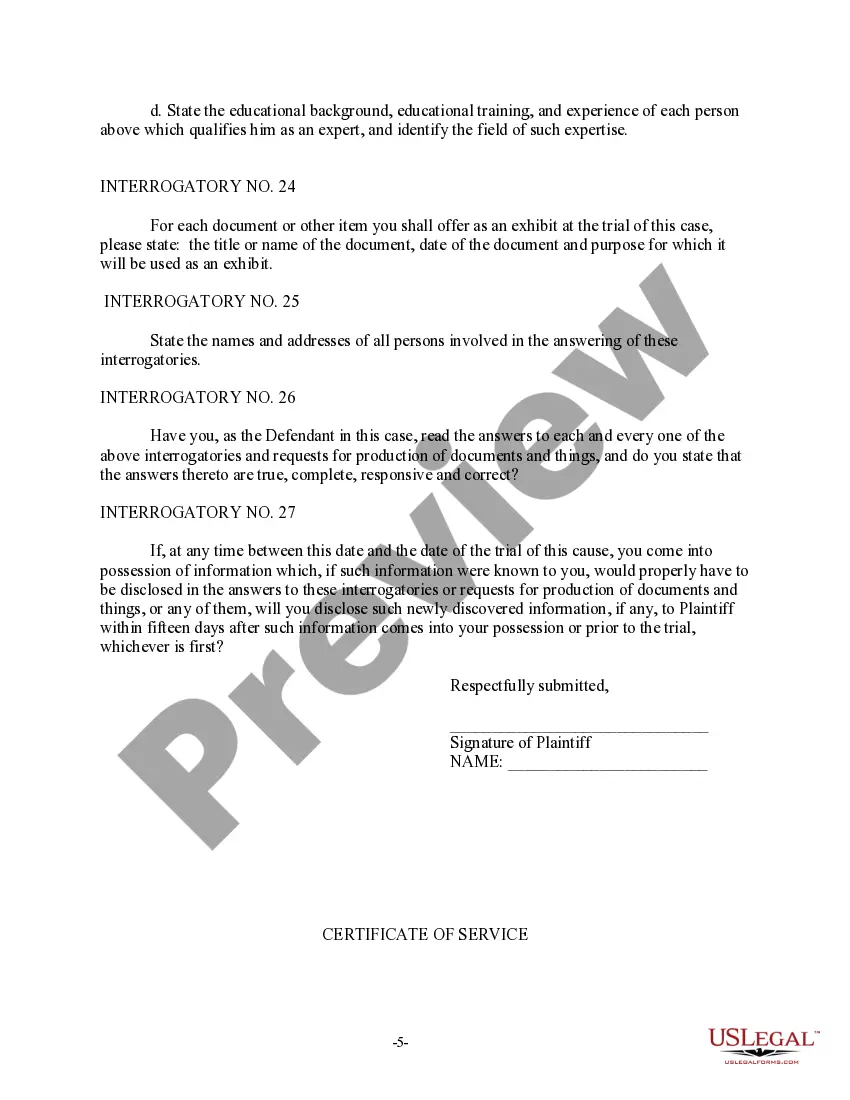
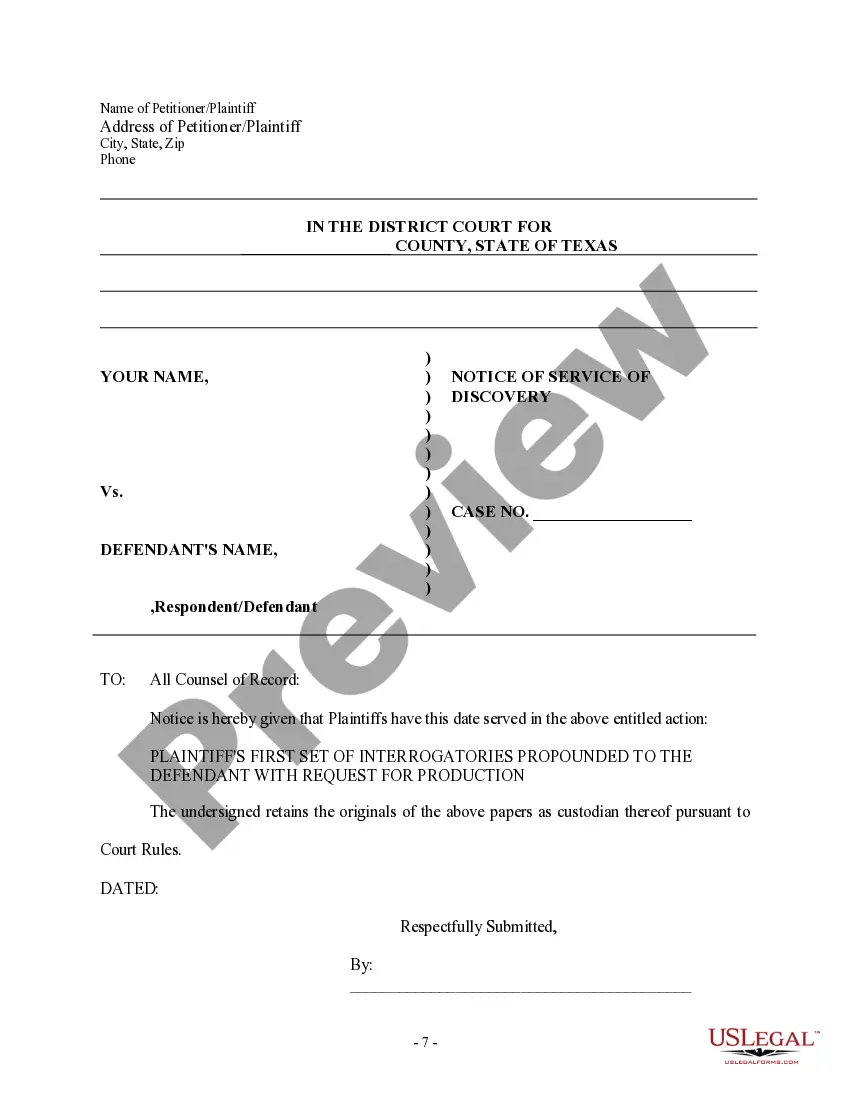
Texas Interrogatories Sample With Plaintiff
Description


Get your form ready online
Our built-in tools help you complete, sign, share, and store your documents in one place.
Make edits, fill in missing information, and update formatting in US Legal Forms—just like you would in MS Word.
Download a copy, print it, send it by email, or mail it via USPS—whatever works best for your next step.
Sign and collect signatures with our SignNow integration. Send to multiple recipients, set reminders, and more. Go Premium to unlock E-Sign.
If this form requires notarization, complete it online through a secure video call—no need to meet a notary in person or wait for an appointment.
We protect your documents and personal data by following strict security and privacy standards.

Make edits, fill in missing information, and update formatting in US Legal Forms—just like you would in MS Word.

Download a copy, print it, send it by email, or mail it via USPS—whatever works best for your next step.

Sign and collect signatures with our SignNow integration. Send to multiple recipients, set reminders, and more. Go Premium to unlock E-Sign.

If this form requires notarization, complete it online through a secure video call—no need to meet a notary in person or wait for an appointment.

We protect your documents and personal data by following strict security and privacy standards.
Looking for another form?


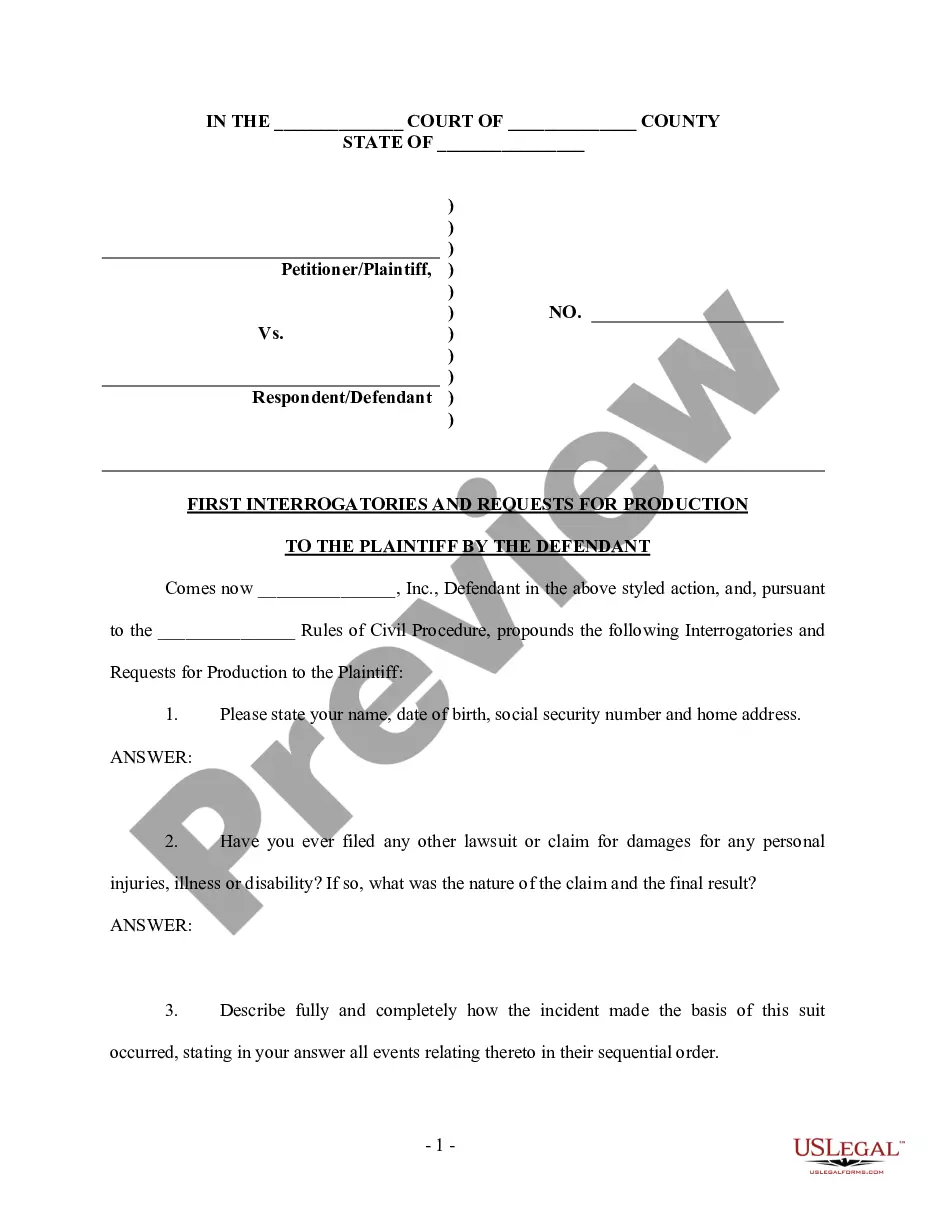
How to fill out Texas Discovery Interrogatories From Plaintiff To Defendant With Production Requests?
- Log into your US Legal Forms account if you're a returning user. Make sure your subscription is active before proceeding.
- For first-time users, preview the available templates and descriptions to ensure you select one that meets your legal needs.
- If the desired form is unavailable, utilize the Search feature to locate a different template that aligns with your requirements.
- Once you find the correct document, click the Buy Now button and choose a subscription plan that fits your needs.
- Complete your purchase using your credit card or PayPal account to gain access to the extensive library of forms.
- After your purchase, download the form to your device for completion. You can also revisit it anytime via the My Forms section.
In conclusion, US Legal Forms provides a robust and user-friendly platform designed to simplify the legal document process. With access to over 85,000 forms and expert assistance, you can ensure your documents are both accurate and compliant.
Start your legal journey today by visiting US Legal Forms and unlocking the resources you need!
Form popularity
FAQ
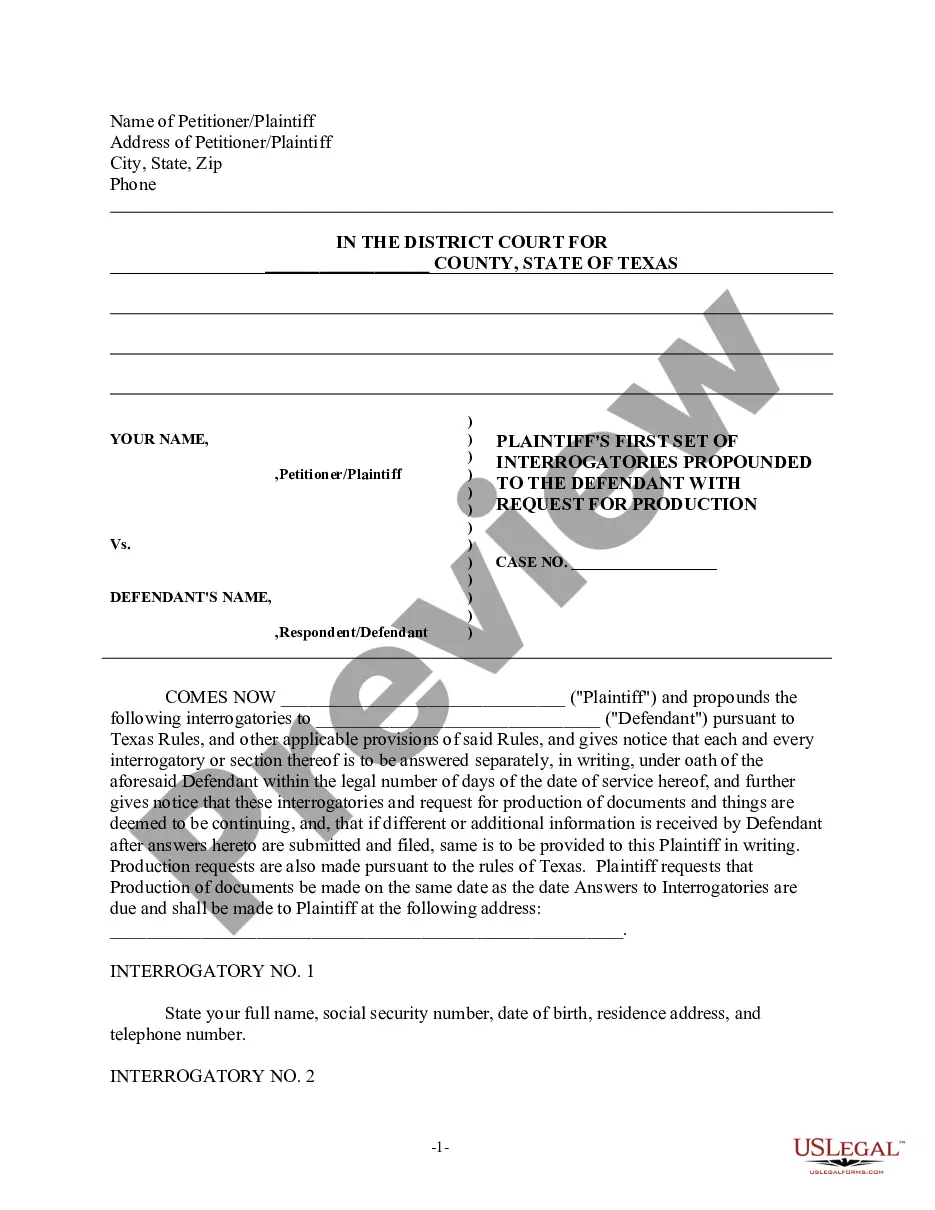
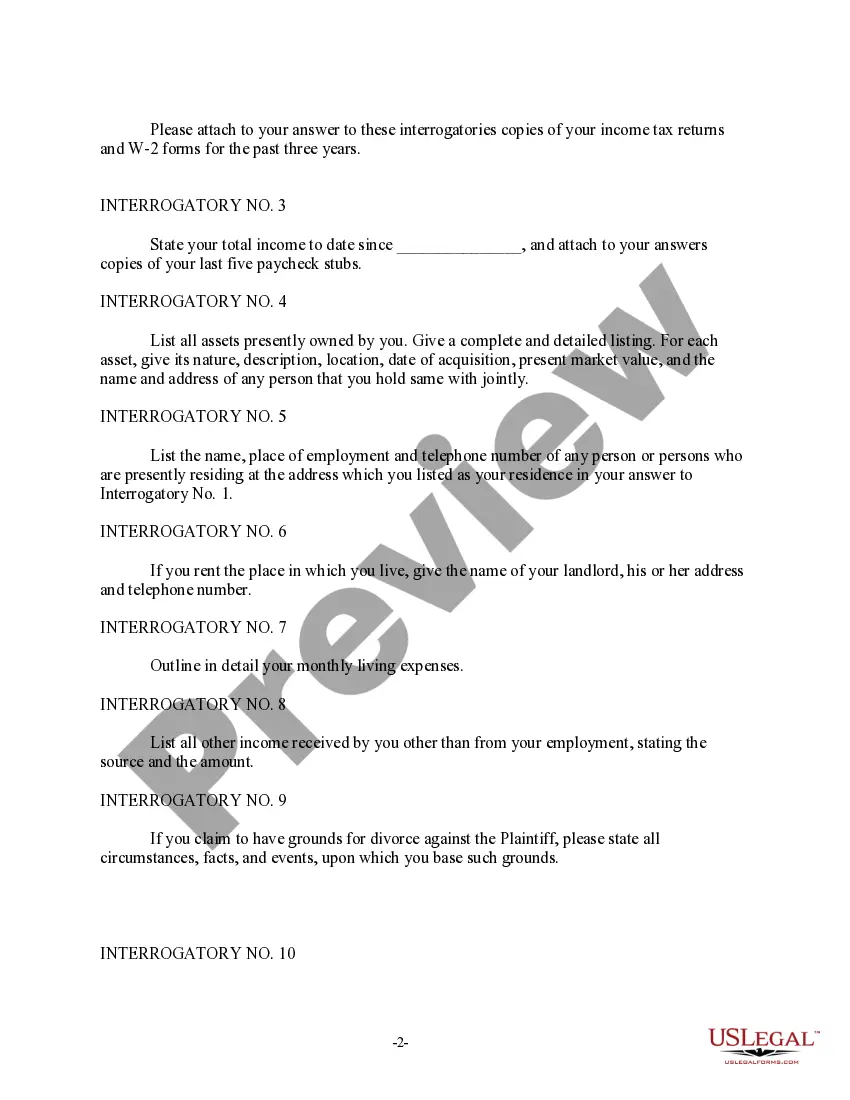
An interrogatory sentence often begins with 'Please describe' or 'Identify.' For example, a Texas interrogatories sample with plaintiff could pose the question, 'Please identify all individuals present at the scene of the incident.' This format provides clarity and directs the responding party to share essential information.
Several objections can be raised against interrogatories, including arguments of irrelevance, overburden, or privilege. Enumerating these objections helps define the scope of the inquiry and ensures compliance with discovery rules. If you encounter objections, refer to a Texas interrogatories sample with plaintiff for strategies to address them effectively.
Rule 33 governs the use of interrogatories in Texas civil procedure, specifying how many interrogatories each party can serve and setting timelines for responses. Typically, a party may serve up to 25 interrogatories, including subparts, unless otherwise agreed upon or ordered by the court. Understanding Rule 33 is vital, so consider referring to a Texas interrogatories sample with plaintiff for best practices.
If someone fails to answer interrogatories, the requesting party may file a motion to compel, which asks the court to require compliance. Non-response can also lead to court sanctions or negative implications for the non-compliant party's case. Using a Texas interrogatories sample with plaintiff effectively can encourage timely and complete answers.
To answer plaintiff's interrogatories, review each question carefully, and provide a clear and concise response. It is important to stick to the facts, avoiding speculation or extraneous information. If you're unsure how to answer effectively, consider using a Texas interrogatories sample with plaintiff as a guide, or consult a legal professional for help.
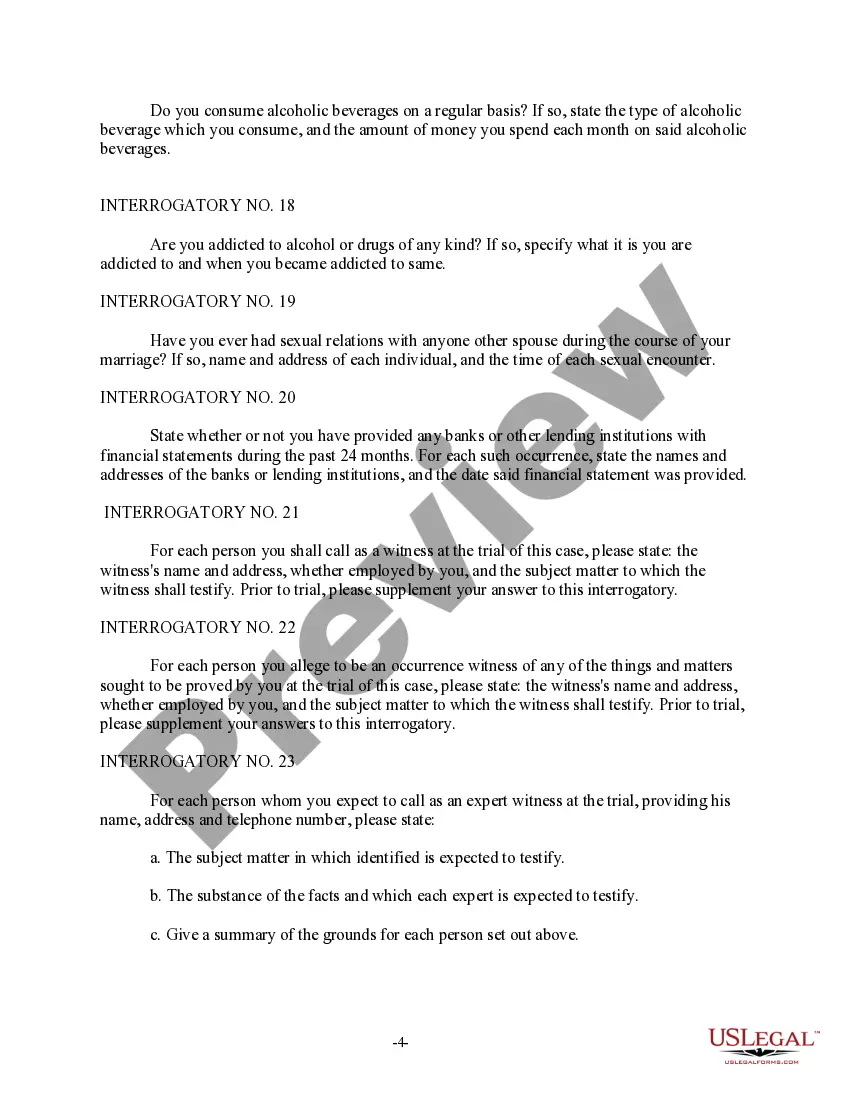
When drafting interrogatories, focus on asking clear, specific questions that elicit useful information. For instance, you might ask the plaintiff to specify any eyewitnesses or details surrounding the incident. A useful Texas interrogatories sample with plaintiff includes inquiries that help to build your case or clarify the opposing party's stance.
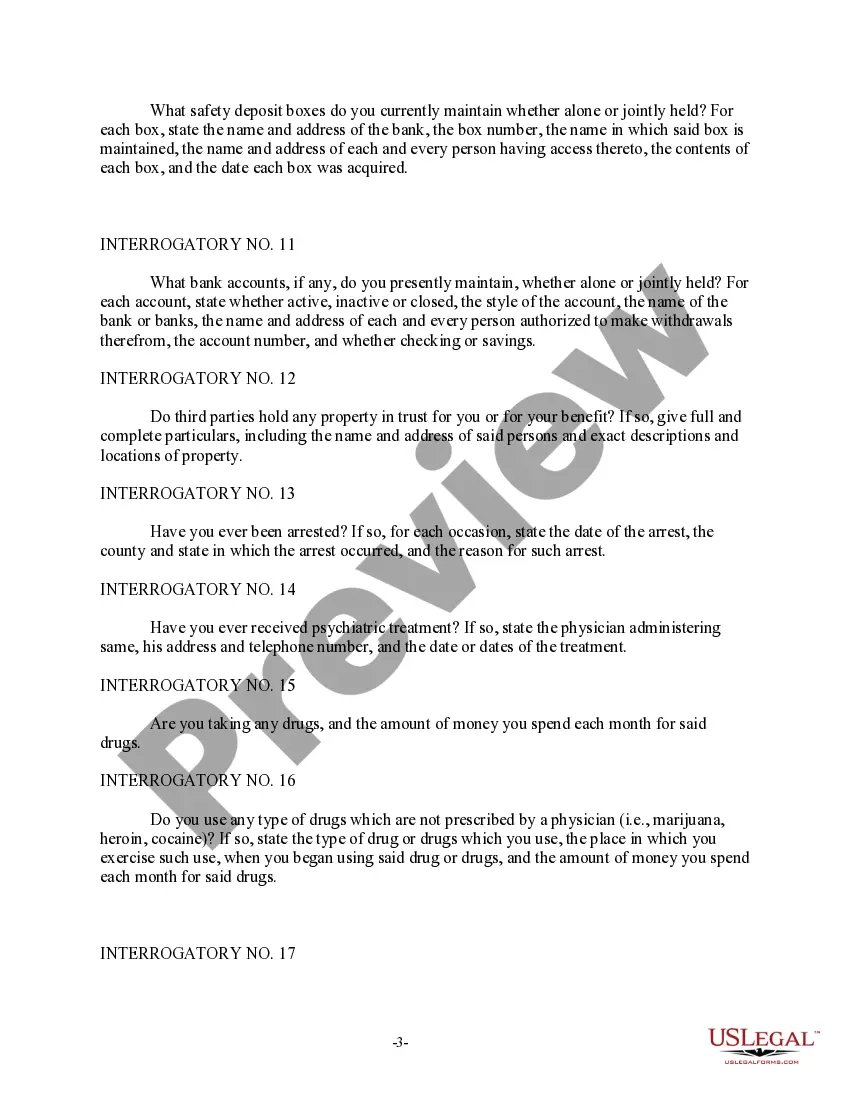
Interrogatories can include questions that seek facts, clarify allegations, and obtain parties' opinions. A Texas interrogatories sample with plaintiff typically encompasses questions regarding names, dates, events, and other pertinent information relevant to the case. These questions are designed to ensure both parties have a clear understanding of the issues involved.
An example of an interrogatory is a written question sent from one party to another in a legal case, aimed at gathering information. For instance, a Texas interrogatories sample with plaintiff might include, 'Please describe in detail the events leading to the incident in question.' This helps clarify the facts of the case and generates a foundation for further legal strategy.
Formatting interrogatories answers requires clear organization and attention to detail. Begin each answer by restating the question to provide context, then proceed with a concise response. If applicable, refer to a Texas interrogatories sample with plaintiff for proper formatting guidelines. Maintaining clarity and coherence in your responses helps ensure that the information is easily understood by all parties involved.
The purpose of interrogatories is to gather detailed information from an opposing party to facilitate the discovery process. They help uncover facts that may influence the outcome of a case. Using a Texas interrogatories sample with plaintiff can provide valuable insight into what information is typically sought. Ultimately, interrogatories promote transparency and fairness in legal proceedings.