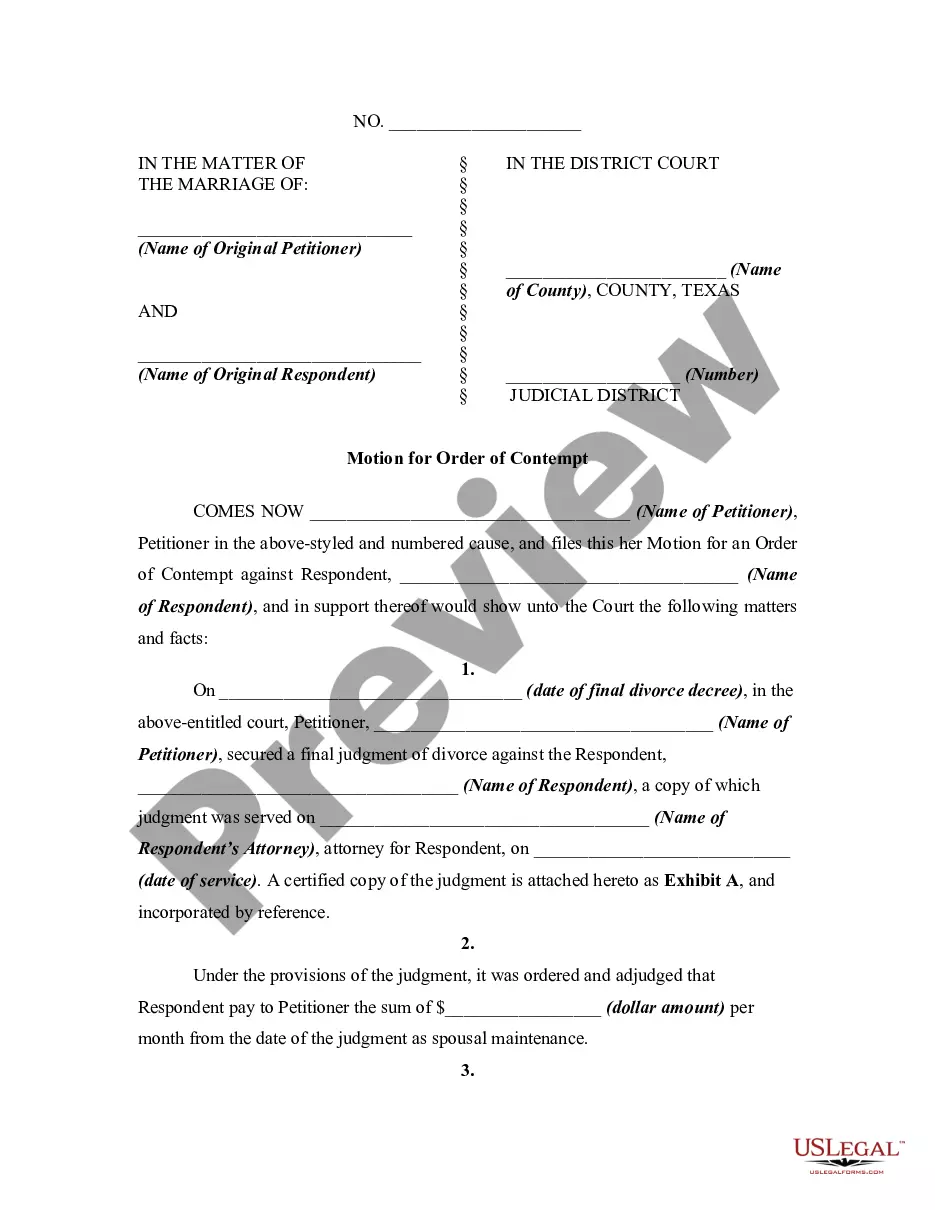
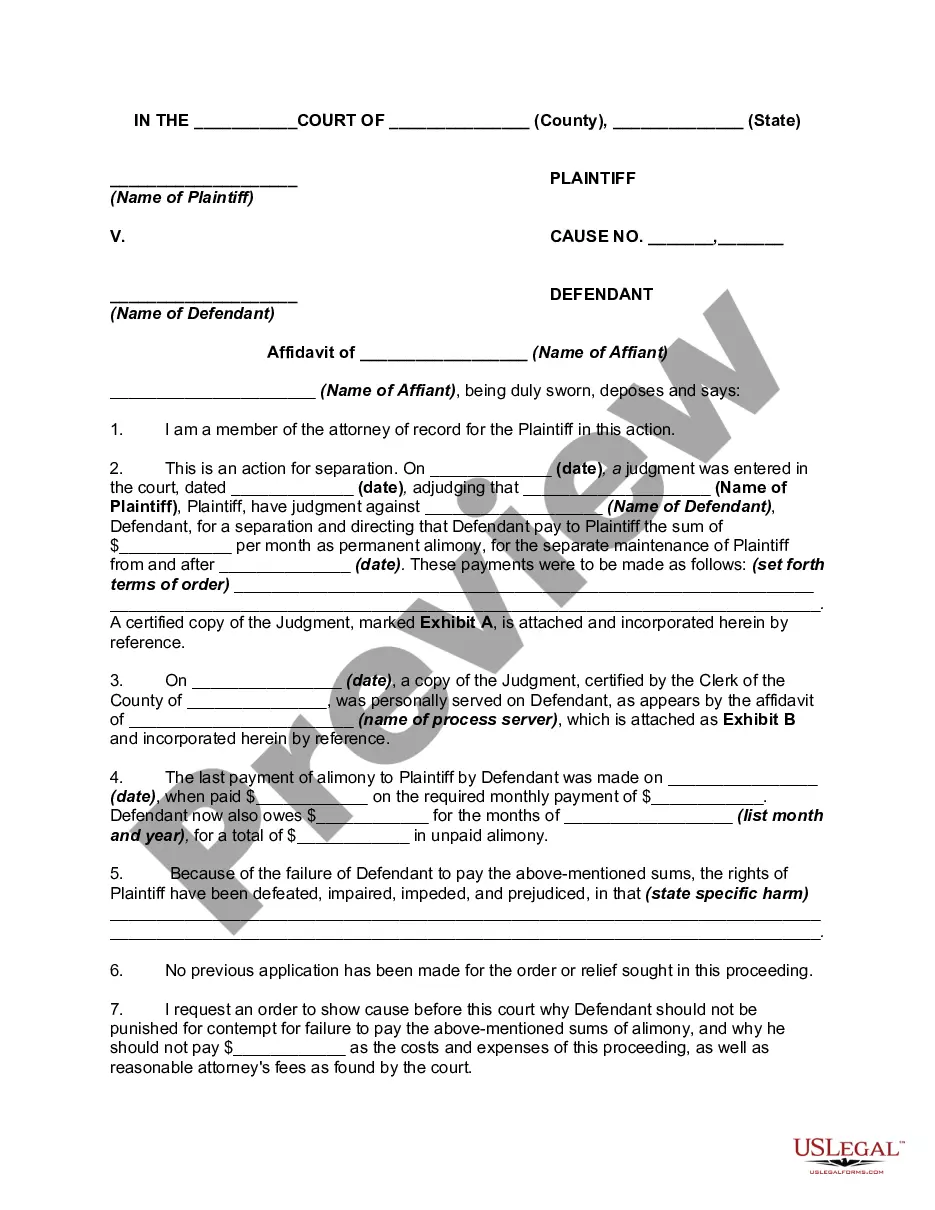
Tx Motion Order Texas With Motion
Description

Get your form ready online
Our built-in tools help you complete, sign, share, and store your documents in one place.
Make edits, fill in missing information, and update formatting in US Legal Forms—just like you would in MS Word.
Download a copy, print it, send it by email, or mail it via USPS—whatever works best for your next step.
Sign and collect signatures with our SignNow integration. Send to multiple recipients, set reminders, and more. Go Premium to unlock E-Sign.
If this form requires notarization, complete it online through a secure video call—no need to meet a notary in person or wait for an appointment.
We protect your documents and personal data by following strict security and privacy standards.

Make edits, fill in missing information, and update formatting in US Legal Forms—just like you would in MS Word.

Download a copy, print it, send it by email, or mail it via USPS—whatever works best for your next step.

Sign and collect signatures with our SignNow integration. Send to multiple recipients, set reminders, and more. Go Premium to unlock E-Sign.

If this form requires notarization, complete it online through a secure video call—no need to meet a notary in person or wait for an appointment.

We protect your documents and personal data by following strict security and privacy standards.
Looking for another form?








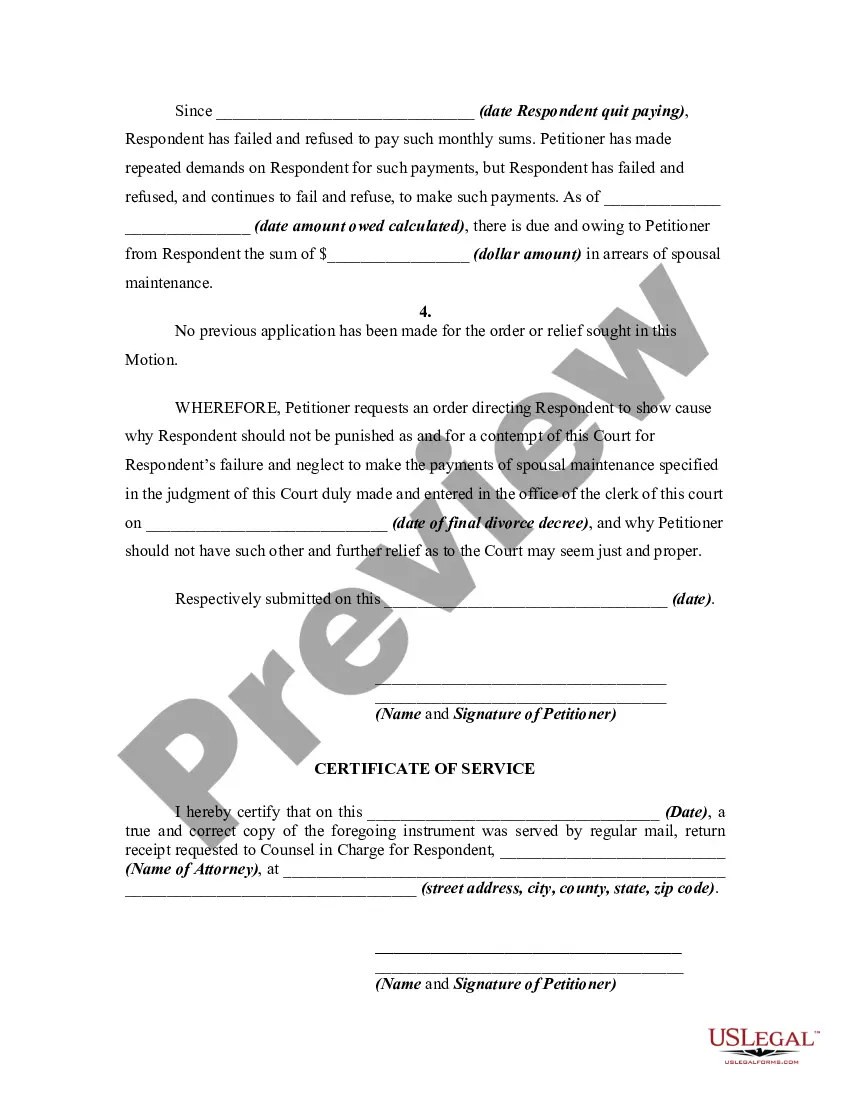
How to fill out Texas Motion For Order Of Contempt For Failure To Pay Spousal Maintenance?
Acquiring legal document examples that adhere to federal and local regulations is crucial, and the web provides numerous choices to select from.
However, what’s the benefit of spending time searching for the appropriately drafted Tx Motion Order Texas With Motion example online when the US Legal Forms online repository already has such templates gathered in one location.
US Legal Forms is the largest online legal repository with over 85,000 fillable templates created by attorneys for any professional and personal situation.
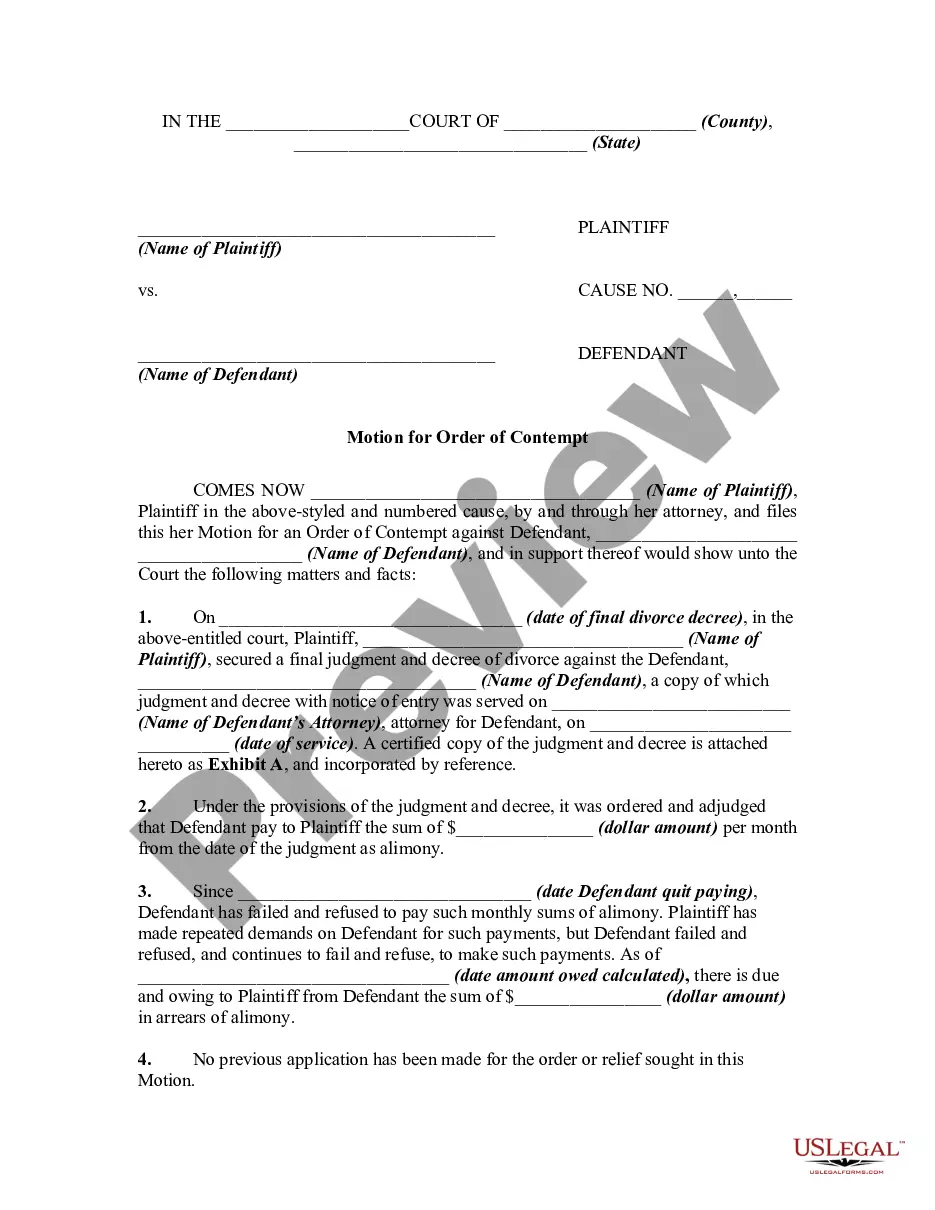
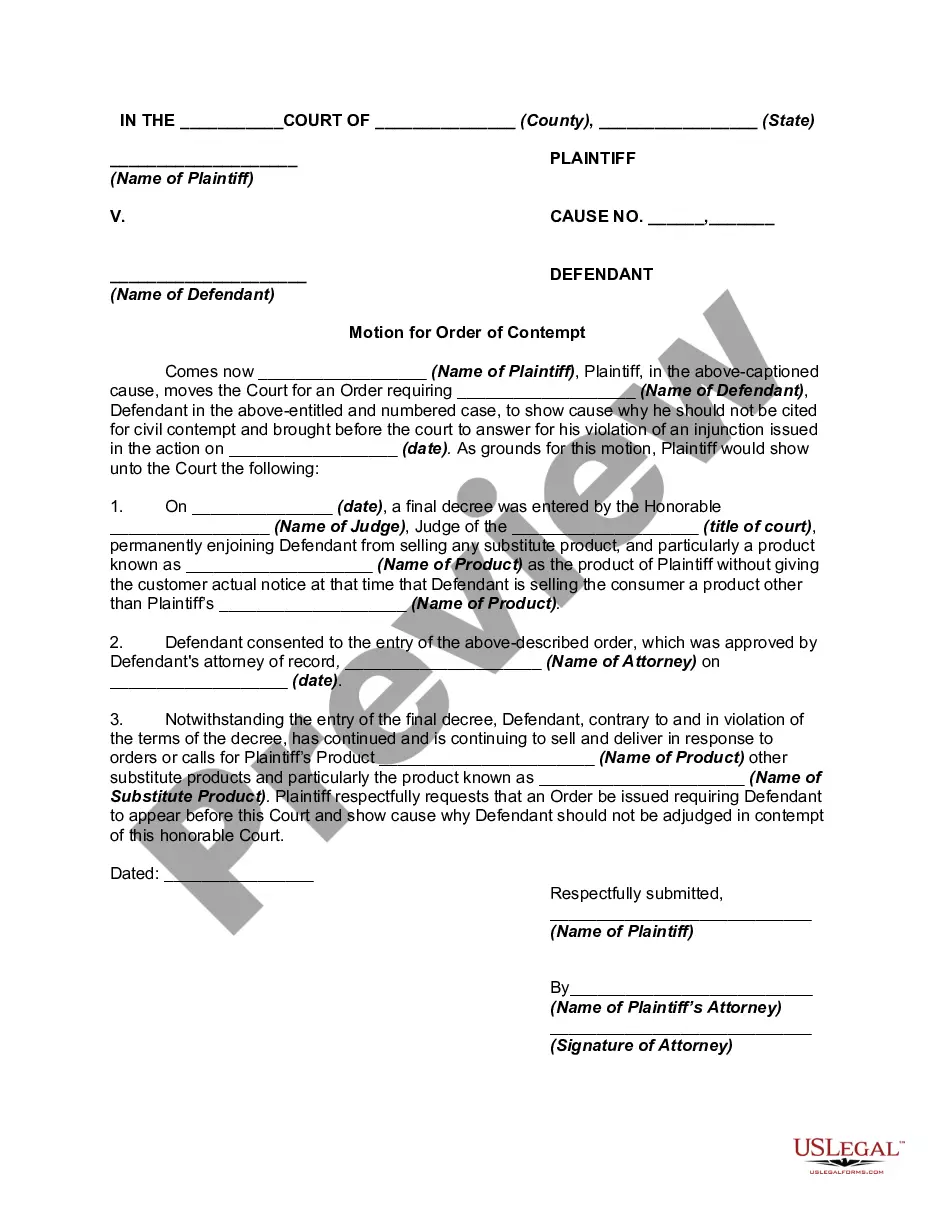
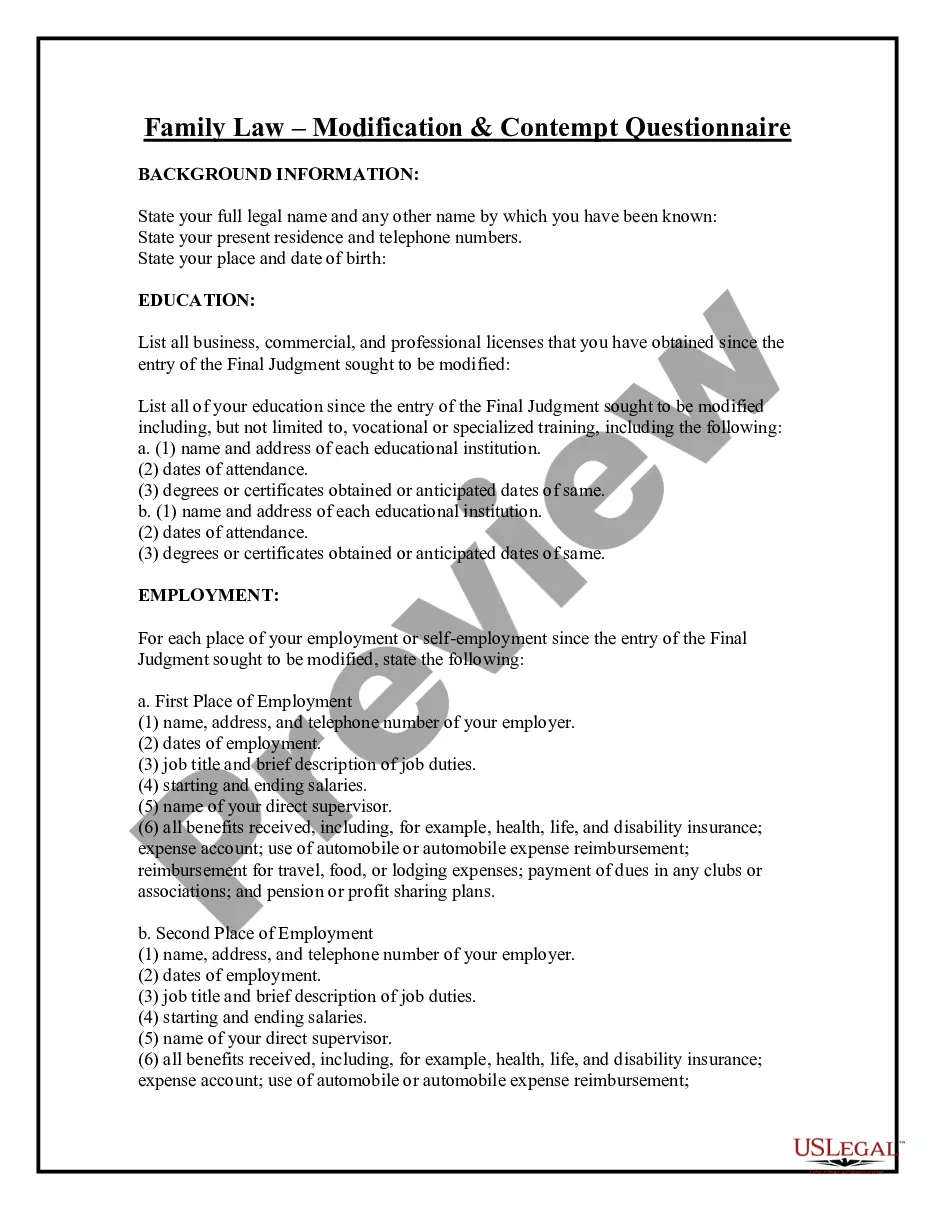
Review the template using the Preview function or through the text description to confirm it aligns with your needs.
- They are easy to navigate with all documents organized by state and intended use.
- Our experts keep up with legal updates, ensuring your paperwork is current and compliant when obtaining a Tx Motion Order Texas With Motion from our site.
- Acquiring a Tx Motion Order Texas With Motion is quick and straightforward for both existing and new users.
- If you already possess an account with an active subscription, Log In and download the document sample you need in the appropriate format.
- If you are a new visitor to our site, follow the instructions below.
Form popularity
FAQ
Unless made orally during a hearing or trial, motions should be in writing, should state the action sought, and should set forth the facts. Motions are the primary way for litigants to ask the Court to take action in a case. They must be filed with the Clerk, and copies must be mailed to all opposing parties (L.R.
A response and brief to an opposed motion must be filed within 21 days from the date the motion is filed. Time for Reply Briefs. Unless otherwise directed by the presiding judge, a party who has filed an opposed motion may file a reply brief within 14 days from the date the response is filed.
3 Time for Motion and Ruling. A motion to dismiss must be: (a) filed within 60 days after the first pleading containing the challenged cause of action is served on the movant; (b) filed at least 21 days before the motion is heard; and (c) granted or denied within 45 days after the motion is filed.
If you just found out about a hearing, fill out a Motion for Continuance and Notice of Hearing form and bring it with you to the hearing. If you have time, send a copy of the motion to the other side. If the other side has a lawyer send it to the lawyer.
Likewise, a judge can dismiss the case if they find no legal basis for the charge, if the defendant's rights have been violated, or if the state has failed to prove its case. Judges can dismiss a case either on their own motion or on the motion of the defendant.