Tx Motion Order Complete For Motion To Dismiss
Description

Get your form ready online
Our built-in tools help you complete, sign, share, and store your documents in one place.
Make edits, fill in missing information, and update formatting in US Legal Forms—just like you would in MS Word.
Download a copy, print it, send it by email, or mail it via USPS—whatever works best for your next step.
Sign and collect signatures with our SignNow integration. Send to multiple recipients, set reminders, and more. Go Premium to unlock E-Sign.
If this form requires notarization, complete it online through a secure video call—no need to meet a notary in person or wait for an appointment.
We protect your documents and personal data by following strict security and privacy standards.

Make edits, fill in missing information, and update formatting in US Legal Forms—just like you would in MS Word.

Download a copy, print it, send it by email, or mail it via USPS—whatever works best for your next step.

Sign and collect signatures with our SignNow integration. Send to multiple recipients, set reminders, and more. Go Premium to unlock E-Sign.

If this form requires notarization, complete it online through a secure video call—no need to meet a notary in person or wait for an appointment.

We protect your documents and personal data by following strict security and privacy standards.
Looking for another form?







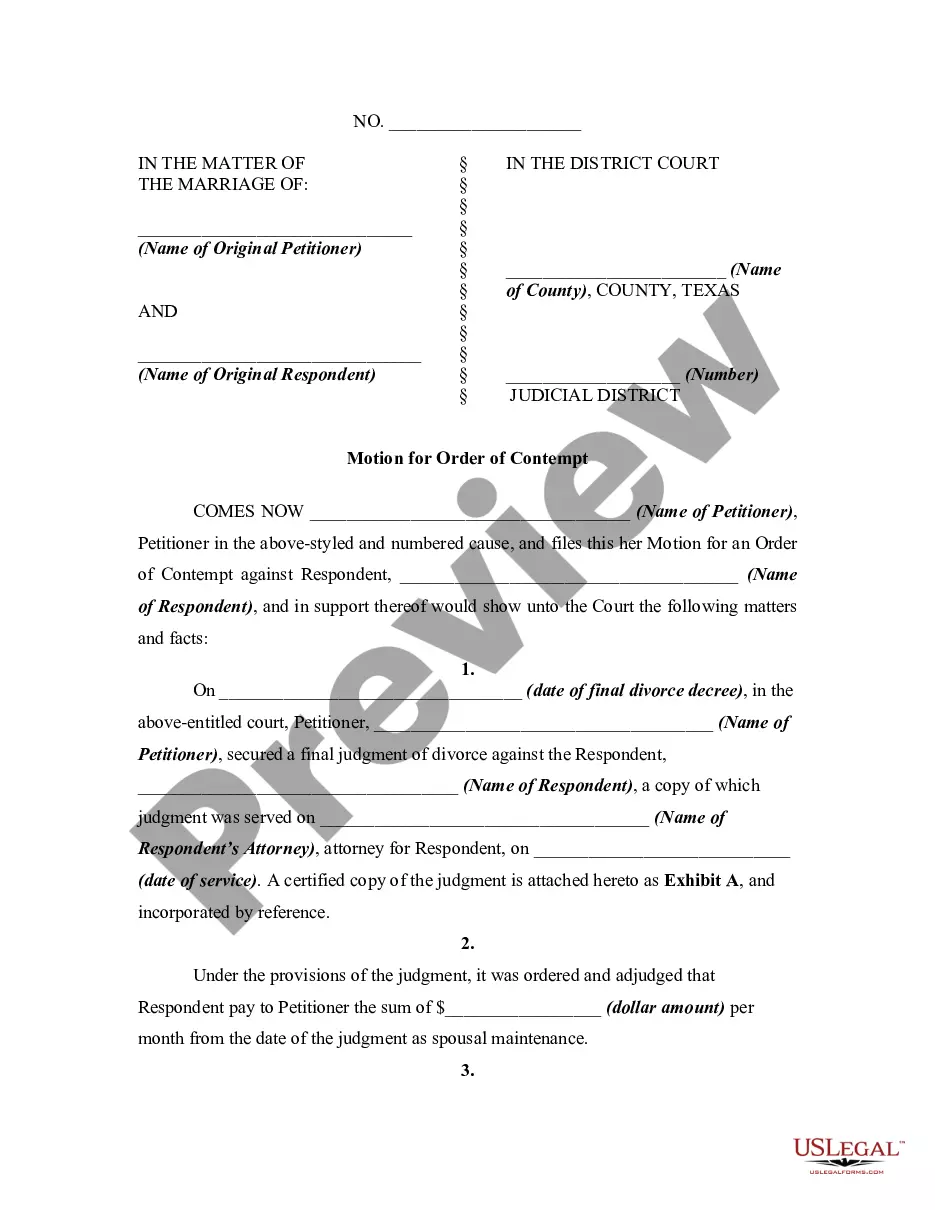
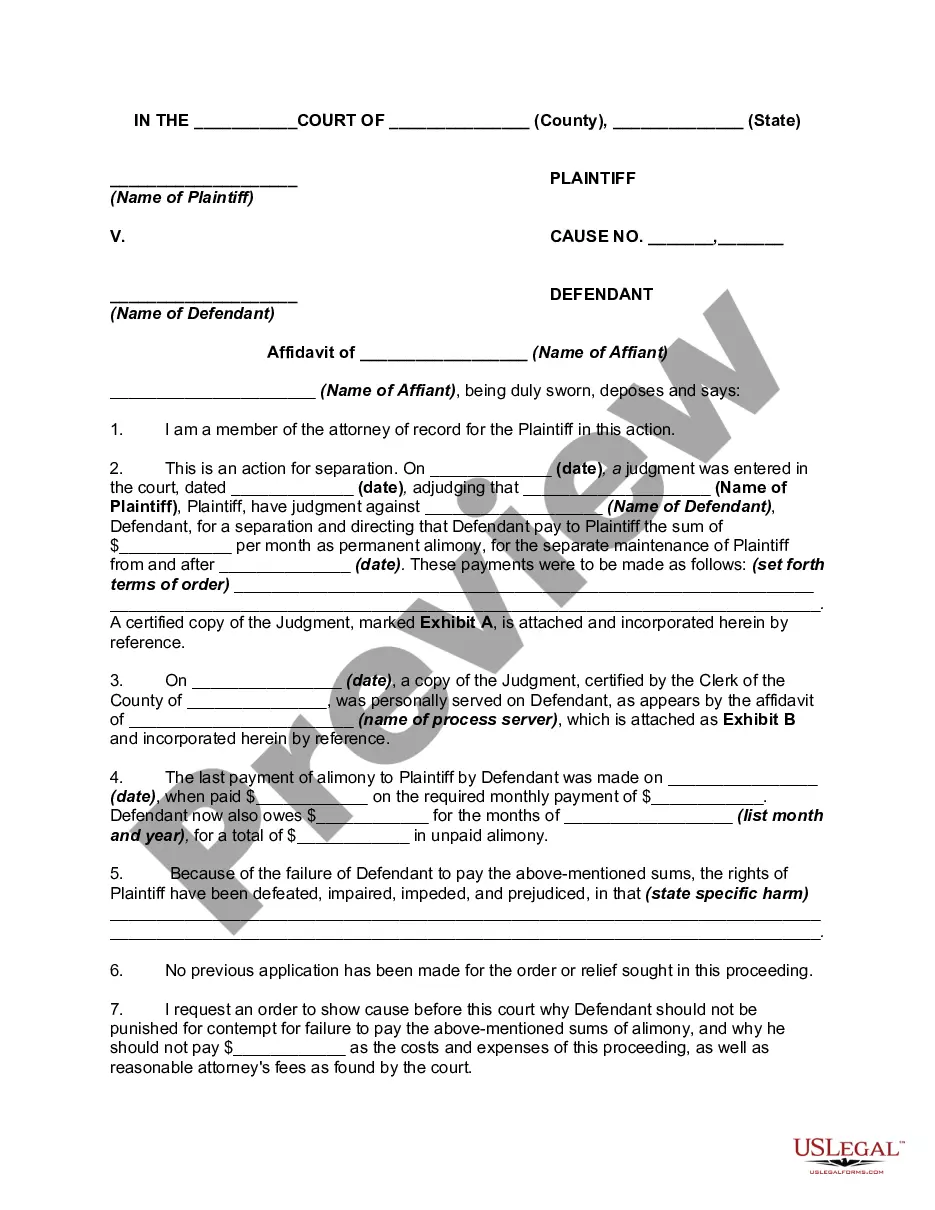
How to fill out Texas Motion For Order Of Contempt For Failure To Pay Spousal Maintenance?
It’s well known that you cannot become a legal expert instantly, nor can you understand how to swiftly create Tx Motion Order Complete For Motion To Dismiss without possessing a specific background. Drafting legal documents is a lengthy process that necessitates particular education and expertise. So why not entrust the creation of the Tx Motion Order Complete For Motion To Dismiss to the experts.
With US Legal Forms, which boasts one of the most extensive collections of legal documents, you can locate anything from judicial paperwork to templates for internal business communication. We understand the significance of compliance and adherence to federal and state laws and regulations. That’s why, on our site, all forms are region-specific and current.
Let’s begin with our platform and obtain the document you require in just a few minutes.
You can revisit your documents from the My documents section at any moment. If you’re an existing client, you can simply Log In, and locate and download the template from the same section.
Irrespective of the purpose of your forms—whether financial, legal, or personal—our platform has you covered. Try US Legal Forms today!
- Find the document you require using the search feature at the top of the page.
- View it (if this option is available) and read the supporting details to determine if Tx Motion Order Complete For Motion To Dismiss is what you need.
- Start your search again if you require another template.
- Sign up for a free account and select a subscription plan to acquire the template.
- Click Buy now. Once the payment is complete, you can access the Tx Motion Order Complete For Motion To Dismiss, complete it, print it, and deliver or send it to the appropriate individuals or organizations.
Form popularity
FAQ
A motion to dismiss for want of prosecution is a legal request submitted to the court, asking for a case to be dismissed due to delays caused by the plaintiff. This motion highlights the lack of progress and urges the court to take action. Understanding this motion is vital because it can directly influence the outcome of your case. For those facing such circumstances, a Tx motion order complete for motion to dismiss can serve as an effective tool to manage legal challenges.
Grounds for a motion to recuse a judge in Texas include any demonstrated bias, conflict of interest, or personal involvement in the case. This motion serves to ensure an impartial hearing by asking for a different judge to preside over the case. Filing such a motion can be complex, so it’s wise to approach it carefully. If you need assistance, uslegalforms can support you with your Tx motion order complete for motion to dismiss.
Rule 92 in Texas civil procedure allows a party to raise a challenge against the venue of a lawsuit through a motion. When filed, this motion requests that the case be moved to a more appropriate court. It’s an important mechanism for ensuring that cases are heard in the correct jurisdiction. For help with this type of motion, consult uslegalforms for your Tx motion order complete for motion to dismiss.
You do not avoid probate with pour-over wills as they still go through probate, and the trust cannot be dissolved during the probate process. While the assets that pour over into the trust are subject to the probate process, the assets already allocated to a trust before your passing do not go through probate.
Even with a living trust, if you do not have a ?pour-over will,? Michigan law requires that probate proceedings take place. A pour-over will eliminates probate in that case, by ?pouring? all of the descendant's assets held outside of the trust into the trust upon death.
In Michigan, wills are typically required to go through probate with some exceptions (later discussed in the article).
No, a Will does not have to be notarized in order for it to be legally valid in Michigan. However, it is an optional action step that you can take if you wish for your Will to be self-proving. To do so, you and your witnesses must go to a notary public.
Probate is required in Michigan when the assets are solely owned. For example if someone passes away and they are the only owner on the property title of their home, then the home would need to pass through probate.
The main downside to pour-over wills is that (like all wills), the property that passes through them must go through probate. That means that any property headed toward a living trust may get hung up in probate before it can be distributed by the trust.
You must sign your will in front of at least two witnesses, but you can have up to three witnesses. They must be 18 or older. It is helpful if they are people you know who could be located to testify about the will if necessary. A person who will inherit from your estate after you die can still serve as a witness.