Motion Order Contempt File With Judge
Description

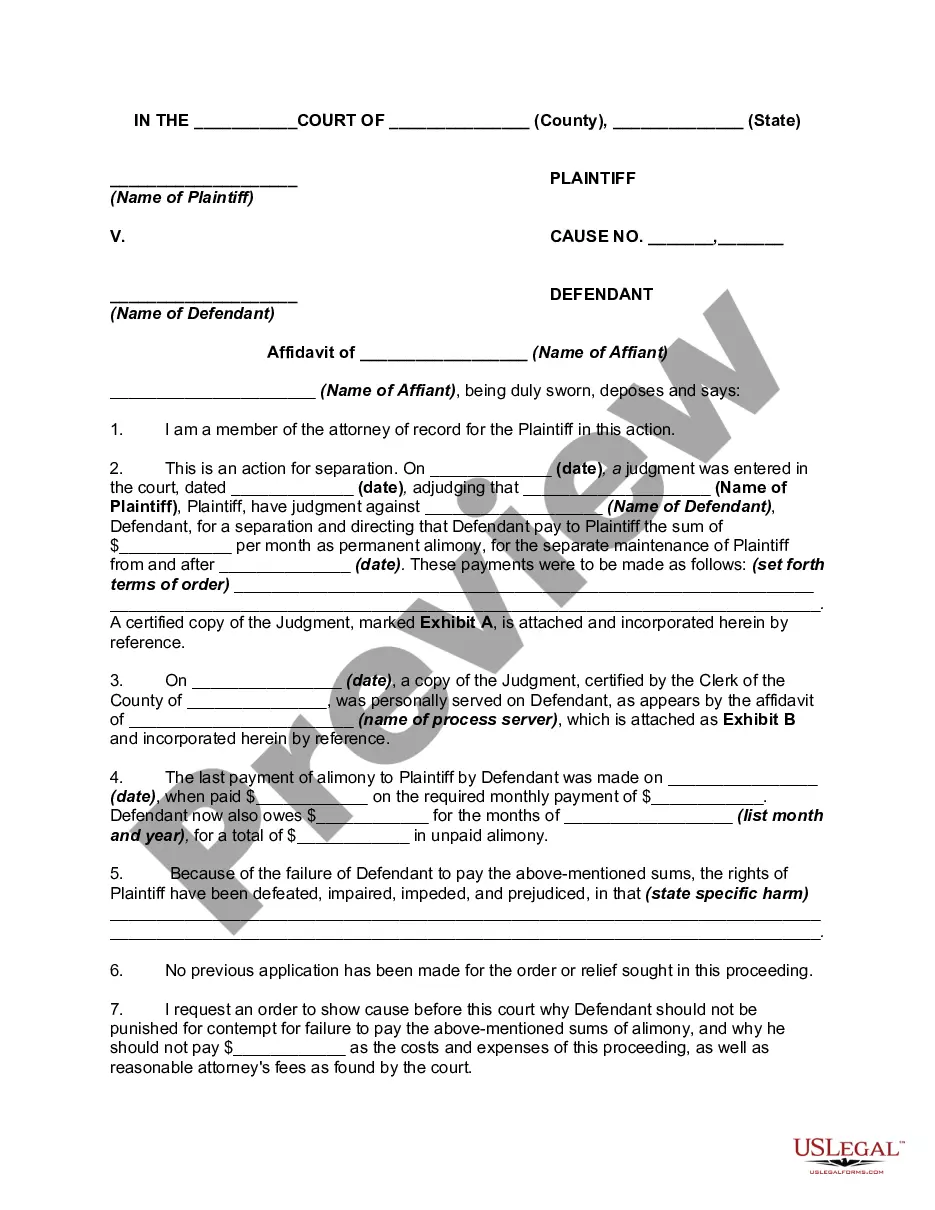
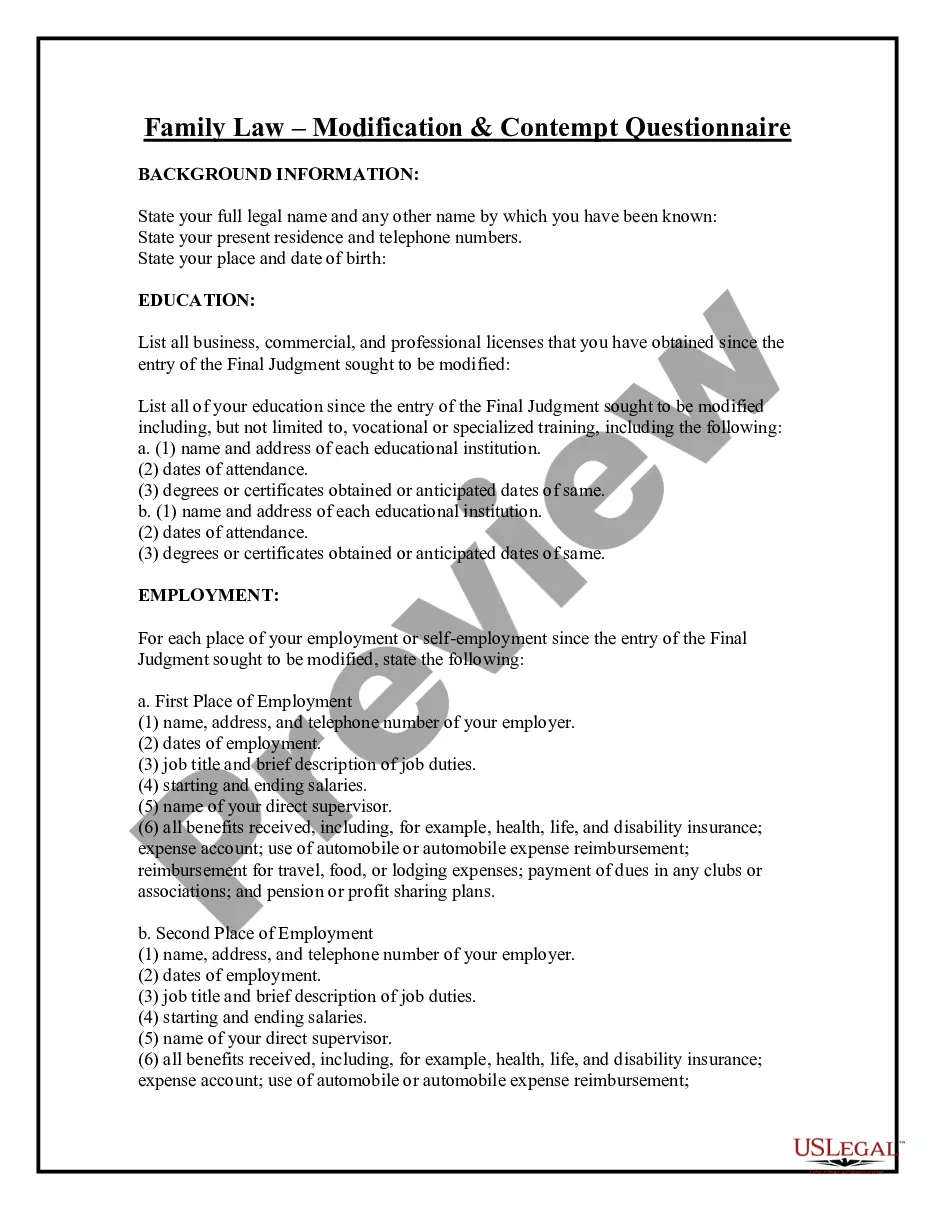
Get your form ready online
Our built-in tools help you complete, sign, share, and store your documents in one place.
Make edits, fill in missing information, and update formatting in US Legal Forms—just like you would in MS Word.
Download a copy, print it, send it by email, or mail it via USPS—whatever works best for your next step.
Sign and collect signatures with our SignNow integration. Send to multiple recipients, set reminders, and more. Go Premium to unlock E-Sign.
If this form requires notarization, complete it online through a secure video call—no need to meet a notary in person or wait for an appointment.
We protect your documents and personal data by following strict security and privacy standards.

Make edits, fill in missing information, and update formatting in US Legal Forms—just like you would in MS Word.

Download a copy, print it, send it by email, or mail it via USPS—whatever works best for your next step.

Sign and collect signatures with our SignNow integration. Send to multiple recipients, set reminders, and more. Go Premium to unlock E-Sign.

If this form requires notarization, complete it online through a secure video call—no need to meet a notary in person or wait for an appointment.

We protect your documents and personal data by following strict security and privacy standards.
Looking for another form?
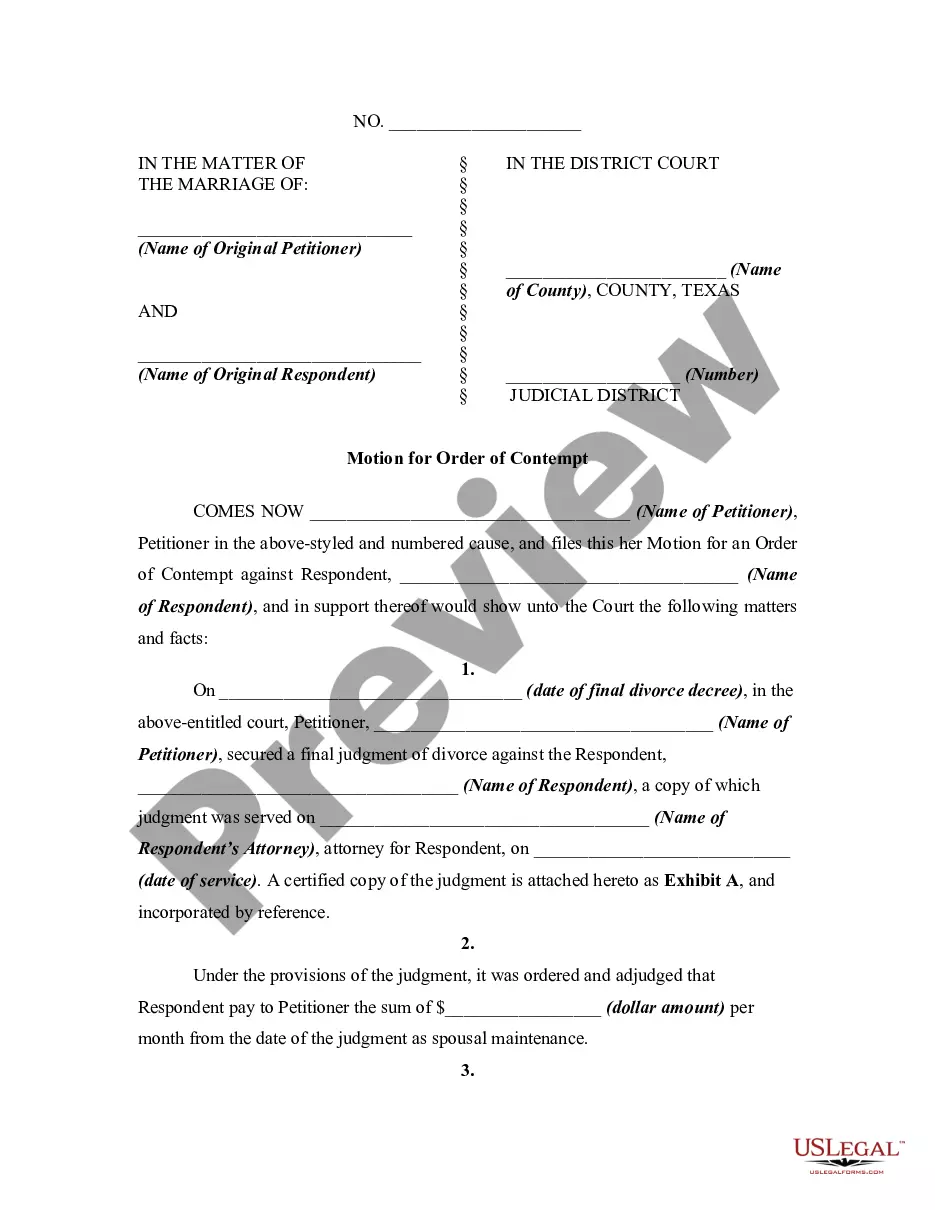
How to fill out Texas Motion For Order Of Contempt For Failure To Pay Spousal Maintenance?
Regardless of whether for commercial reasons or personal matters, everyone must confront legal scenarios at some stage in their life.
Completing legal documents requires meticulous care, beginning with selecting the appropriate form template. For example, if you choose an incorrect version of the Motion Order Contempt File With Judge, it will be rejected upon submission.
With a comprehensive US Legal Forms catalog available, you don’t have to waste time searching for the suitable template online. Utilize the library’s straightforward navigation to discover the right template for any circumstance.
- Acquire the template you require using the search bar or catalog navigation.
- Review the form’s description to confirm it aligns with your case, state, and county.
- Click on the form’s preview to inspect it.
- If it is the wrong document, return to the search option to find the Motion Order Contempt File With Judge template you need.
- Obtain the template if it meets your needs.
- If you have a US Legal Forms account, click Log in to access previously saved documents in My documents.
- If you do not have an account yet, you can download the form by clicking Buy now.
- Select the appropriate pricing option.
- Fill out the profile registration form.
- Choose your payment method: use a credit card or PayPal account.
- Select the file format you desire and download the Motion Order Contempt File With Judge.
- Once saved, you can complete the form using editing software or print it and fill it out manually.
Form popularity
FAQ
Upon responding to a motion for contempt, a defendant may either lodge a defense or he or she may purge the contempt by complying with the court's order and remedying any past due support obligations. The defendant responds by filing an answer. The answer may contain defenses against the contempt action.
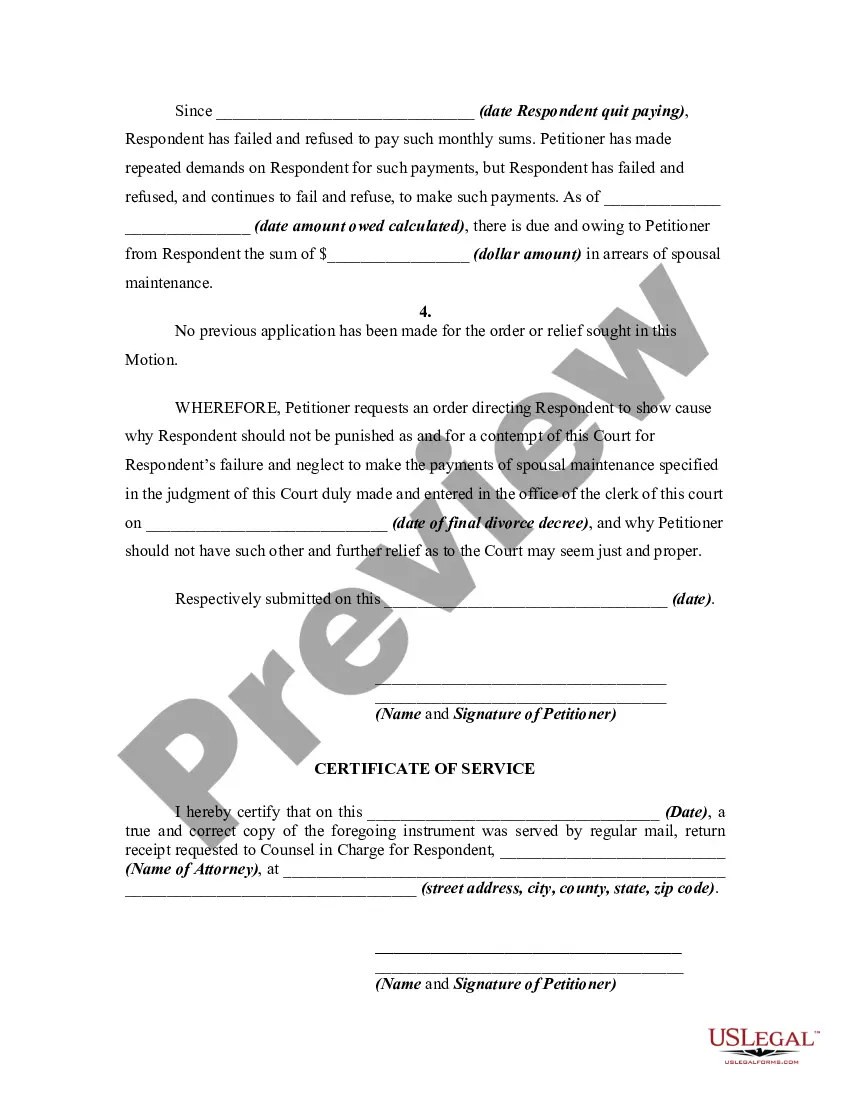
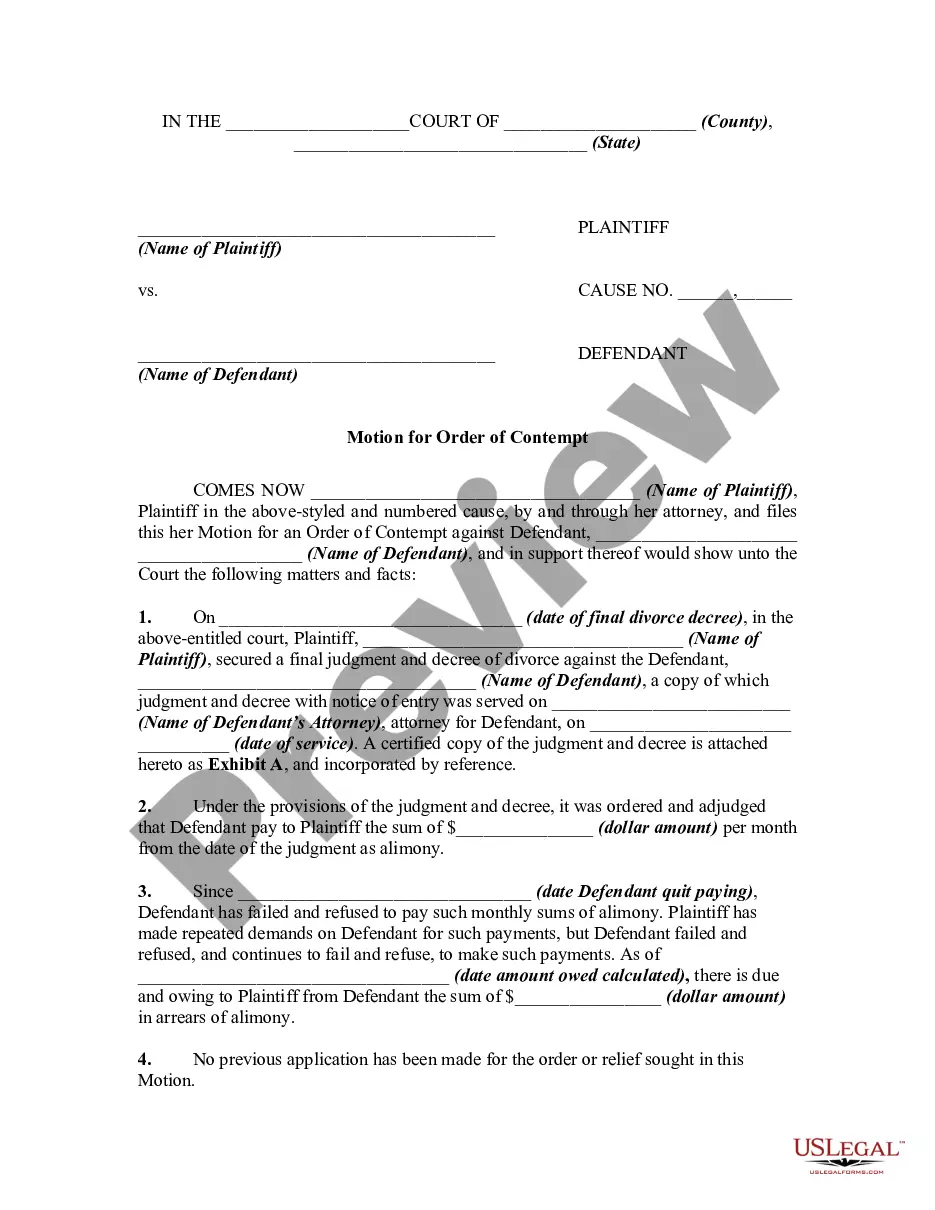
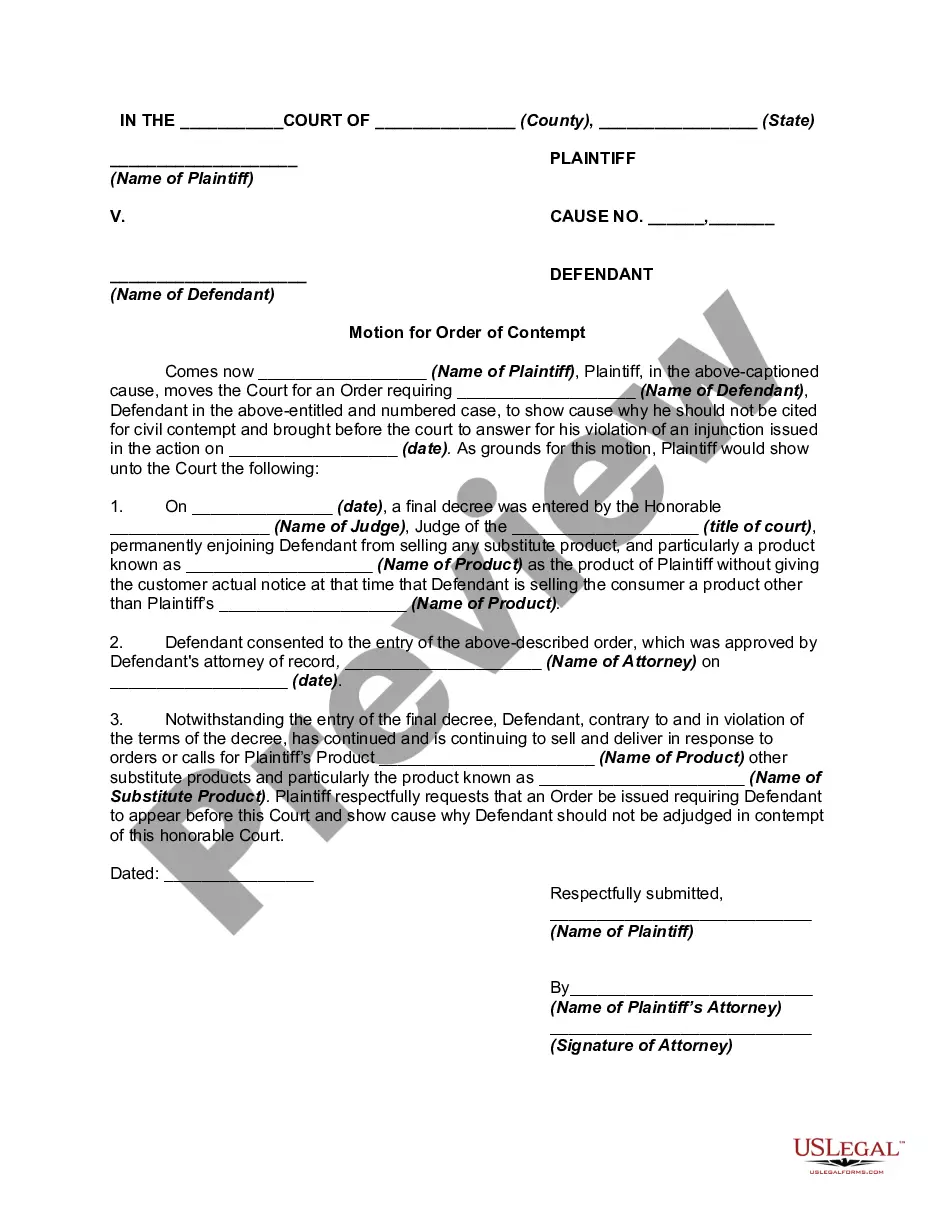
The Process of Filing for Contempt The motion explains to the court what the order that has been violated states, and how the other party is violating the order. The motion asks the court to order the other party to appear in court and show cause why he or she should not be punished for disobeying the court's order.
You must explain what the other party has failed to do. This form must be signed before a notary public and a copy must be furnished to the other party by mail, fax and mail, or hand delivery. If you want to be sure of service, the motion should be personally served by a sheriff or process server.
The consequences of the motion: A motion to enforce, if approved, inflicts no punishment on the non-compliant party and instead serves as a reminder to fulfill their legal duties. Alternatively, a motion for contempt can result in jail time or fines for not following a verdict.
A motion for contempt is used to enforce a court order. Basically, a person might be found in contempt if they disobeyed a court order. In your case, you are filing the motion because your co-parent has violated or continues to violate the child custody order.