House Deeds
Description

Get your form ready online
Our built-in tools help you complete, sign, share, and store your documents in one place.
Make edits, fill in missing information, and update formatting in US Legal Forms—just like you would in MS Word.
Download a copy, print it, send it by email, or mail it via USPS—whatever works best for your next step.
Sign and collect signatures with our SignNow integration. Send to multiple recipients, set reminders, and more. Go Premium to unlock E-Sign.
If this form requires notarization, complete it online through a secure video call—no need to meet a notary in person or wait for an appointment.
We protect your documents and personal data by following strict security and privacy standards.

Make edits, fill in missing information, and update formatting in US Legal Forms—just like you would in MS Word.

Download a copy, print it, send it by email, or mail it via USPS—whatever works best for your next step.

Sign and collect signatures with our SignNow integration. Send to multiple recipients, set reminders, and more. Go Premium to unlock E-Sign.

If this form requires notarization, complete it online through a secure video call—no need to meet a notary in person or wait for an appointment.

We protect your documents and personal data by following strict security and privacy standards.
Looking for another form?





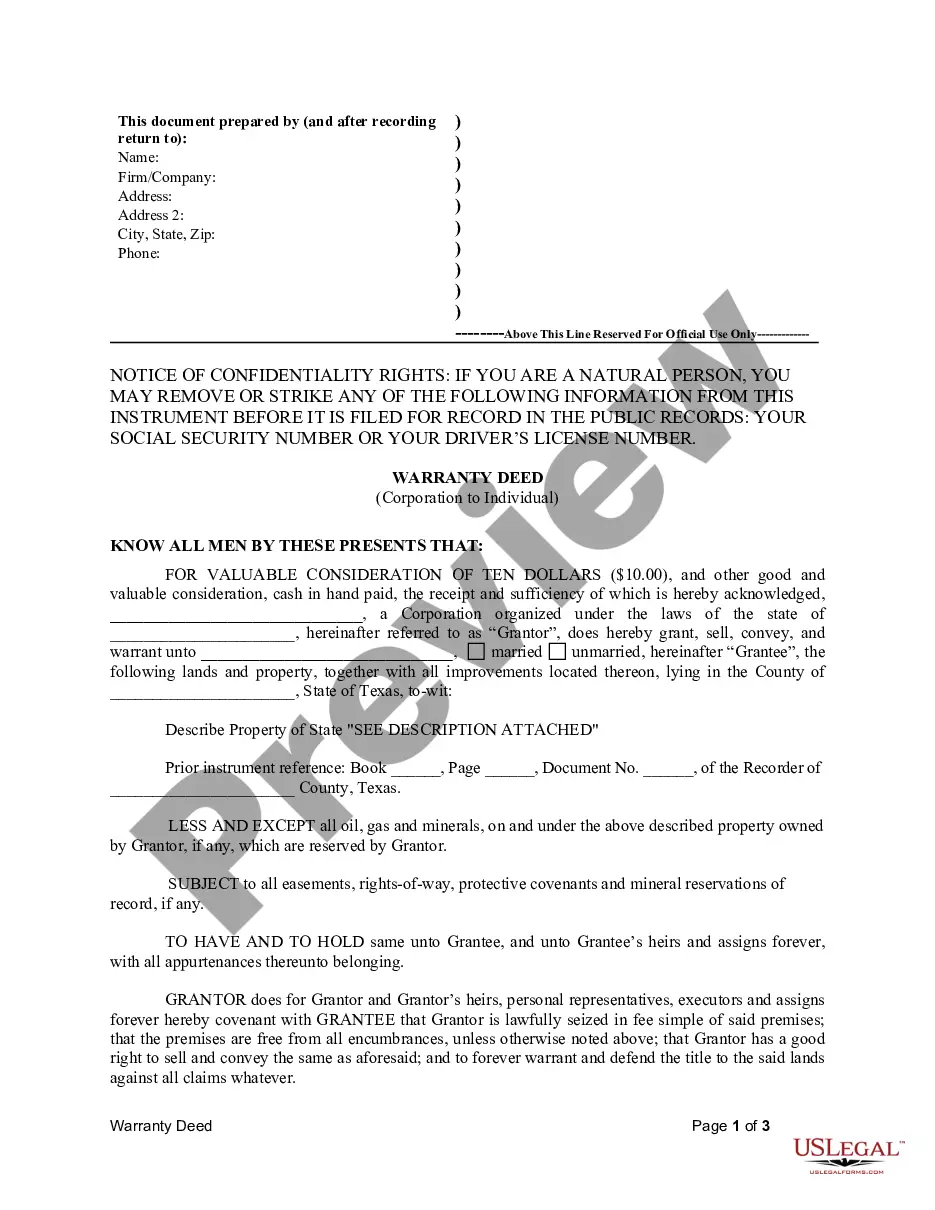
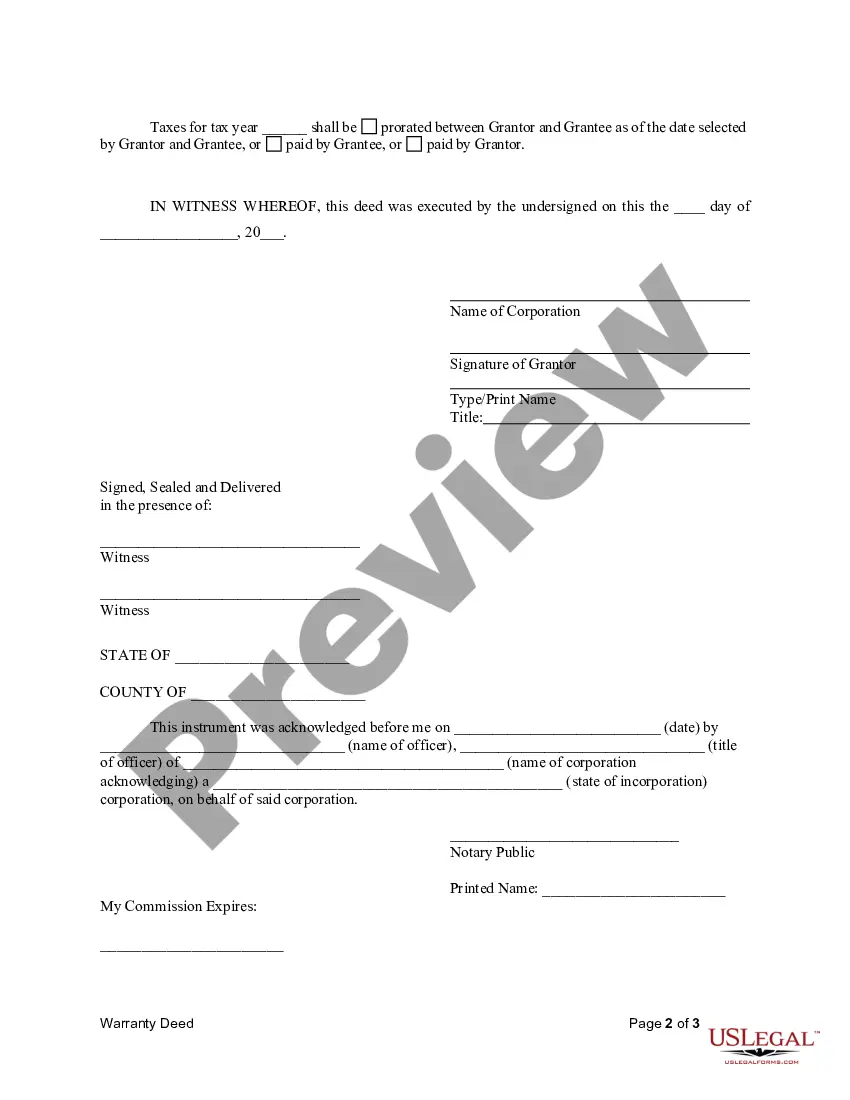
How to fill out Texas Warranty Deed From Corporation To Individual?
- Log in to your US Legal Forms account if you’re a returning user and select the appropriate house deed template for download. Ensure your subscription is current; if not, renew it as per your plan.
- For first-time users, browse the extensive library of over 85,000 legal forms. Review the preview and descriptions to ensure the selected template meets your local jurisdiction's requirements.
- If you cannot find the perfect fit, use the search functionality to locate alternative templates that may suit your needs more closely.
- Once you've identified the correct document, click on the Buy Now button. Select your preferred subscription plan and create an account to gain access to a vast range of resources.
- Complete your purchase by entering your payment details, either through a credit card or PayPal, to finalize your subscription.
- After purchasing, download the house deed form directly to your device for filling out, and you can always find your purchased documents in the My Forms section of your profile.
In conclusion, utilizing US Legal Forms to acquire your house deeds can greatly simplify the process of property transactions. Their extensive library and exceptional support ensure that you will receive the necessary legal documents correctly and efficiently.
Start your journey with US Legal Forms today!
Form popularity
FAQ
In Virginia, only certain professionals can prepare house deeds. Typically, licensed attorneys or certified title companies handle this task. They ensure that the deeds comply with state laws and protect your interests in the transaction. If you're looking for help with house deeds, consider using uslegalforms, where you can find resources and templates to assist you.
After closing, the buyer typically receives a copy of the house deeds. The original deed is recorded with the local county recorder's office to establish public record. This recording is vital for verifying property ownership. It provides a permanent record of the transaction and protects your interests as a property owner.
The deed to your house is typically sent by the closing agent or title company after the settlement. This process ensures that the ownership transfer is properly recorded. Once the transaction is complete, the title company will prepare the house deeds and send you a copy for your records. It's a crucial step in confirming your ownership.
To look up a deed to a property in Georgia, you can access the Georgia Superior Court's online database or visit the local county clerk's office. You will need the property address or the owner's name to perform a search. For a streamlined experience, consider using services like US Legal Forms that guide you in retrieving house deeds and navigating Georgia's property records.
To obtain the deed to your house, visit the local county clerk or recorder's office. You can request a copy of your house deed, and you may need to provide specific property details, such as the address or parcel number. For convenience, you can also explore US Legal Forms, which offers resources to help you obtain your house deeds efficiently.
You can locate your house deed at your local county recorder's office or online through your state’s property records website. Typically, house deeds are filed and maintained by the county in which your property is located. If you're having trouble accessing these records, consider using platforms like US Legal Forms to simplify the process and get your house deeds without hassle.
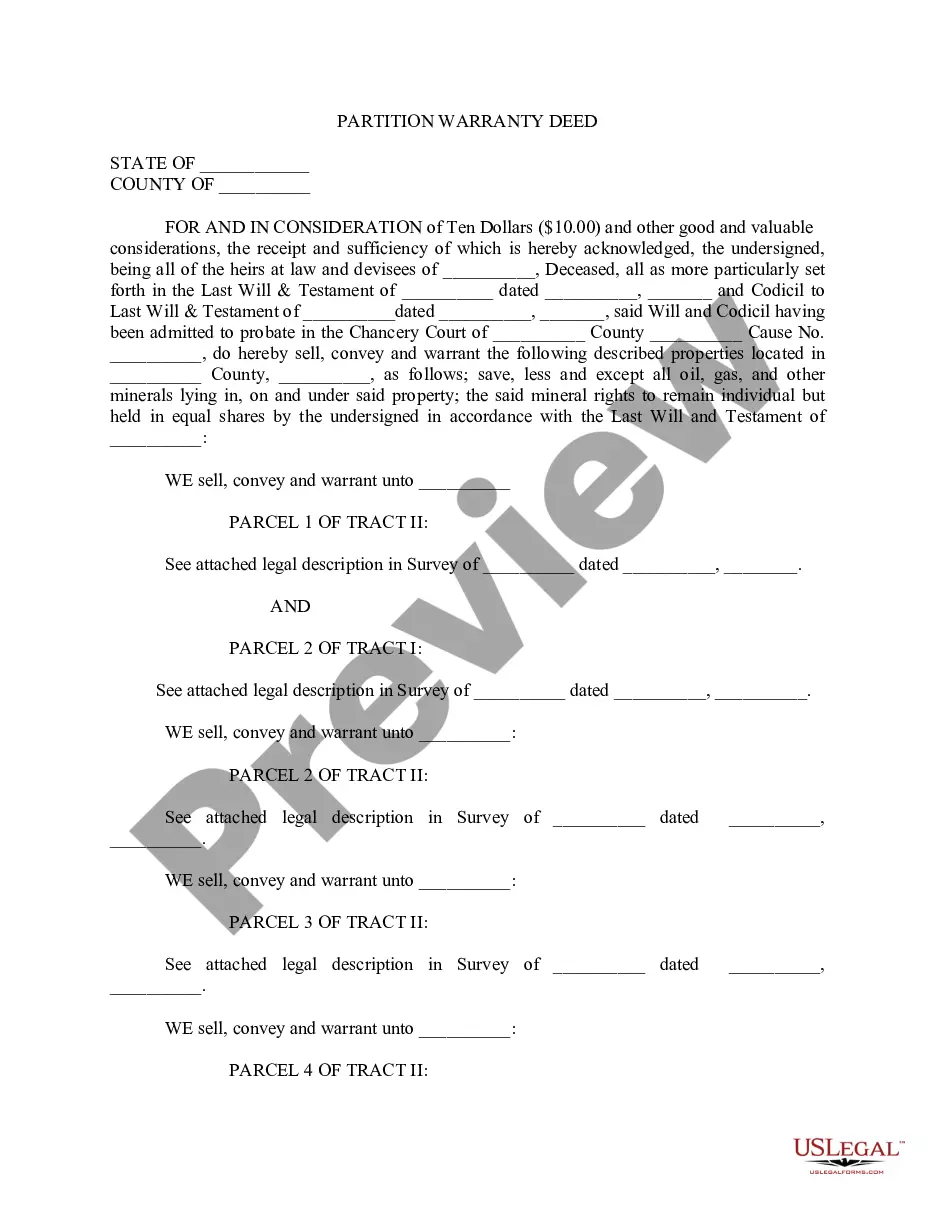
To write a house deed, start with the names and addresses of all parties involved. Next, describe the property in detail to avoid any confusion. Make sure to follow the legal format required in your state, and consider using USLegalForms for access to templates that ensure you cover all necessary aspects of house deeds.
Completing a deed requires filling out the necessary information accurately. Be sure to include the names of the grantor and grantee, a thorough description of the property, and appropriate signatures. After completion, you can file the deed with the local county office, a step often simplified through resources from USLegalForms that guide you through the process of managing house deeds.
Writing a property deed involves several key steps. First, gather essential information such as the names of the parties involved, a legal description of the property, and the type of deed you want to create. Utilizing a template from USLegalForms can provide structure and clarity, making it easier to produce valid house deeds.
You do not necessarily need a lawyer to write house deeds, but having legal assistance can simplify the process. A lawyer can ensure that the deed meets all legal requirements and accurately reflects your intentions. If you are unsure about the specifics, consider legal consulting or resources like USLegalForms for guidance.