Texas Estate Individual With Us Citizens
Description
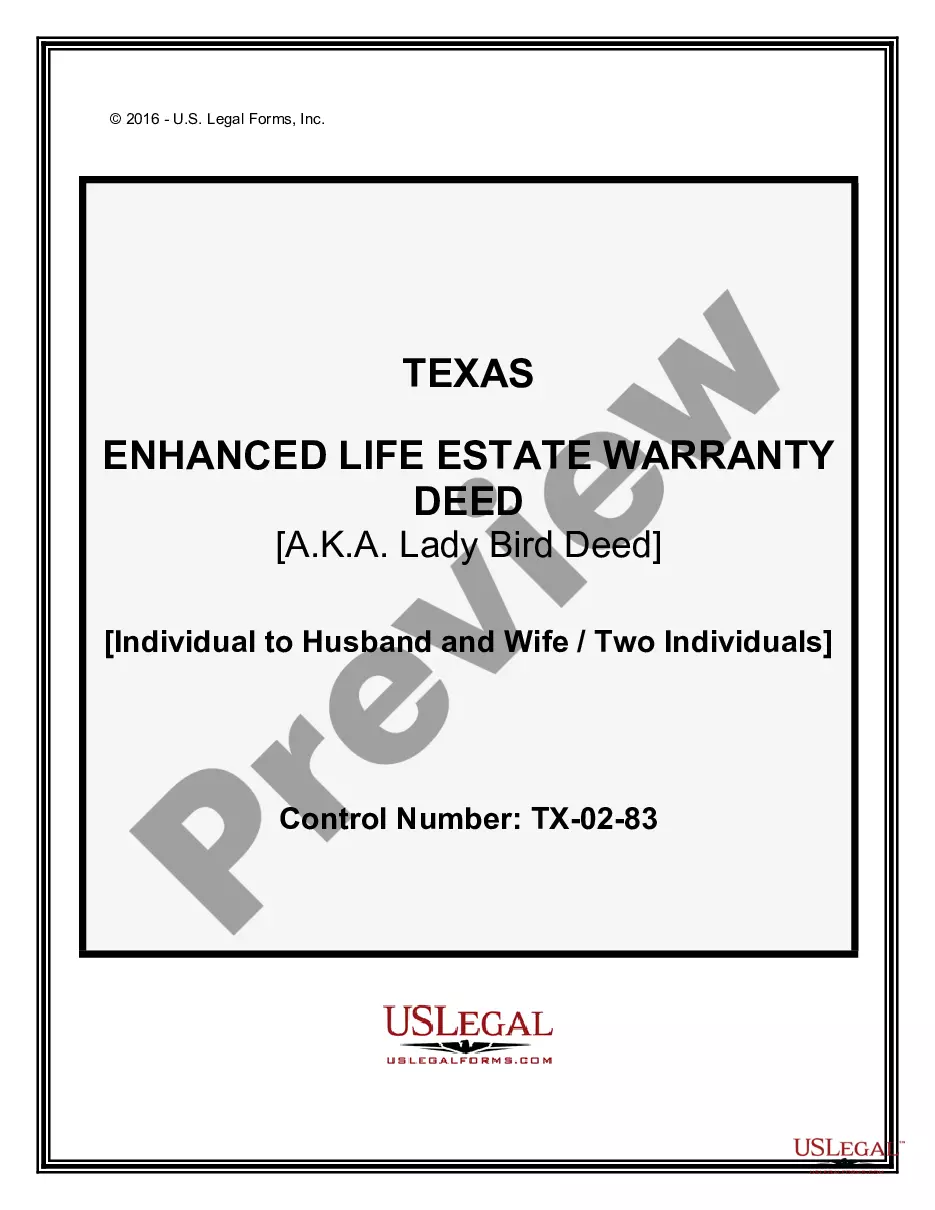
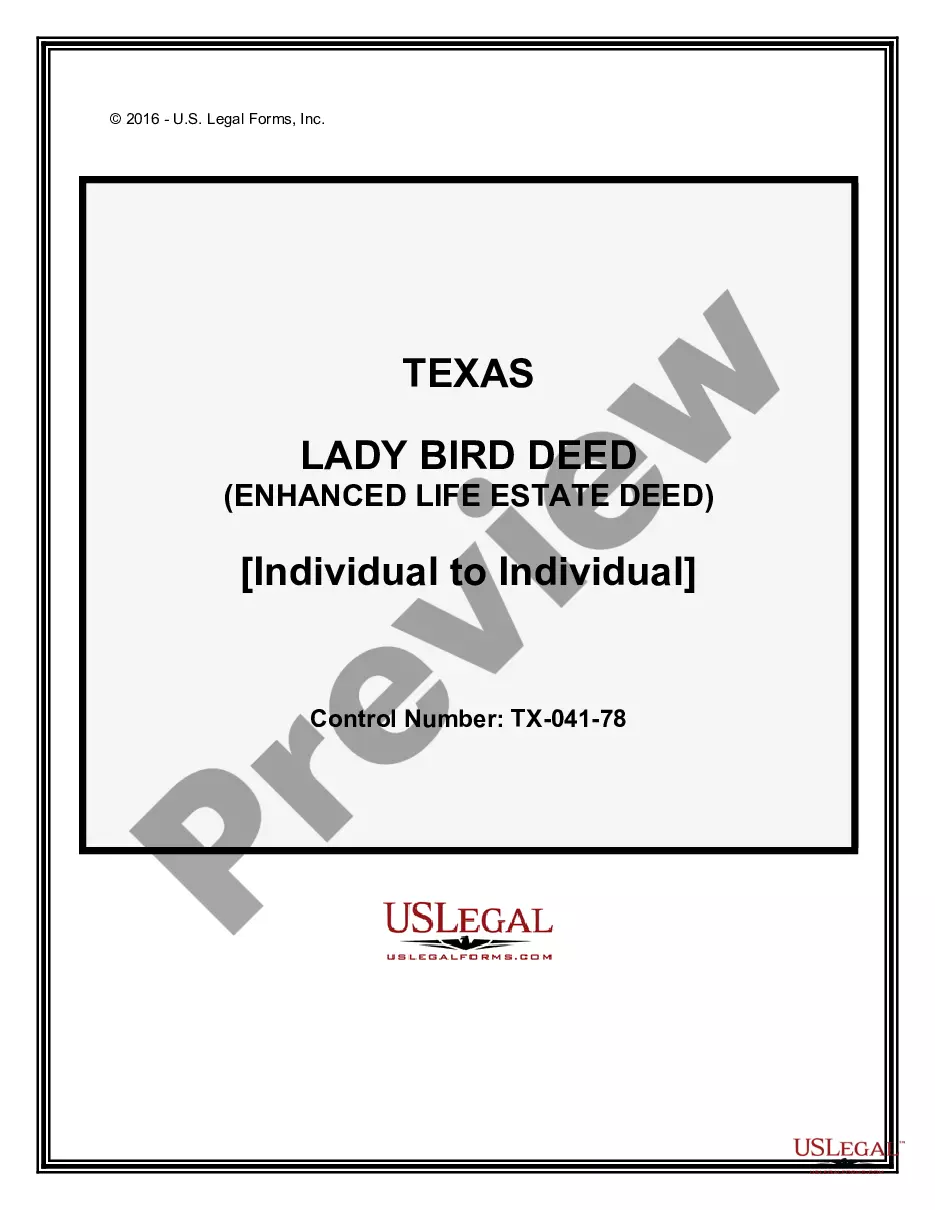
Get your form ready online
Our built-in tools help you complete, sign, share, and store your documents in one place.
Make edits, fill in missing information, and update formatting in US Legal Forms—just like you would in MS Word.
Download a copy, print it, send it by email, or mail it via USPS—whatever works best for your next step.
Sign and collect signatures with our SignNow integration. Send to multiple recipients, set reminders, and more. Go Premium to unlock E-Sign.
If this form requires notarization, complete it online through a secure video call—no need to meet a notary in person or wait for an appointment.
We protect your documents and personal data by following strict security and privacy standards.

Make edits, fill in missing information, and update formatting in US Legal Forms—just like you would in MS Word.

Download a copy, print it, send it by email, or mail it via USPS—whatever works best for your next step.

Sign and collect signatures with our SignNow integration. Send to multiple recipients, set reminders, and more. Go Premium to unlock E-Sign.

If this form requires notarization, complete it online through a secure video call—no need to meet a notary in person or wait for an appointment.

We protect your documents and personal data by following strict security and privacy standards.
Looking for another form?
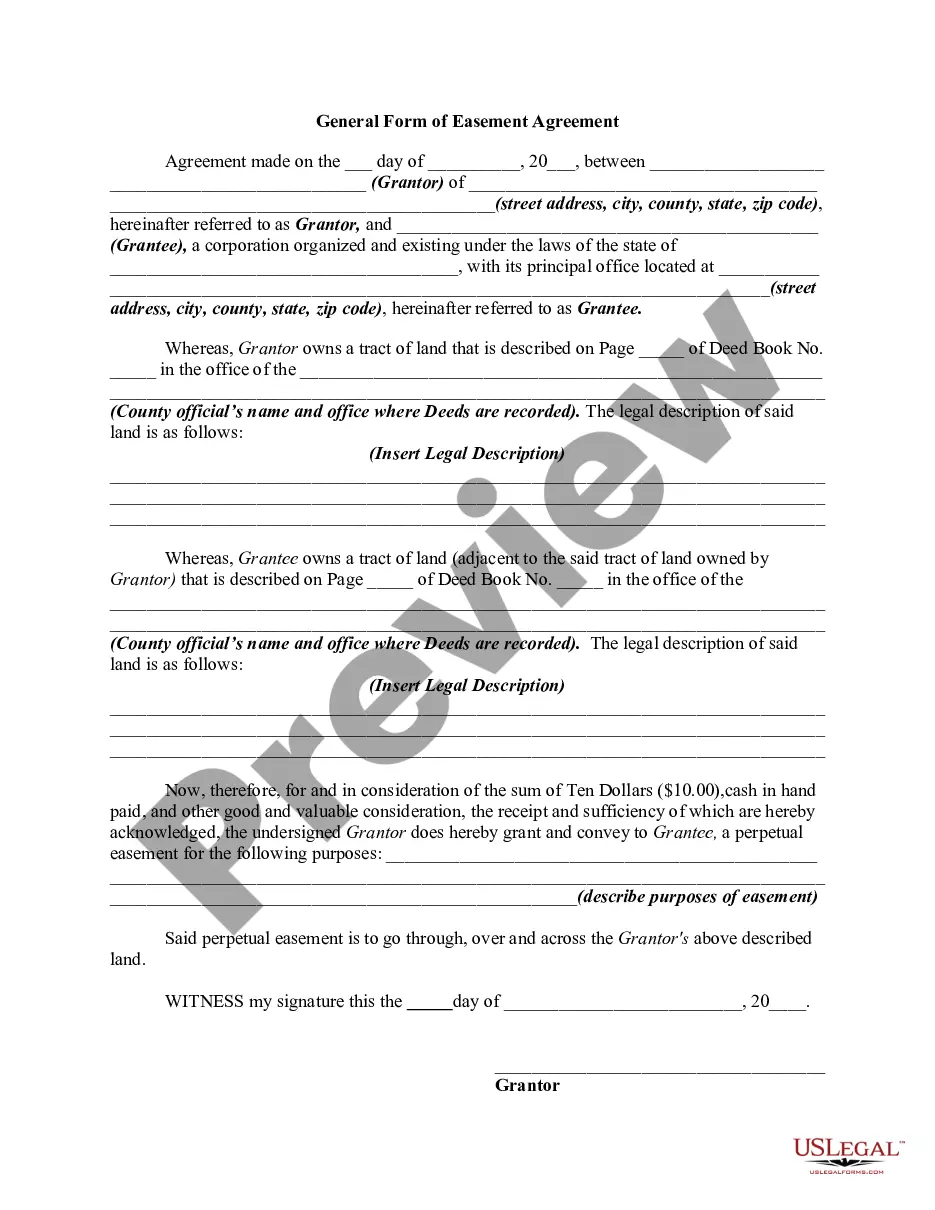

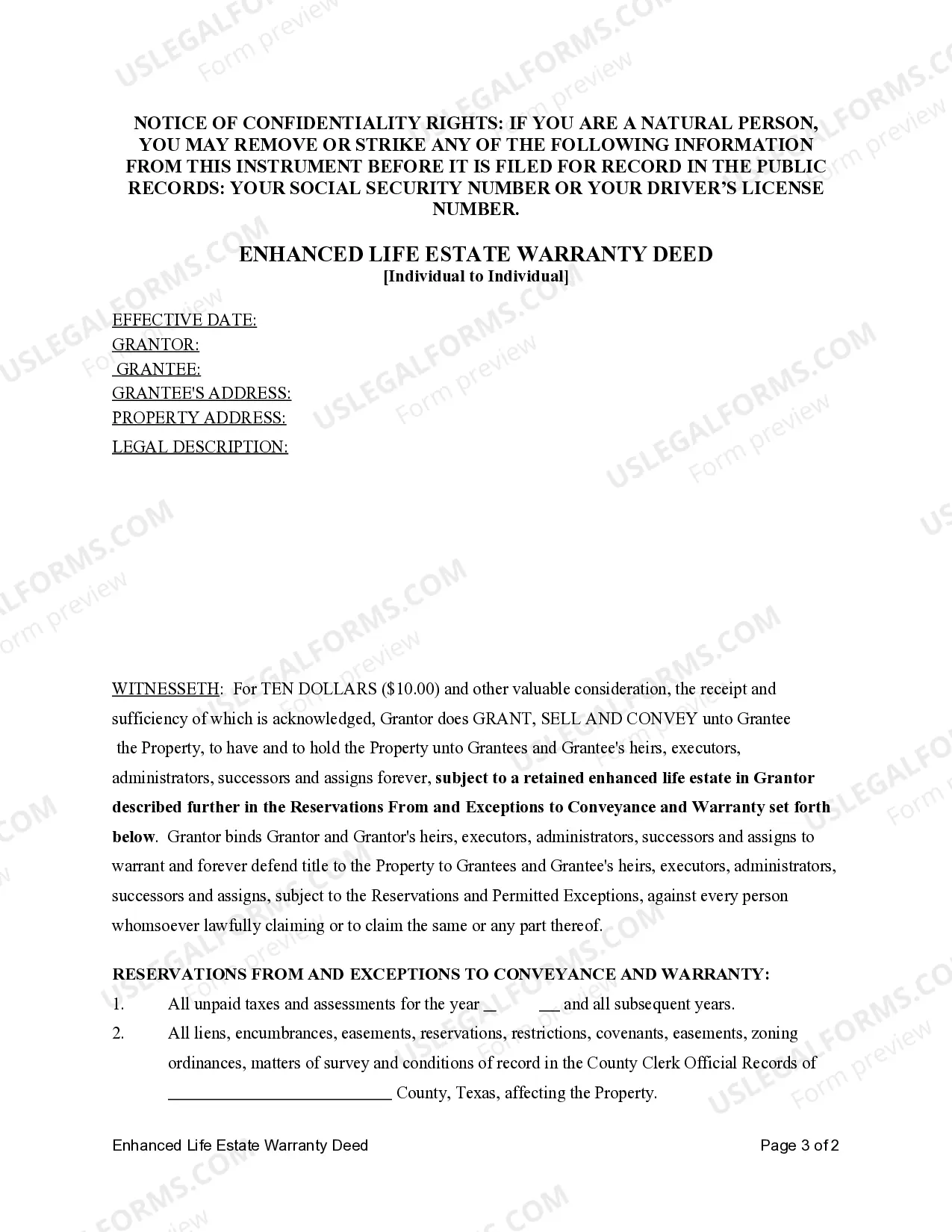
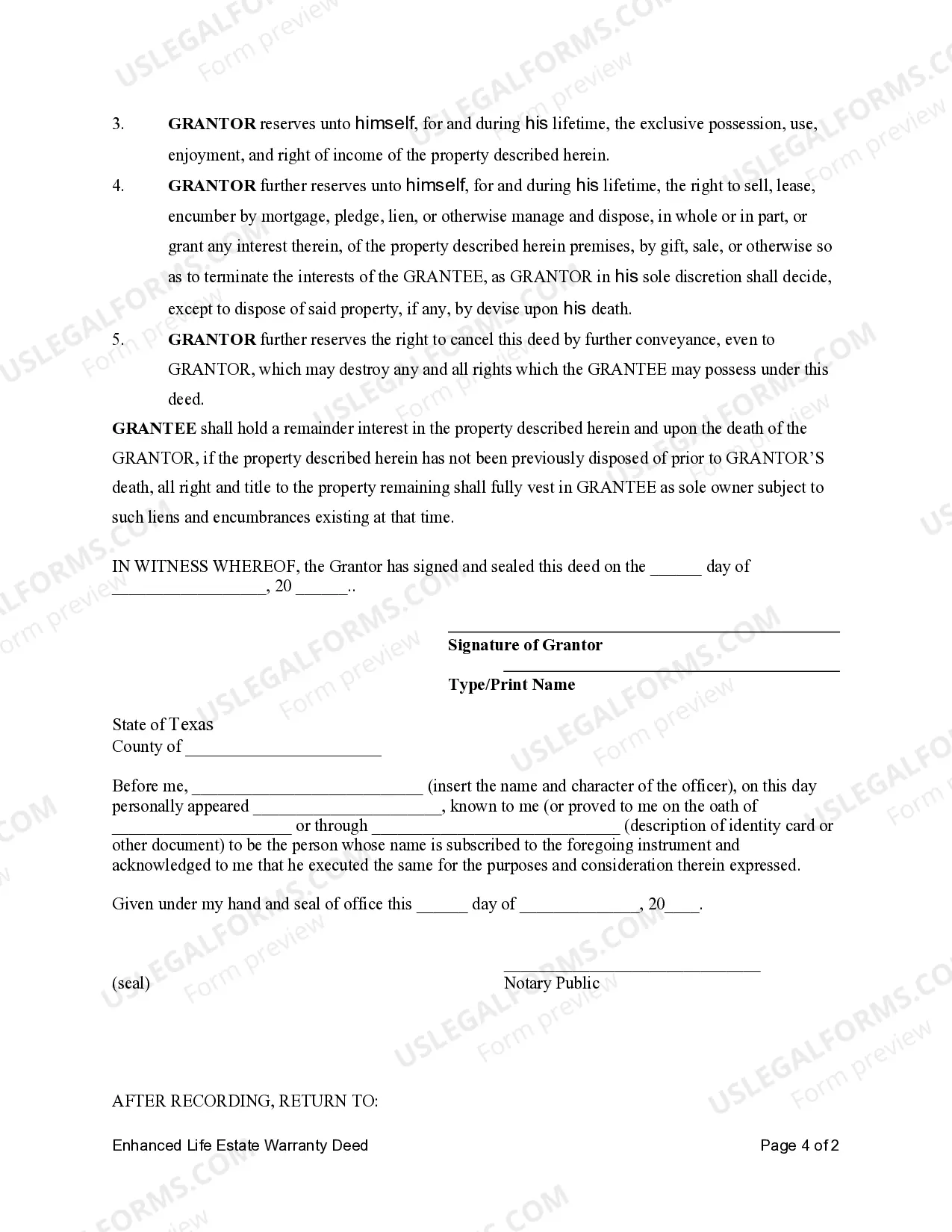
How to fill out Texas Lady Bird Or Enhanced Life Estate Warranty Deed - Individual To Individual?
- If you're a returning user, log in to your account and download the necessary form by clicking the Download button. Ensure your subscription is active; if it’s not, renew according to your plan.
- Preview the desired form to ensure it meets your specific needs and complies with local regulations. If you find inconsistencies, use the Search feature to locate the correct template.
- Once you have the right document, click the Buy Now button and select your preferred subscription plan. Create an account to access all resources.
- Proceed with payment by entering your credit card information or utilizing your PayPal account to secure your subscription.
- Download the approved form to your device for completion, and you can always access it later in the My Forms section of your profile.
In conclusion, US Legal Forms streamlines the process of legal document acquisition, offering a robust database with unmatched support. By following these steps, you’ll have the right forms in no time.
Start your estate planning process today with US Legal Forms and ensure you have precisely what you need!
Form popularity
FAQ
Yes, it is possible to settle an estate without probate in Texas using specific legal processes, such as small estate affidavits. This can offer a simpler and quicker resolution for estates that meet certain requirements. For guidance on this process, uslegalforms can be a helpful resource to understand your options.
Section 304.003 of the Texas Estates Code details the regulations surrounding the rights and responsibilities of fiduciaries in Texas estates. This section is significant for estate planning involving U.S. citizens and non-citizens alike. Understanding this regulation can provide clarity on the legal obligations of executors and administrators in Texas.
Yes, you can name a non-U.S. citizen as your beneficiary in your Texas estate planning documents. This ensures that your assets can be passed down according to your wishes, regardless of the beneficiary's citizenship. Utilizing resources from uslegalforms can provide you with the proper documents to facilitate this process.
Absolutely, a non-U.S. citizen can act as an executor for a U.S. estate, including Texas estates with U.S. citizens. However, local laws may impose requirements, so it's beneficial to understand these before naming an executor. You may consider using the platform of uslegalforms to find the necessary forms and resources.
U.S. citizen can inherit property from a U.S. citizen under Texas law. The transfer of property can occur regardless of the beneficiary's citizenship status. However, it is essential to consider tax implications and seek proper legal advice to navigate these issues.
Yes, a non-U.S. citizen can serve as an executor of a Texas estate involving U.S. citizens, provided they meet certain qualifications. The Texas probate court may require the executor to have a U.S. resident agent, which can facilitate communication and legal processes. It is important to consult legal guidance to ensure compliance with Texas estate laws.
The estate for a Texas estate individual with U.S. citizens typically includes tangible and intangible assets. Tangible assets cover real property and personal items, while intangible assets include financial investments and accounts. Understanding the full range of these assets helps in creating a robust estate plan. Consider uslegalforms for clear, straightforward guidance to ensure no asset is overlooked.
Your estate includes all your owned assets such as real estate, vehicles, bank accounts, investments, and personal items. For individuals with U.S. citizenship in Texas, it's crucial to compile these assets accurately for inheritance and tax purposes. An effective estate plan can significantly enhance management and distribution. Platforms like uslegalforms offer templates to organize your estate effectively.
When a single individual passes away, their estate goes through probate, where assets are distributed according to their will or, if no will exists, through state intestacy laws. This process can lead to various challenges, especially for Texas estate individuals with U.S. citizens. To navigate these complexities smoothly, consider utilizing resources from uslegalforms that can provide necessary legal documents and steps.
Certain assets do not fall under the estate of a Texas estate individual with U.S. citizens. For instance, jointly owned property, life insurance payouts, and retirement accounts often pass outside of probate and do not become part of the estate. It is important to identify these exclusions to streamline the estate settlement process. Consult with uslegalforms for guidance tailored to your situation.