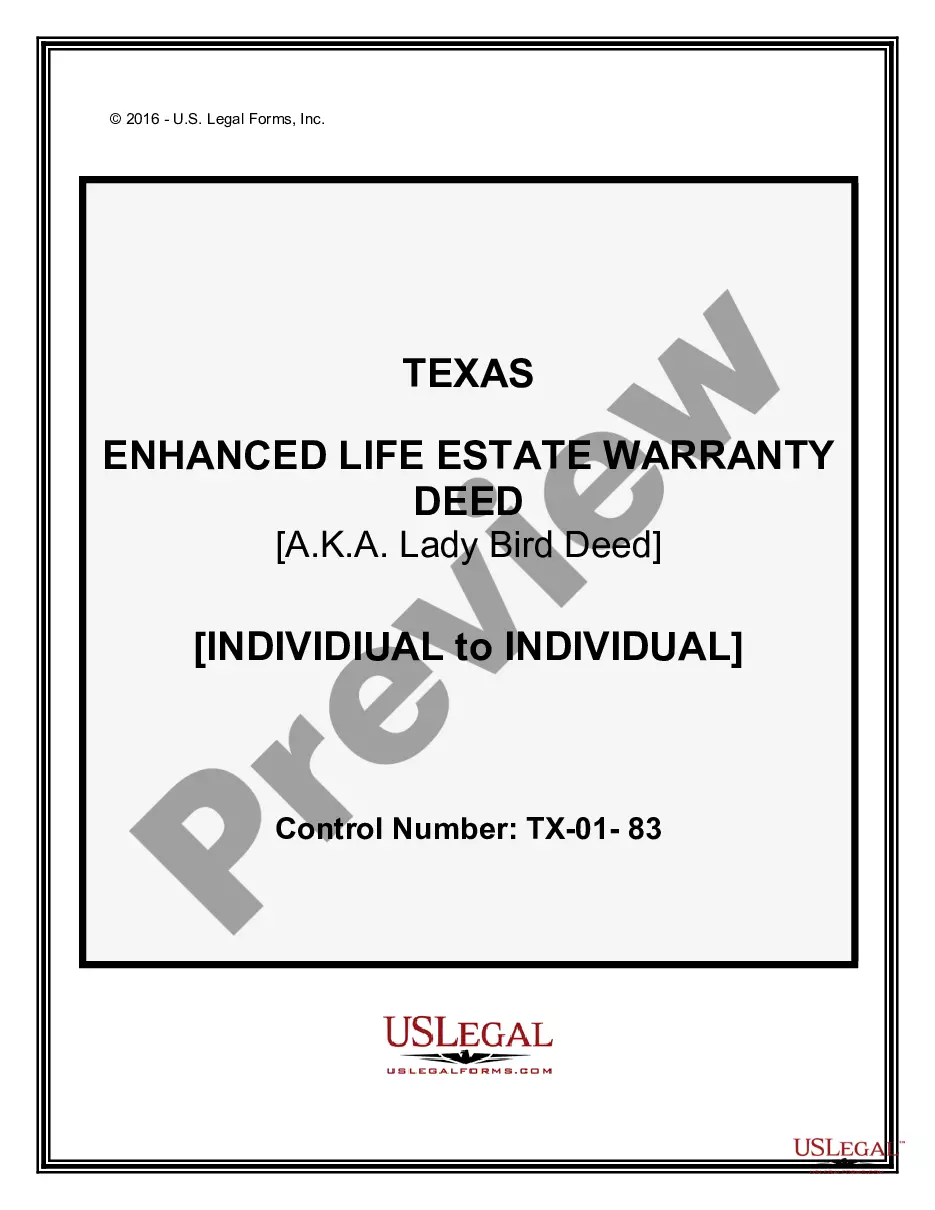
Enhanced Life Deed Texas With A Child
Description

Get your form ready online
Our built-in tools help you complete, sign, share, and store your documents in one place.
Make edits, fill in missing information, and update formatting in US Legal Forms—just like you would in MS Word.
Download a copy, print it, send it by email, or mail it via USPS—whatever works best for your next step.
Sign and collect signatures with our SignNow integration. Send to multiple recipients, set reminders, and more. Go Premium to unlock E-Sign.
If this form requires notarization, complete it online through a secure video call—no need to meet a notary in person or wait for an appointment.
We protect your documents and personal data by following strict security and privacy standards.

Make edits, fill in missing information, and update formatting in US Legal Forms—just like you would in MS Word.

Download a copy, print it, send it by email, or mail it via USPS—whatever works best for your next step.

Sign and collect signatures with our SignNow integration. Send to multiple recipients, set reminders, and more. Go Premium to unlock E-Sign.

If this form requires notarization, complete it online through a secure video call—no need to meet a notary in person or wait for an appointment.

We protect your documents and personal data by following strict security and privacy standards.
Looking for another form?







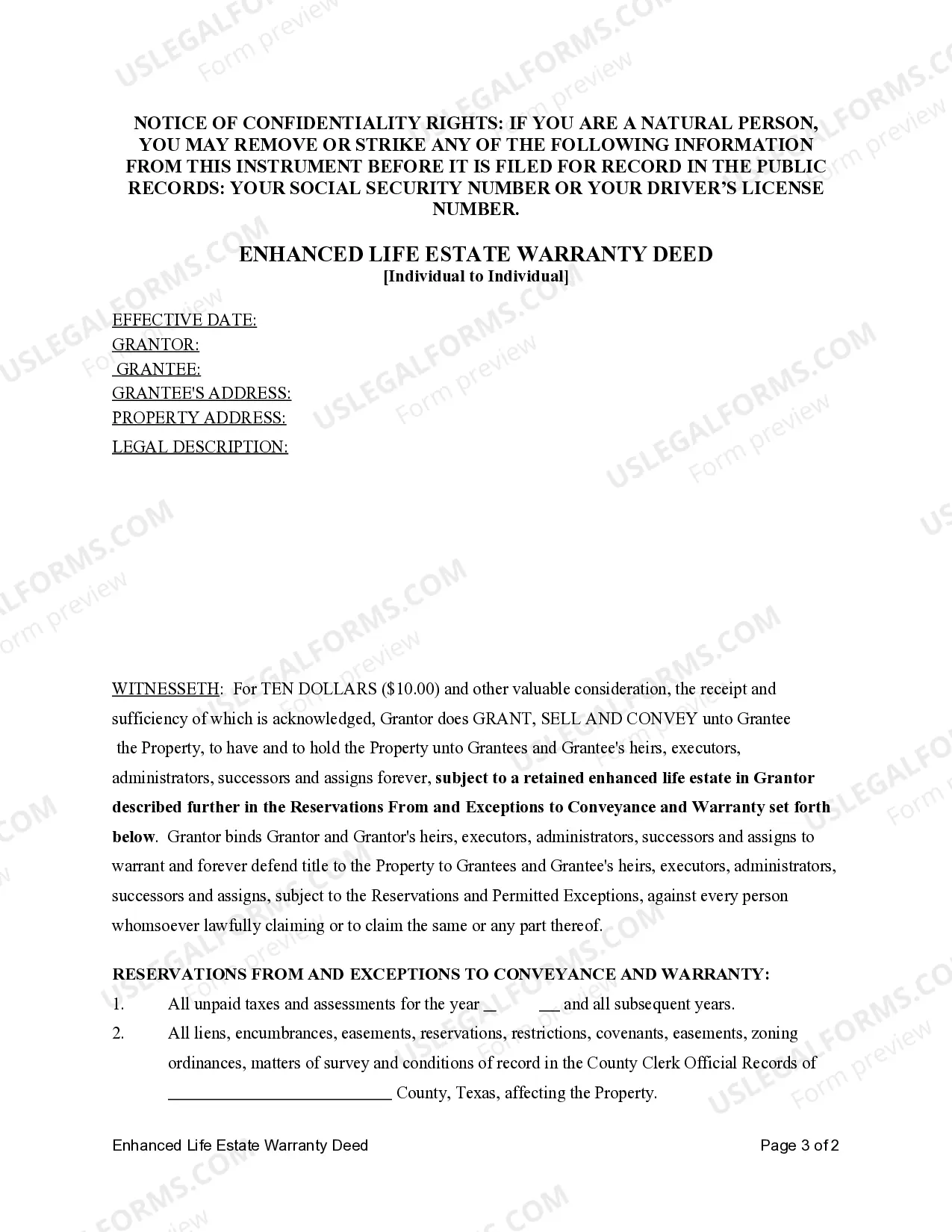
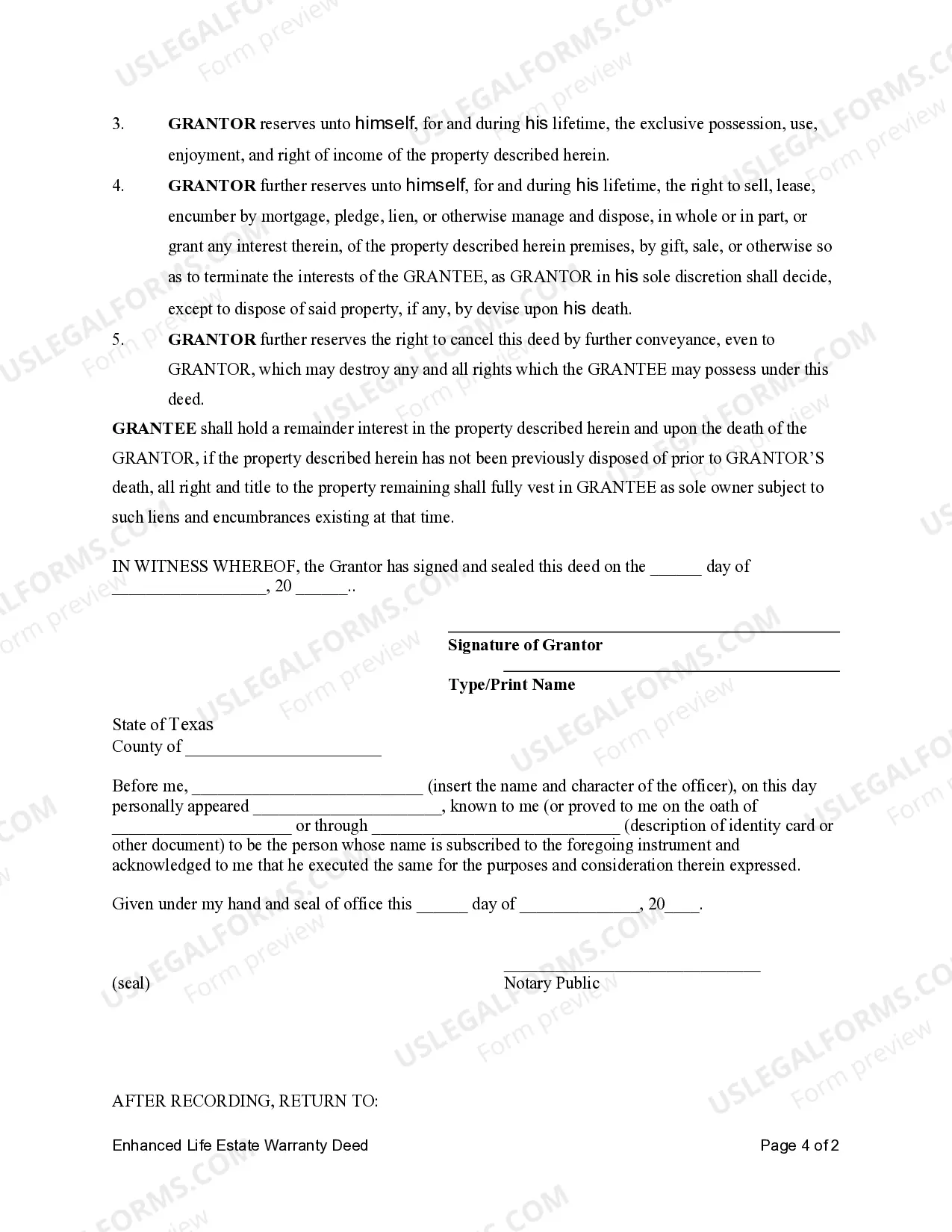
How to fill out Texas Lady Bird Or Enhanced Life Estate Warranty Deed - Individual To Individual?
- Log in to your US Legal Forms account if you're already a member, or sign up if you're new.
- Visit the Enhanced Life Deed section and review the template preview to ensure it fits your requirements.
- If the selected form does not meet your legal needs, utilize the search functionality to explore alternative templates that might be a better fit.
- Select your preferred subscription plan by clicking the Buy Now button to gain access to US Legal Forms extensive library.
- Complete your purchase by entering your payment details, either via credit card or PayPal.
- Once the payment is confirmed, download the Enhanced Life Deed template directly to your device and access it anytime through the My Forms menu.
In conclusion, US Legal Forms not only simplifies the document creation process but also provides users with the resources they need for accuracy and legal validity. The extensive collection of over 85,000 forms ensures that you will find exactly what you need for your legal documentation.
Start your journey towards effortless legal documentation today with US Legal Forms!
Form popularity
FAQ
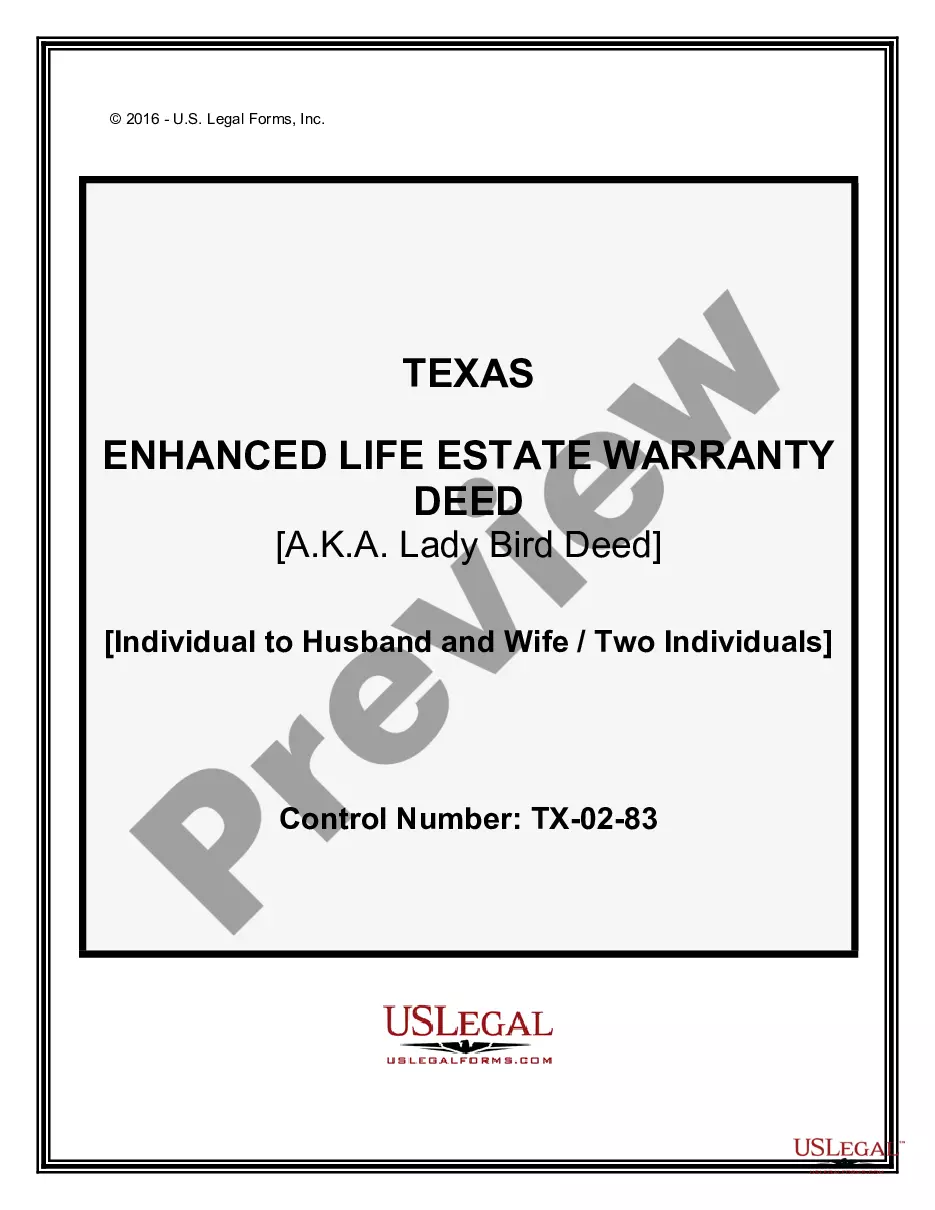
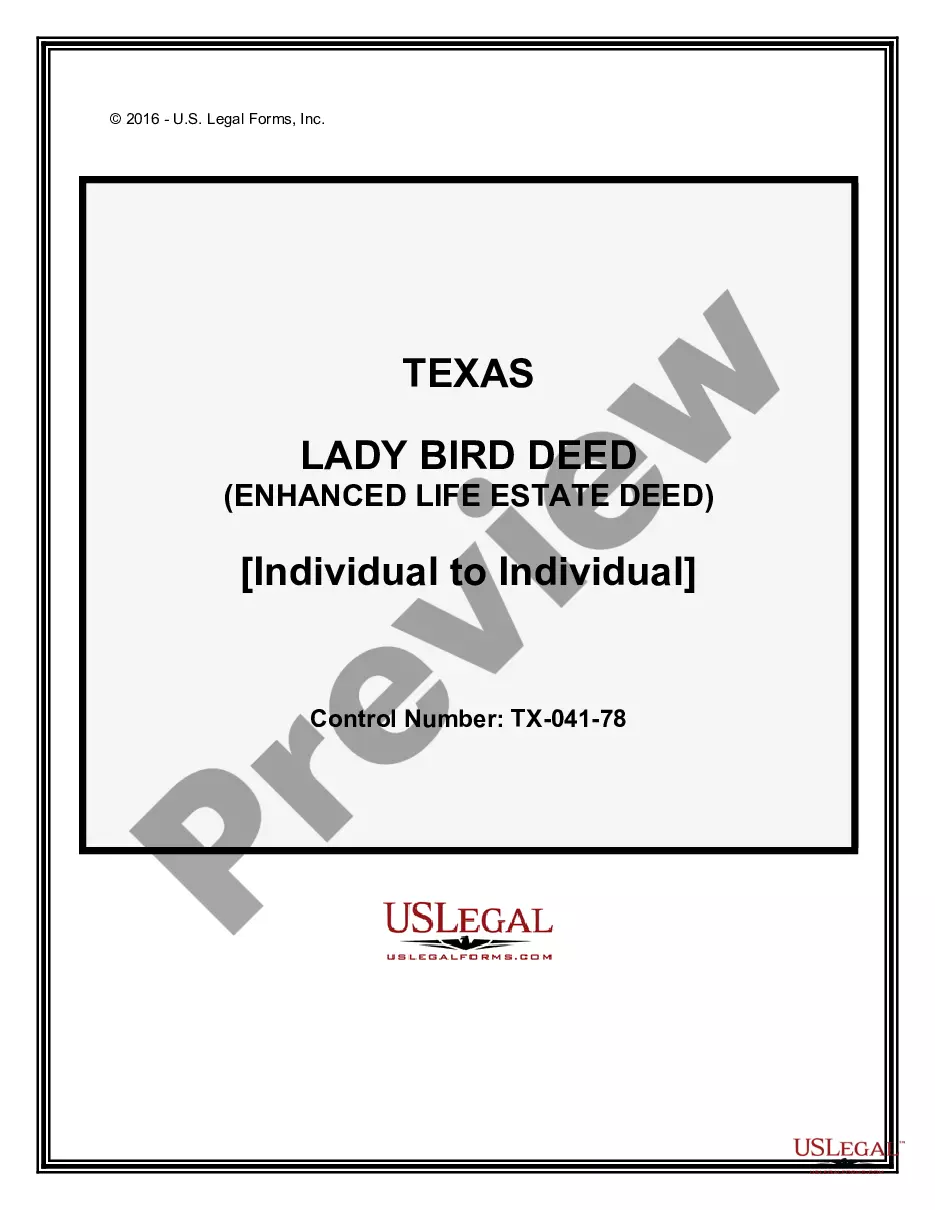
An example of an enhanced life estate deed is when a parent transfers their home to their child but retains the right to live in the home until their passing. This setup becomes effective upon death, allowing the child to inherit the house directly. Utilizing an enhanced life deed Texas with a child simplifies the transfer and avoids the probate process.
The difference between a life estate and an enhanced life estate in Texas lies in the benefits provided after the owner’s death. A life estate limits the beneficiary's rights, often requiring probate for property transfer. An enhanced life deed Texas with a child, however, ensures that the property transfers directly to the designated heir without delay.
An enhanced life estate in Texas is a legal arrangement that allows the property owner to retain the right to use and live in the property during their lifetime, while also designating someone, like a child, to automatically inherit the property after their death. This deed helps avoid probate, making the inheritance process much smoother. It can be a beneficial strategy for estate planning.
Yes, you can revoke an enhanced life estate deed in Texas, but the process may vary depending on how the deed was created. If you want to revoke it, you might need to create a new deed that explicitly states the revocation. Consulting with a legal professional can help you navigate this process effectively.
To add a child to your deed in Texas, you need to draft a new deed that includes the child's name along with your own. This can be accomplished through an enhanced life deed Texas with a child, allowing the child to inherit the property automatically without probate. Make sure to file the new deed with the county clerk to finalize the change.
The primary difference between a life estate and an enhanced life estate in Texas lies in the rights after the owner’s death. With an enhanced life deed Texas with a child, the property automatically transfers to the designated beneficiary, avoiding probate. A standard life estate, however, typically requires the estate to go through the probate process for the transfer.
In Texas, the two types of life estate are the conventional life estate and the enhanced life estate. A conventional life estate allows the owner to use the property during their lifetime but does not provide additional benefits upon their death. In contrast, an enhanced life estate deed Texas with a child allows for the property to be transferred to a named beneficiary without going through probate.
To transfer a deed to a family member after death in Texas, you typically need to provide proof of death, such as a death certificate, and complete a new deed transferring the property. If an enhanced life deed Texas with a child is in place, the child may automatically become the owner without involving probate. It's advisable to consult with a legal expert to ensure a smooth process.
A Lady Bird deed can provide some protection against Medicaid claims, but it is not foolproof. Medicaid may still assert a claim against the property depending on the circumstances, particularly if the owner requires long-term care. To navigate these complexities effectively, explore enhanced life deed Texas with a child through a platform like uslegalforms, ensuring you understand your options fully.
Yes, a Lady Bird deed can help in avoiding capital gains tax when transferring property. This is because the property retains its original basis for tax purposes, which means capital gains taxes may not apply upon the owner’s passing. If you are considering an enhanced life deed Texas with a child, this tax benefit is an important factor to weigh in your decision.