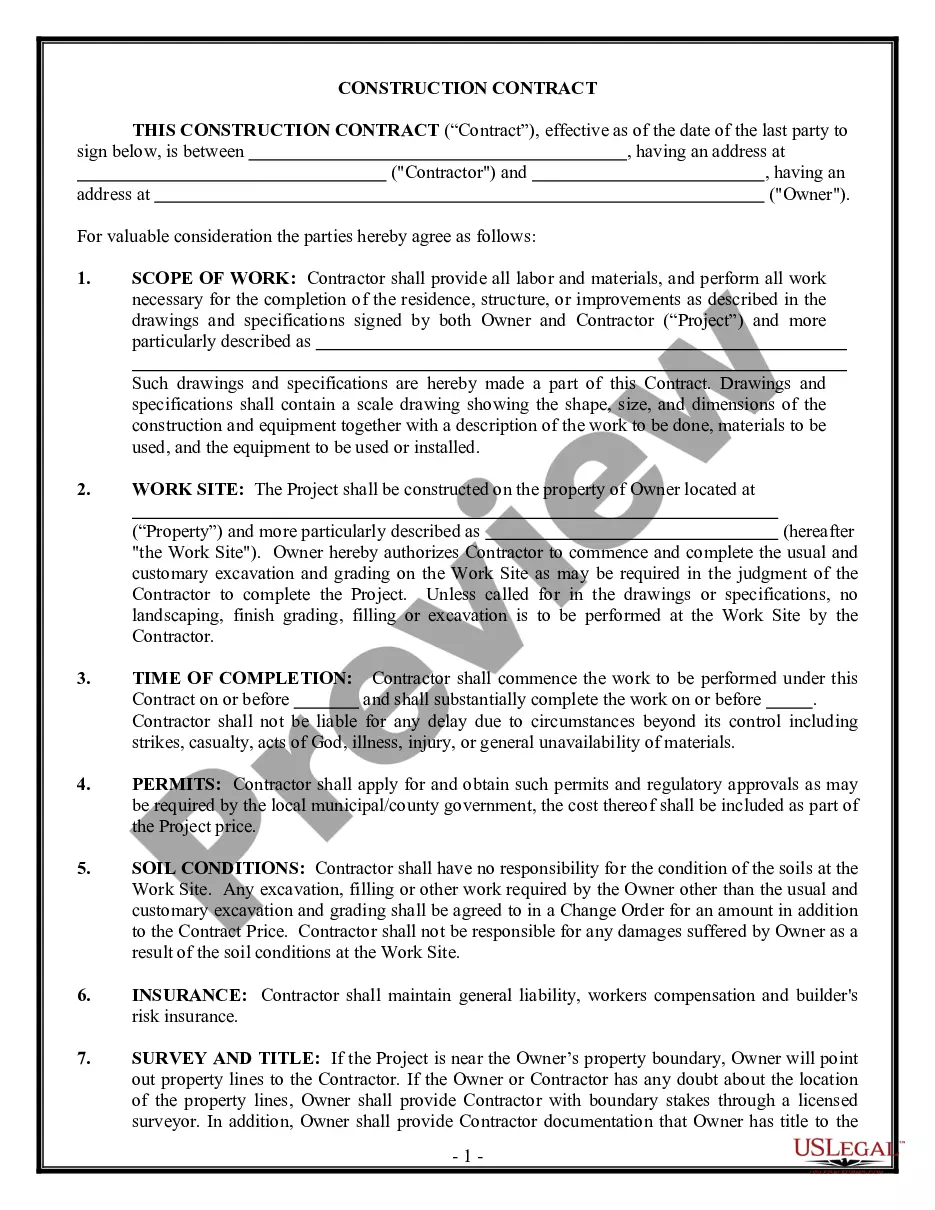
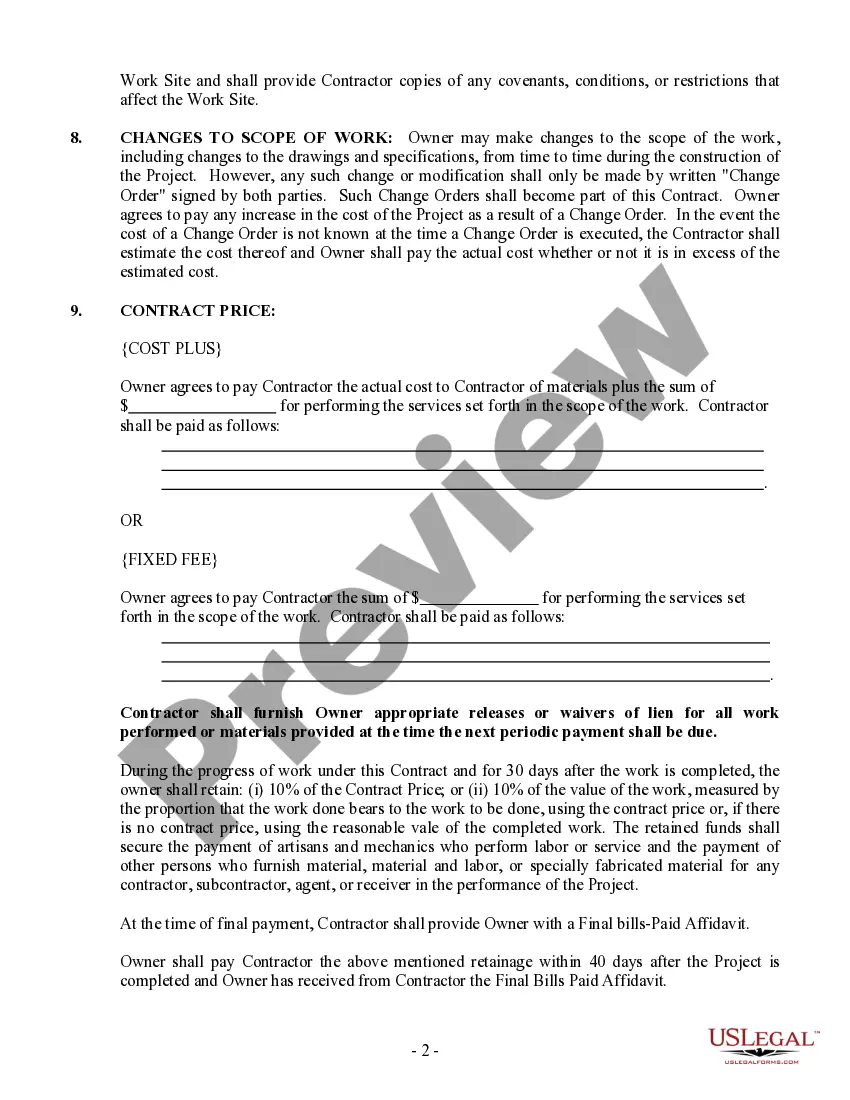
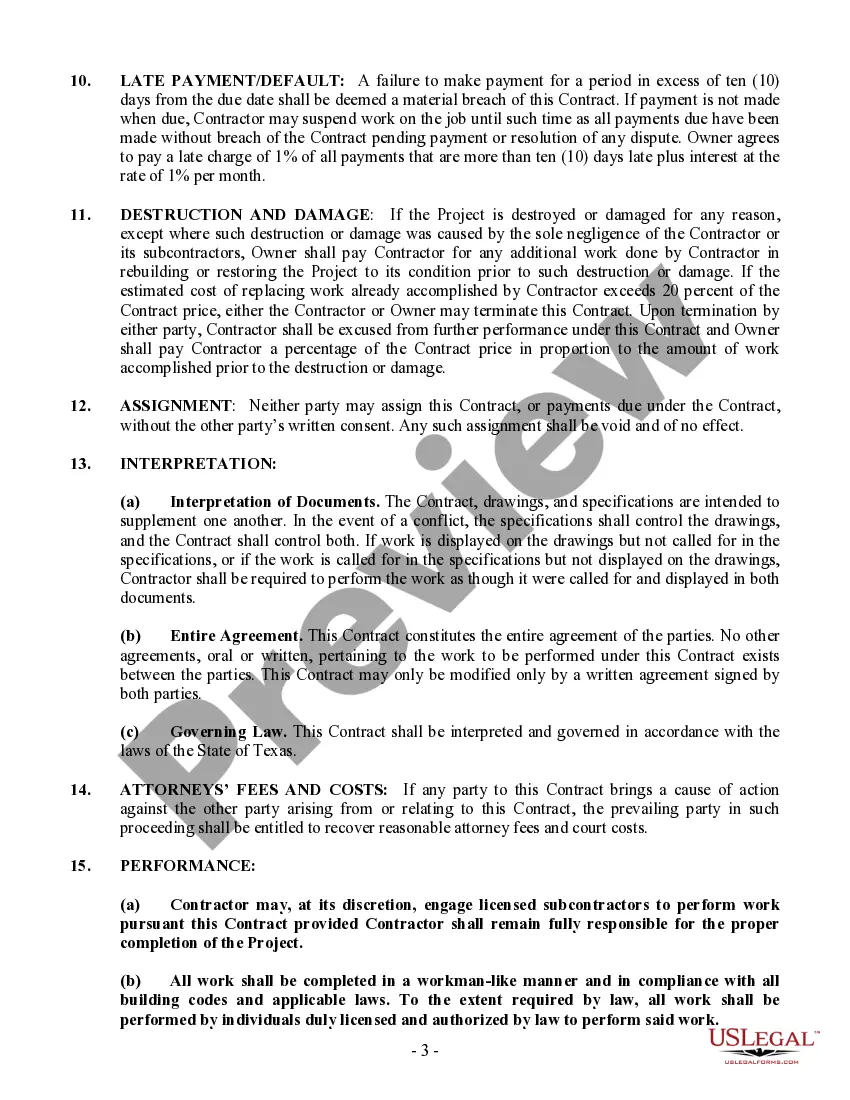
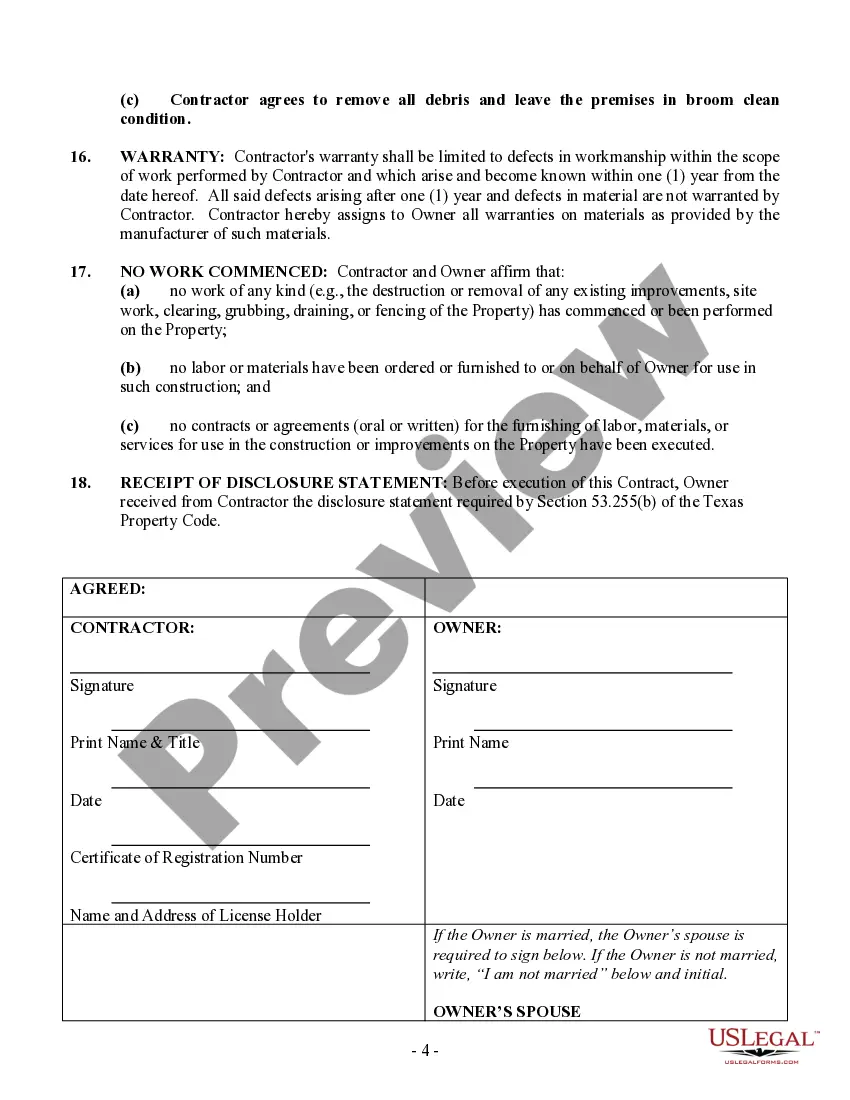
Residential Construction Contract Cost Plus Fort Smith
Description
Get your form ready online
Our built-in tools help you complete, sign, share, and store your documents in one place.
Make edits, fill in missing information, and update formatting in US Legal Forms—just like you would in MS Word.
Download a copy, print it, send it by email, or mail it via USPS—whatever works best for your next step.
Sign and collect signatures with our SignNow integration. Send to multiple recipients, set reminders, and more. Go Premium to unlock E-Sign.
If this form requires notarization, complete it online through a secure video call—no need to meet a notary in person or wait for an appointment.
We protect your documents and personal data by following strict security and privacy standards.

Make edits, fill in missing information, and update formatting in US Legal Forms—just like you would in MS Word.

Download a copy, print it, send it by email, or mail it via USPS—whatever works best for your next step.

Sign and collect signatures with our SignNow integration. Send to multiple recipients, set reminders, and more. Go Premium to unlock E-Sign.

If this form requires notarization, complete it online through a secure video call—no need to meet a notary in person or wait for an appointment.

We protect your documents and personal data by following strict security and privacy standards.
Looking for another form?









How to fill out Texas Construction Contract Cost Plus Or Fixed Fee?
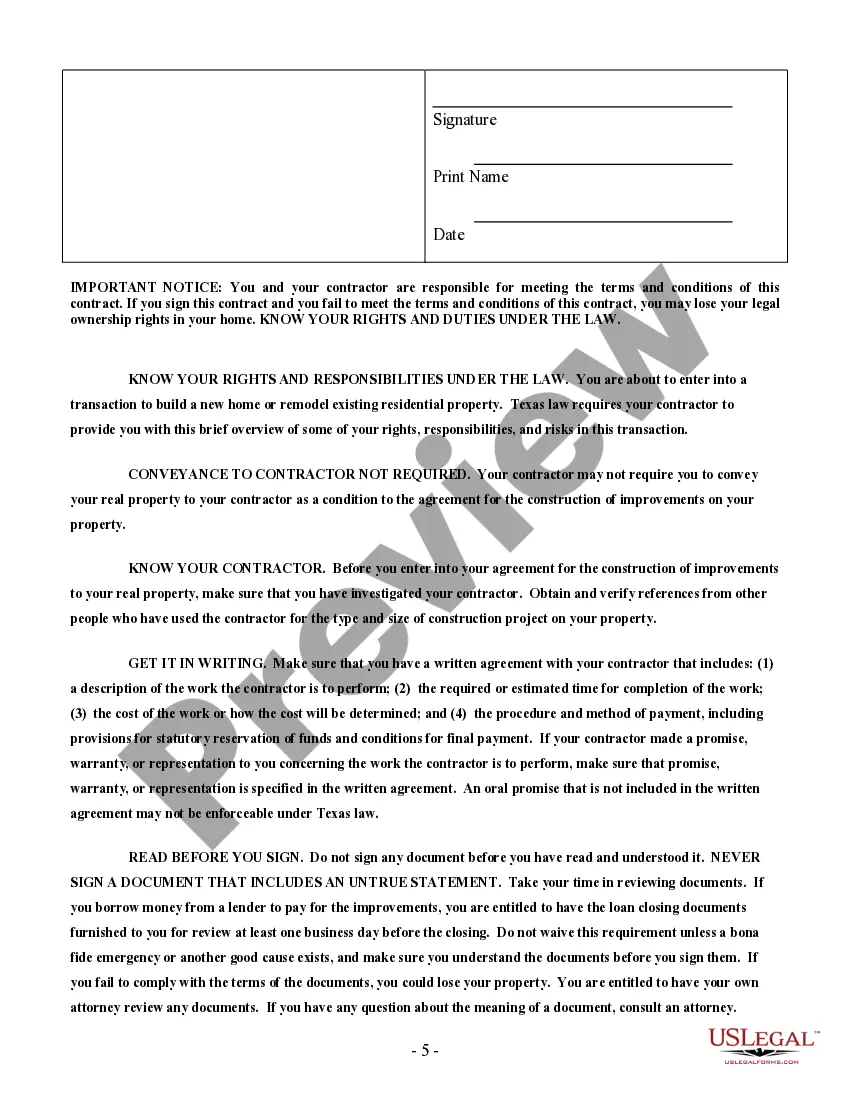
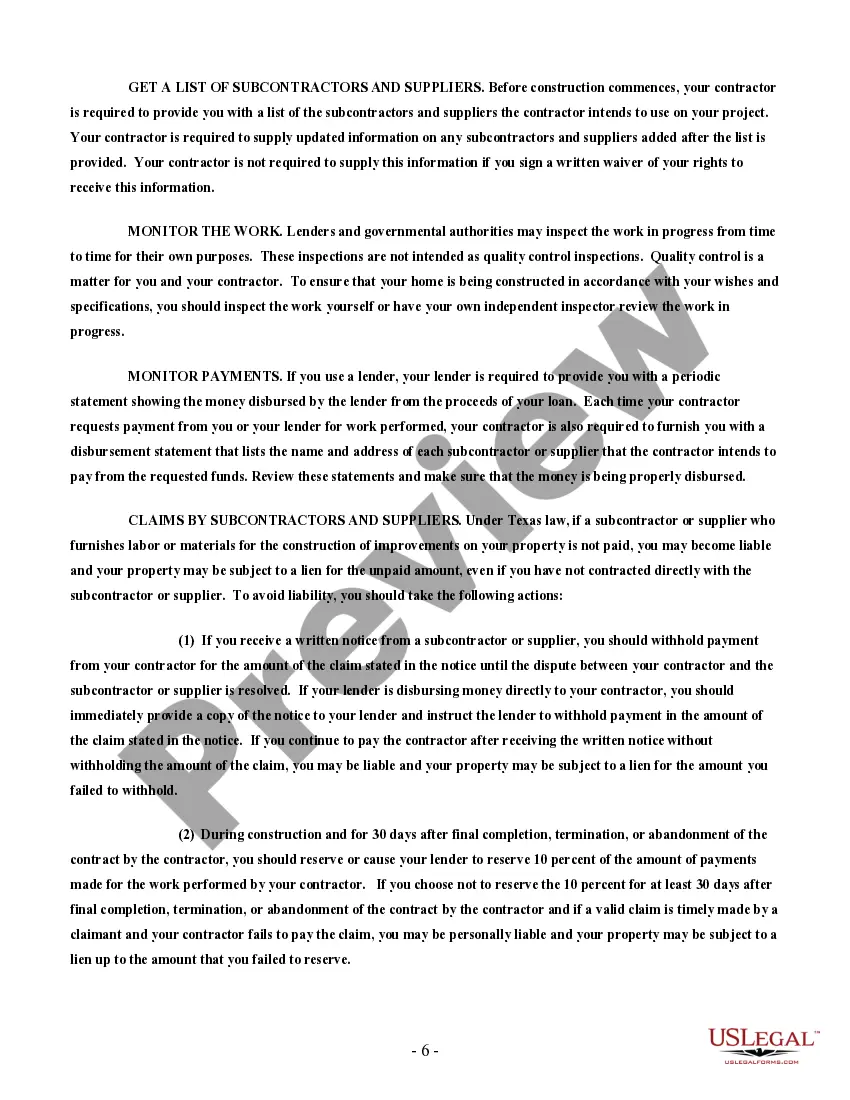
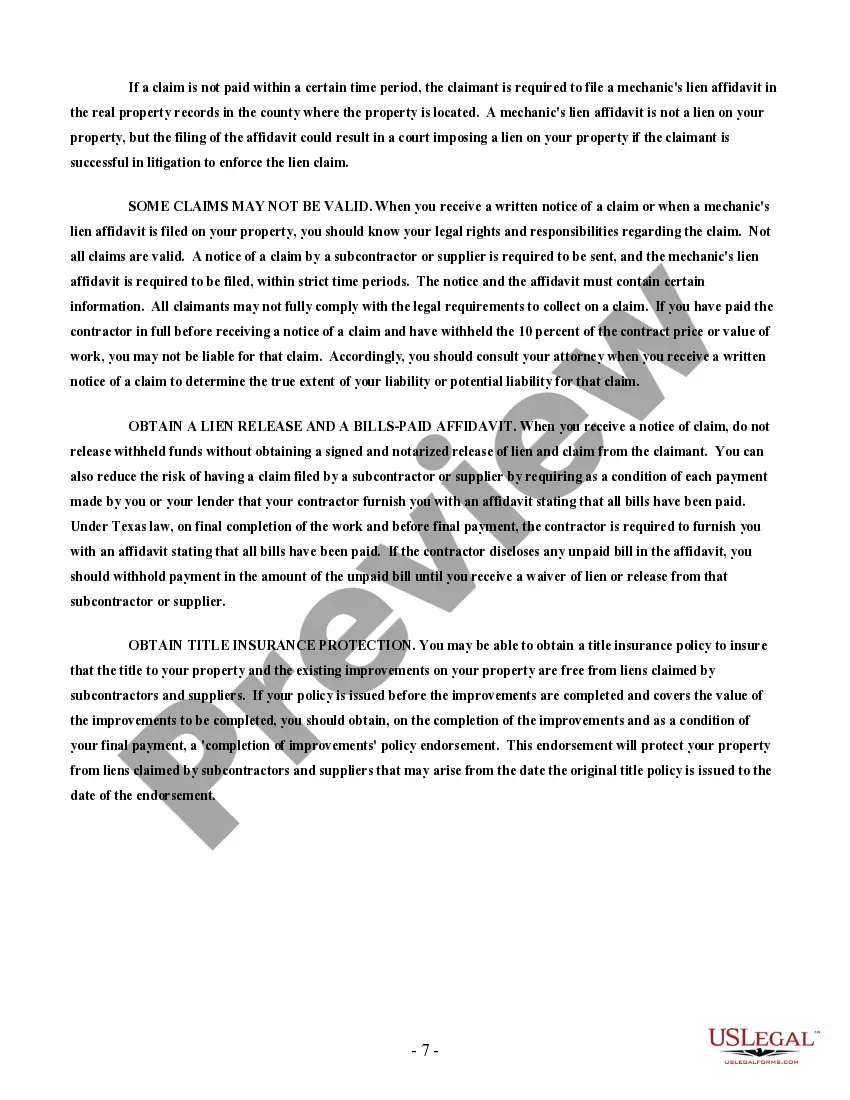
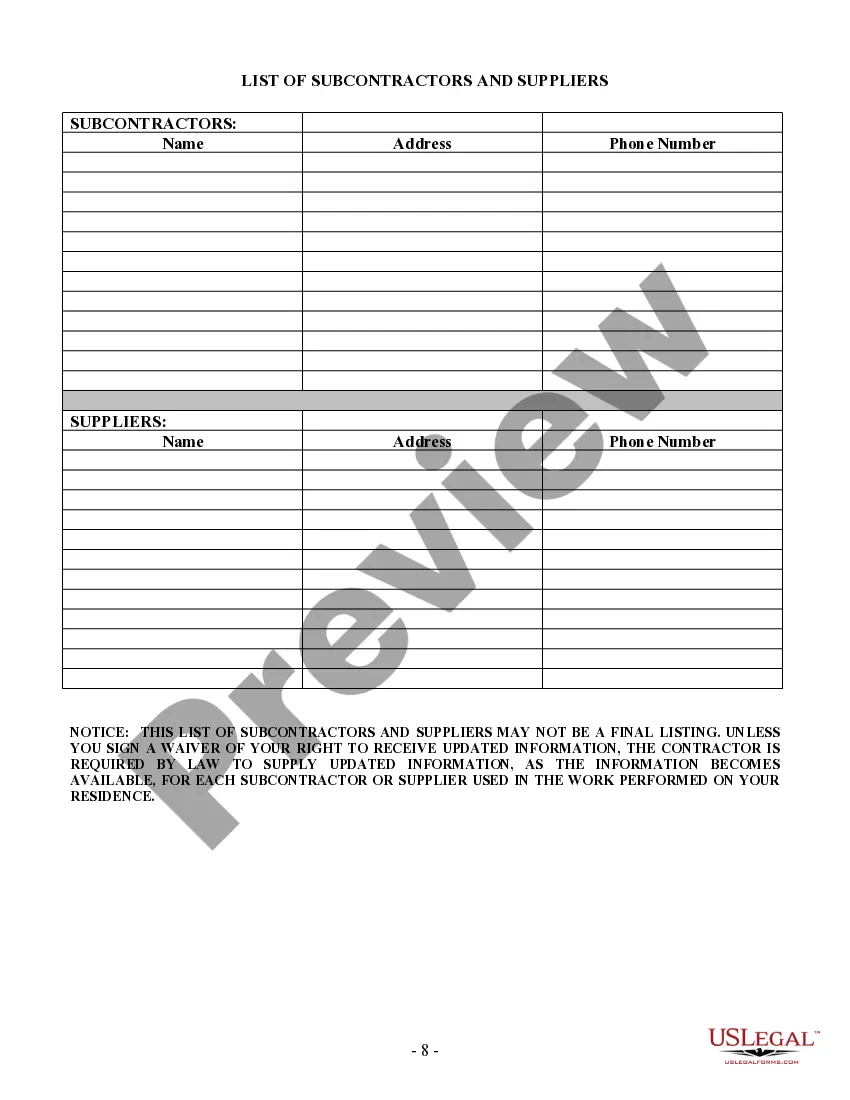
The Residential Building Agreement Cost Plus Fort Smith displayed on this page is a reusable official template created by qualified attorneys in accordance with national and local regulations.
For over 25 years, US Legal Forms has offered individuals, enterprises, and legal professionals access to more than 85,000 validated, state-specific documents for any commercial and personal situation. It’s the fastest, simplest, and most reliable method to acquire the documents you require, as the service ensures bank-level data confidentiality and anti-malware safeguards.
Subscribe to US Legal Forms to have verified legal templates for all of life's circumstances at your fingertips.
- Search for the document you require and examine it.
- Look through the sample you searched and preview it or assess the form description to confirm it meets your needs. If it doesn't, utilize the search feature to find the correct one. Click Buy Now once you have located the template you need.
- Register and Log In.
- Choose the pricing plan that best fits you and create an account. Use PayPal or a credit card for a speedy transaction. If you already possess an account, Log In and review your subscription to move forward.
- Acquire the editable template.
- Select the format you prefer for your Residential Building Agreement Cost Plus Fort Smith (PDF, Word, RTF) and save the file on your device.
- Fill out and sign the documents.
- Print the template to complete it physically. Alternatively, use an online versatile PDF editor to quickly and accurately fill in and sign your form with a valid signature.
- Re-download your documents.
- Use the same document again whenever necessary. Access the My documents tab in your profile to retrieve any previously saved forms.
Form popularity
FAQ
plus construction contract operates by reimbursing the contractor for all legitimate expenses incurred during the project, plus an additional amount for profit. This model provides flexibility, allowing adjustments based on actual costs and changes in project scope. Clients benefit from transparency in the billing process, as they can see how funds are allocated. For those navigating residential construction contract cost plus Fort Smith, using US Legal Forms can simplify understanding and managing these financial aspects.
An example of a cost-plus percentage of cost contract might involve a contractor charging 15% on all actual expenses incurred during the construction of a home. If the total costs amount to $200,000, the contractor would receive an additional $30,000. This structure allows for transparency in costs while ensuring the contractor is fairly compensated. For more examples and contract templates, consider exploring US Legal Forms, your resource for residential construction contract cost plus Fort Smith.
In a cost-plus building contract, the percentage charged can vary based on agreements between the client and contractor. Commonly, it falls between 10% and 15% of total costs. It is essential to establish this percentage clearly in the contract to avoid misunderstandings later. For reliable contract samples and legal advice, visit US Legal Forms, specializing in residential construction contract cost plus Fort Smith.
The standard cost-plus percentage typically ranges from 10% to 20%, depending on the project's scope and complexity. This percentage is added to the total costs incurred during construction. Choosing the right percentage can influence your budget and the contractor's motivation. To learn more about the specifics of residential construction contract cost plus Fort Smith, explore resources on the US Legal Forms platform.
A standard cost-plus construction contract involves paying the contractor for all construction costs plus an additional amount for profit. This structure offers flexibility, allowing adjustments as project needs evolve. It is particularly useful for residential projects where costs may fluctuate. For detailed templates and insights, check out US Legal Forms, which specializes in residential construction contract cost plus Fort Smith.
A good cost-plus percentage for residential construction contracts in Fort Smith typically ranges from 10% to 20%. This percentage should cover the contractor's overhead, profit, and any unforeseen expenses. It's essential to discuss this percentage openly with your contractor to ensure it aligns with your budget and project goals. Understanding the residential construction contract cost plus Fort Smith will help you make informed decisions and maintain financial control throughout your project.
One of the biggest cons is the potential for project costs to spiral out of control. Since the contractor's fee is fixed regardless of expenses, there may be little incentive to keep costs under control. Another downside is that it can be challenging to accurately estimate the total cost of a project upfront.
A: As an example, a cost-plus contract may establish that the total estimated cost of a building project is $10 million plus a fixed fee of $1.5 million, roughly 15% of the total cost, as the contractor's profit. So the total expense to the buyer would be approximately $11.5 million ?the cost plus the fee.
The profit in a cost-plus contract is typically set as a fixed amount or a fixed percentage of the project's total costs. The percentage typically ranges from 10% to 20% of the total cost of the project.
Cost plus a percentage of cost is a method of pricing contractors use when drafting contracts with clients when they cannot provide a final cost at the time of the contract. These contracts specify how they can determine the cost of the project is without calculating the cost.