Tenant Landlord Failure For Lease Agreement
Description


Get your form ready online
Our built-in tools help you complete, sign, share, and store your documents in one place.
Make edits, fill in missing information, and update formatting in US Legal Forms—just like you would in MS Word.
Download a copy, print it, send it by email, or mail it via USPS—whatever works best for your next step.
Sign and collect signatures with our SignNow integration. Send to multiple recipients, set reminders, and more. Go Premium to unlock E-Sign.
If this form requires notarization, complete it online through a secure video call—no need to meet a notary in person or wait for an appointment.
We protect your documents and personal data by following strict security and privacy standards.

Make edits, fill in missing information, and update formatting in US Legal Forms—just like you would in MS Word.

Download a copy, print it, send it by email, or mail it via USPS—whatever works best for your next step.

Sign and collect signatures with our SignNow integration. Send to multiple recipients, set reminders, and more. Go Premium to unlock E-Sign.

If this form requires notarization, complete it online through a secure video call—no need to meet a notary in person or wait for an appointment.

We protect your documents and personal data by following strict security and privacy standards.
Looking for another form?
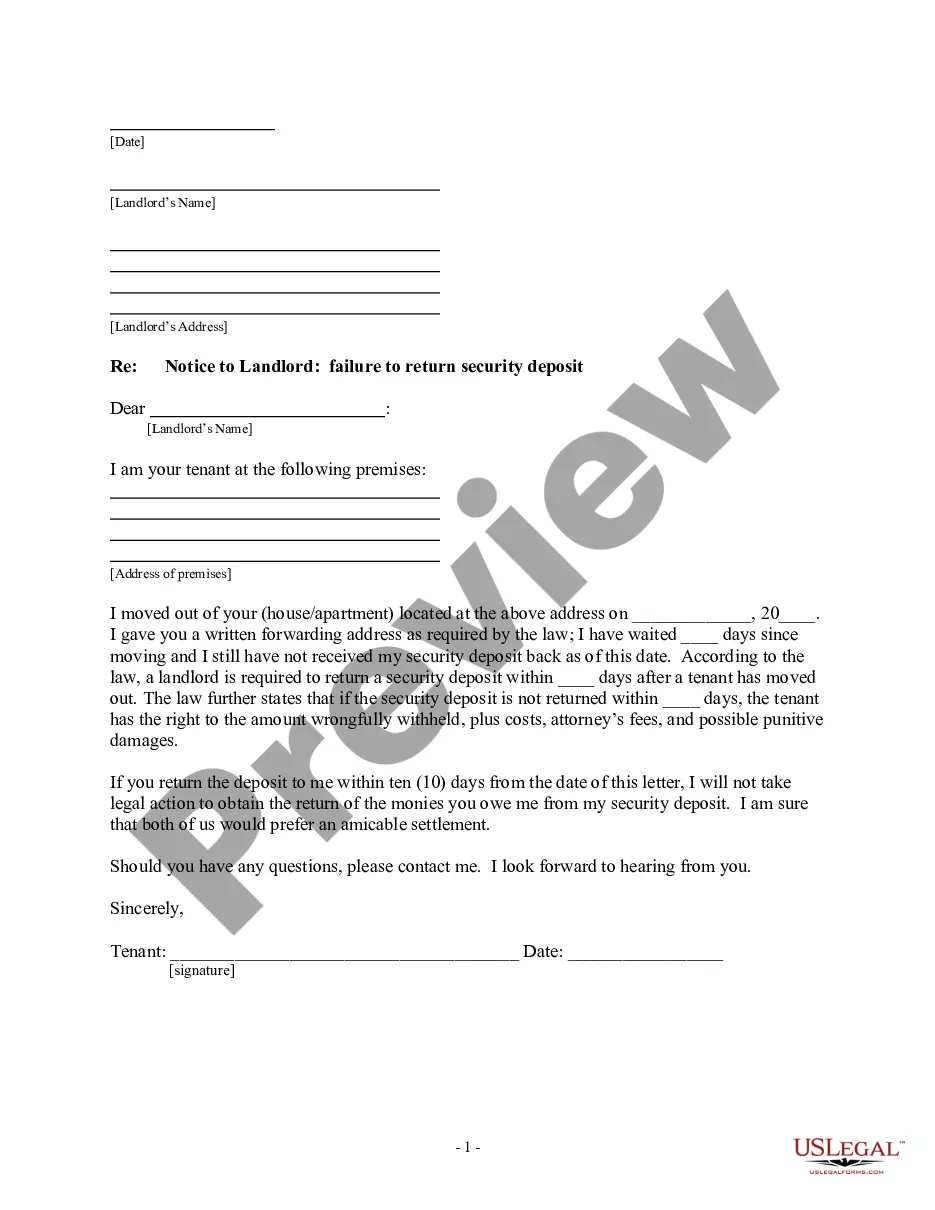
How to fill out Tennessee Letter From Tenant To Landlord Containing Notice Of Failure To Return Security Deposit And Demand For Return?
- Log into your US Legal Forms account if you already have one. If you haven't subscribed yet, go to the website to register.
- Review the Preview mode and form description to ensure you're selecting the right lease agreement that meets your local jurisdiction's requirements.
- If necessary, utilize the Search tab to find any alternative templates that may suit your needs better.
- Once you've identified the right document, click on the Buy Now button and select your preferred subscription plan.
- Complete your payment using a credit card or PayPal to finalize your subscription.
- After purchase, download the lease agreement to your device for easy access and completion from your account.
By following these steps, you can efficiently obtain the lease agreement you need. US Legal Forms' robust collection and expert assistance ensure you create accurate, legally sound documents.
Don't wait! Visit US Legal Forms today and streamline your legal documentation process.
Form popularity
FAQ
A breach of lease occurs when either the tenant or the landlord fails to adhere to the terms specified in the lease agreement. This can include issues such as non-payment of rent, unauthorized alterations to the property, or failure to maintain the premises. Recognizing these issues early can prevent tenant landlord failure for lease agreement and protect your tenancy rights.
If your landlord never provided a lease, it's important to document your tenancy and communicate your concerns. You can request a written lease to clarify the terms of your agreement. Not having a lease can lead to tenant landlord failure for lease agreement, but platforms like uslegalforms can help create formal agreements to protect your rights.
A lease violation means a tenant has not complied with the terms of their lease agreement, potentially leading to penalties or eviction. Common violations include not paying rent on time or causing damage to the property. Understanding lease obligations is crucial to avoid tenant landlord failure for lease agreement.
Red flags in a lease may include vague terms, excessive fees, or clauses that seem unfair. For instance, if a lease allows the landlord to enter without notice, it may violate tenant privacy rights. Identifying these red flags early can help prevent tenant landlord failure for lease agreement and ensure a smoother renting experience.
In Nebraska, tenants can report their landlord to local housing authorities or code enforcement offices if they face issues like unsafe living conditions or unaddressed lease violations. Reporting helps address concerns and can prevent tenant landlord failure for lease agreement. It's important to document any complaints and issues before making a report.
The most common action landlords take against tenants who breach their lease is serving an eviction notice. This is often due to non-payment of rent or lease violations, which can spark a tenant landlord failure for lease agreement. Landlords may pursue legal action if the issue is not resolved promptly.
A lease violation occurs when a tenant does not adhere to the terms outlined in their lease agreement. For example, if a tenant has a no-pets clause in their lease but brings a pet into the apartment, this constitutes a violation. Such actions can lead to tenant landlord failure for lease agreement and potential eviction proceedings.
In Nebraska, renters have several rights that protect them, including the right to a safe and habitable living environment, the right to privacy, and the right to have their security deposit returned under specific conditions. It is important to understand these rights to prevent any tenant landlord failure for lease agreement. Additionally, tenants have the right to report any violations to local authorities.
The 7 day landlord failure to comply refers to a situation where a landlord does not address repairs or violations within a seven-day timeframe after being notified. This failure to comply allows tenants to take further steps, such as termination of the lease or filing a complaint. Knowing your rights is vital in such cases of tenant landlord failure for lease agreement, and using legal resources can be beneficial.
A 7 day notice to a landlord for repairs in Florida is a formal notification informing the landlord of needed repairs. This notice gives the landlord seven days to respond and address the requested repairs. If the landlord fails to act, tenants may pursue additional legal remedies. Understanding this process is essential in contexts of tenant landlord failure for lease agreement, ensuring your rights are protected.