Tennessee Quitclaim Deed With The Law
Description

Get your form ready online
Our built-in tools help you complete, sign, share, and store your documents in one place.
Make edits, fill in missing information, and update formatting in US Legal Forms—just like you would in MS Word.
Download a copy, print it, send it by email, or mail it via USPS—whatever works best for your next step.
Sign and collect signatures with our SignNow integration. Send to multiple recipients, set reminders, and more. Go Premium to unlock E-Sign.
If this form requires notarization, complete it online through a secure video call—no need to meet a notary in person or wait for an appointment.
We protect your documents and personal data by following strict security and privacy standards.

Make edits, fill in missing information, and update formatting in US Legal Forms—just like you would in MS Word.

Download a copy, print it, send it by email, or mail it via USPS—whatever works best for your next step.

Sign and collect signatures with our SignNow integration. Send to multiple recipients, set reminders, and more. Go Premium to unlock E-Sign.

If this form requires notarization, complete it online through a secure video call—no need to meet a notary in person or wait for an appointment.

We protect your documents and personal data by following strict security and privacy standards.
Looking for another form?








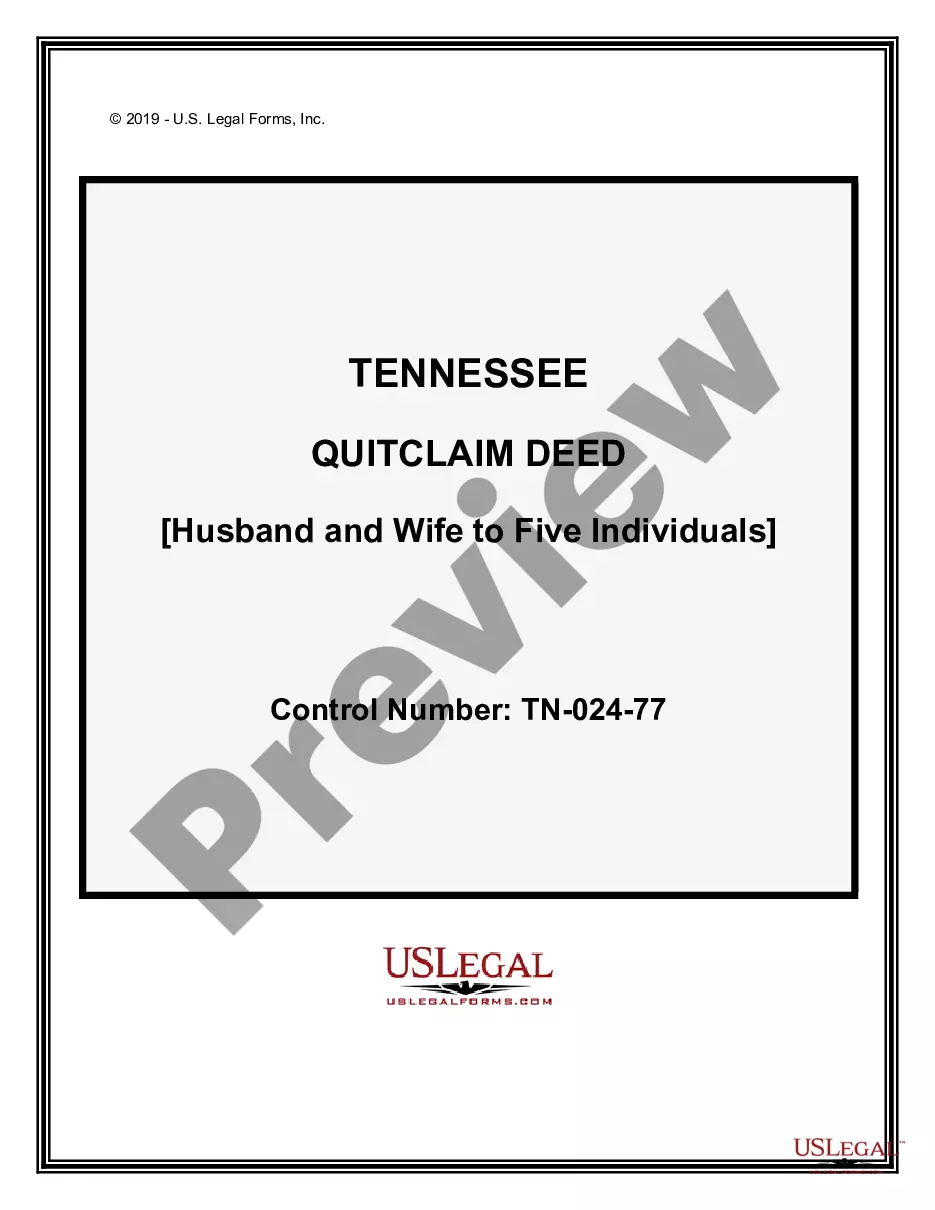
How to fill out Tennessee Quitclaim Deed - Husband And Wife To Five Individuals?
- If you are a returning user, log into your account to access the template. Verify that your subscription is active; if not, renew it as necessary.
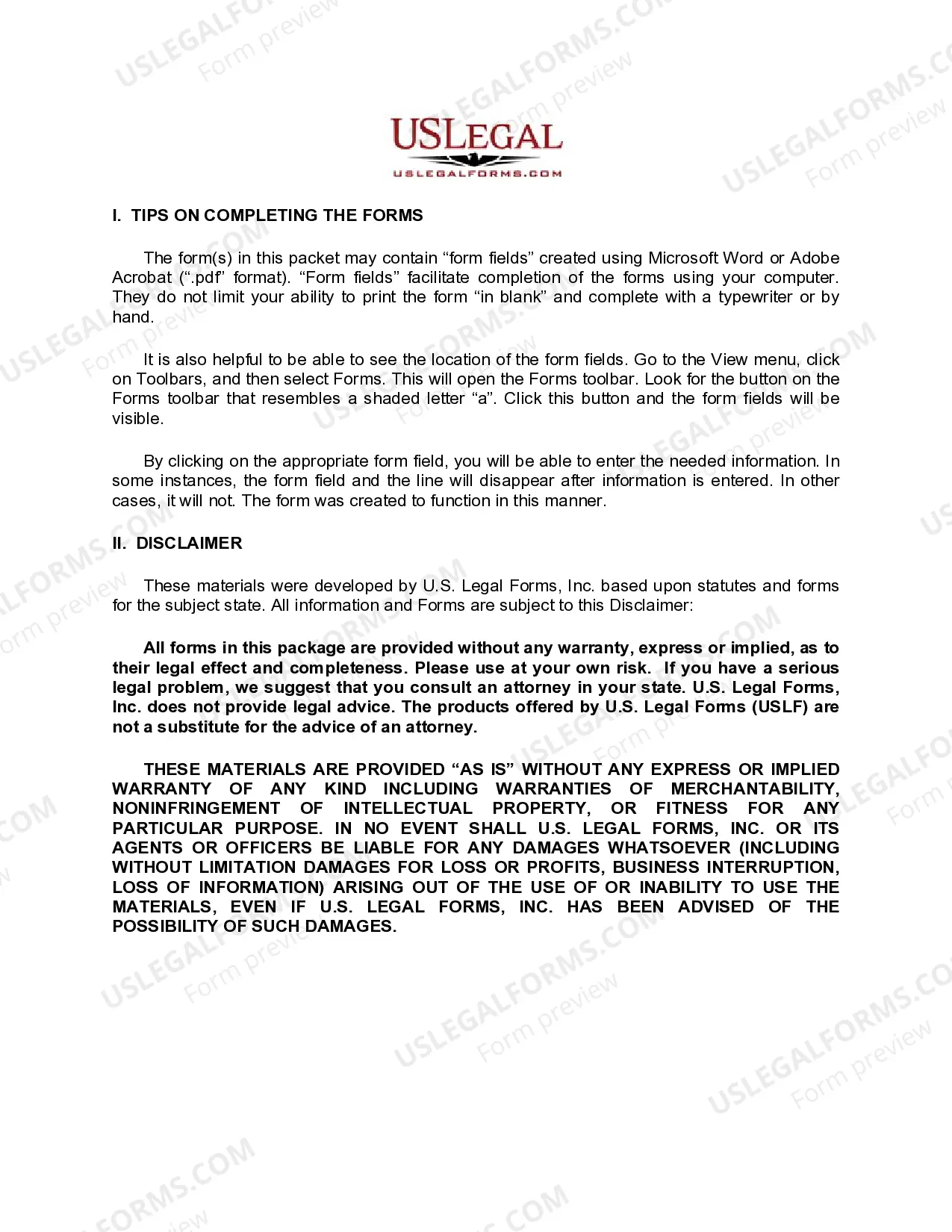
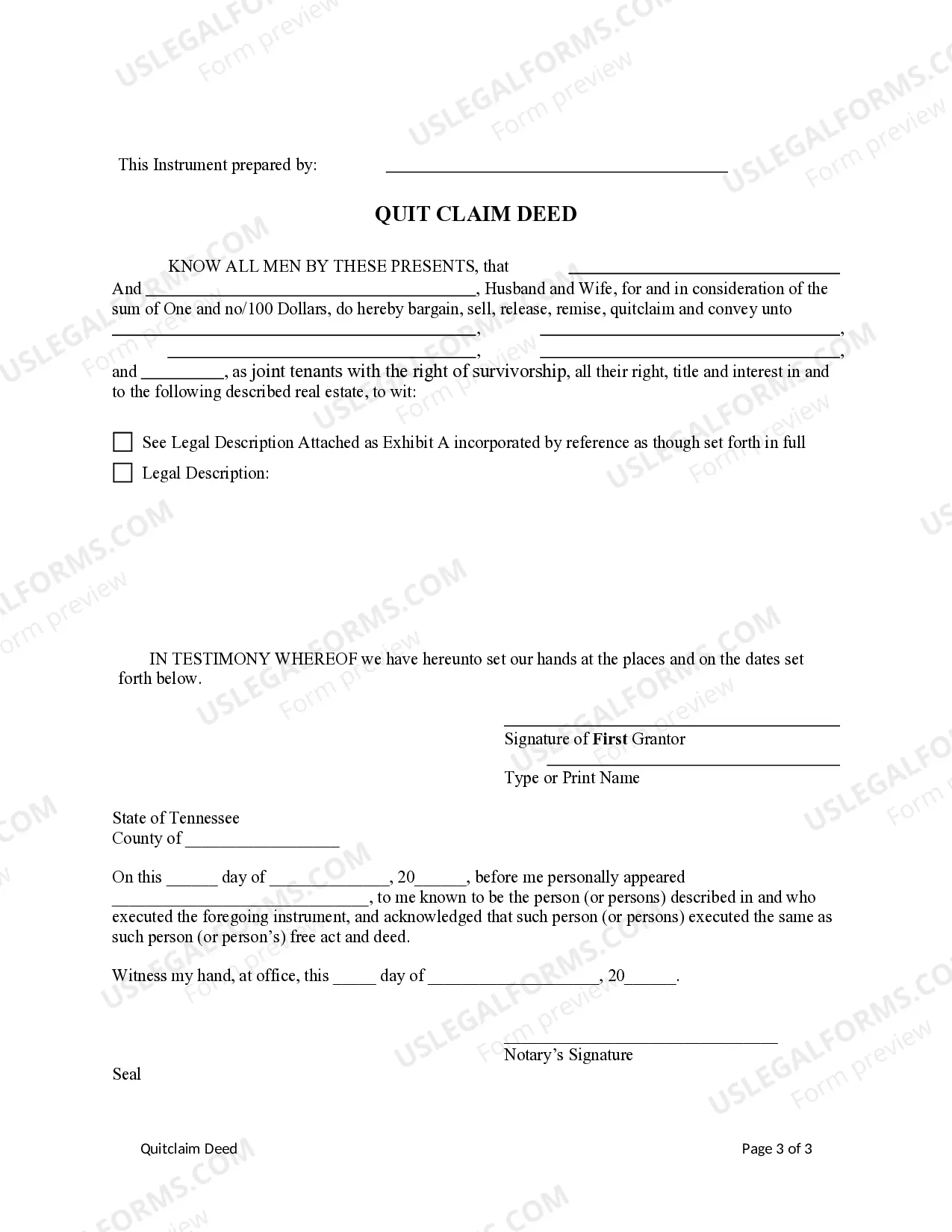
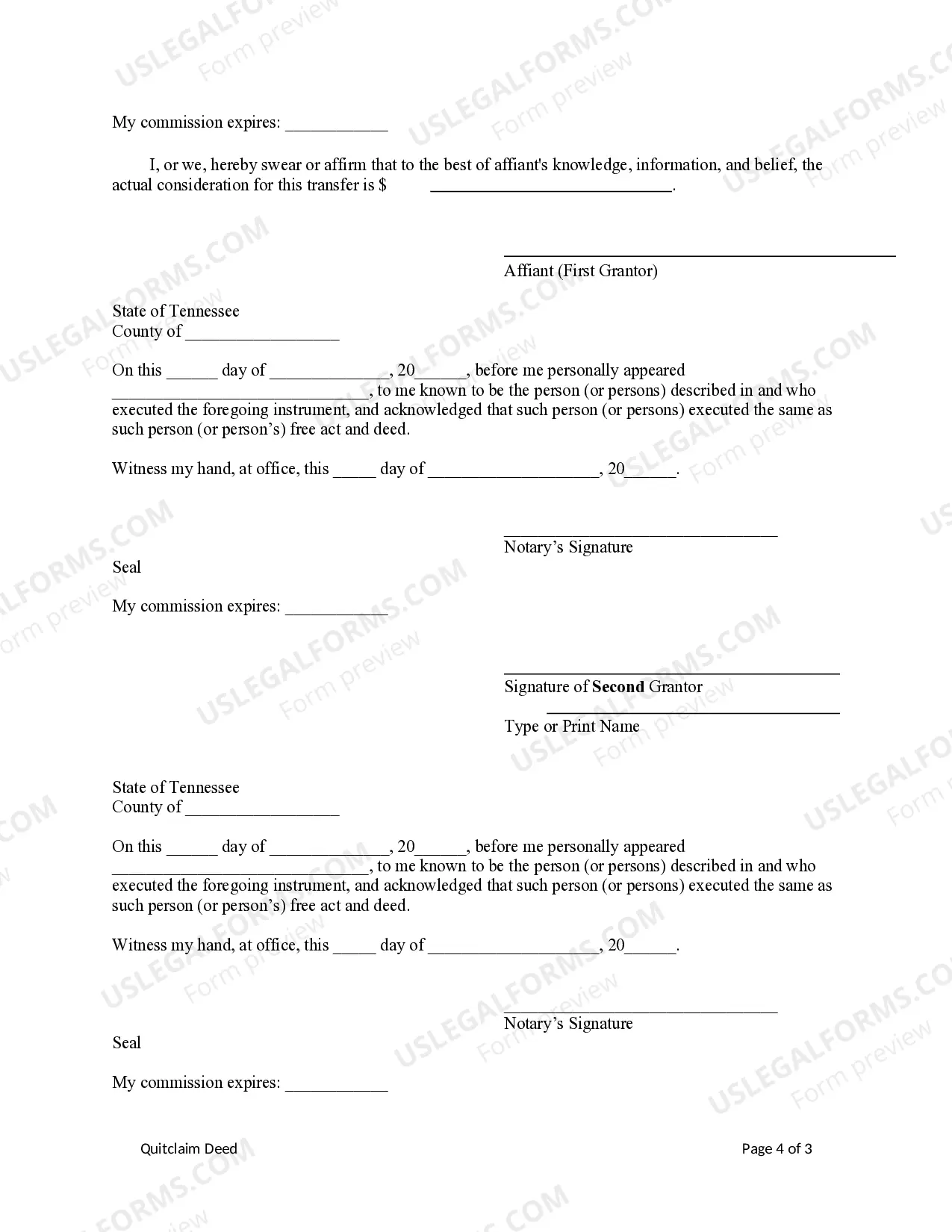
- Preview the form and read the description carefully to ensure it meets your local jurisdiction's requirements.
- If adjustments are needed or if you are looking for alternatives, use the Search feature to find a more suitable template.
- Once you've confirmed the right document, click the Buy Now button and select your desired subscription plan. You'll need to create an account to unlock the full library.
- Proceed with payment by entering your credit card information or using PayPal.
- Finally, download the template to your device. You can always access it later through the My Forms section.
By utilizing US Legal Forms, individuals and attorneys can efficiently draft legal documents backed by comprehensive resources. This ensures that you have the right forms customized for your needs, along with expert assistance when needed.
Don't hesitate—start your Tennessee quitclaim deed process today with US Legal Forms and ensure a seamless property transfer!
Form popularity
FAQ
To obtain a quitclaim deed in Tennessee, you can start by drafting the deed according to the guidelines set forth in the Tennessee quitclaim deed with the law. You will need to include specific information, such as the names of the parties involved and a clear description of the property. After drafting, ensure you sign the deed in front of a notary public. For convenience, consider accessing US Legal Forms, which offers ready-to-use templates that comply with Tennessee’s legal standards.
You can perform a quitclaim deed on your own in Tennessee as long as you adhere to the legal guidelines stipulated in the Tennessee quitclaim deed with the law. This process allows property owners to transfer interest without a formal title search. While it is possible to do it independently, many choose to use resources like US Legal Forms to simplify the process and minimize mistakes.
Yes, you can create a quit claim deed yourself in Tennessee, but it requires a good understanding of the state's legal requirements. The Tennessee quitclaim deed with the law outlines specific language and format that must be used for the deed to be valid. It is essential to ensure that you fill out and execute the deed correctly to protect your interests. For guidance, you may consider utilizing platforms like US Legal Forms, which provide templates and instructions.
Yes, you can file a quitclaim deed yourself in Tennessee, but it requires a clear understanding of the paperwork involved. You must ensure that all necessary documents are properly filled out and comply with local rules. Platforms like US Legal Forms can provide guidance and templates to help you navigate the Tennessee quitclaim deed with the law effectively.
A quitclaim deed can become void due to a variety of issues. For instance, if there is a mistake in the property description, or if the grantor is found to be incompetent to convey property at the time of signing, it may lead to a void deed. Understanding the nuances of the Tennessee quitclaim deed with the law is crucial to prevent these situations.
Several factors can contribute to the invalidation of a quitclaim deed. If the deed lacks proper notarization, is missing essential signatures, or does not meet state-specific requirements, it may be deemed invalid. Ensuring compliance with the Tennessee quitclaim deed with the law is vital to avoid complications in property transfer.
Not every notary can notarize a quitclaim deed, especially in Tennessee. A notary public must follow specific guidelines outlined in Tennessee law. It's essential to choose a qualified notary who understands the requirements for notarizing the Tennessee quitclaim deed with the law to ensure its validity.
To create a valid Tennessee quitclaim deed with the law, specific requirements must be met. The deed must include the names of both the grantor and grantee, a clear description of the property, and it must be signed in front of a notary public. Additionally, filing the deed in the appropriate county office is essential to ensure it is recognized legally.
The main beneficiaries of a Tennessee quitclaim deed with the law are individuals transferring property between family members or friends. In these cases, trust usually exists, reducing the need for extensive protections. Also, those looking to clear up title issues quickly often find this method advantageous as it enables fast transfers without lengthy procedures.
A Tennessee quitclaim deed with the law has its disadvantages. Primarily, it offers no warranties, which can leave the new owner vulnerable to unexpected claims. Furthermore, since the deed does not check for title issues, the buyer assumes all responsibility for past claims and liens. This lack of protection can create significant risk for the grantee.