Tennessee Quitclaim Deed With A Child
Description


Get your form ready online
Our built-in tools help you complete, sign, share, and store your documents in one place.
Make edits, fill in missing information, and update formatting in US Legal Forms—just like you would in MS Word.
Download a copy, print it, send it by email, or mail it via USPS—whatever works best for your next step.
Sign and collect signatures with our SignNow integration. Send to multiple recipients, set reminders, and more. Go Premium to unlock E-Sign.
If this form requires notarization, complete it online through a secure video call—no need to meet a notary in person or wait for an appointment.
We protect your documents and personal data by following strict security and privacy standards.

Make edits, fill in missing information, and update formatting in US Legal Forms—just like you would in MS Word.

Download a copy, print it, send it by email, or mail it via USPS—whatever works best for your next step.

Sign and collect signatures with our SignNow integration. Send to multiple recipients, set reminders, and more. Go Premium to unlock E-Sign.

If this form requires notarization, complete it online through a secure video call—no need to meet a notary in person or wait for an appointment.

We protect your documents and personal data by following strict security and privacy standards.
Looking for another form?










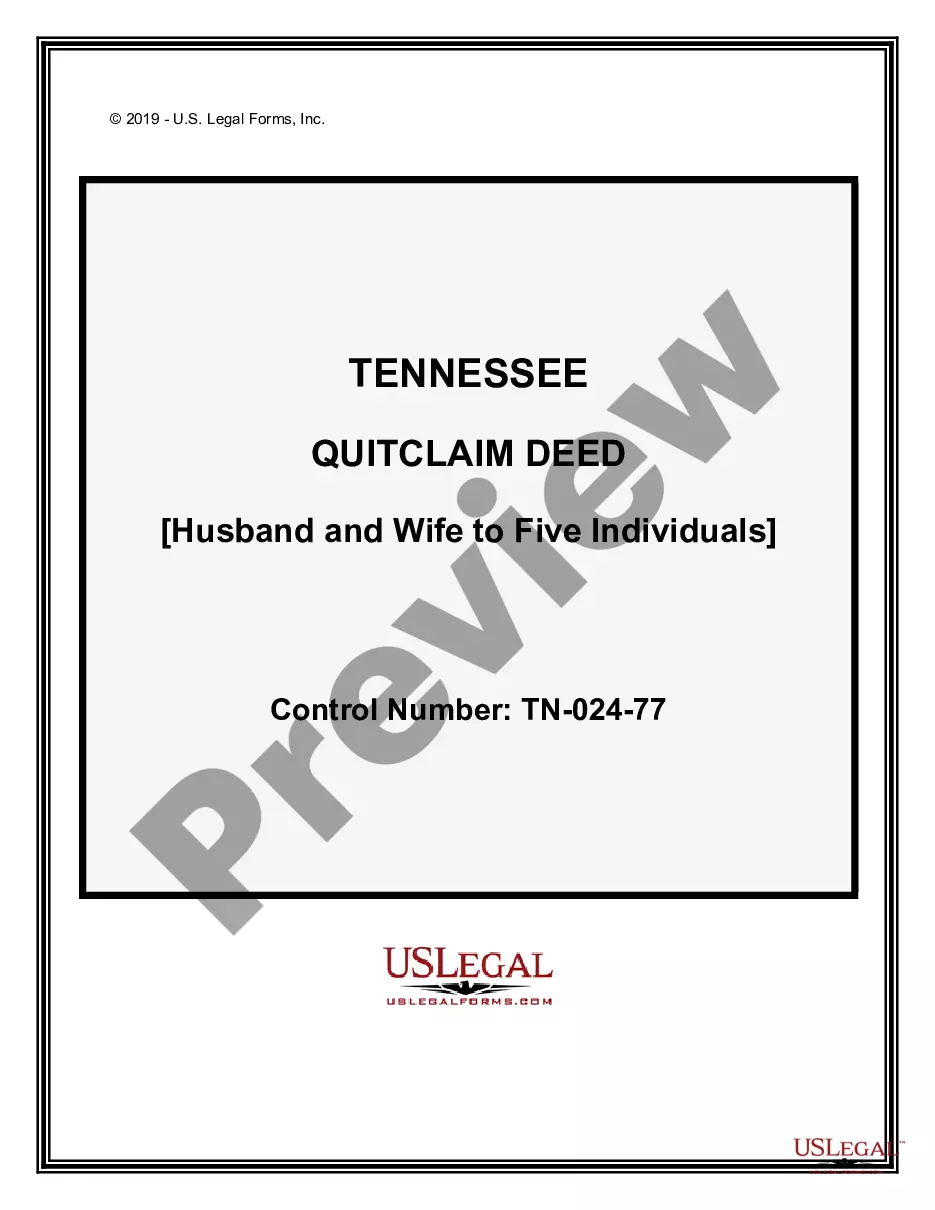
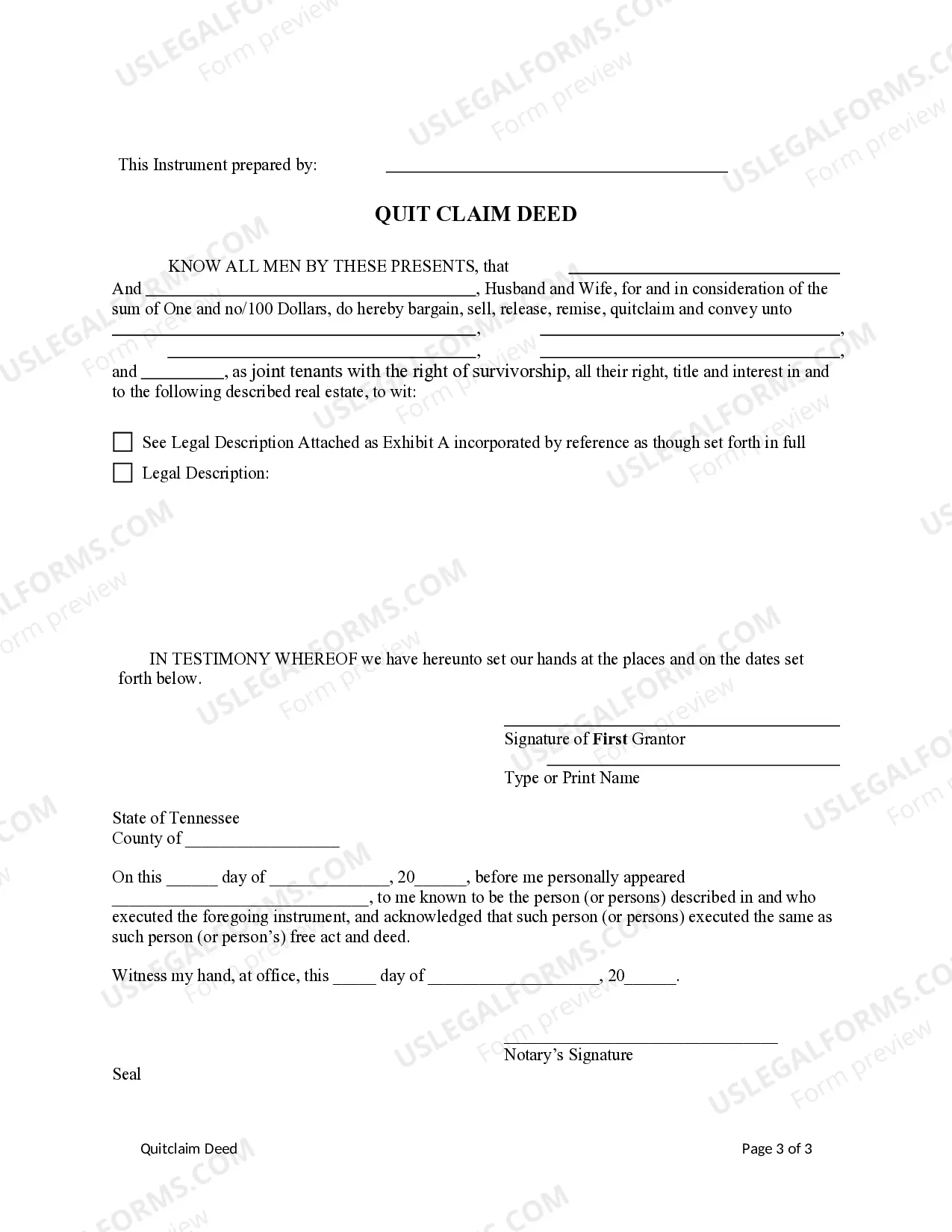
How to fill out Tennessee Quitclaim Deed - Husband And Wife To Five Individuals?
- If you are a returning user, log in to your account and retrieve the necessary form template by clicking the Download button. Ensure your subscription is active, and renew if necessary.
- If you are using US Legal Forms for the first time, start by browsing the available templates. Utilize the Preview mode to verify that the form meets your requirements and local jurisdiction specifications.
- Should you need a different template, utilize the Search feature to find a suitable alternative. Confirm it aligns with your requirements before proceeding.
- Next, select the document by clicking the Buy Now button and choose an appropriate subscription plan, which also requires account registration for library access.
- Complete your purchase by entering your payment method, either credit card or PayPal, to finalize your subscription.
- Finally, download the form to your device. You can also access it anytime through the My Forms menu in your account.
In conclusion, US Legal Forms not only simplifies the process of obtaining a Tennessee quitclaim deed with a child, but it also provides valuable resources and expert assistance. This ensures your documents are accurate and comply with legal standards.
Start your journey today with US Legal Forms to secure your family's future.
Form popularity
FAQ
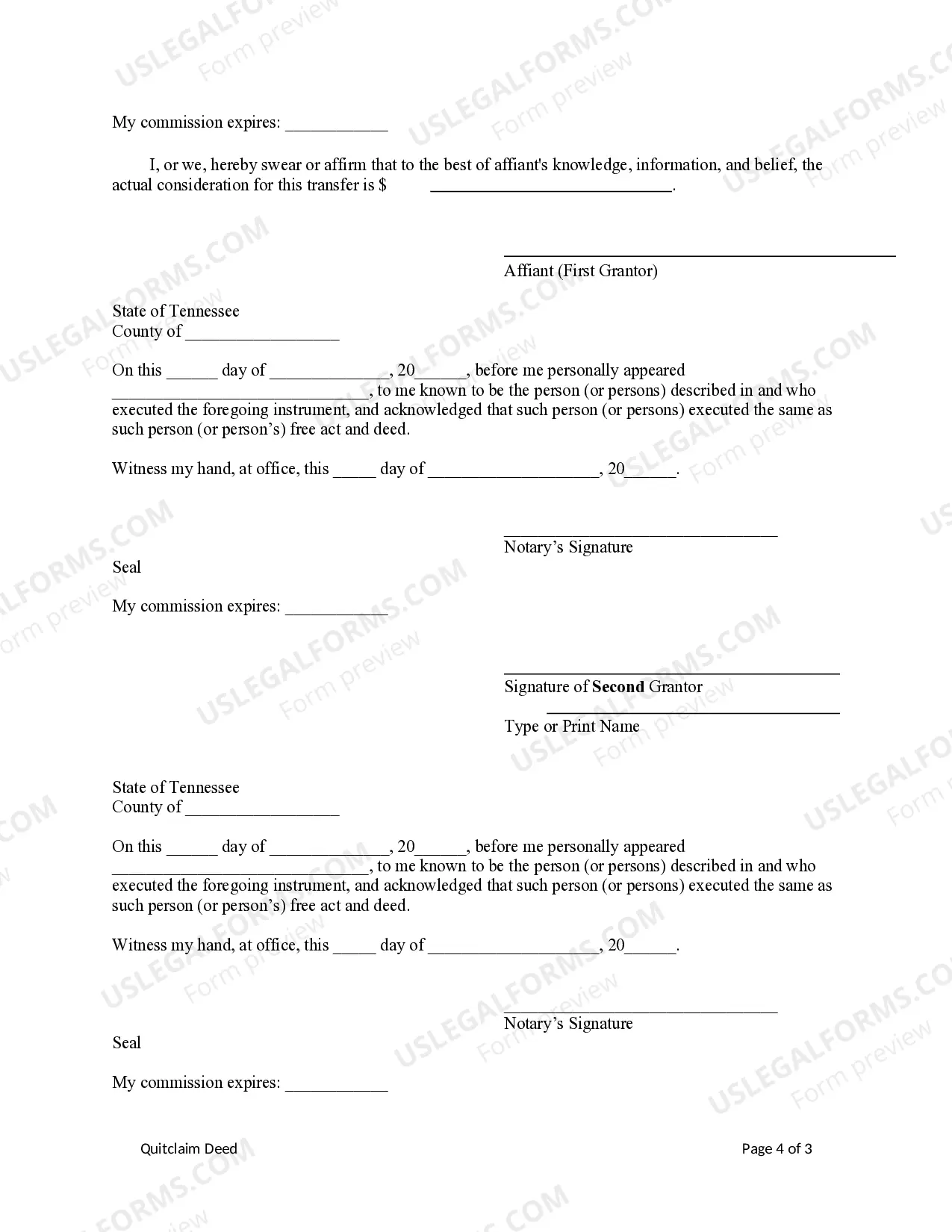
Yes, a Tennessee quitclaim deed with a child requires signatures from both parties involved in the transaction. This ensures that the transfer of property rights is legally recognized and valid. If one party does not sign, the deed may not hold up in court. It is essential to understand that both parties have to consent to the terms and sign the document to finalize the transfer.
While it is not legally required to have a lawyer to transfer a deed, consulting one can ensure you understand the implications of using a Tennessee quitclaim deed with a child. A legal expert can guide you through the process and help avoid any common pitfalls. Additionally, they can provide vital advice on any tax implications or family matters that may arise from the transfer. If you feel unsure about the process, it’s wise to seek professional help.
To put your children on your deed, you can utilize a Tennessee quitclaim deed with a child, which provides a simple way to add them as co-owners. You will need to complete the deed, listing both you and your children as owners, and then file it with your local county recorder's office. This action helps secure their ownership rights and can ease potential future inheritance issues. Make sure to confirm the requirements in your area to ensure a seamless process.
Transferring property to a family member is often best achieved using a Tennessee quitclaim deed with a child. This method allows you to easily transfer your ownership rights without the lengthy process of a sale. It’s a straightforward process that can help keep property within the family, enabling your children to have a stake in their future. Always ensure you follow the proper legal steps to make this transfer valid.
Many people view Tennessee quitclaim deeds with a child with skepticism due to their inherent risks. Since they do not provide warranties on the property's title, a buyer may inherit hidden debts tied to the property. Furthermore, the lack of thorough due diligence can lead to disputes. Therefore, it's essential to carefully consider your options and explore reliable platforms like USLegalForms for guidance.
Family members, particularly parents transferring property to their children, often benefit the most from a Tennessee quitclaim deed with a child. This method simplifies the transfer process and provides a quick way to pass on property without the complexity of traditional sales. Additionally, individuals who need to resolve title issues can find quitclaims useful in clarifying ownership.
Tennessee quitclaim deeds with a child are frequently used to transfer property between family members, such as parents to children. They often serve estate planning purposes, allowing for a smoother transition of property without the need for extensive legal proceedings. Additionally, homeowners may use quitclaims to remove an ex-spouse from the title after a divorce.
To create a valid Tennessee quitclaim deed with a child, several requirements must be met. First, both the grantor and grantee must be clearly identified, including their addresses. Additionally, the property description must be accurate and detailed. Finally, the deed must be signed in the presence of a notary public to ensure its legality.
To transfer property to a family member in Tennessee, consider using a Tennessee quitclaim deed with a child. This method is efficient and conveys the property title without the need for extensive legal processes. Start by preparing the deed accurately, including necessary details, and then have it notarized. Once filed appropriately with the county clerk's office, the property transfer becomes official and secure.
Filling out a quitclaim deed in Tennessee involves several straightforward steps. Start by obtaining the quitclaim deed form, where you will fill in the names of the grantor and grantee, and describe the property being transferred. If you're using a Tennessee quitclaim deed with a child, ensure additional details related to the child are included. After notarization, file the completed deed with the county clerk to finalize the transfer.