Tennessee Final Electrical Inspection
Description
Get your form ready online
Our built-in tools help you complete, sign, share, and store your documents in one place.
Make edits, fill in missing information, and update formatting in US Legal Forms—just like you would in MS Word.
Download a copy, print it, send it by email, or mail it via USPS—whatever works best for your next step.
Sign and collect signatures with our SignNow integration. Send to multiple recipients, set reminders, and more. Go Premium to unlock E-Sign.
If this form requires notarization, complete it online through a secure video call—no need to meet a notary in person or wait for an appointment.
We protect your documents and personal data by following strict security and privacy standards.

Make edits, fill in missing information, and update formatting in US Legal Forms—just like you would in MS Word.

Download a copy, print it, send it by email, or mail it via USPS—whatever works best for your next step.

Sign and collect signatures with our SignNow integration. Send to multiple recipients, set reminders, and more. Go Premium to unlock E-Sign.

If this form requires notarization, complete it online through a secure video call—no need to meet a notary in person or wait for an appointment.

We protect your documents and personal data by following strict security and privacy standards.
Looking for another form?
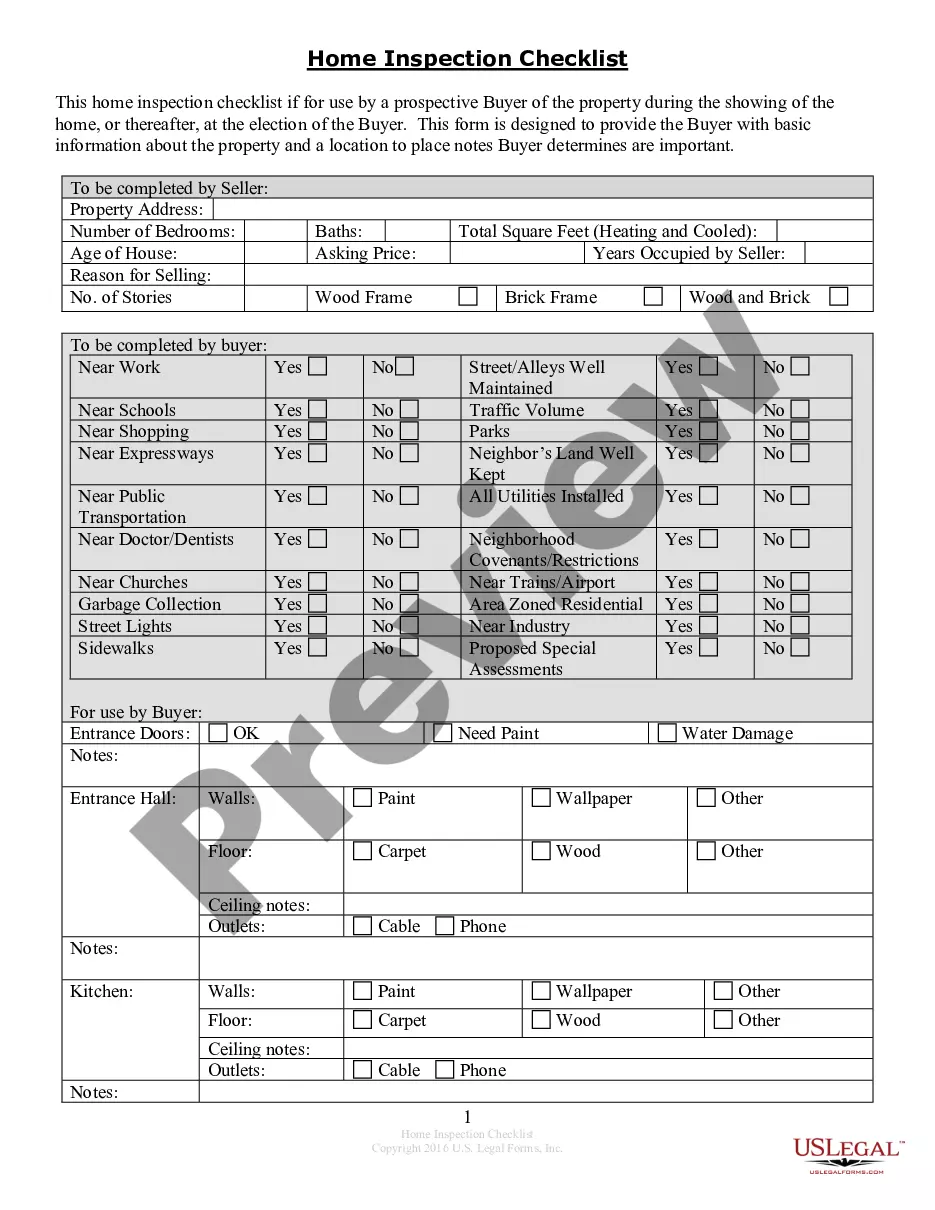
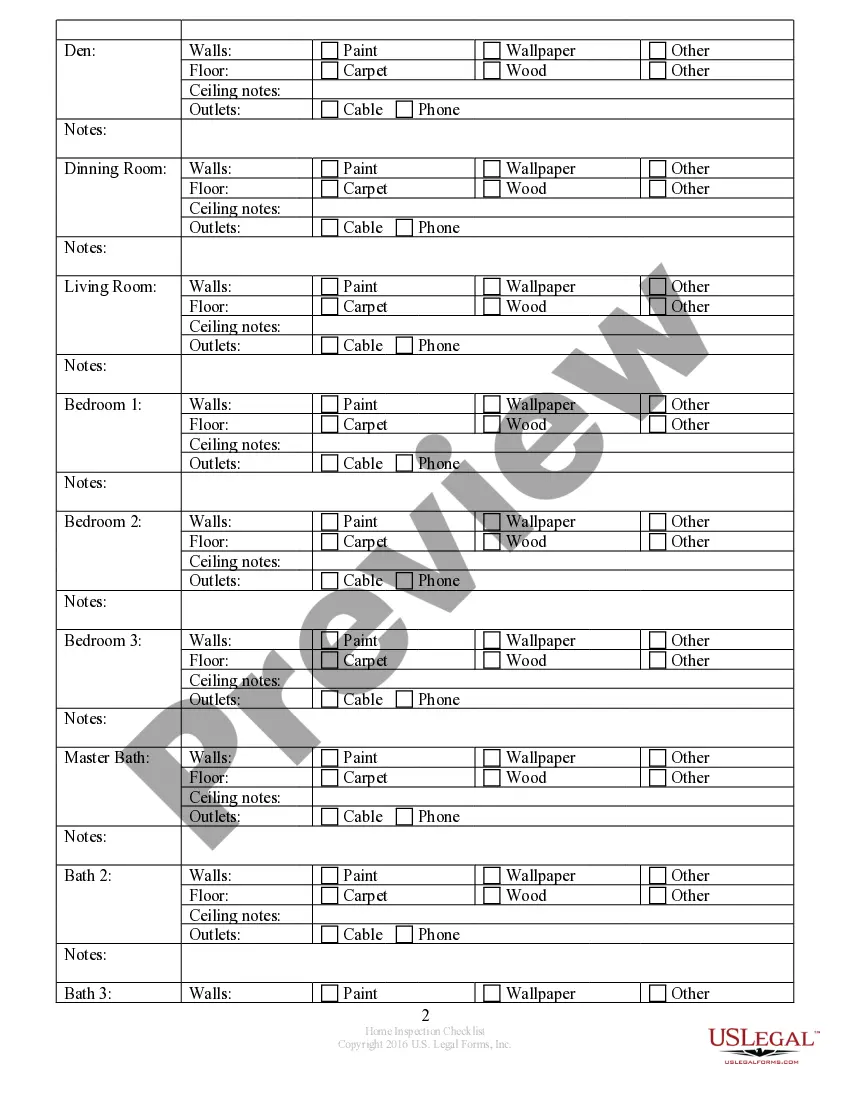
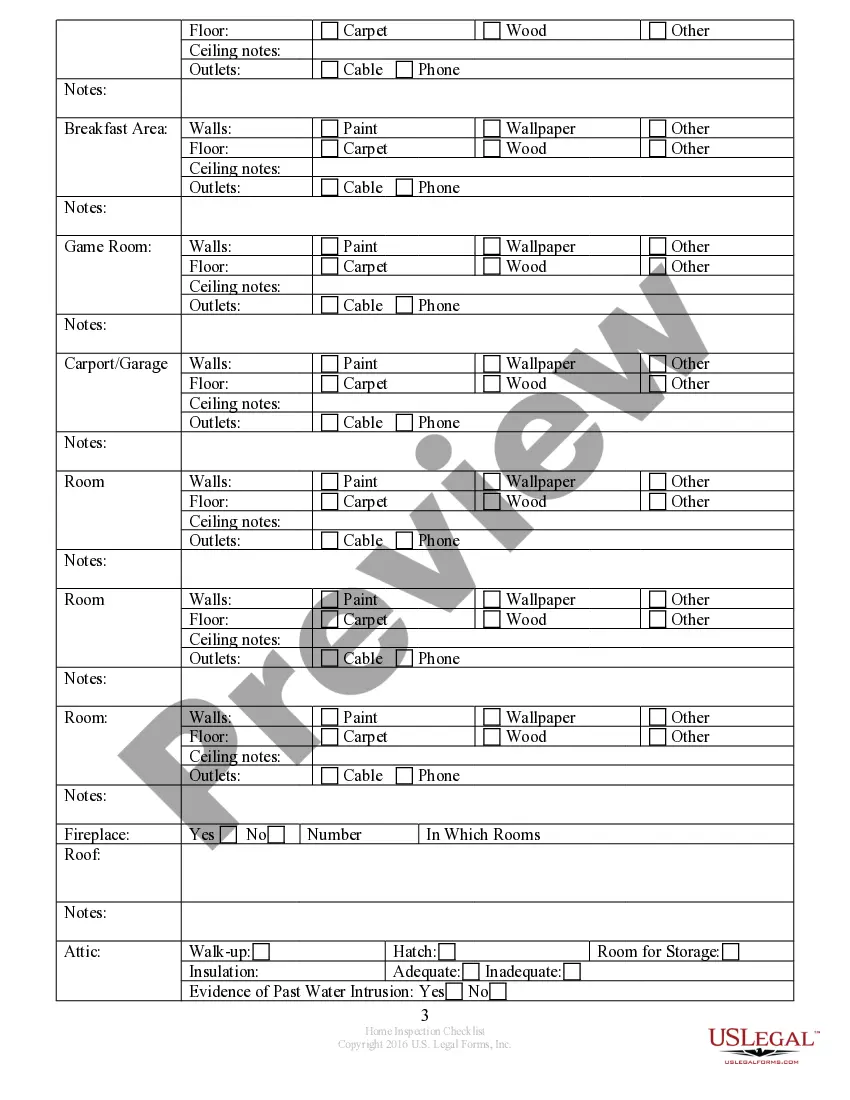
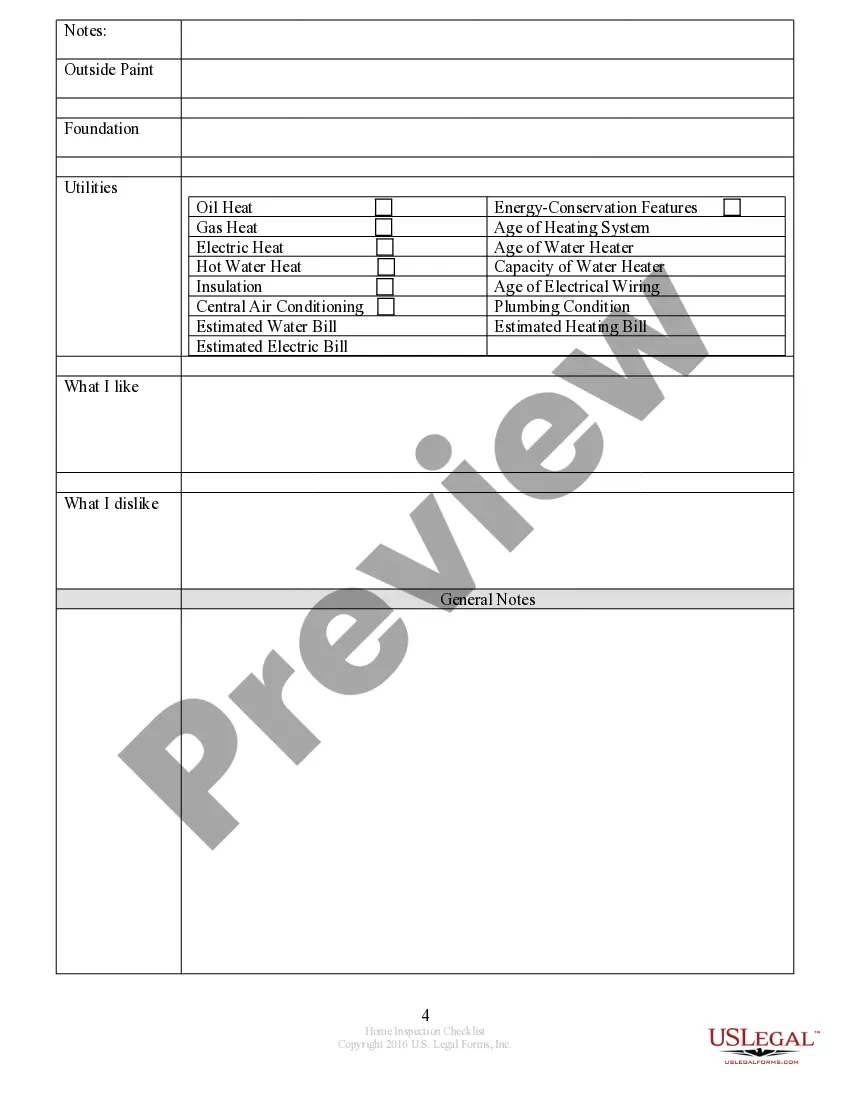
How to fill out Tennessee Buyer's Home Inspection Checklist?
- Log in to your US Legal Forms account if you have one. Verify that your subscription is still active; renew it if necessary.
- Use the Preview feature to review available templates. Ensure that the selected form meets your local Tennessee regulations.
- Search for additional templates if required. Utilize the Search tab to find forms that match your needs exactly.
- To purchase the form, click the Buy Now button and select a subscription plan that suits you. You will need to create an account for full access.
- Complete the payment with your credit card or PayPal to finalize your subscription.
- Once purchased, download the form directly to your device and access it anytime through the My Forms section of your profile.
By following these steps, securing your necessary legal forms for a Tennessee final electrical inspection becomes a hassle-free process. US Legal Forms not only saves time but also offers peace of mind with its extensive library and expert support.
Start your journey today by visiting US Legal Forms and simplify your legal document needs!
Form popularity
FAQ
The duration of a Tennessee final electrical inspection can vary, but it typically takes about 30 minutes to an hour. The inspector will check all connections, circuits, and your panel's overall condition. If there are any issues, the inspection may take longer as further evaluations are necessary. Planning ahead can help, so you can accommodate the inspector's schedule.
For a successful Tennessee final electrical inspection, you need to ensure that all wiring is completed according to code and local standards. You should have your electrical panel accessible and include any required permits. Additionally, you might want to gather any documentation of previous inspections or work done. Having everything in order will smooth the process and help you avoid delays.
In Tennessee, homeowners can perform their own electrical work, but it must comply with local codes and regulations. If you choose this route, be prepared to schedule a Tennessee final electrical inspection to verify your work. While handling basic tasks might be manageable, any complex projects require a licensed electrician to ensure safety and compliance. Consider using the US Legal Forms platform to access the necessary permits and guidelines.
A rough electrical inspection occurs during the installation process, while a Tennessee final electrical inspection takes place after all work is completed. The rough inspection checks the infrastructure of your wiring before it’s covered. In contrast, the final inspection confirms that everything is functioning correctly and meets legal standards before you can use the system.
A Tennessee final electrical inspection typically includes a thorough examination of your entire electrical system. Inspectors check wiring, circuit breakers, outlets, and light fixtures to ensure everything operates safely and efficiently. They will also assess grounding and bonding systems, making sure they meet established safety codes. Overall, this inspection helps protect you and your property.
To prepare for the Tennessee final electrical inspection, make sure all electrical work complies with local codes. All circuits must be properly connected and ready for testing. Additionally, ensure that all outlets, fixtures, and panels are installed and accessible for inspection. This step confirms that your wiring is safe and meets the necessary standards.
The inspection process typically includes several stages: initial inspections during construction, mid-project check-ins, and a final inspection. In Tennessee, the final electrical inspection is crucial as it ensures that all electrical systems meet design and safety requirements. Each stage allows you to address issues progressively, leading to a successful final approval.
The final inspection process involves scheduling an appointment with a local inspector who will come to your property to review completed work. For a Tennessee final electrical inspection, this means checking all electrical components for compliance with safety standards. After the inspection, you will receive feedback, which can involve corrections if any issues arise.
During a final building inspection, you can expect a thorough evaluation of your construction project, including plumbing, electrical, and structural elements. The inspector will verify that your work complies with local codes, including the Tennessee final electrical inspection requirements. It's an opportunity for you to ask questions and ensure everything is ready for occupancy.
A Tennessee final electrical inspection checks the entire electrical system of your property for compliance with safety codes and regulations. Inspectors examine wiring, circuits, panels, fixtures, and grounding systems to ensure they meet the necessary standards. This process helps to prevent potential hazards and assures that your electrical work is safe for use.