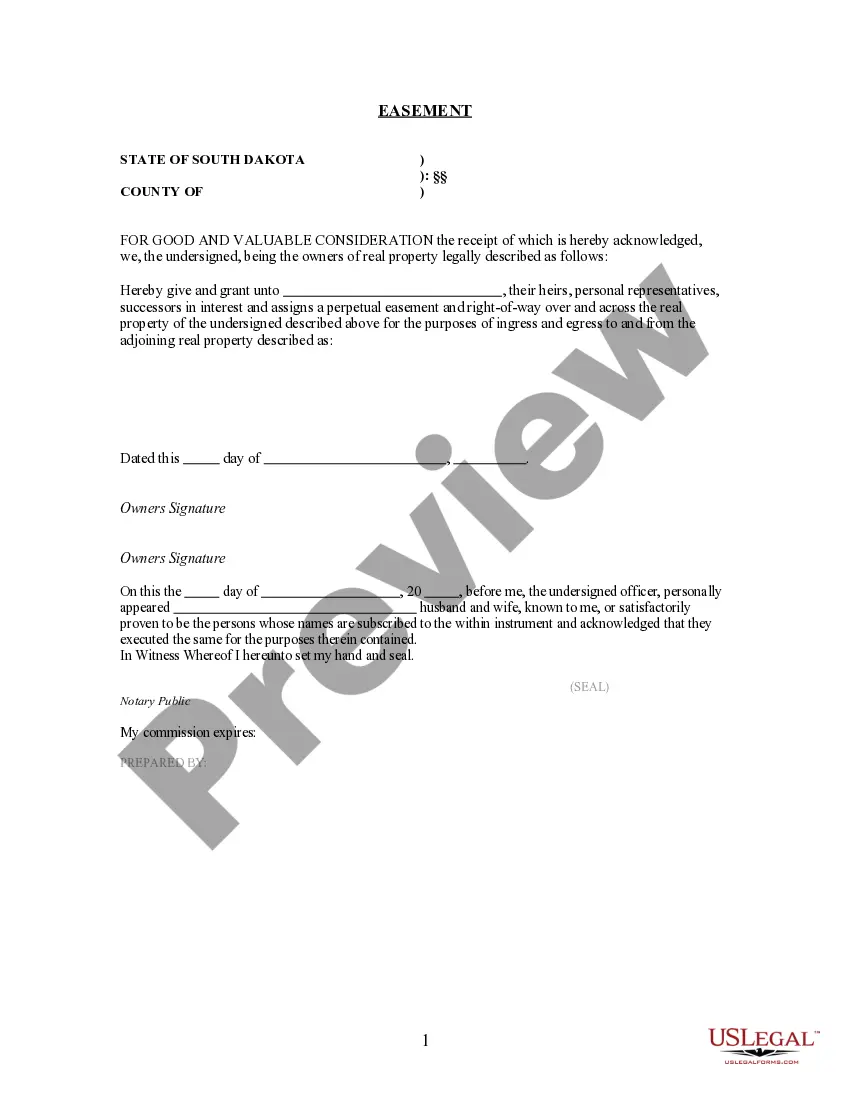
South Dakota Easement Form
Description
Get your form ready online
Our built-in tools help you complete, sign, share, and store your documents in one place.
Make edits, fill in missing information, and update formatting in US Legal Forms—just like you would in MS Word.
Download a copy, print it, send it by email, or mail it via USPS—whatever works best for your next step.
Sign and collect signatures with our SignNow integration. Send to multiple recipients, set reminders, and more. Go Premium to unlock E-Sign.
If this form requires notarization, complete it online through a secure video call—no need to meet a notary in person or wait for an appointment.
We protect your documents and personal data by following strict security and privacy standards.

Make edits, fill in missing information, and update formatting in US Legal Forms—just like you would in MS Word.

Download a copy, print it, send it by email, or mail it via USPS—whatever works best for your next step.

Sign and collect signatures with our SignNow integration. Send to multiple recipients, set reminders, and more. Go Premium to unlock E-Sign.

If this form requires notarization, complete it online through a secure video call—no need to meet a notary in person or wait for an appointment.

We protect your documents and personal data by following strict security and privacy standards.
Looking for another form?
How to fill out South Dakota Easement - General Fill In Blank Purposes?
What is the most reliable service to obtain the South Dakota Easement Form and other current versions of legal documents.
US Legal Forms is the solution! It's the largest compilation of legal papers for any purpose.
If you haven't created an account in our library yet, here are the steps you need to take to get one: Form compliance verification. Before obtaining any template, ensure that it meets your use case requirements as well as your state's or county's laws. Review the form description and utilize the Preview feature if available.
- Every sample is correctly formulated and verified for adherence to federal and local laws and regulations.
- They are categorized by area and state of application, making it easy to find what you require.
- Experienced users of the platform simply need to Log In to the system, verify if their subscription is active, and click the Download button next to the South Dakota Easement Form to obtain it.
- Once saved, the template remains accessible for future use within the My documents section of your profile.
Form popularity
FAQ
A period of non-use is evidence, but not conclusive evidence, that an easement has been abandoned. The circumstances of each individual case will contribute to the decision and factors showing that the non-user implies abandonment must be evident.
There are two types of easements: affirmative and negative. An affirmative easement gives the easement holder the right to do something on the grantor of the easement's land, such as travel on a road through the grantor's land.
The concept of easement has been defined under Section 4 of The Indian Easements Act, 1882. According to the provisions of Section 4, an easementary right is a right possessed by the owner or occupier of the land on some other land, not his own, the purpose of which is to provide the beneficial enjoyment of the land.
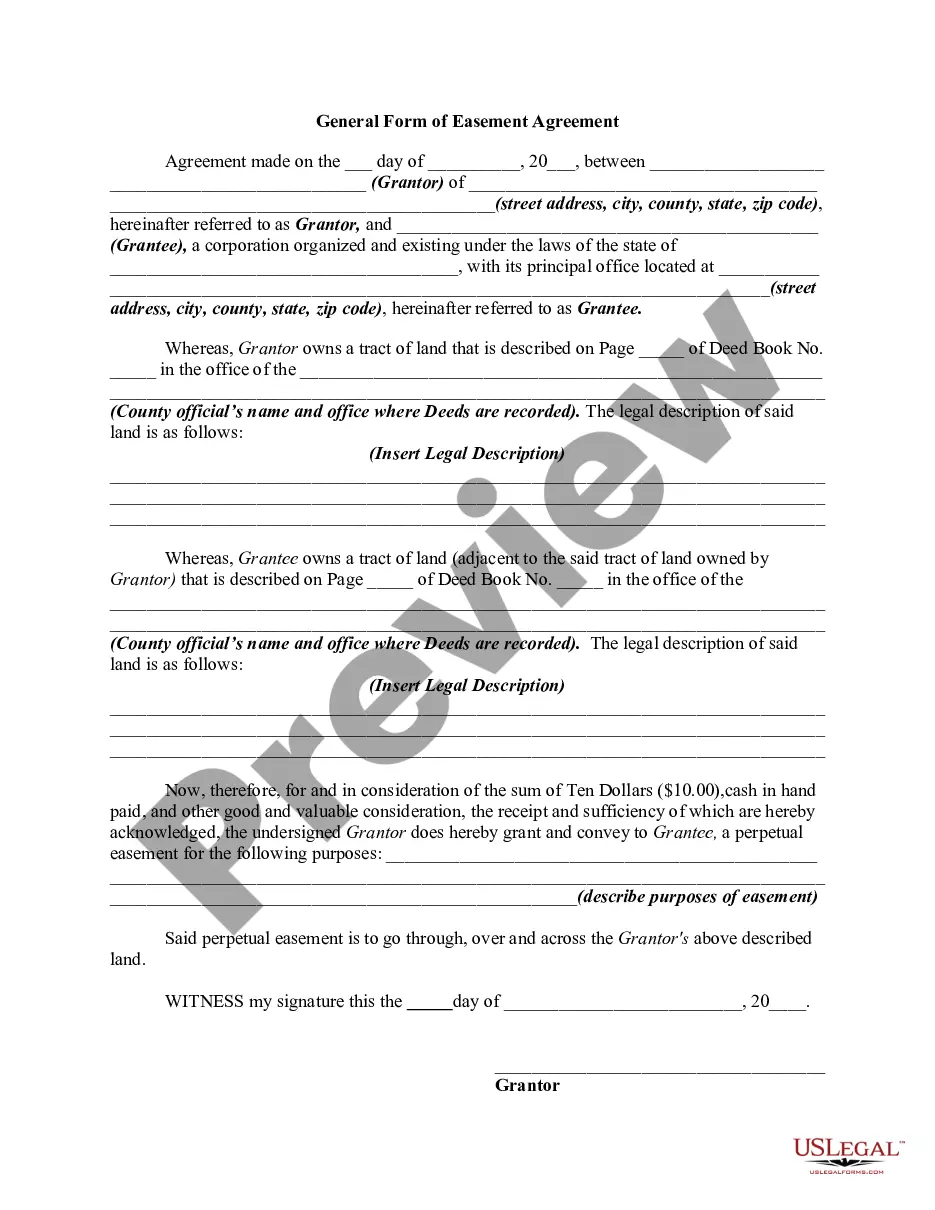
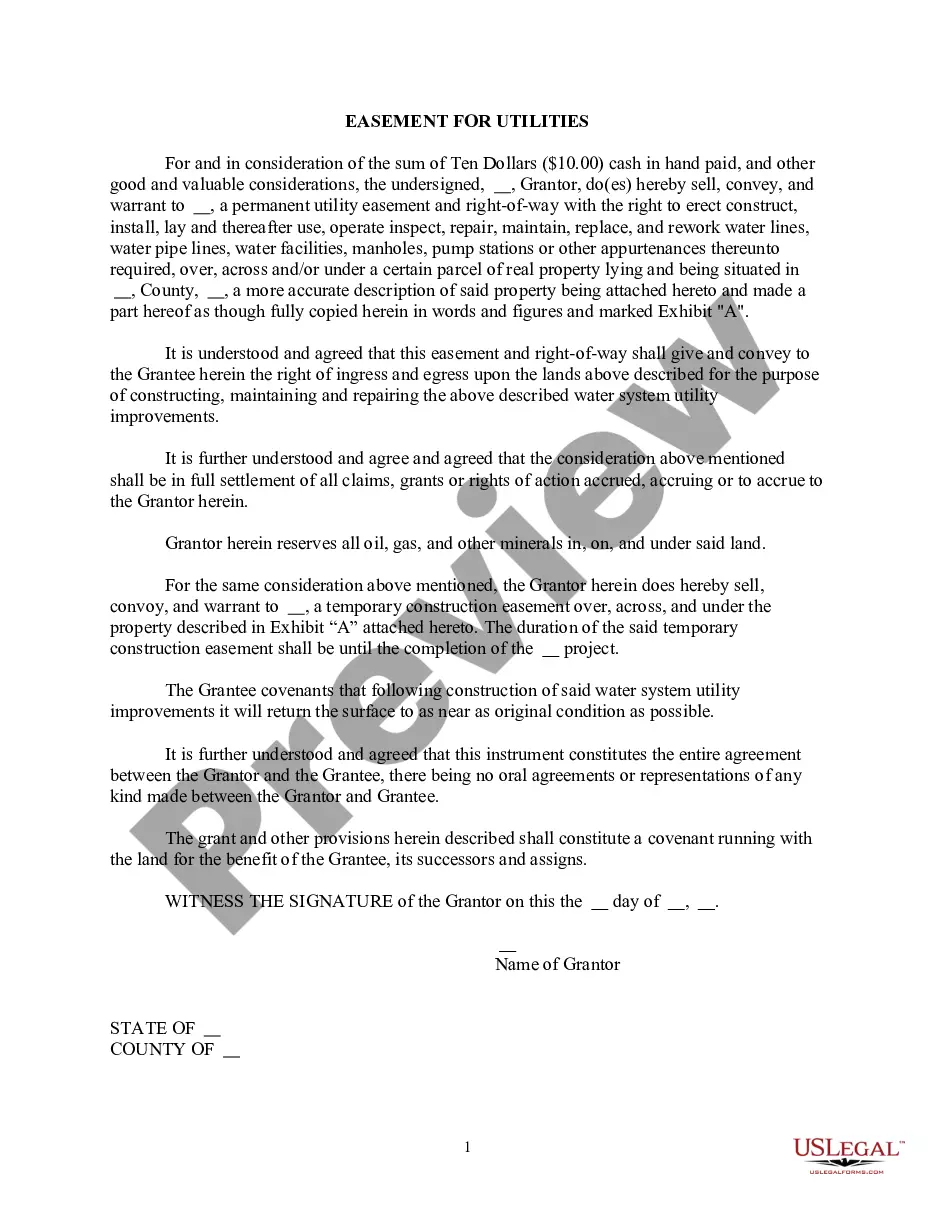
A short form agreement granting an easement interest in real property for the benefit of another parcel of real property. This form of easement agreement is a jurisdictionally neutral multistate template that can be used in all jurisdictions.
To claim easement, the plaintiff must admit the title of the defendant over the property. If the plaintiff claims easementary right that must be proved by sufficient evidence by the plaintiff.