Horse Boarding Price Sheet For Beginners
Description
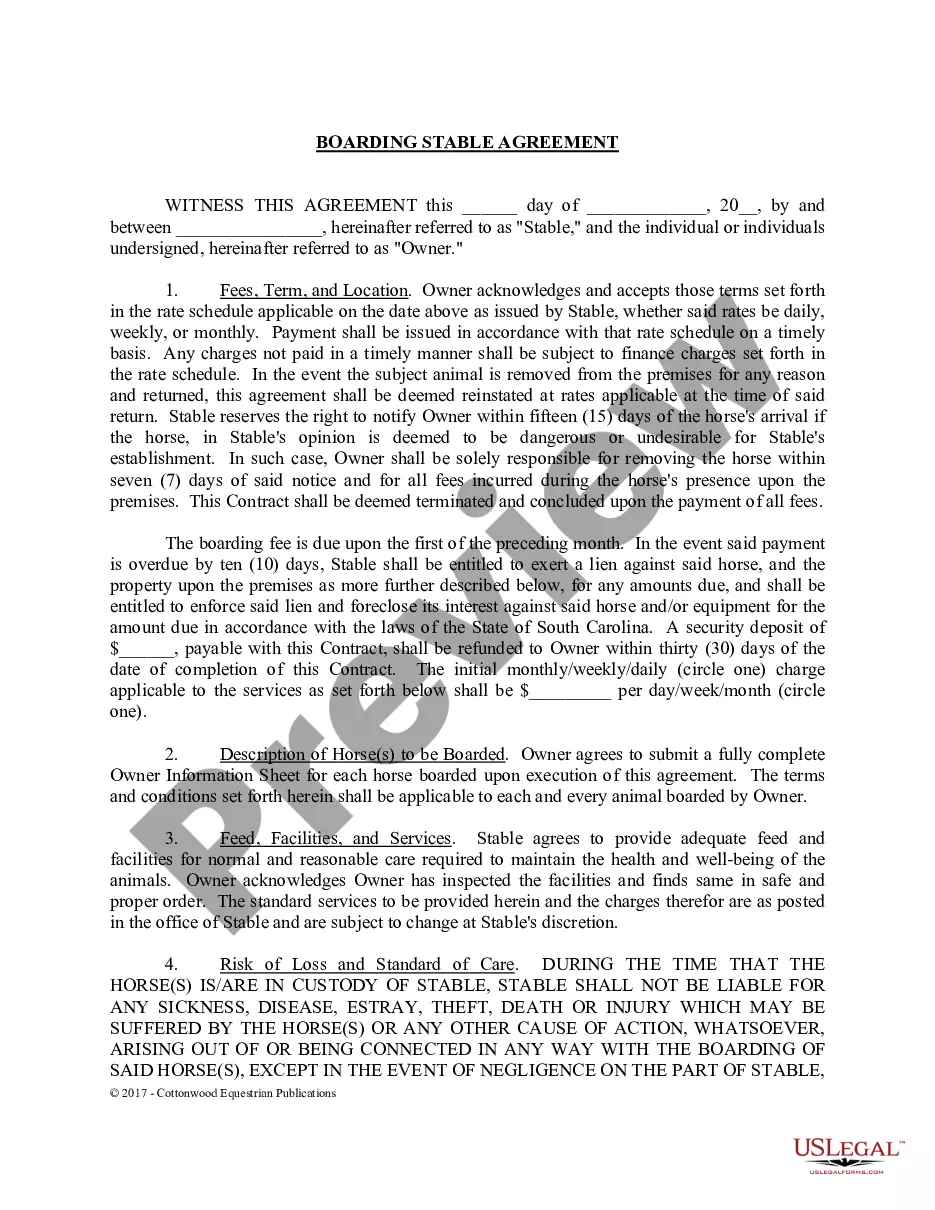
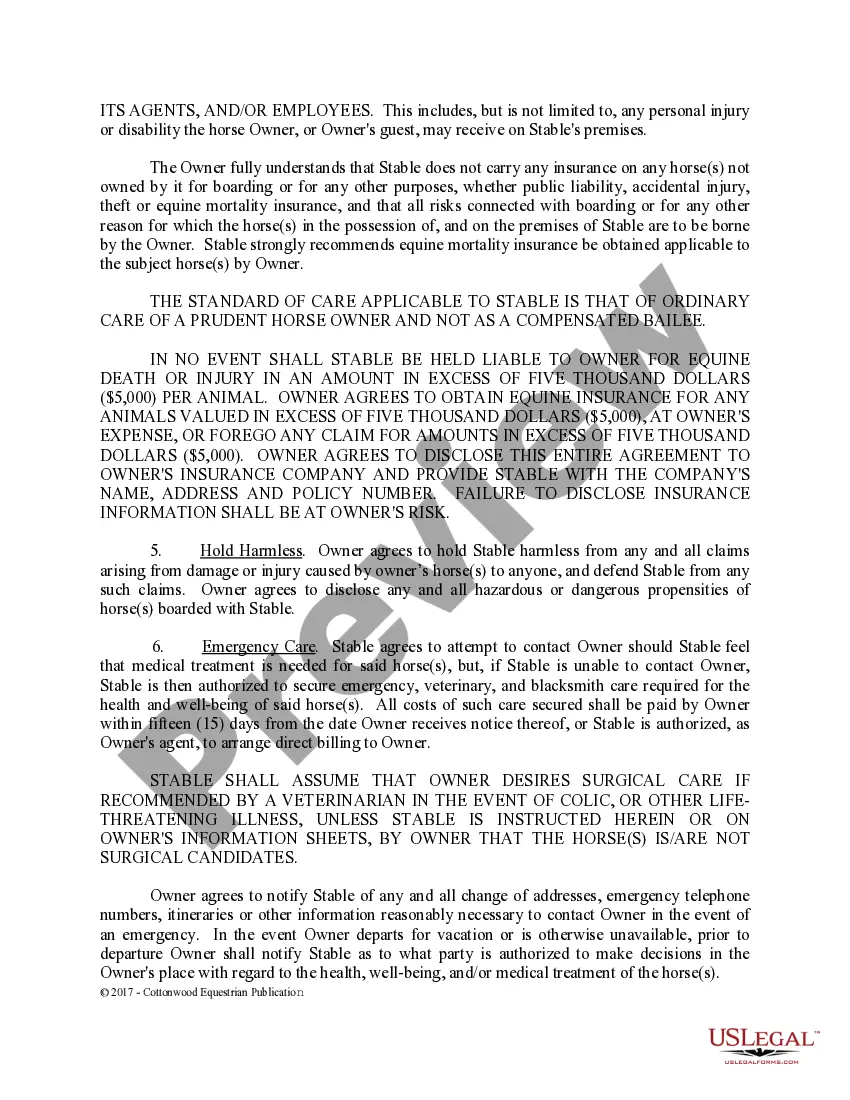
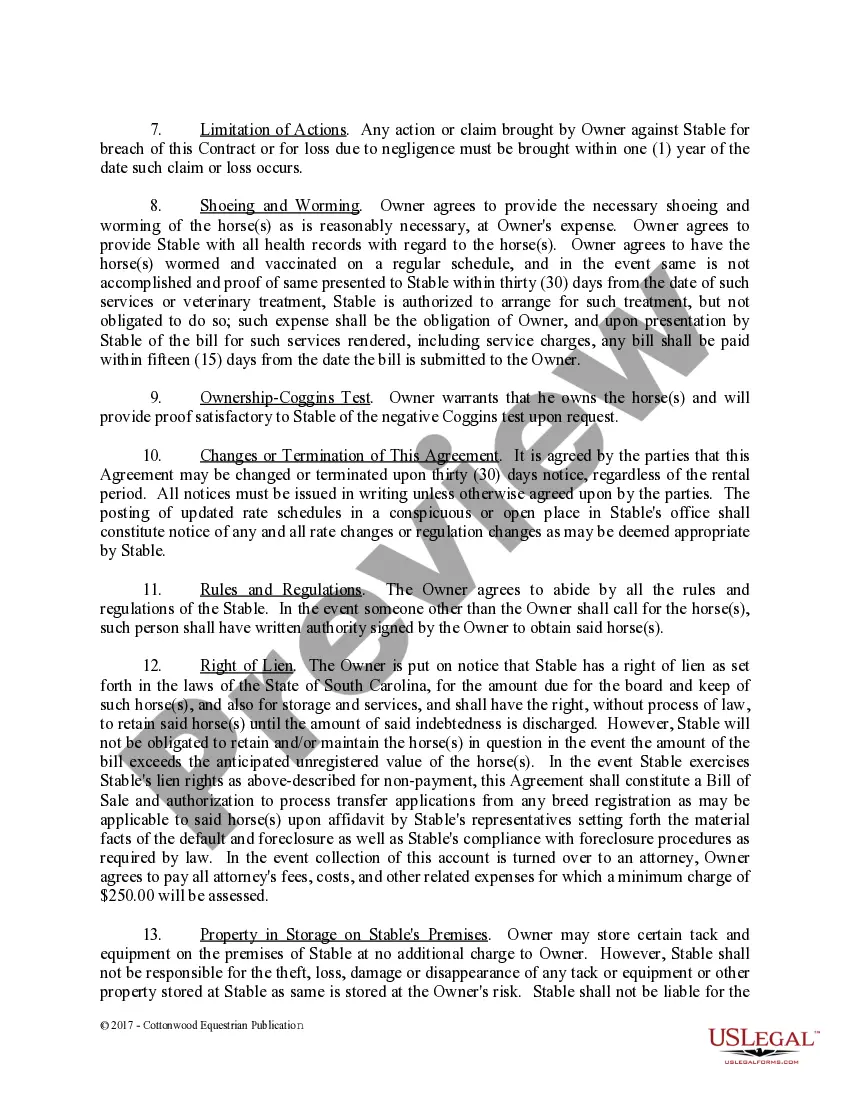
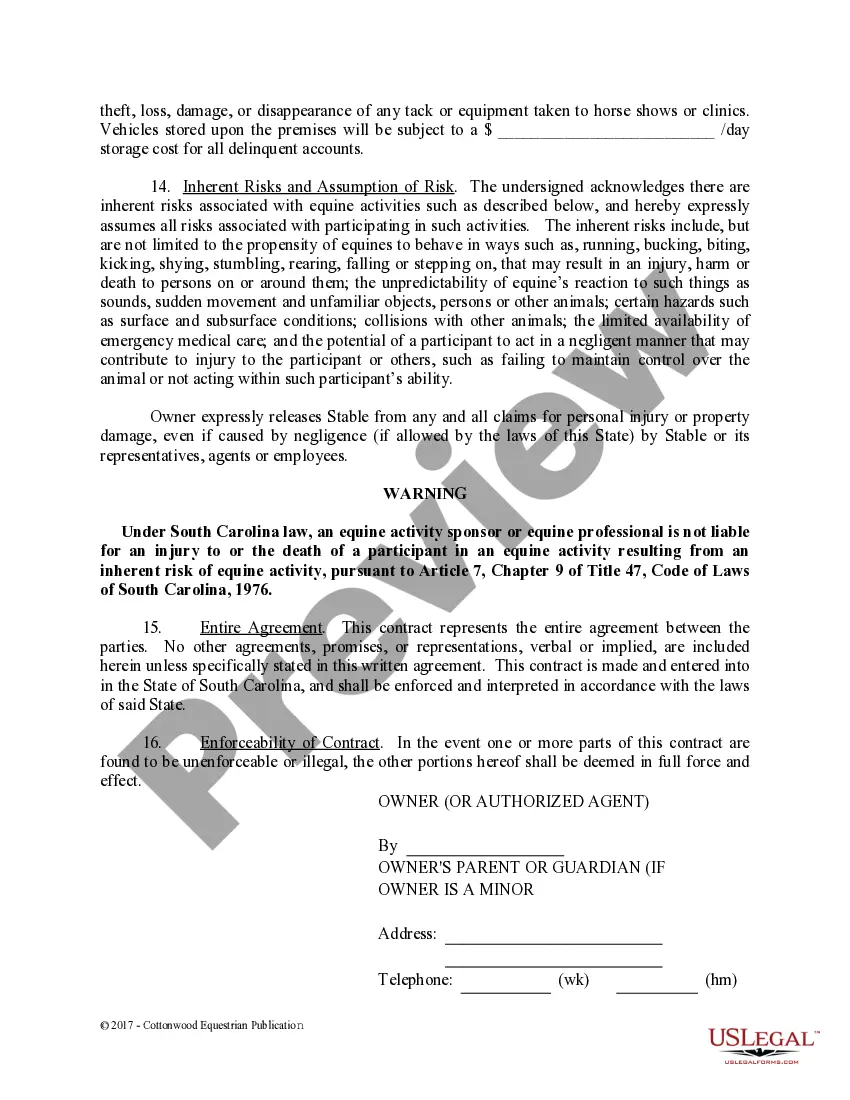

Get your form ready online
Our built-in tools help you complete, sign, share, and store your documents in one place.
Make edits, fill in missing information, and update formatting in US Legal Forms—just like you would in MS Word.
Download a copy, print it, send it by email, or mail it via USPS—whatever works best for your next step.
Sign and collect signatures with our SignNow integration. Send to multiple recipients, set reminders, and more. Go Premium to unlock E-Sign.
If this form requires notarization, complete it online through a secure video call—no need to meet a notary in person or wait for an appointment.
We protect your documents and personal data by following strict security and privacy standards.

Make edits, fill in missing information, and update formatting in US Legal Forms—just like you would in MS Word.

Download a copy, print it, send it by email, or mail it via USPS—whatever works best for your next step.

Sign and collect signatures with our SignNow integration. Send to multiple recipients, set reminders, and more. Go Premium to unlock E-Sign.

If this form requires notarization, complete it online through a secure video call—no need to meet a notary in person or wait for an appointment.

We protect your documents and personal data by following strict security and privacy standards.
Looking for another form?






How to fill out South Carolina Boarding Stable Agreement - Horse Equine Forms?
The Equine Boarding Fee Schedule For Novices that you find on this site is a reusable legal document crafted by expert attorneys in adherence to national and state regulations.
For over 25 years, US Legal Forms has supplied individuals, entities, and legal professionals with over 85,000 validated, state-oriented documents for every business and personal scenario. It is the quickest, simplest, and most trustworthy method to secure the paperwork you require, as the service ensures bank-grade data protection and anti-malware safeguards.
Select the format you prefer for your Equine Boarding Fee Schedule For Novices (PDF, DOCX, RTF) and save the document on your device.
- Search for the form you require and examine it.
- Browse through the file you searched and view it or check the form description to confirm it meets your requirements. If not, utilize the search feature to find the appropriate one. Click Buy Now once you locate the template you need.
- Register and Log In.
- Choose a pricing plan that fits your needs and create an account. Use PayPal or a credit card for quick payment. If you already have an account, Log In and verify your subscription to proceed.
- Obtain the editable document.
Form popularity
FAQ
Determining the value of a horse involves several factors, including age, breed, training level, and health status. To assess the value accurately, you might reference a horse boarding price sheet for beginners to understand how boarding costs impact overall value. Additionally, consider market trends and the horse's competition history. Using these criteria helps potential buyers make informed decisions.
DIY horse boarding refers to a situation where horse owners take responsibility for caring for their own horses without relying on a commercial boarding facility. This approach allows owners to save on costs, as they can create their own horse boarding price sheet for beginners. It also fosters a closer bond between the owner and their horse. However, it's crucial to understand the needs of your horse and provide proper facilities before embarking on this journey.
Horses can be profitable in various ways, including boarding, training, and sales. A well-structured horse boarding price sheet for beginners can show potential earnings while helping you outline additional services that add value. By diversifying your offerings, such as lessons or events, you can create multiple income streams. Building a strong reputation will lead to more clients and increased profitability.
Breeding horses generally requires ample space, typically around 2 to 5 acres per horse, depending on management practices. This land allows for safe grazing and proper shelter while maintaining the wellbeing of both horses and the environment. As you prepare your horse boarding price sheet for beginners, consider how the size of your property can impact breeding costs and care. Having enough space ensures a healthier environment for breeding.
The most expensive part of owning a horse often revolves around boarding costs, which can vary significantly based on location and services provided. For beginners, understanding the horse boarding price sheet for beginners is crucial, as it helps to break down the various expenses. In addition to boarding, you may need to consider costs for feed, veterinary care, and supplies. Overall, managing these expenses requires careful planning, and platforms like US Legal Forms can assist you in creating budgets and agreements to streamline your horse ownership journey.
To buy a horse, you can expect to pay between $100 - $10,000, depending on the horse breed's pedigree, how you are planning to use the horse, and your location. The average cost of a hobby horse is about $3,000. ing to Seriously Equestrian, the most expensive horse breeds can cost up to $250,000.
The reality is that boarding facilities operate on slim profit margins. ?By the time costs are considered for hay, grain, bedding, labor for feeding, cleaning stalls, doing turnout, etc., the board fees typically do not leave a lot left over,? Sherrick-von Schiller said.
Housing. If you don't own enough land to support a horse, boarding at a barn or stable is the next best option. A horse is assigned a stall and you're given access to trails, a pasture or arena. The cost of boarding averages $400 to $500 per month but can go as high as $1,200 to $2,500 in metropolitan areas.
How Much Does a Horse Cost? Caring for a horse can cost anywhere between $200 to $325 per month ? an annual average of $3,876, ing to finance consulting site Money Crashers. Some of these costs include: Grain/feed.
How Much Does a Horse Cost? Caring for a horse can cost anywhere between $200 to $325 per month ? an annual average of $3,876, ing to finance consulting site Money Crashers. Some of these costs include: Grain/feed.