Life Estate Foreclosure
Description
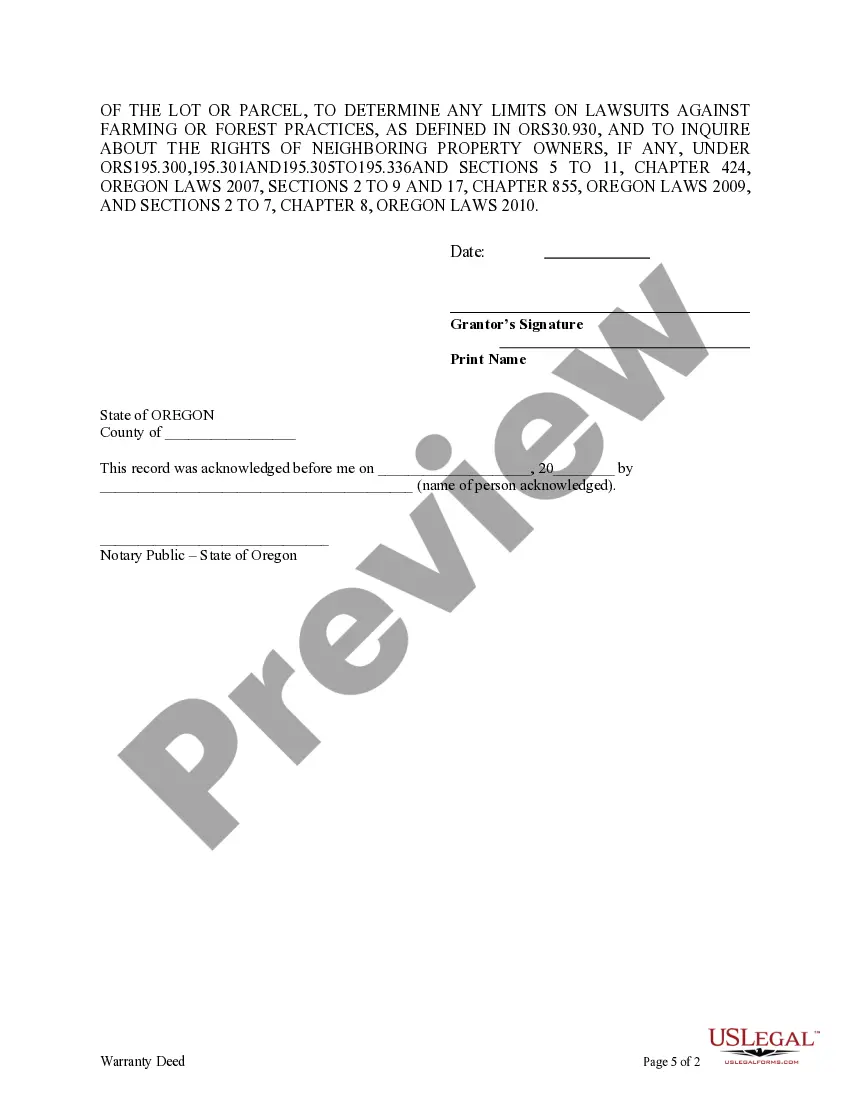


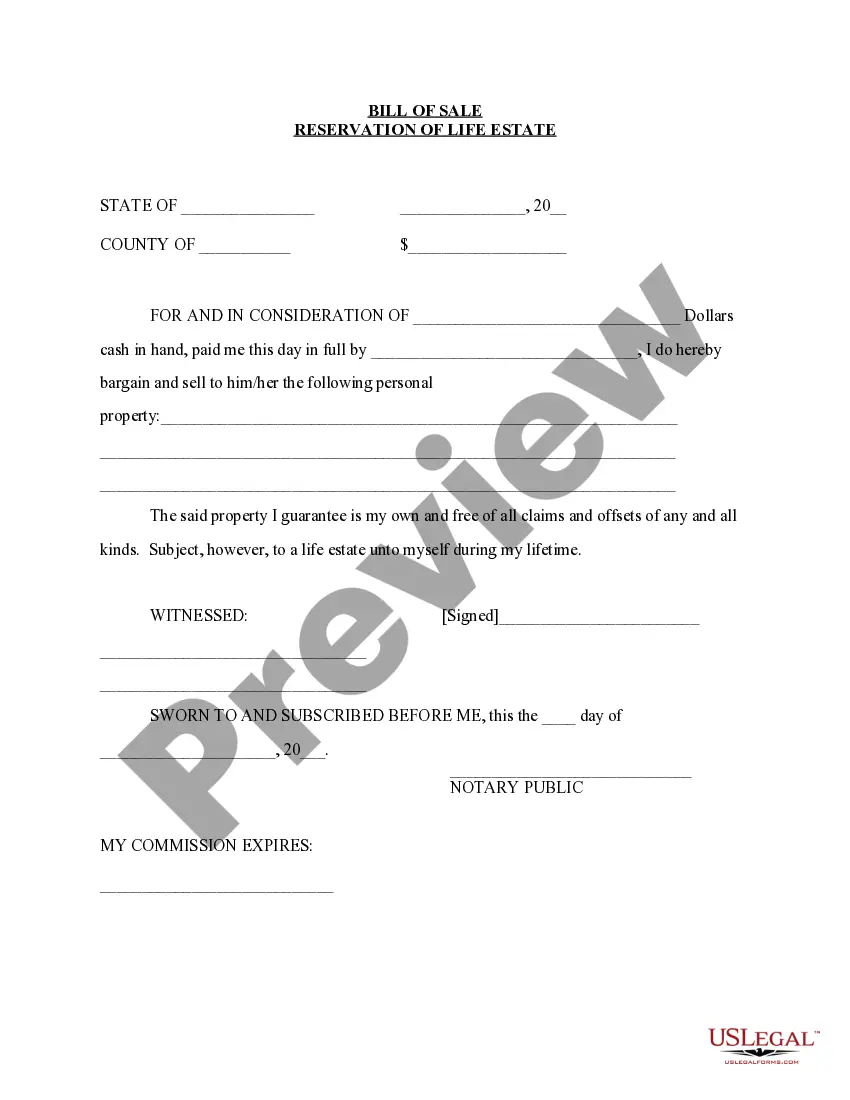
Get your form ready online
Our built-in tools help you complete, sign, share, and store your documents in one place.
Make edits, fill in missing information, and update formatting in US Legal Forms—just like you would in MS Word.
Download a copy, print it, send it by email, or mail it via USPS—whatever works best for your next step.
Sign and collect signatures with our SignNow integration. Send to multiple recipients, set reminders, and more. Go Premium to unlock E-Sign.
If this form requires notarization, complete it online through a secure video call—no need to meet a notary in person or wait for an appointment.
We protect your documents and personal data by following strict security and privacy standards.

Make edits, fill in missing information, and update formatting in US Legal Forms—just like you would in MS Word.

Download a copy, print it, send it by email, or mail it via USPS—whatever works best for your next step.

Sign and collect signatures with our SignNow integration. Send to multiple recipients, set reminders, and more. Go Premium to unlock E-Sign.

If this form requires notarization, complete it online through a secure video call—no need to meet a notary in person or wait for an appointment.

We protect your documents and personal data by following strict security and privacy standards.
Looking for another form?

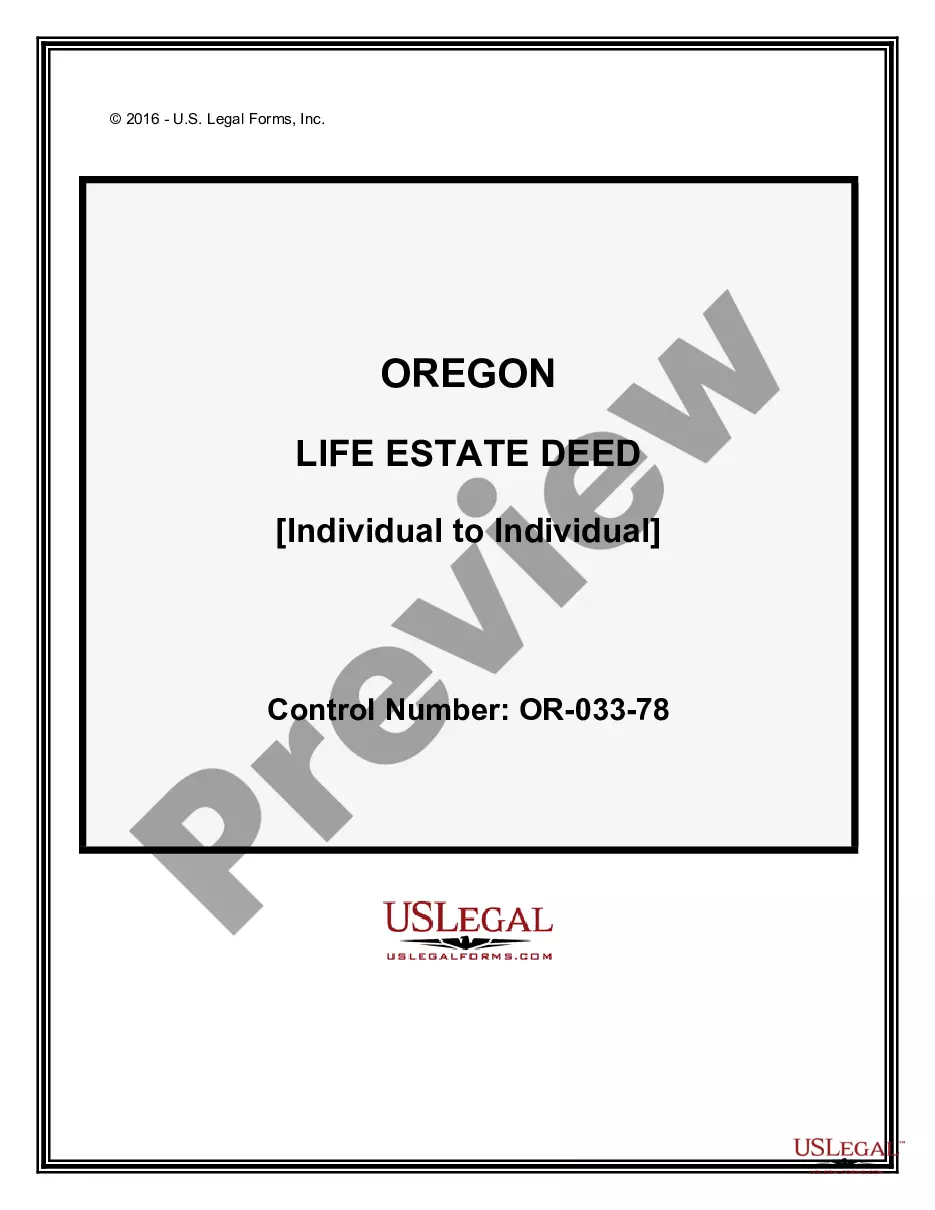
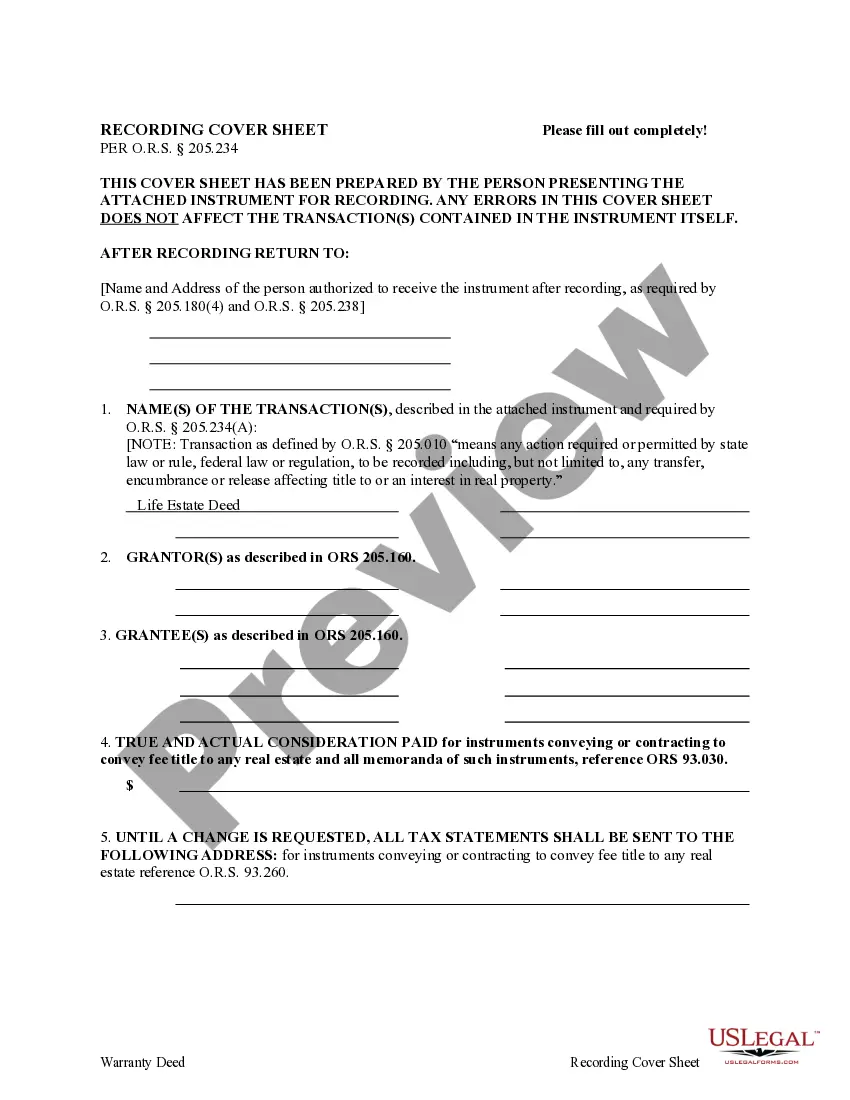
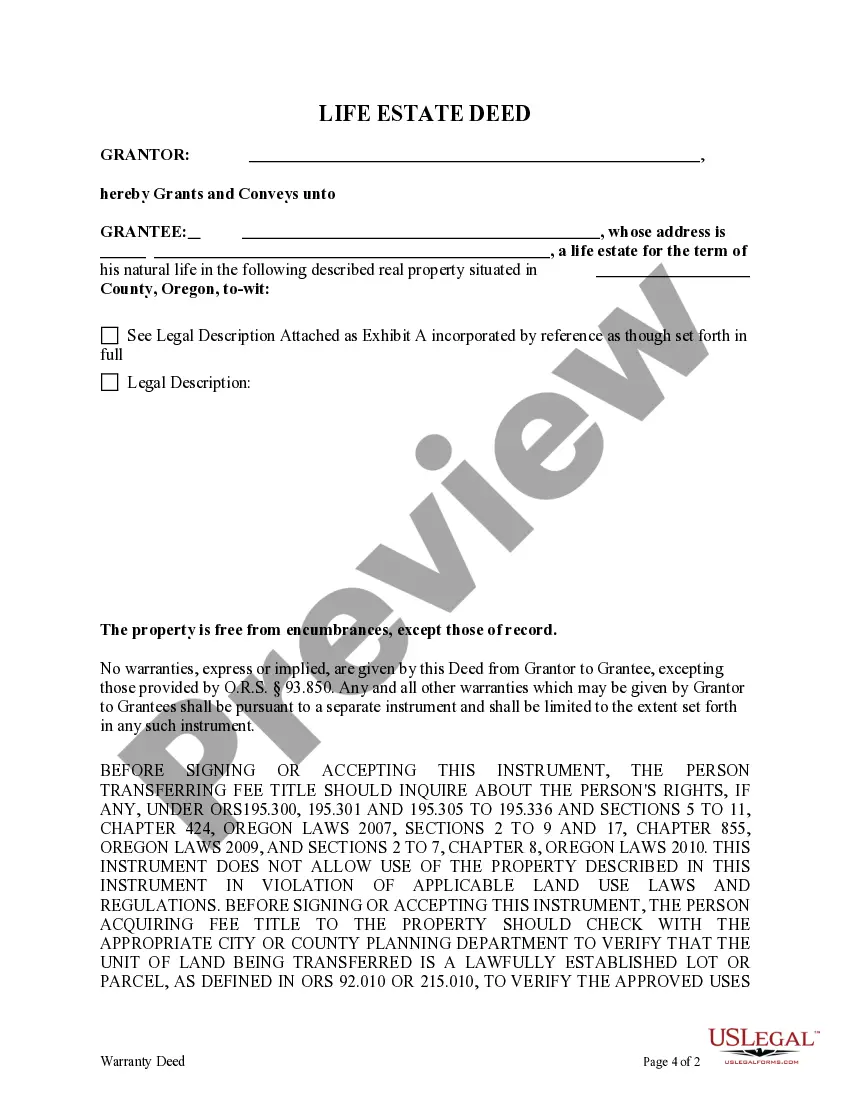
How to fill out Oregon Life Estate Deed From An Individual To An Individual.?
The Life Estate Foreclosure presented on this site is a versatile official template created by expert attorneys in accordance with federal and local regulations.
For over 25 years, US Legal Forms has been offering individuals, organizations, and legal experts access to more than 85,000 validated, state-specific documents for any business and personal situation. It is the quickest, easiest, and most reliable method to acquire the forms you require, as the service ensures the highest degree of data protection and anti-malware safeguards.
Select the format you desire for your Life Estate Foreclosure (PDF, Word, RTF) and download the document onto your device.
- Search for the document you require and examine it.
- Browse through the file you searched and inspect it or review the form description to verify it meets your expectations. If it doesn't, utilize the search bar to find the appropriate one. Click Buy Now when you've found the template you require.
- Register and Log Into your account.
- Choose the pricing option that fits your needs and set up your account. Use PayPal or a credit card for quick payment. If you already possess an account, Log In and check your subscription to proceed.
- Acquire the editable template.
Form popularity
FAQ
Yes, you can borrow against a life estate, but the process comes with specific considerations. A life estate allows you to retain certain rights while passing property to another upon your death. However, lenders may view life estates with caution due to the potential for life estate foreclosure. If you are exploring this option, consider using the resources available at US Legal Forms to understand the legal implications and find suitable lending options for your situation.
In North Carolina, the life estate statute outlines the rights and responsibilities of life tenants and remaindermen. This law specifies how the property should be managed during the life tenant's lifetime and what happens after their passing. Understanding the life estate foreclosure implications in NC can help prevent disputes. You can find detailed resources and support through platforms like US Legal Forms to navigate these legal considerations.
A life estate can limit your control over the property. When you create a life estate, you grant rights to another person after your death, which can restrict your ability to sell or change the property during your lifetime. Moreover, issues like life estate foreclosure can arise if the life tenant does not fulfill necessary obligations, such as paying property taxes. It's crucial to understand these limitations before establishing a life estate.
Recording a life estate deed involves filing it with the appropriate local government office, typically the county recorder or clerk’s office. Ensure you have signed the deed in the presence of a notary, as this is a standard requirement. Once filed, the deed becomes part of the public record, securing your rights and clarifying ownership to prevent issues such as life estate foreclosure in the future. Using services from US Legal Forms can make this process straightforward and efficient.
To fill out a life estate deed, begin by gathering all necessary information, including the property details and the names of the life tenant and remainderman. Clearly state your intentions, ensuring the life estate terms are explicitly defined. It is often helpful to consult resources like US Legal Forms, where you can find templates that simplify the process. Remember, understanding the potential for life estate foreclosure is crucial, as it can impact your estate planning.
A life estate can be considered invalid for several reasons, such as a lack of legal capacity of the grantor or if the deed fails to meet state requirements. Additionally, if the property was transferred under duress or fraud, the life estate may not hold up in court. It's important to ensure all legal criteria are met to avoid complications with life estate foreclosure.
To file a life estate, you should start by drafting a deed that clearly defines the life estate interest. This document must be signed, notarized, and recorded in the appropriate county office. Using platforms like USLegalForms can simplify this process by providing templates and guidance tailored for creating a legally binding life estate document.
Yes, a lien can be placed on a life estate, but it's crucial to understand the implications. The lien attaches to the interest of the life tenant, not the property itself. This means that creditors may seek satisfaction from the life tenant but cannot force a sale until the life tenant's death, at which point the property reverts to the underlying owner.
Yes, you can foreclose on a life estate. However, the process can be complex due to the nature of life estates, which only grant rights to use the property during the holder's lifetime. The underlying property owner retains reversionary rights, so consulting with a legal expert may be beneficial in navigating a life estate foreclosure.