Oregon Agreement To Occupy After Closing
Description
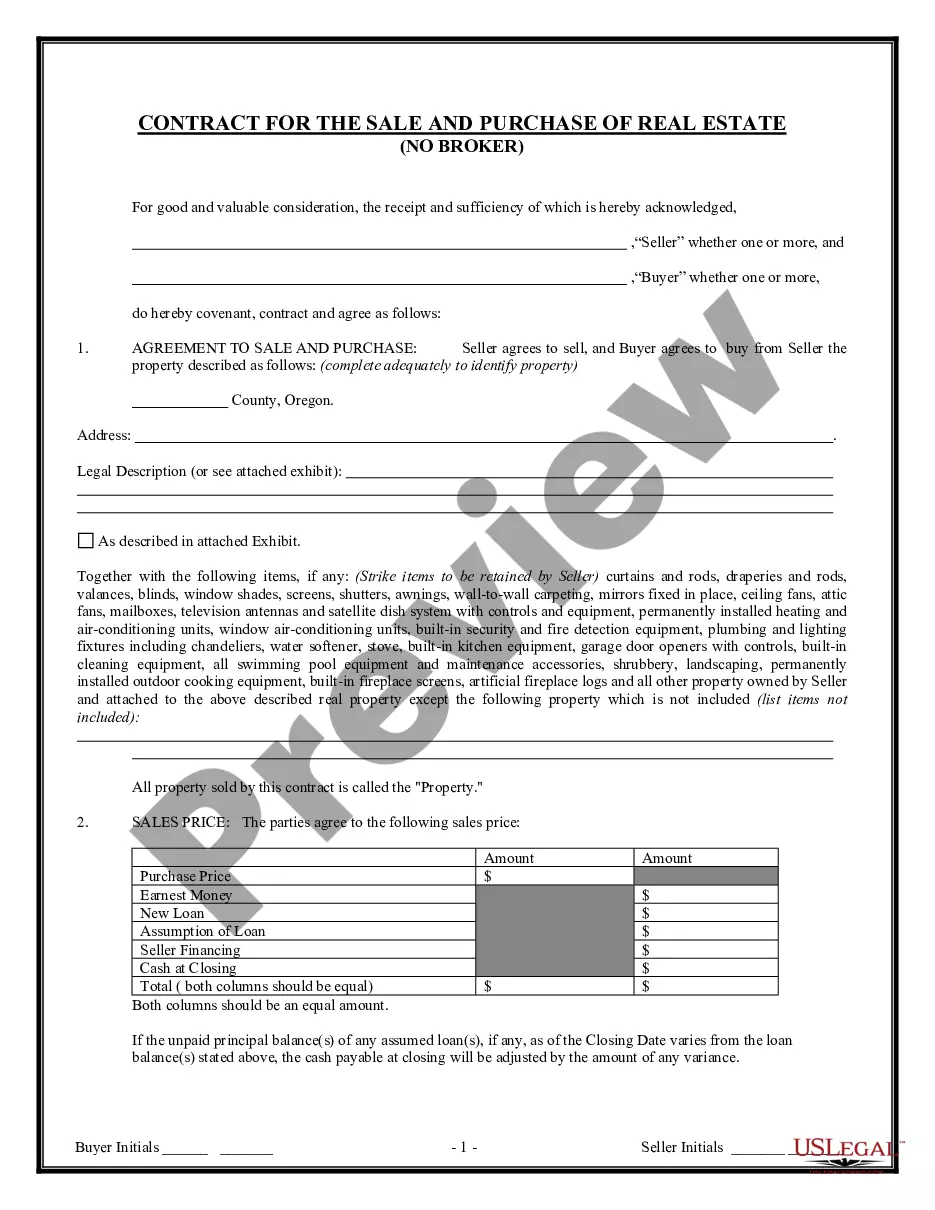
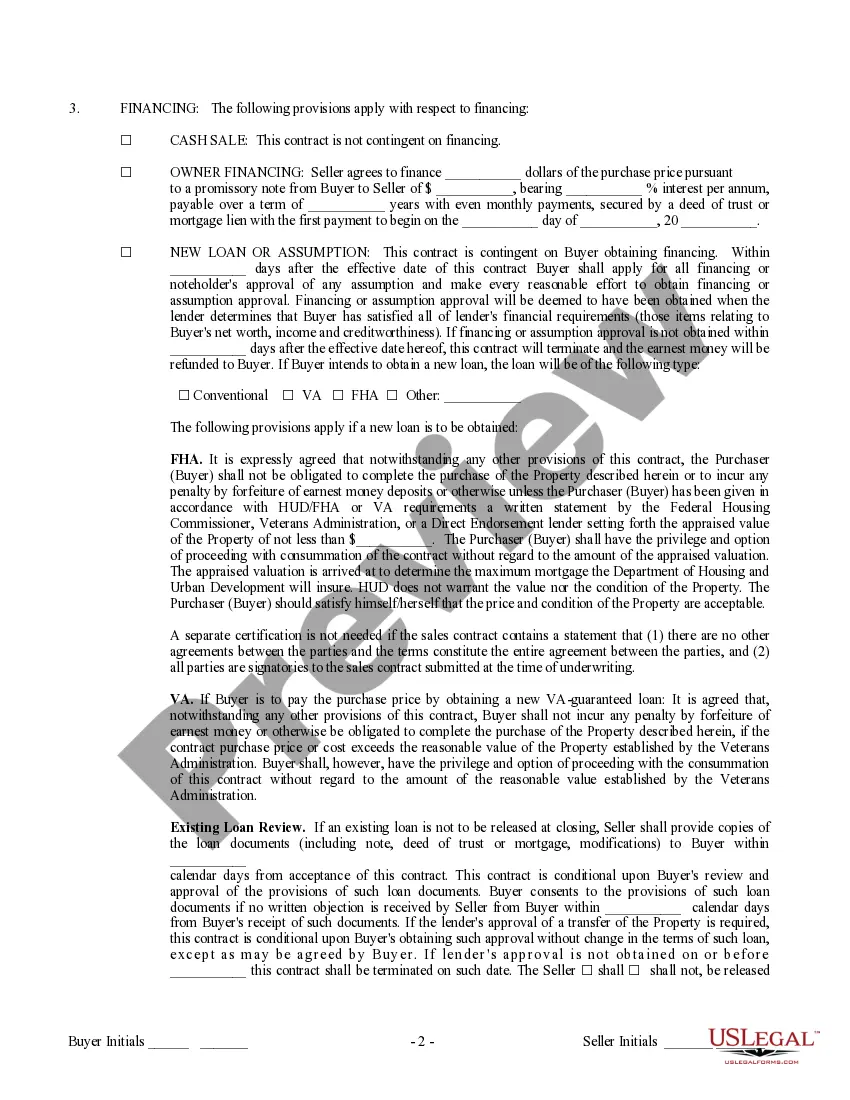
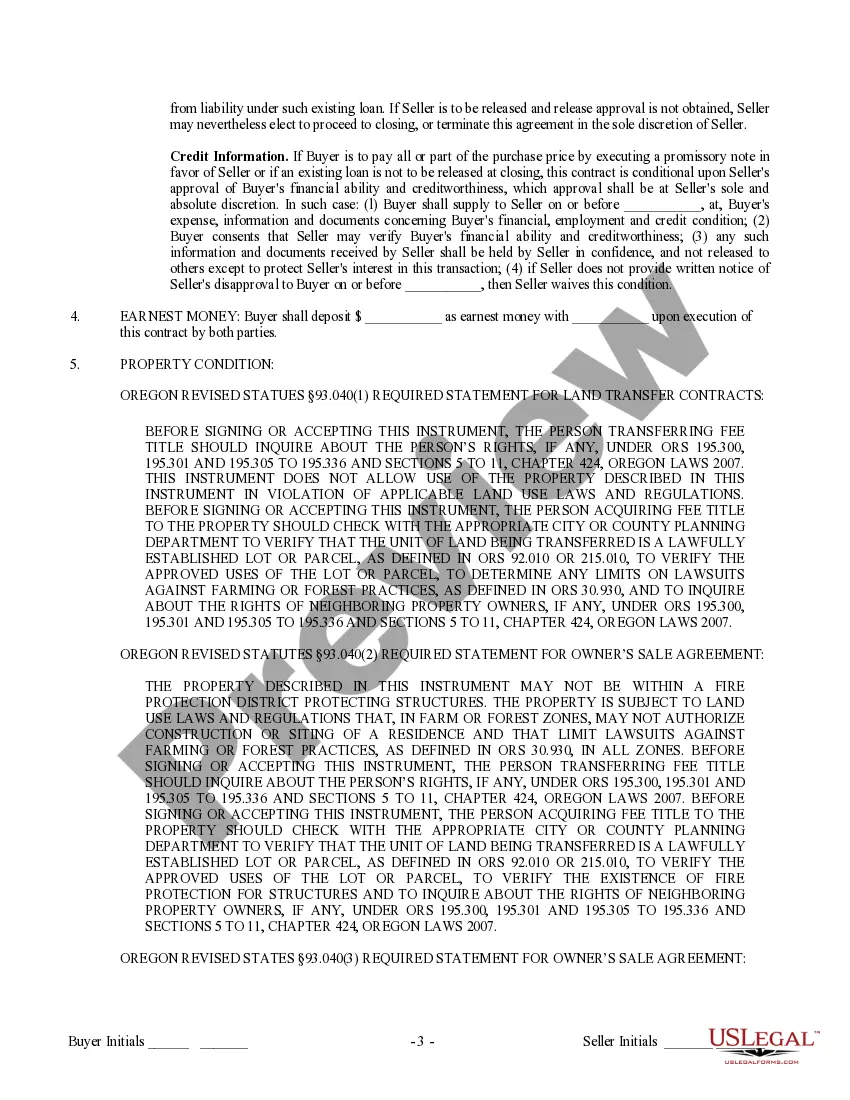
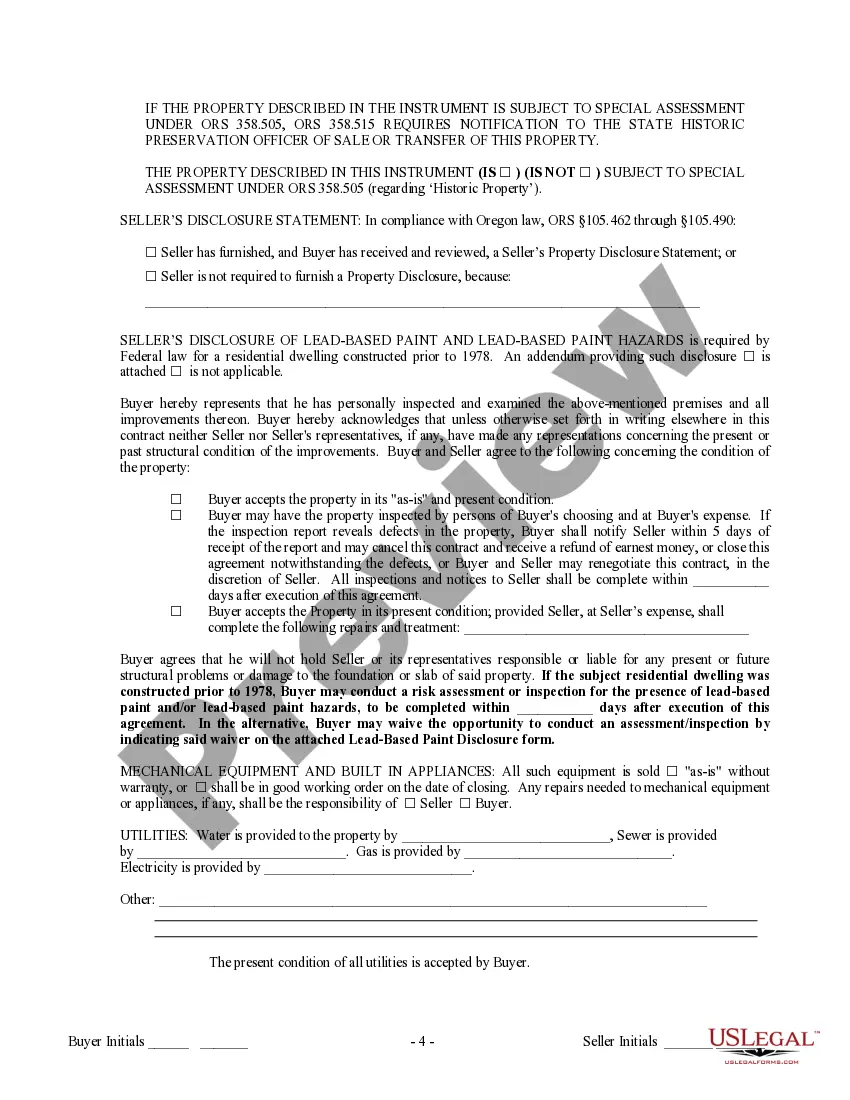
Get your form ready online
Our built-in tools help you complete, sign, share, and store your documents in one place.
Make edits, fill in missing information, and update formatting in US Legal Forms—just like you would in MS Word.
Download a copy, print it, send it by email, or mail it via USPS—whatever works best for your next step.
Sign and collect signatures with our SignNow integration. Send to multiple recipients, set reminders, and more. Go Premium to unlock E-Sign.
If this form requires notarization, complete it online through a secure video call—no need to meet a notary in person or wait for an appointment.
We protect your documents and personal data by following strict security and privacy standards.

Make edits, fill in missing information, and update formatting in US Legal Forms—just like you would in MS Word.

Download a copy, print it, send it by email, or mail it via USPS—whatever works best for your next step.

Sign and collect signatures with our SignNow integration. Send to multiple recipients, set reminders, and more. Go Premium to unlock E-Sign.

If this form requires notarization, complete it online through a secure video call—no need to meet a notary in person or wait for an appointment.

We protect your documents and personal data by following strict security and privacy standards.
Looking for another form?
How to fill out Oregon Contract For Sale And Purchase Of Real Estate With No Broker For Residential Home Sale Agreement?
There's no longer any need to squander time looking for legal documents to comply with your local state laws.
US Legal Forms has assembled all of them in one location and improved their accessibility.
Our platform provides over 85k templates for any business and individual legal matters categorized by state and area of application.
Using the library to prepare formal paperwork under federal and state laws is quick and straightforward with US Legal Forms. Start now to maintain your documentation in order!
- All forms are expertly drafted and validated for legitimacy, so you can be confident in obtaining an up-to-date Oregon Agreement To Occupy After Closing.
- If you are acquainted with our platform and already possess an account, make certain your subscription is active before acquiring any templates.
- Log In to your account, choose the document, and click Download.
- You can also revisit all saved documents at any time by accessing the My documents tab in your profile.
- If you haven't interacted with our platform before, the process will require a few more steps to finalize.
- Here's how new users can discover the Oregon Agreement To Occupy After Closing in our library.
- Read the page content meticulously to ensure it includes the sample you require.
- Utilize the form description and preview options if available.
Form popularity
FAQ
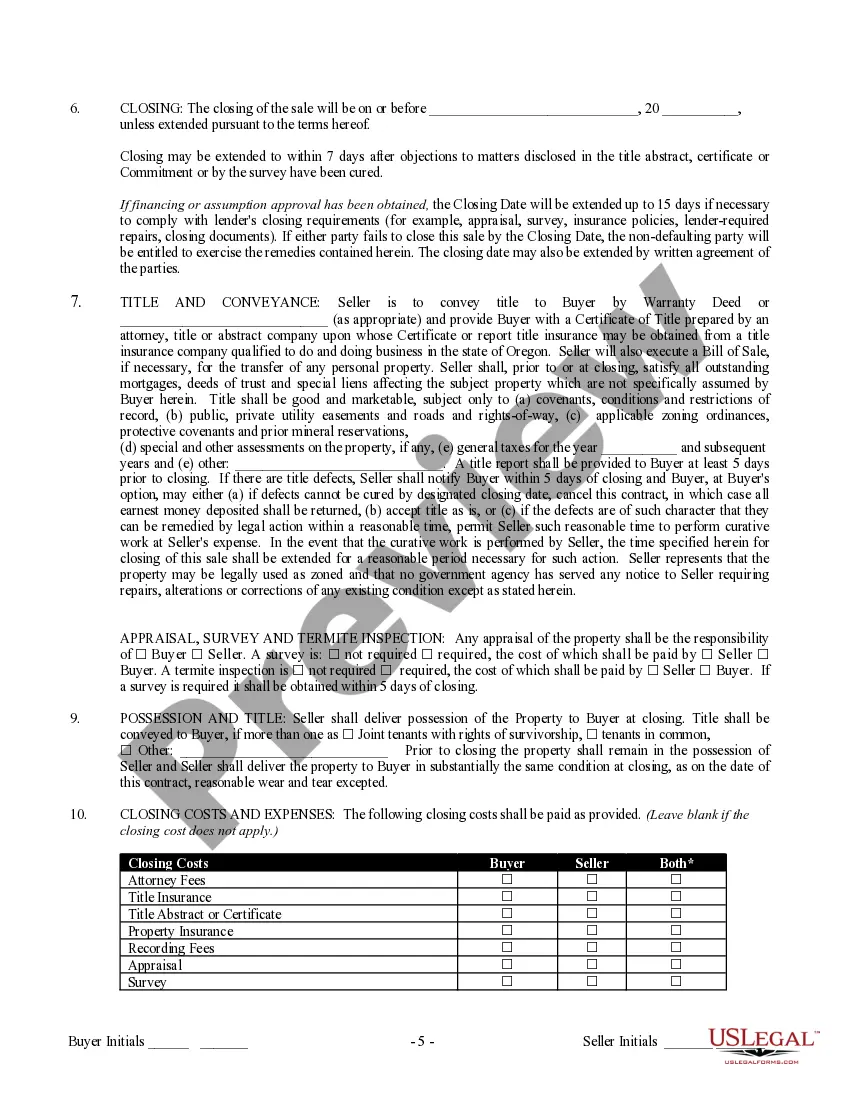
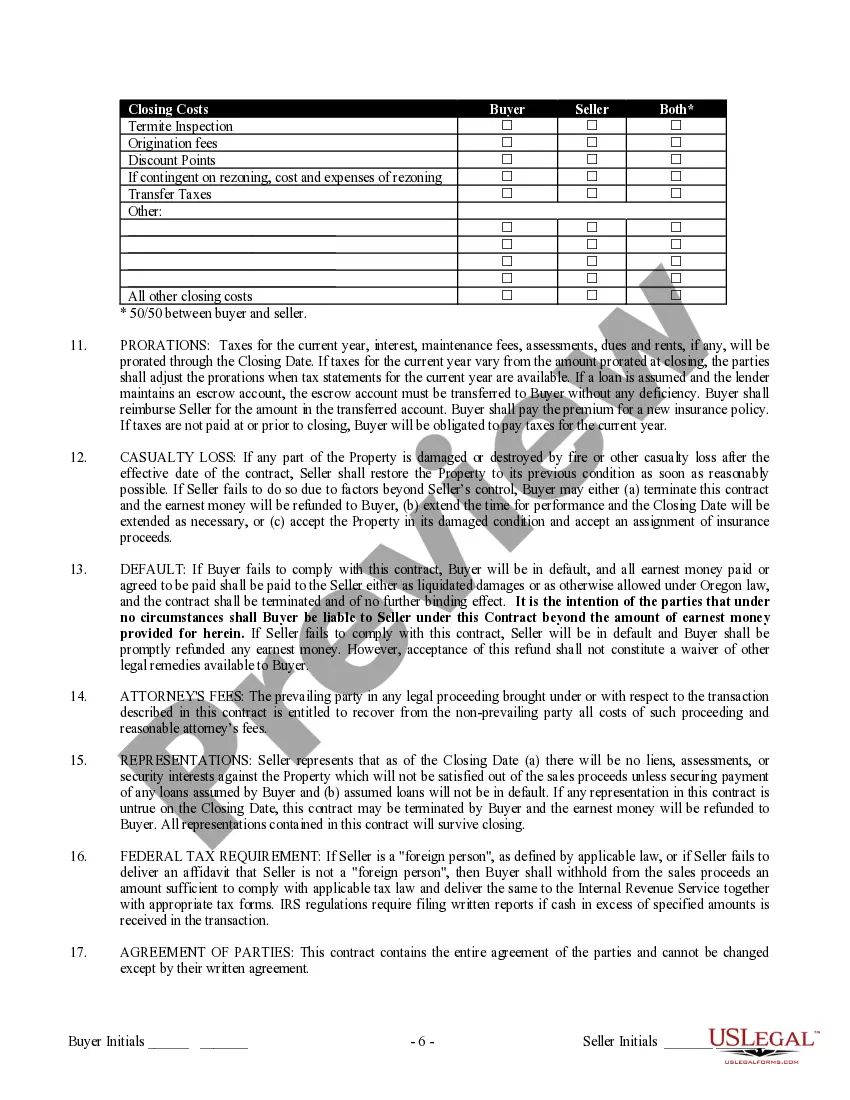
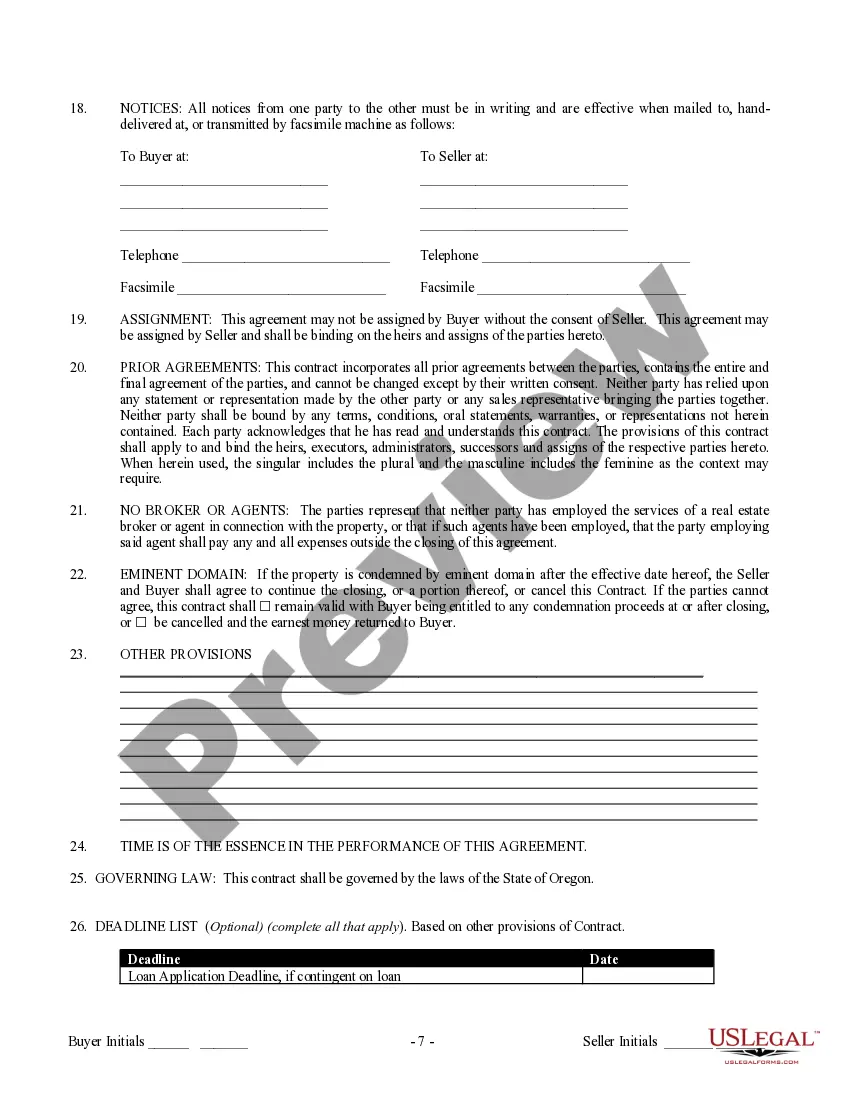
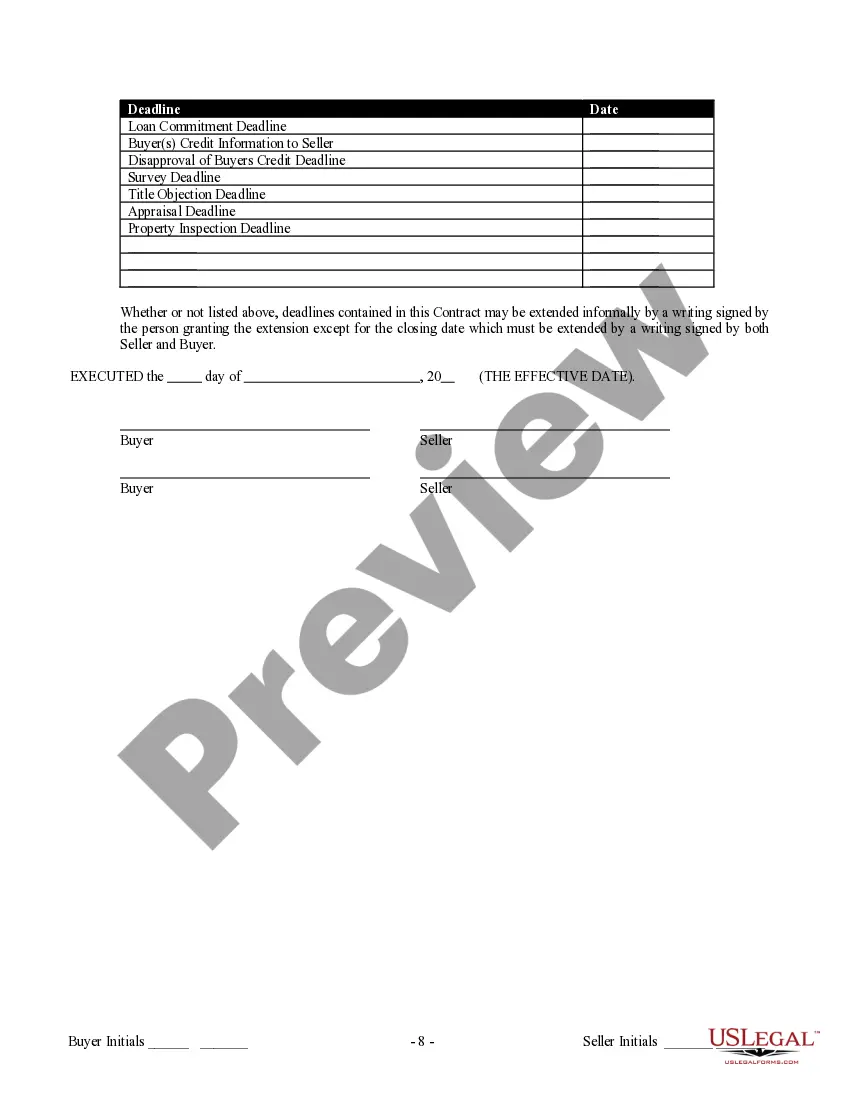
A use and occupancy agreement - sometimes referred to as a U&O - is a temporary agreement between the buyer and the seller that allows one party the right to use and occupy the property for a set period of time. It's usually put in place if the buyer needs to move into the property before ownership can be transferred.
The corollary for the sellers is this: Under no circumstances should you let a buyer move into the house before the sale has closed. The absolute best-case scenario is that you could end up with property disputes that can only be resolved with the help of a residential real estate attorney.
Federal law gives borrowers what is known as the "right of rescission." This means that borrowers after signing the closing papers for a home equity loan or refinance have three days to back out of that deal.
Moving in before the closing date is also known as taking early possession of the property. It's generally not feasible to move in early unless the seller has already vacated the property. Naturally, the seller won't want you to be moving your items into the property as they're trying to move their belongings out.
How to negotiate rent with your landlord. California's eviction moratorium expires February 1Compare rent prices in your neighborhood.Pay a percentage, ask your landlord to forgive the rest.Harness power in numbers.Don't hire a lawyer (right away)Be cordial and sympathetic to your landlord.More items...?