Registered Land For Sale
Description
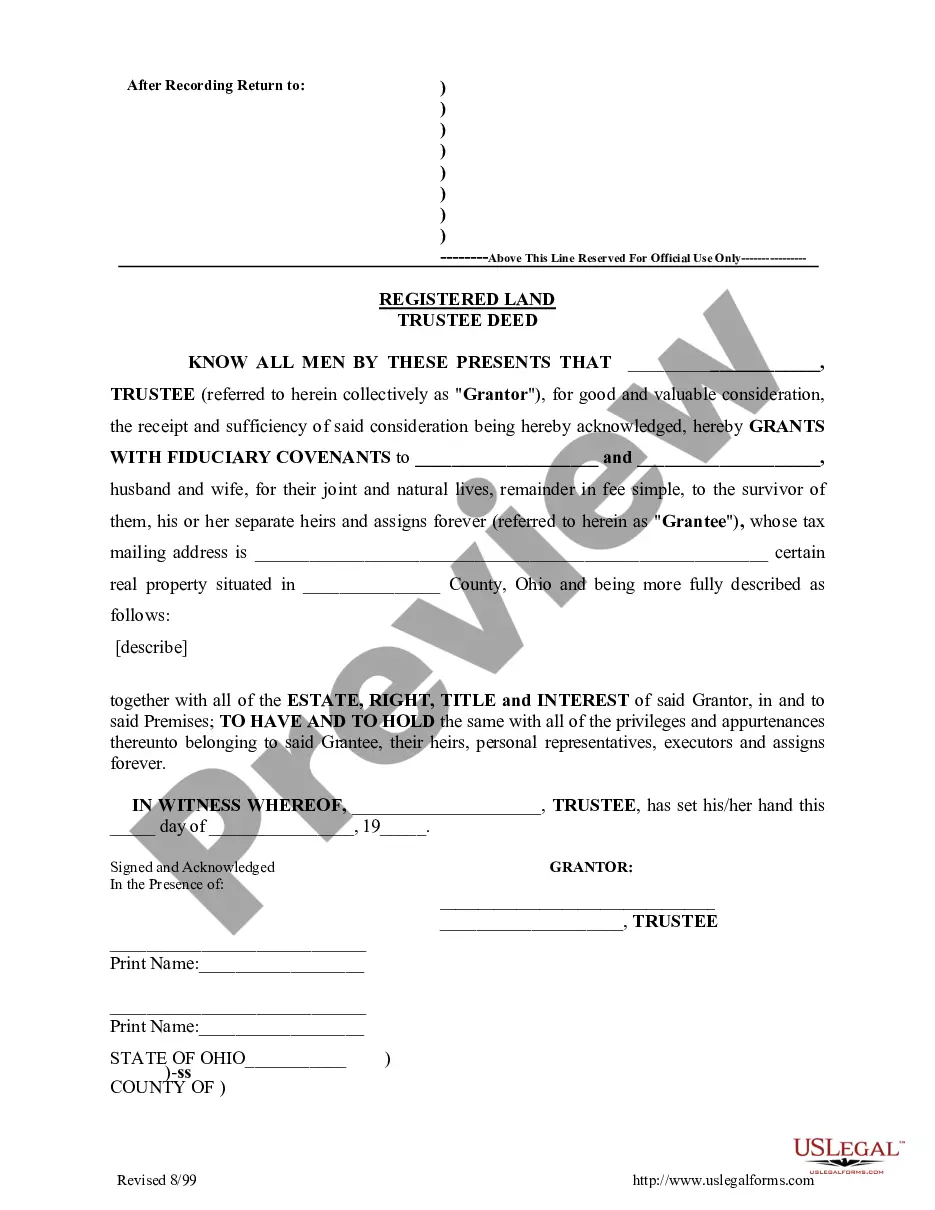



Get your form ready online
Our built-in tools help you complete, sign, share, and store your documents in one place.
Make edits, fill in missing information, and update formatting in US Legal Forms—just like you would in MS Word.
Download a copy, print it, send it by email, or mail it via USPS—whatever works best for your next step.
Sign and collect signatures with our SignNow integration. Send to multiple recipients, set reminders, and more. Go Premium to unlock E-Sign.
If this form requires notarization, complete it online through a secure video call—no need to meet a notary in person or wait for an appointment.
We protect your documents and personal data by following strict security and privacy standards.

Make edits, fill in missing information, and update formatting in US Legal Forms—just like you would in MS Word.

Download a copy, print it, send it by email, or mail it via USPS—whatever works best for your next step.

Sign and collect signatures with our SignNow integration. Send to multiple recipients, set reminders, and more. Go Premium to unlock E-Sign.

If this form requires notarization, complete it online through a secure video call—no need to meet a notary in person or wait for an appointment.

We protect your documents and personal data by following strict security and privacy standards.
Looking for another form?


How to fill out Ohio Registered Land - Trustees Deed?
Legal oversight can be daunting, even for seasoned experts.
When you are interested in a Registered Land For Sale and do not have the opportunity to engage in seeking the suitable and current version, the processes may be overwhelming.
Access a valuable repository of articles, guides, and resources regarding your situation and requirements.
Save time and effort in locating the documents you need, and use US Legal Forms' advanced search and Preview feature to obtain Registered Land For Sale and download it.
Enjoy the US Legal Forms online library, backed by 25 years of expertise and reliability. Streamline your daily document management into a simple and user-friendly process today.
- Log in to your US Legal Forms account if you have a subscription, search for the form, and download it.
- Check your My documents tab to review the documents you have previously downloaded and manage your folders as you see fit.
- If this is your first experience with US Legal Forms, create a complimentary account and gain unlimited access to all the features of the platform.
- Confirm that this is the correct form by previewing it and reviewing its description.
- Ensure that the template is accepted in your state or county.
- Click Buy Now when ready.
- Choose a subscription plan.
- Locate the format you desire, and Download, complete, eSign, print, and submit your documents.
- Utilize state- or county-specific legal and organizational documents.
- US Legal Forms addresses any requirements you may possess, from personal to business documentation, all in one location.
- Employ cutting-edge tools to complete and manage your Registered Land For Sale.
Form popularity
FAQ
Yes, you are required to report a sale of land to the IRS if you have realized a profit from the sale. This includes registered land for sale, which could impact your taxes based on capital gains. You will need to fill out the appropriate tax forms to disclose any earnings. For clarity and assistance, consider using the resources available at US Legal Forms to ensure compliance with tax regulations.
To record a land sale, you must first complete a deed that transfers ownership from the seller to the buyer. This deed is then submitted to the local county recorder's office. After recording, the transaction becomes part of the public record, ensuring that your registered land for sale is properly documented. Utilizing US Legal Forms can simplify this process by providing you with the necessary templates and guidance.
Investing in abandoned registered land for sale can be worth it, depending on the location and potential for development. Such properties may require significant renovations or legal work, but they can lead to substantial returns if developed correctly. Carefully analyzing the local real estate market can help you understand if the investment aligns with your goals. Consider utilizing resources from US Legal Forms for expertise and documentation.
To discover abandoned registered land for sale, start by checking local property tax records for parcels with unpaid taxes. Networking within local real estate groups can also lead you to potential deals. Government auctions and foreclosure listings are viable options to explore abandoned properties. Moreover, consulting the US Legal Forms platform can provide guidance on the necessary steps to acquire such land legally.
Finding registered land for sale that appears unclaimed can be challenging. You typically need to research property records, which often show ownership and convey an accurate picture of land status. Additionally, consider consulting local government offices or online databases that specialize in registered land for sale. Always ensure you understand your local laws and seek professional legal advice if necessary.
The 6 year rule refers to the time frame in which the IRS looks back when assessing capital gains taxes on registered land for sale. If you sell the property, the IRS considers the last 6 years of ownership to determine if the gain is long-term or short-term. Understanding this rule can help you strategize when to sell your land for the most favorable tax treatment.
The 1250 recapture rule applies to the sale of depreciable real estate, including registered land for sale if depreciation was claimed. It requires you to recapture part of the gain as ordinary income upon sale. This rule helps regulate how much of your capital gain can be taxed at lower capital gains rates. Familiarizing yourself with this rule can help you better plan for any taxes owed.
Yes, capital gains from the sale of registered land for sale must be reported on your tax return. Understanding how much capital gain you have is vital for accurate tax reporting. This includes both short-term and long-term gains, which have different tax implications. Keeping thorough records of your transactions can simplify this process.
To record the sale of registered land for sale, you need to complete the necessary legal documents, such as a deed and potentially a bill of sale. After filling out these forms, you should submit them to your local county recorder’s office for official recording. This process ensures that you provide public notice of the transfer of ownership.
Yes, you must report the sale of registered land for sale to the IRS. It’s crucial to report any capital gains or losses from the transaction, as the IRS uses this information for tax reporting. Failing to report could result in penalties or fines. You should keep detailed records of your sale for accurate reporting.