Ohio Rule 4 Waiver Form For Employees
Description
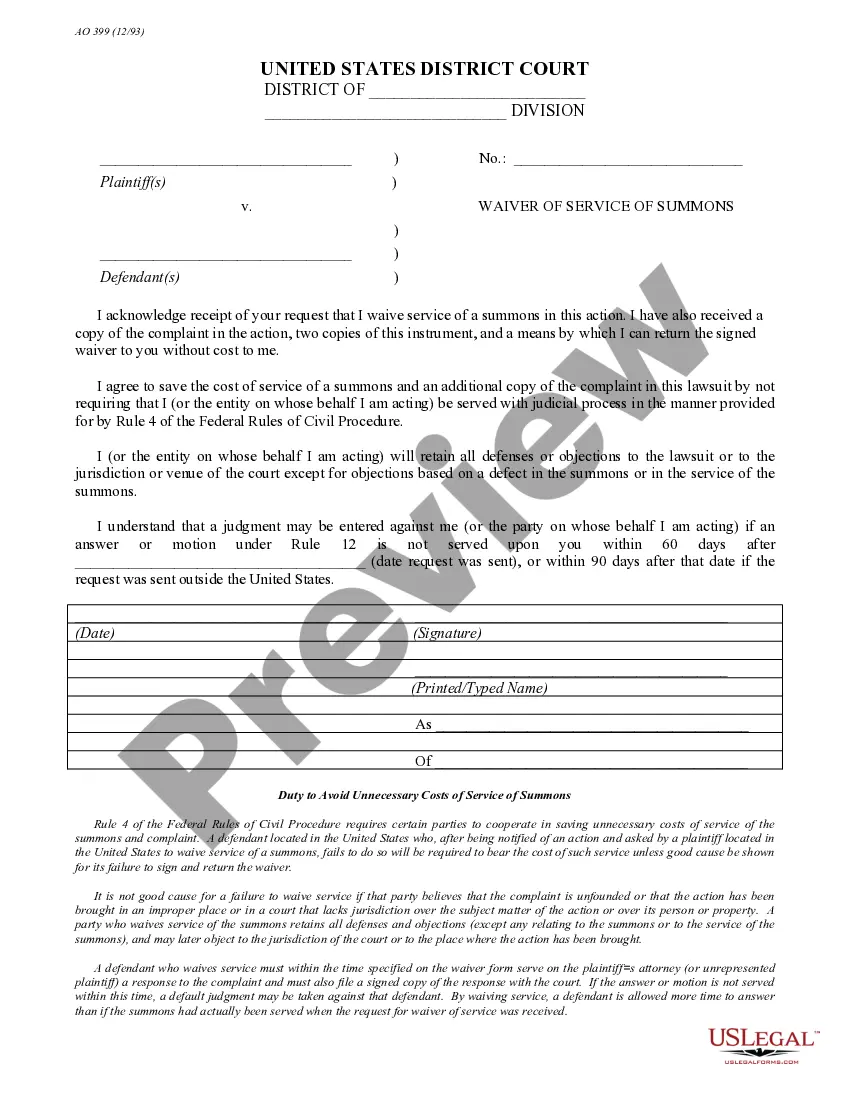
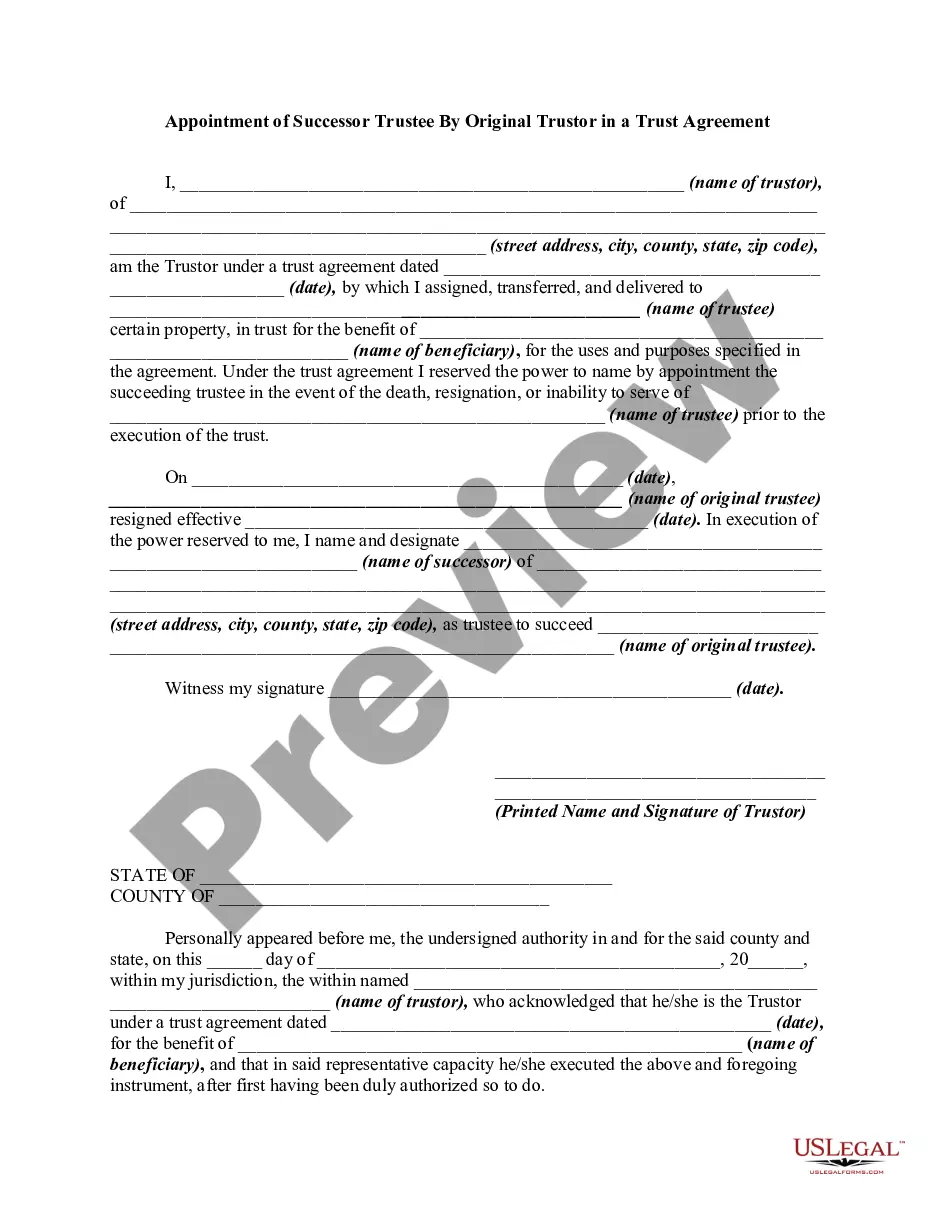
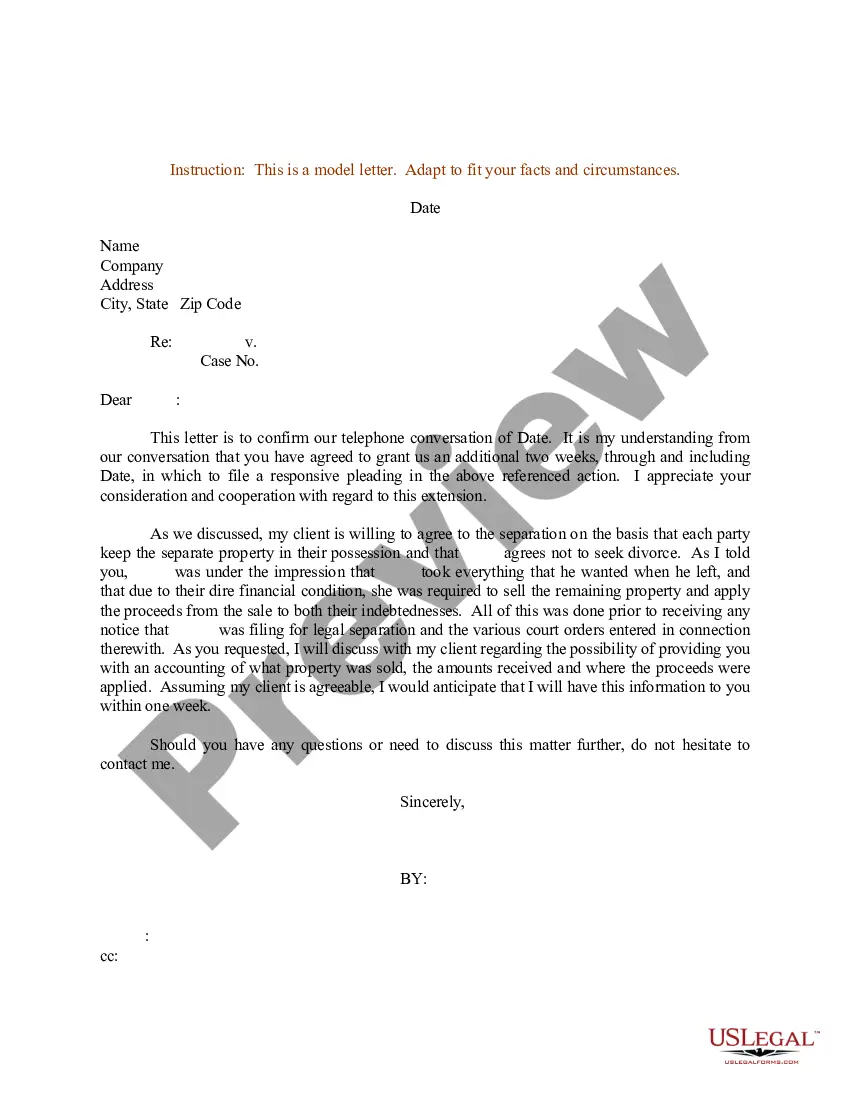
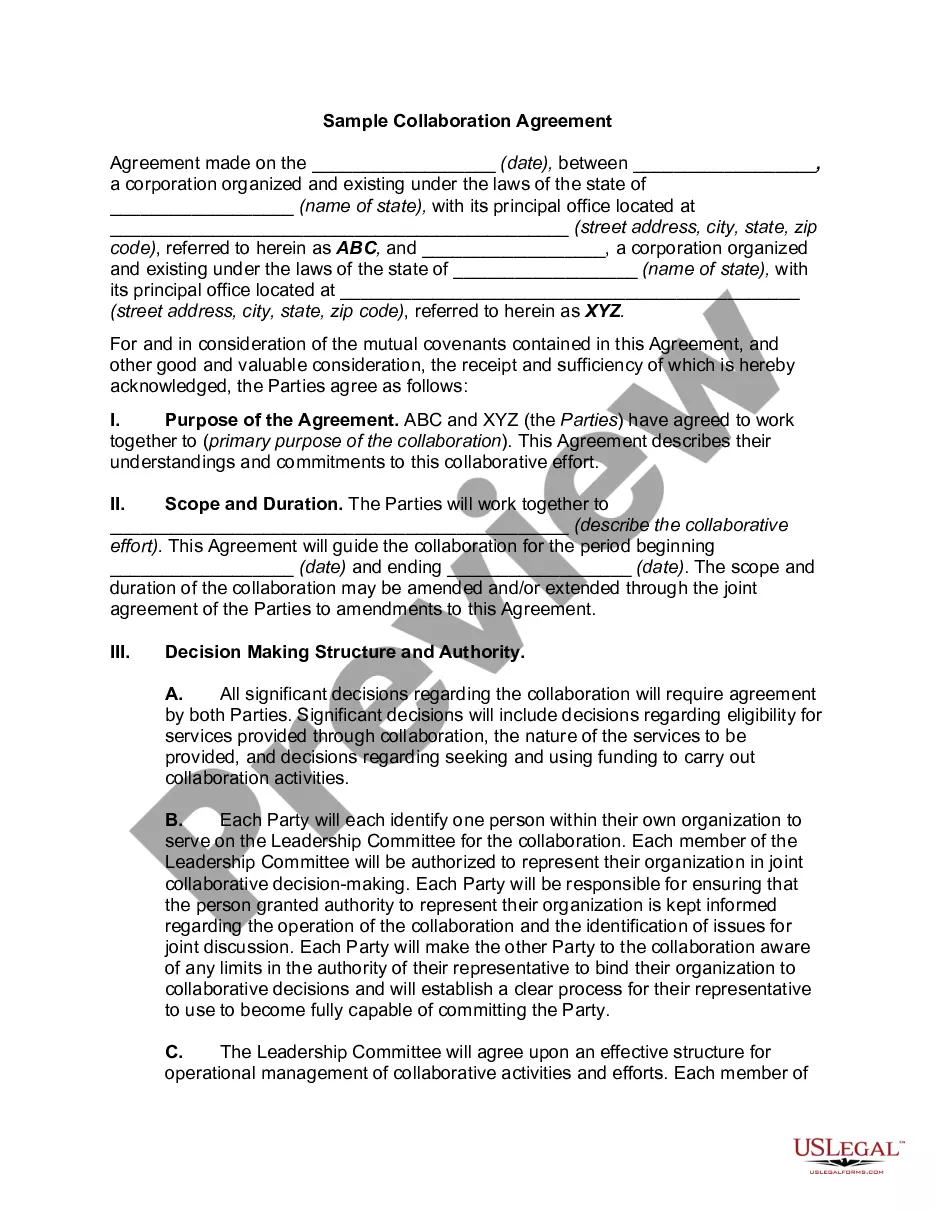
How to fill out Ohio Waiver Of Service Of Summons?
Managing legal documents can be daunting, even for experienced professionals.
If you're in search of an Ohio Rule 4 Waiver Form For Employees but lack the time to dedicate to finding the right and most current version, the process can be stressful.
US Legal Forms caters to any needs you may have, whether personal or business documents, all in one place.
Leverage advanced tools to fill out and manage your Ohio Rule 4 Waiver Form For Employees.
Here are the steps to follow after locating the form you need: Verify that it's the correct form by previewing it and reading its description.
- Gain access to a wealth of articles, tutorials, and guides pertinent to your situation and needs.
- Save time and energy in finding the documents you need, using US Legal Forms’ sophisticated search and Preview tool to identify and download the Ohio Rule 4 Waiver Form For Employees.
- If you are a member, Log In to your US Legal Forms account, search for the form, and download it.
- Check your My documents tab to see the documents you've previously saved and to organize your folders as desired.
- If this is your first experience with US Legal Forms, create a free account for unlimited access to all the library's benefits.
- Utilize an extensive online form repository that can transform the way you address these matters effectively.
- US Legal Forms stands as a leader in digital legal documents, featuring over 85,000 state-specific legal forms available to you anytime.
- Access specific legal and business forms tailored to your state or county.
Form popularity
FAQ
Rule 60 in Ohio allows parties to seek relief from a judgment or order under specific circumstances, such as newly discovered evidence or fraud. This rule is essential for ensuring justice is served, particularly for employees who may need to contest decisions affecting their rights. Utilizing the Ohio rule 4 waiver form for employees can sometimes help navigate issues related to judgments or motions, providing clarity in legal processes.
Because your trust assets do not pass through probate, the entire trust and its terms remain completely private. There is no public record of what you placed in trust or who you gave it to.
Because your trust assets do not pass through probate, the entire trust and its terms remain completely private. There is no public record of what you placed in trust or who you gave it to. Because assets are not held up in probate, they can be distributed immediately upon your death if you so choose without any delay.
Any property stored inside the trust is not subject to probate court, a time-consuming and sometimes privacy-invading process that most trusts have to go through. This may be especially important in Arkansas, which does not use the Uniform Probate Code, which simplifies the probate process in some other states.
To make a living trust in Arkansas, you: Choose whether to make an individual or shared trust. Decide what property to include in the trust. Choose a successor trustee. Decide who will be the trust's beneficiaries?that is, who will get the trust property. Create the trust document.
To make a living trust in Arkansas, you: Choose whether to make an individual or shared trust. Decide what property to include in the trust. Choose a successor trustee. Decide who will be the trust's beneficiaries?that is, who will get the trust property. Create the trust document.
A will does not have to be recorded or filed in court, but it can be deposited with a probate court for safekeeping.
A living trust allows you to avoid the probate process entirely, as long as you put all of your assets into the trust. Then, upon your death, the property will pass ing to the terms of your trust.
The cost of setting up a trust in Arkansas varies depending on the complexity of the trust and the attorney's fees. A basic Revocable Living Trust generally ranges from $1,000 to $3,000. More complex trusts can cost several thousand dollars more.