Ohio Parenting Plan Template Without Court
Description
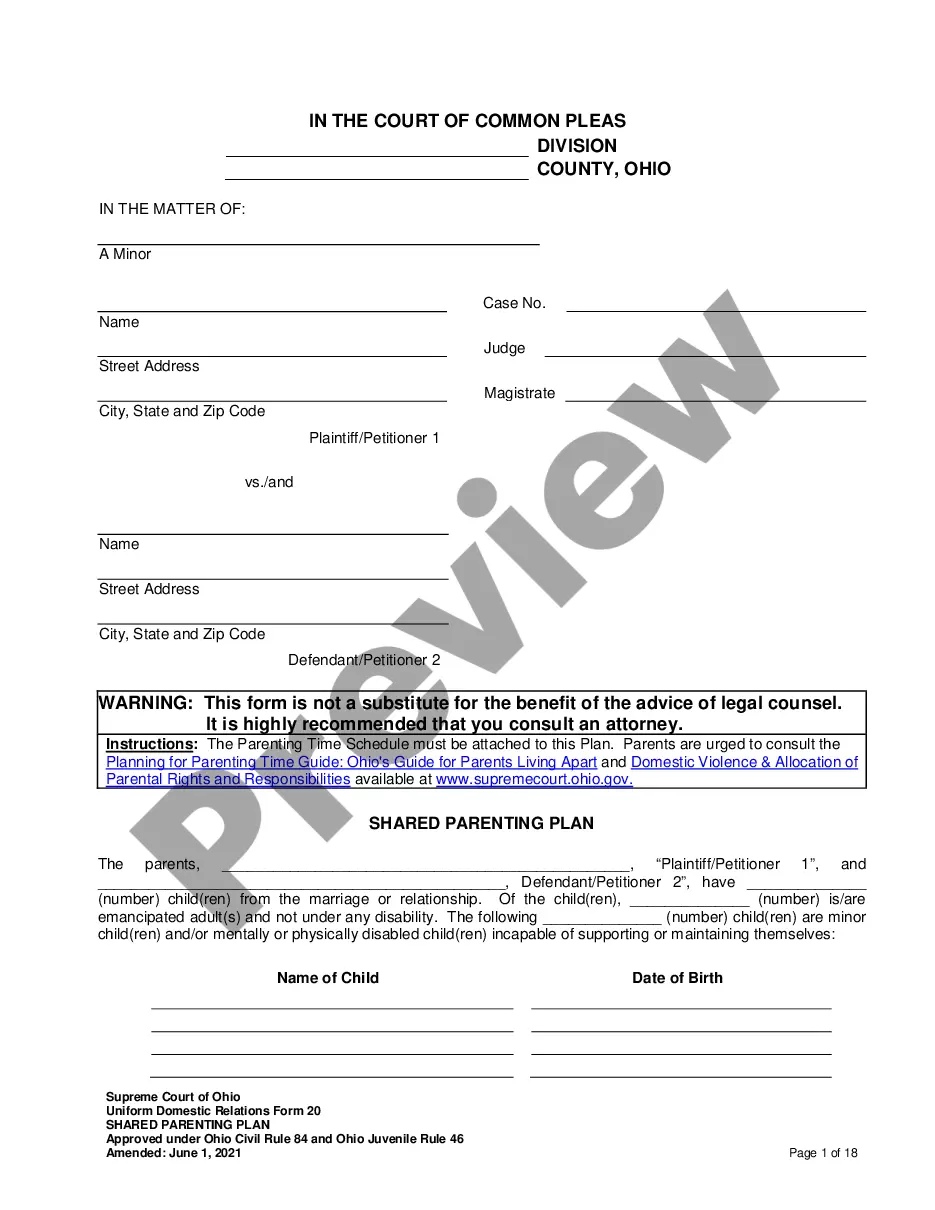
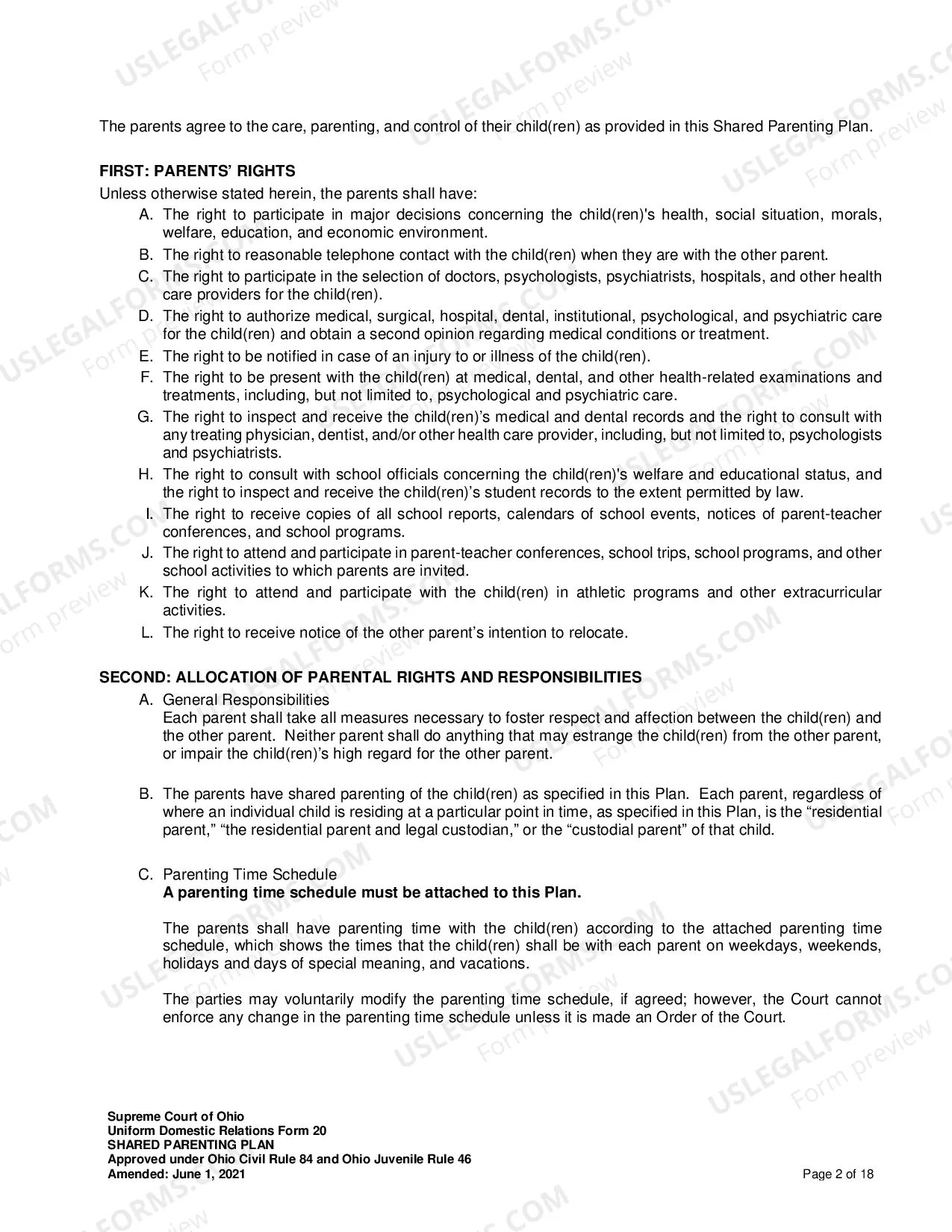
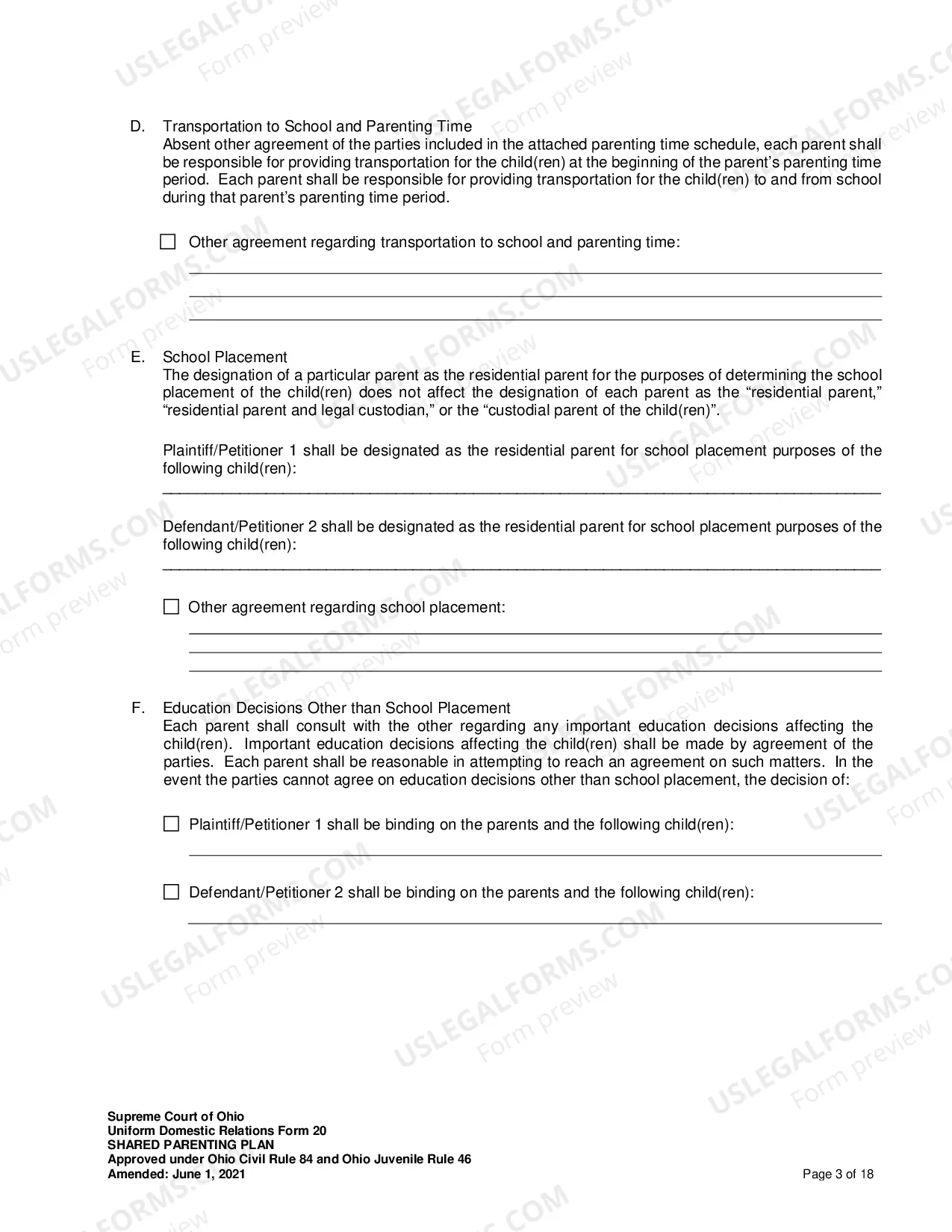
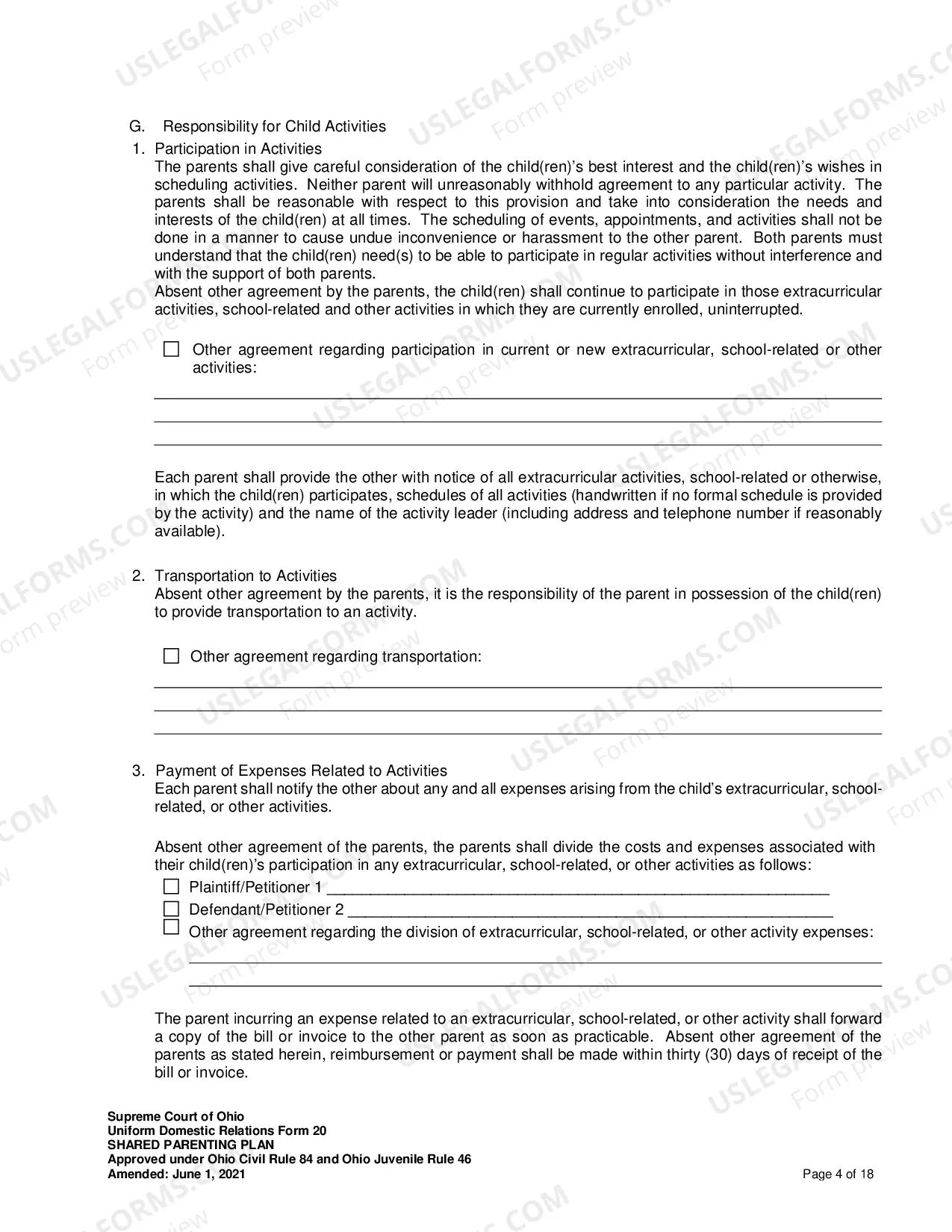

Get your form ready online
Our built-in tools help you complete, sign, share, and store your documents in one place.
Make edits, fill in missing information, and update formatting in US Legal Forms—just like you would in MS Word.
Download a copy, print it, send it by email, or mail it via USPS—whatever works best for your next step.
Sign and collect signatures with our SignNow integration. Send to multiple recipients, set reminders, and more. Go Premium to unlock E-Sign.
If this form requires notarization, complete it online through a secure video call—no need to meet a notary in person or wait for an appointment.
We protect your documents and personal data by following strict security and privacy standards.

Make edits, fill in missing information, and update formatting in US Legal Forms—just like you would in MS Word.

Download a copy, print it, send it by email, or mail it via USPS—whatever works best for your next step.

Sign and collect signatures with our SignNow integration. Send to multiple recipients, set reminders, and more. Go Premium to unlock E-Sign.

If this form requires notarization, complete it online through a secure video call—no need to meet a notary in person or wait for an appointment.

We protect your documents and personal data by following strict security and privacy standards.
Looking for another form?









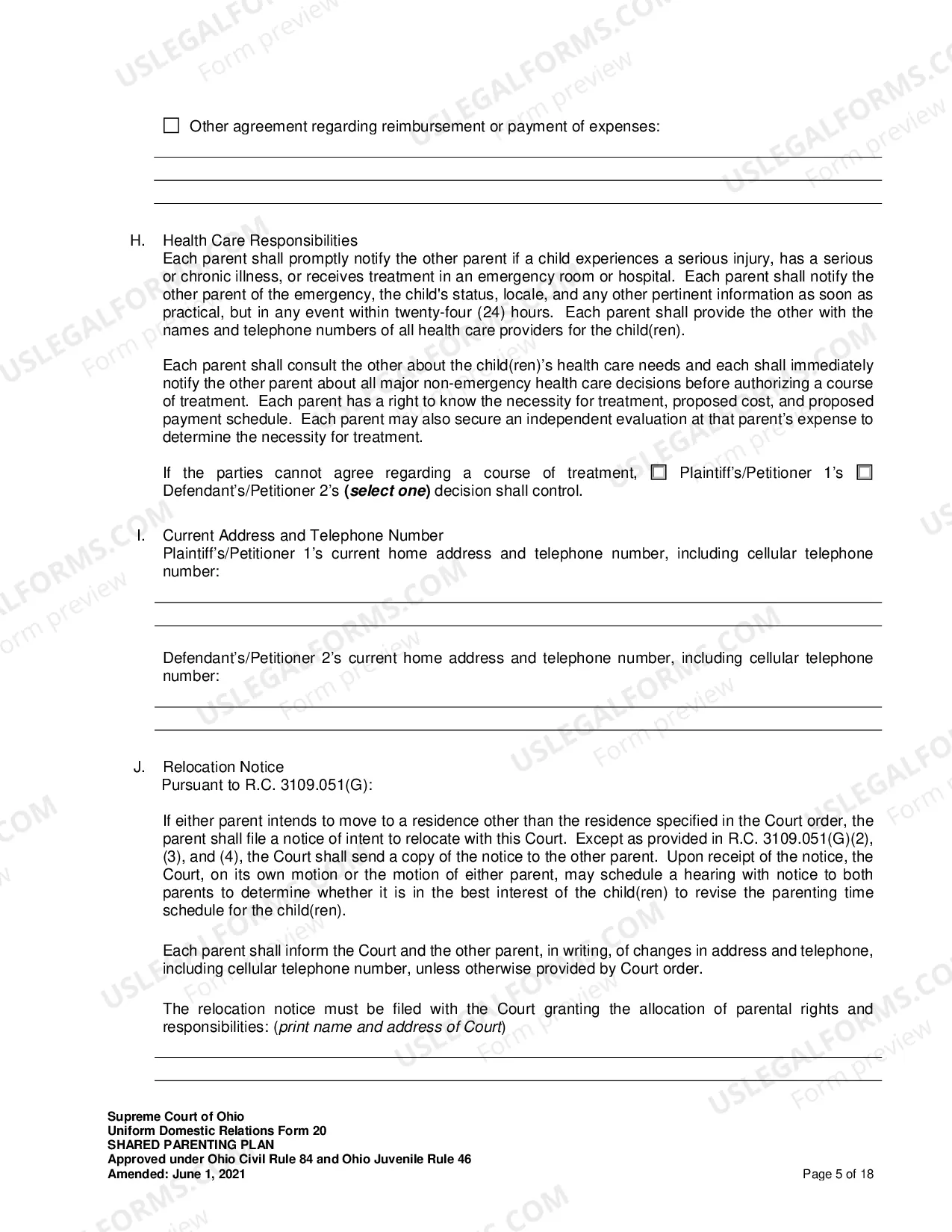
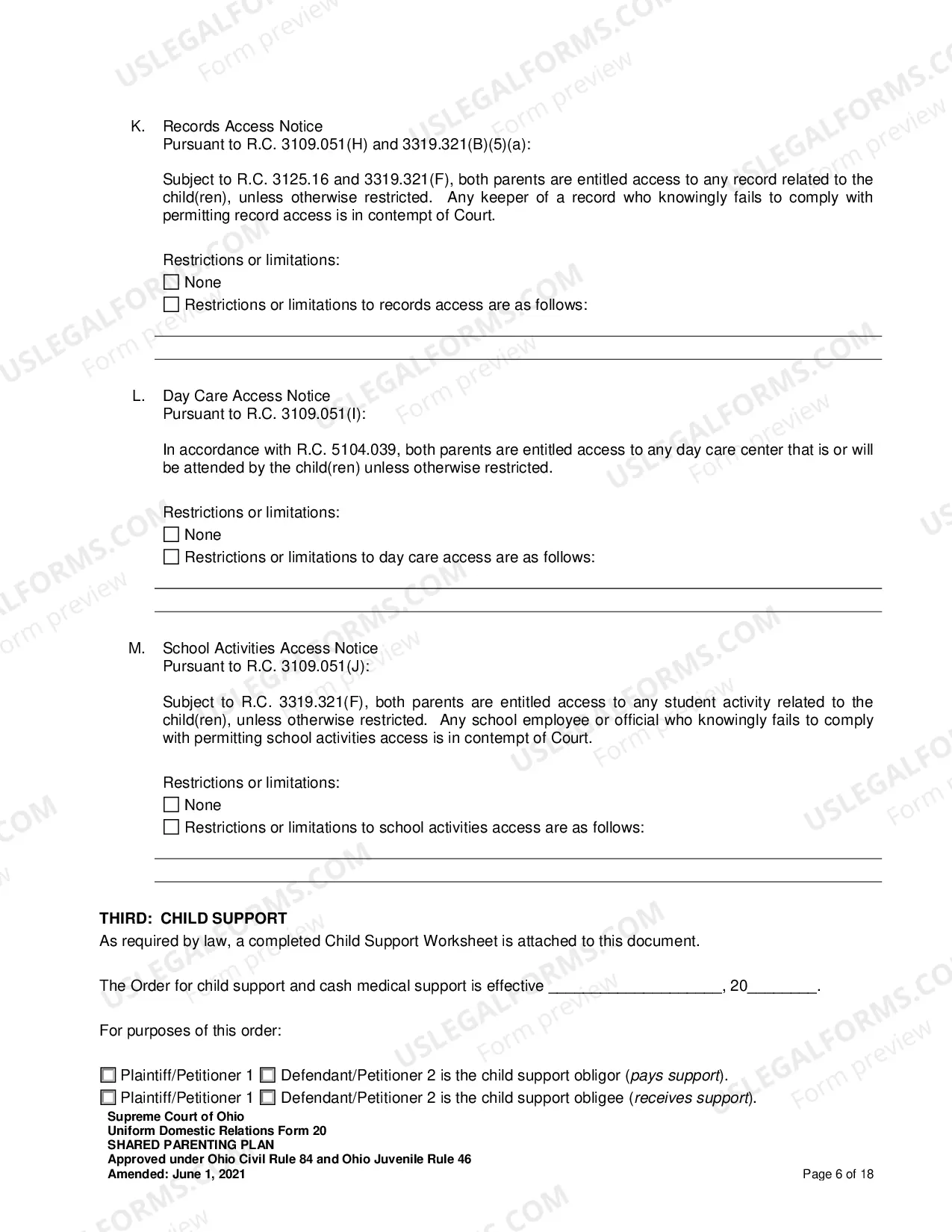
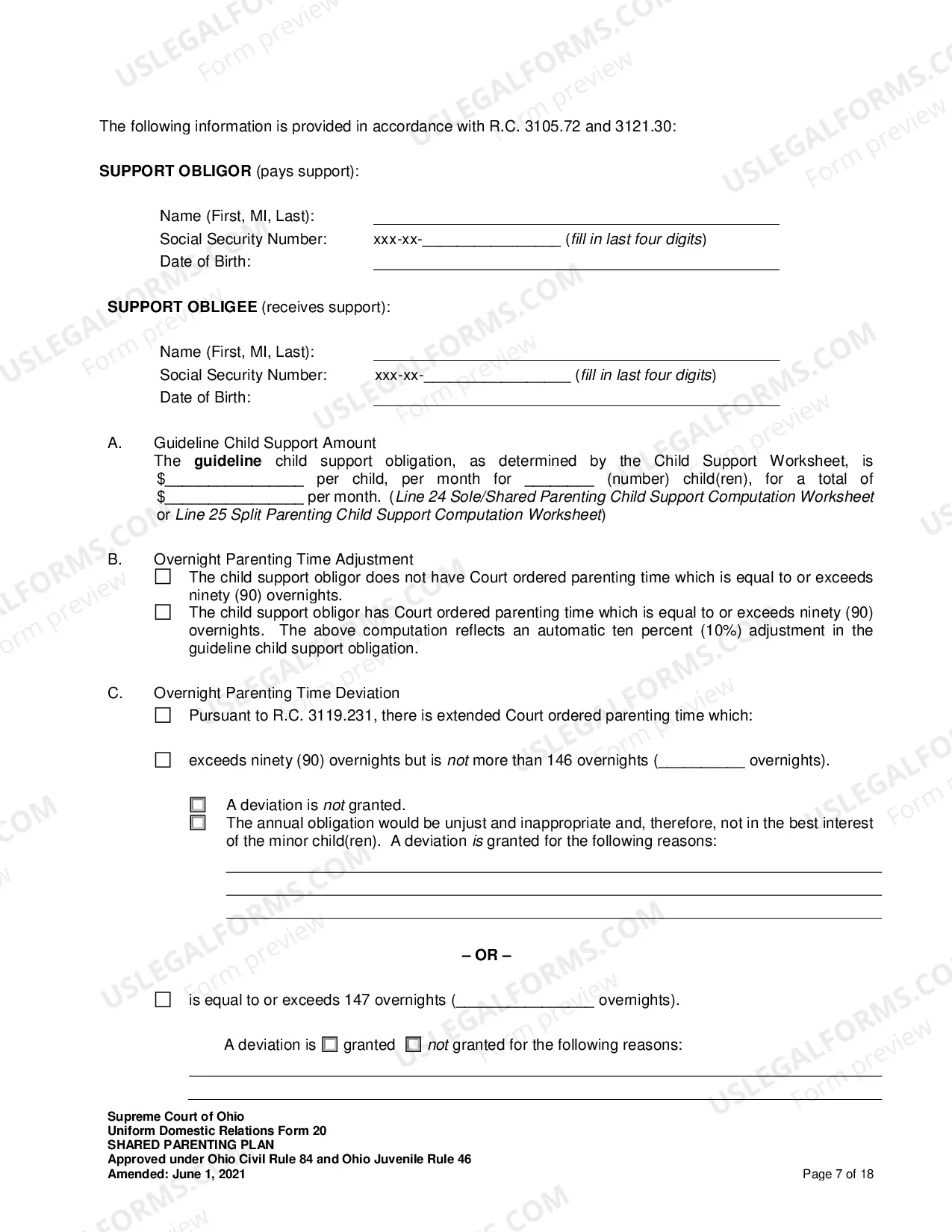
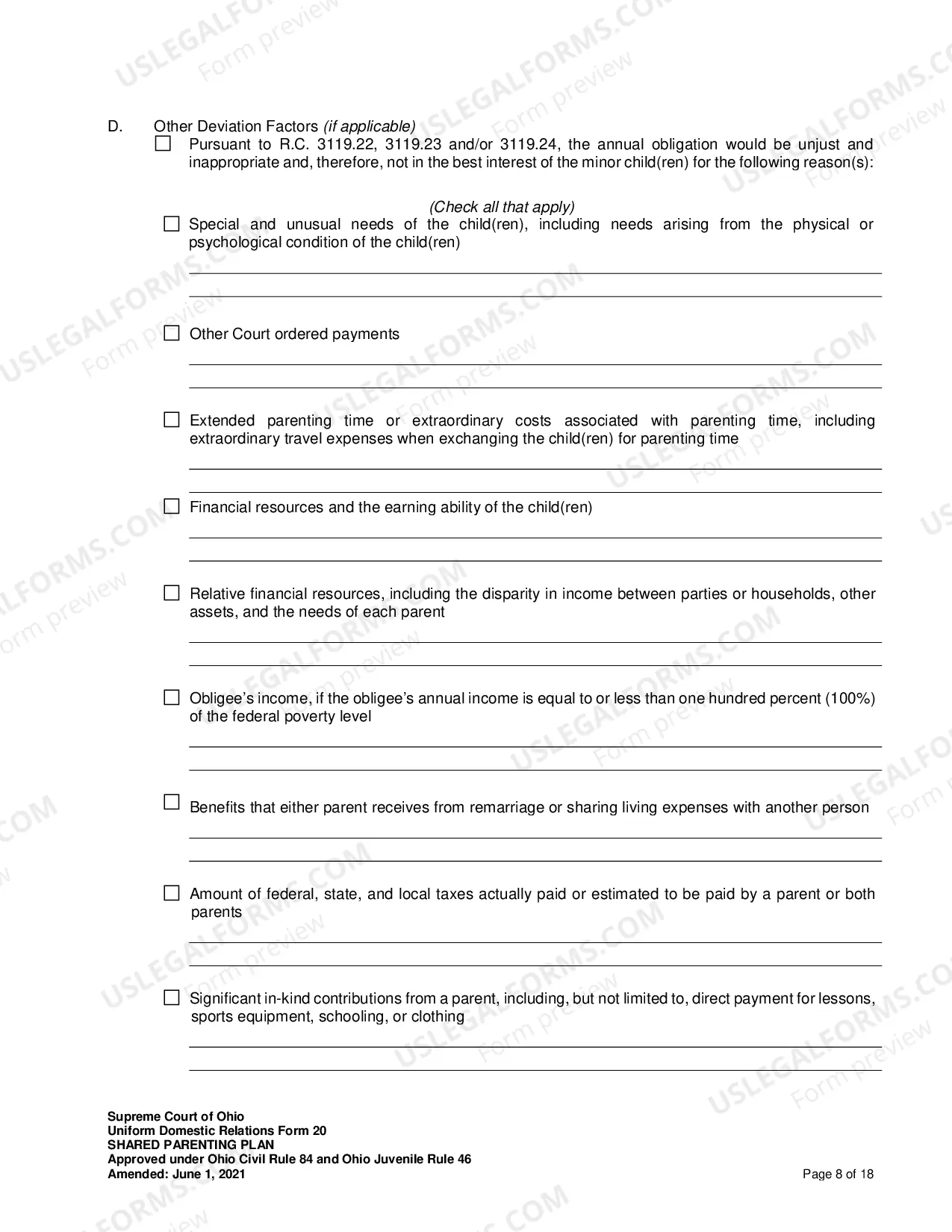
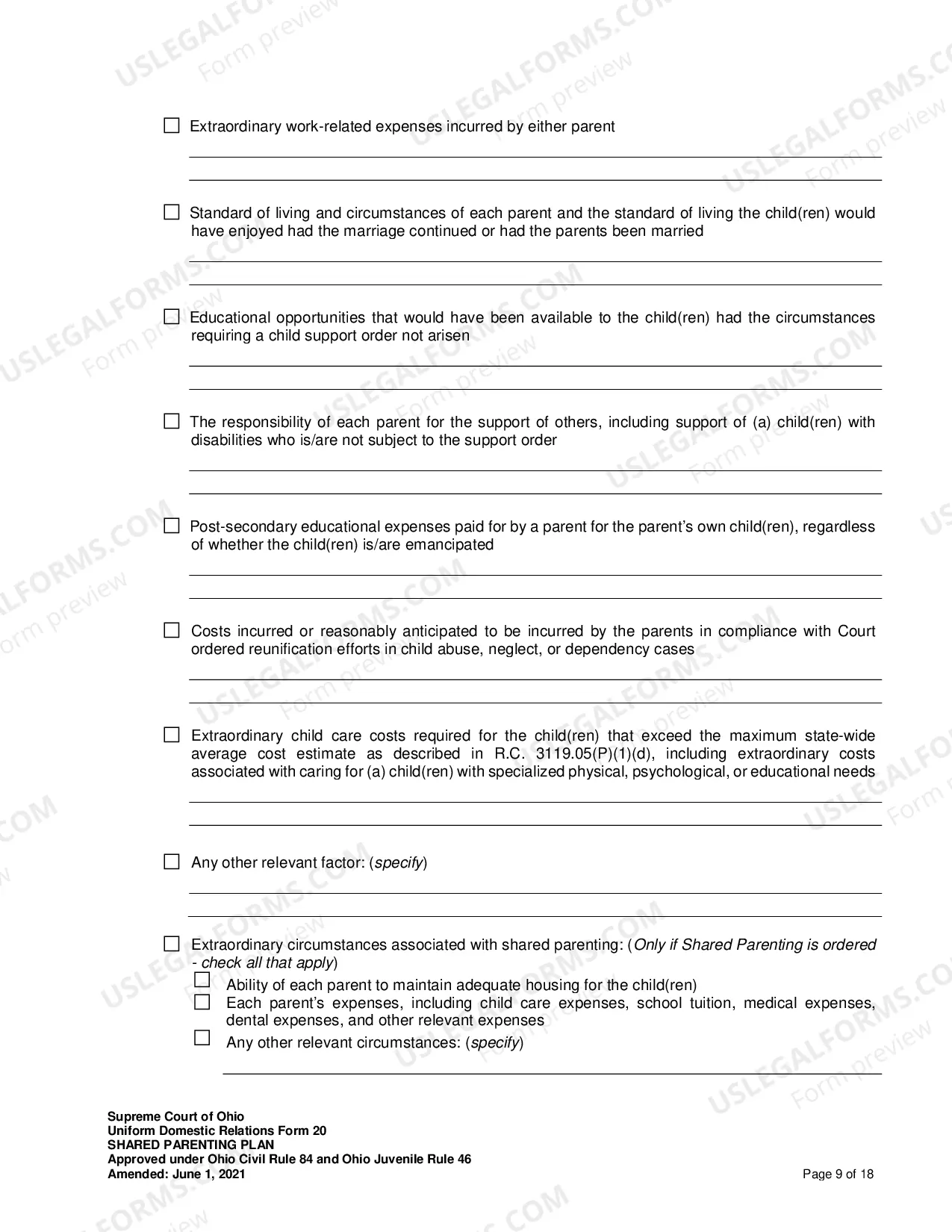
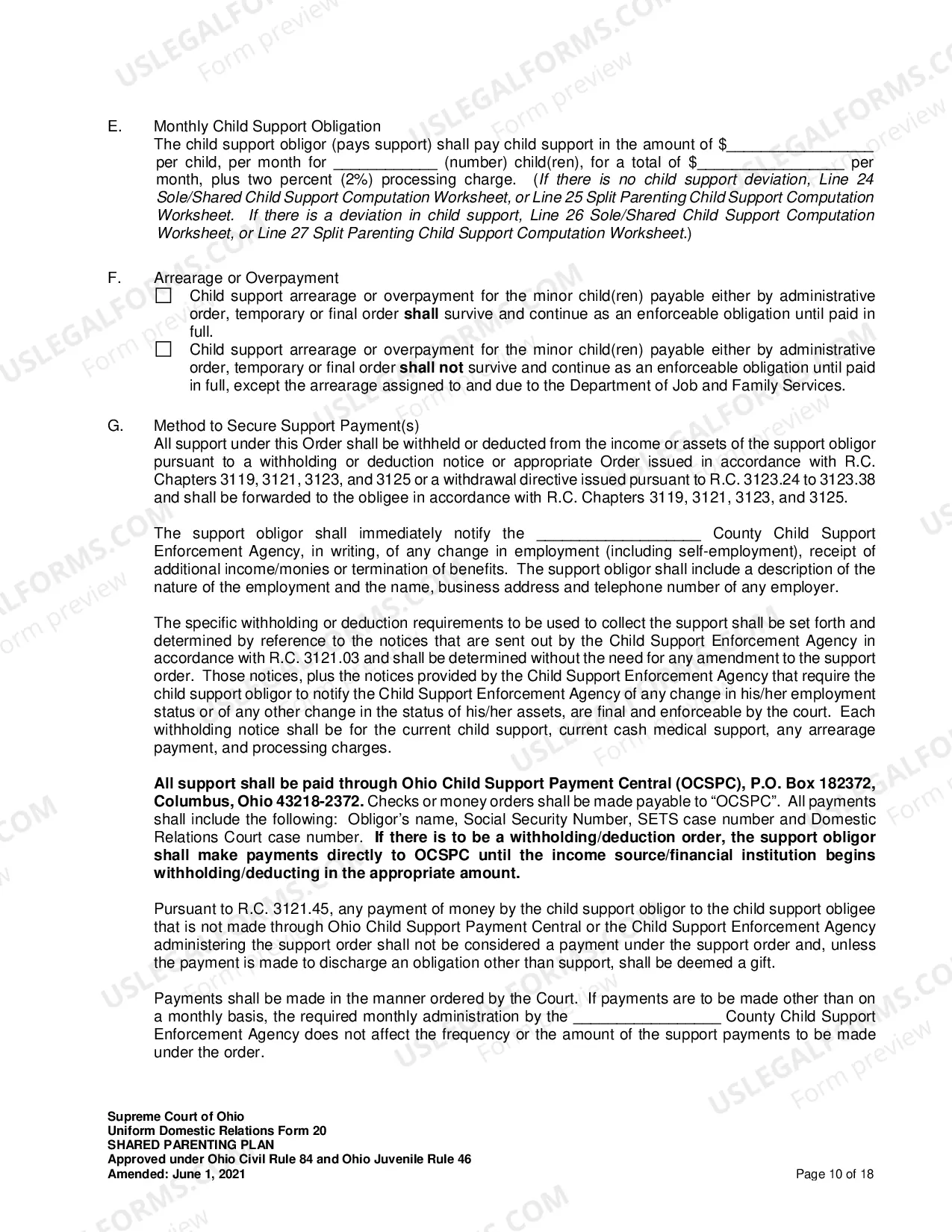
How to fill out Ohio Shared Parenting Plan?
Obtaining a reliable source for the latest and suitable legal templates is a significant part of dealing with bureaucracy.
Locating the appropriate legal documents requires accuracy and meticulousness, which is why it is essential to obtain samples of Ohio Parenting Plan Template Without Court solely from trustworthy providers, such as US Legal Forms. A faulty template will squander your time and delay your circumstances.
Once you have the form on your device, you can modify it using the editor or print it out and fill it in by hand. Eliminate the complications associated with your legal paperwork. Explore the extensive US Legal Forms collection where you can discover legal templates, verify their relevance to your situation, and download them immediately.
- Utilize the catalog navigation or search bar to locate your sample.
- Review the form’s description to determine if it meets the criteria of your state and county.
- Access the form preview, if available, to ensure the template is indeed the one you need.
- Return to the search and seek the correct template if the Ohio Parenting Plan Template Without Court does not fulfill your requirements.
- When you are confident about the form’s applicability, download it.
- If you are a registered user, click Log in to verify and access your chosen forms in My documents.
- If you do not have an account yet, click Buy now to acquire the form.
- Select the pricing plan that matches your needs.
- Proceed with the registration to complete your order.
- Finalize your purchase by choosing a payment option (credit card or PayPal).
- Select the file format for downloading Ohio Parenting Plan Template Without Court.
Form popularity
FAQ
The 80/20 rule for custody refers to a situation where a child spends 80% of their time with one parent and 20% with the other. This arrangement aims to provide stability while allowing the non-custodial parent to maintain a meaningful relationship with the child. When drafting an Ohio parenting plan template without court, it is essential to clearly define the specifics of this arrangement to ensure both parents understand their roles and responsibilities.
To file for custody in Ohio, you typically need to complete forms such as the Complaint for Custody and Parenting Time. Additionally, you may need to provide a proposed Ohio parenting plan template without court to outline your desired arrangements. Utilizing resources from UsLegalForms can simplify this process by providing the necessary forms and guidance on how to fill them out correctly.
Child custody in Nebraska is determined based on the child's best interests, considering various factors such as the child's age, relationships with each parent, and the ability of each parent to provide a stable environment. Both parents have the opportunity to present their case, which can be made easier with a well-structured Ohio parenting plan template without court. This plan can help clarify expectations and facilitate discussions about custody arrangements.
In an 80/20 custody arrangement, the child typically spends 80% of their time with one parent and 20% with the other. This translates to about 60 overnights with the parent who has less custody. When creating your Ohio parenting plan template without court, it is important to clearly outline the schedule to ensure both parents understand their responsibilities and commitments.
One of the biggest mistakes in a custody battle is failing to prioritize the child's best interests. Parents often become too focused on winning instead of creating a nurturing environment for their child. Working together on an Ohio parenting plan template without court can help establish a cooperative co-parenting relationship, which is beneficial for everyone involved.
Despite the state's preference for joint custody, courts do award sole custody when it's best for the children, or when parents agree on it.
Despite the state's preference for joint custody, courts do award sole custody when it's best for the children, or when parents agree on it. If one parent has sole residential custody, the nonresidential parent commonly has the children every other weekend and once during the week for an overnight visit.
In Ohio, ?allocation of parental rights,? commonly called custody, is the legal right and responsibility to care for and make decisions for a child. If you have an existing custody order, you have to go through the court to change it.
Information that would be useful in proving that a parent is unfit might include the following: Police reports and conviction records; An itemized list of all missed child support payments; Exchanges of text messages or voice mails in which one parent refused visitation;
Complete a "Complaint for Parentage, Allocation of Parental Rights and Responsibilities (Custody), Parenting Time (Companionship and Visitation)" form. This form is available at supremecourt.ohio.gov. By filling out this form, you can request a parenting plan and child support obligation from the court.