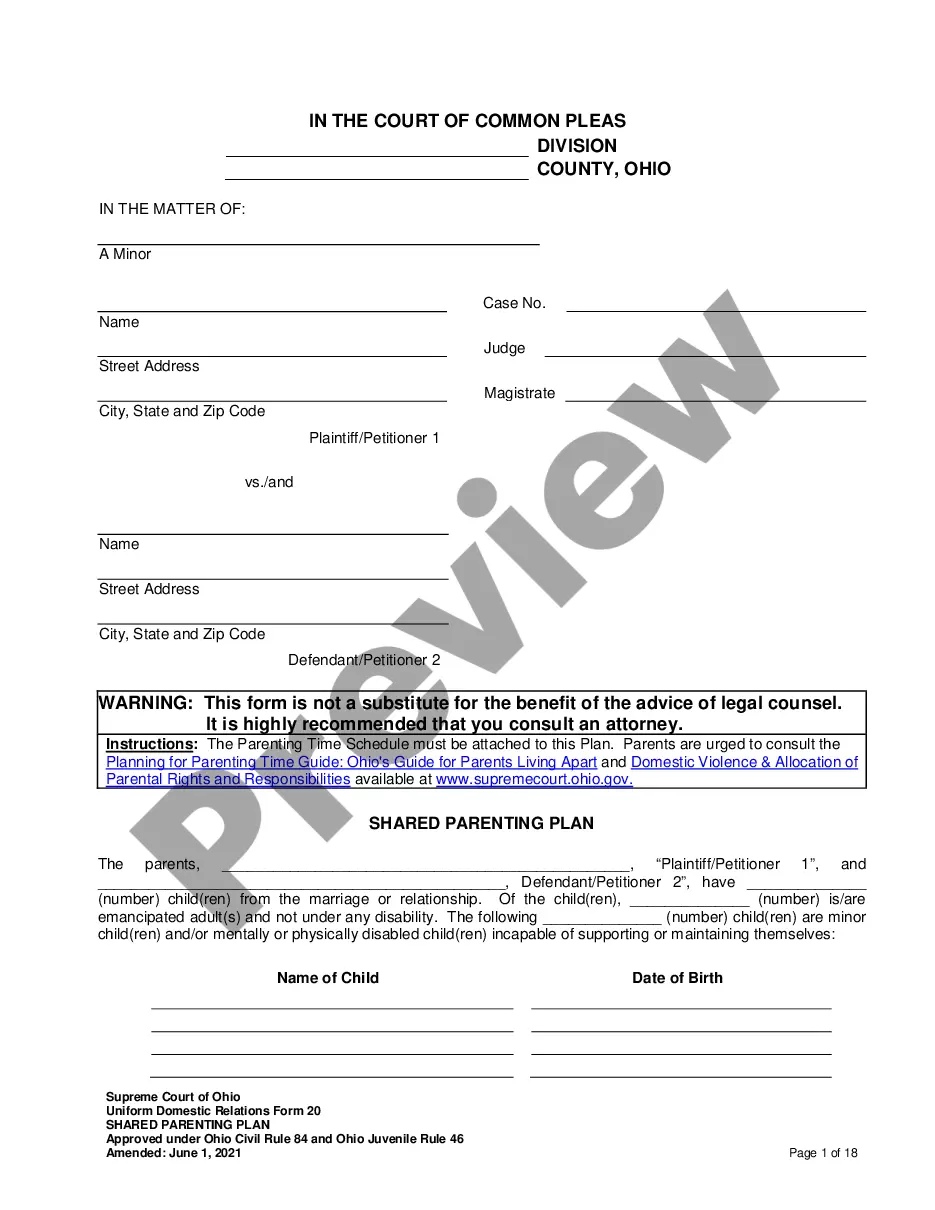
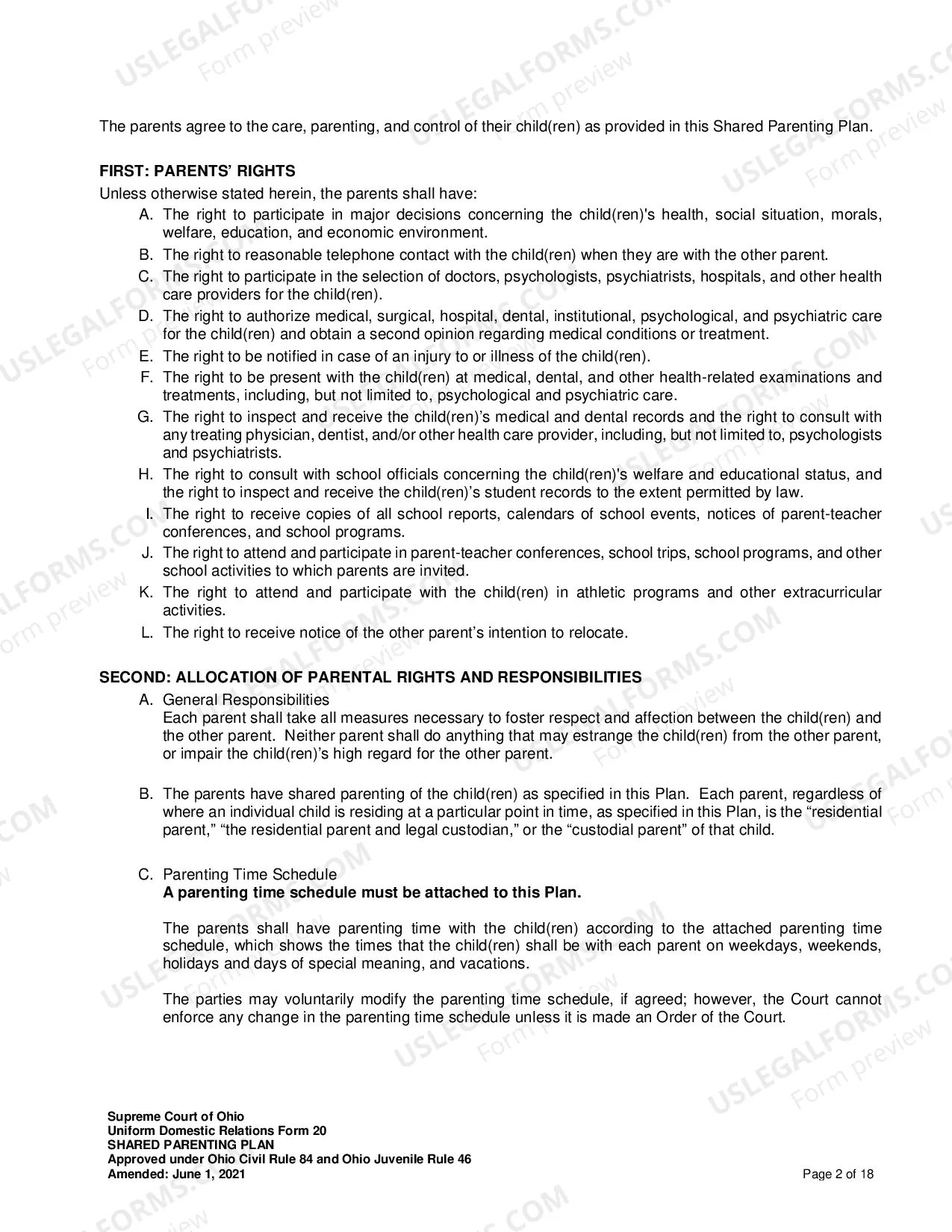
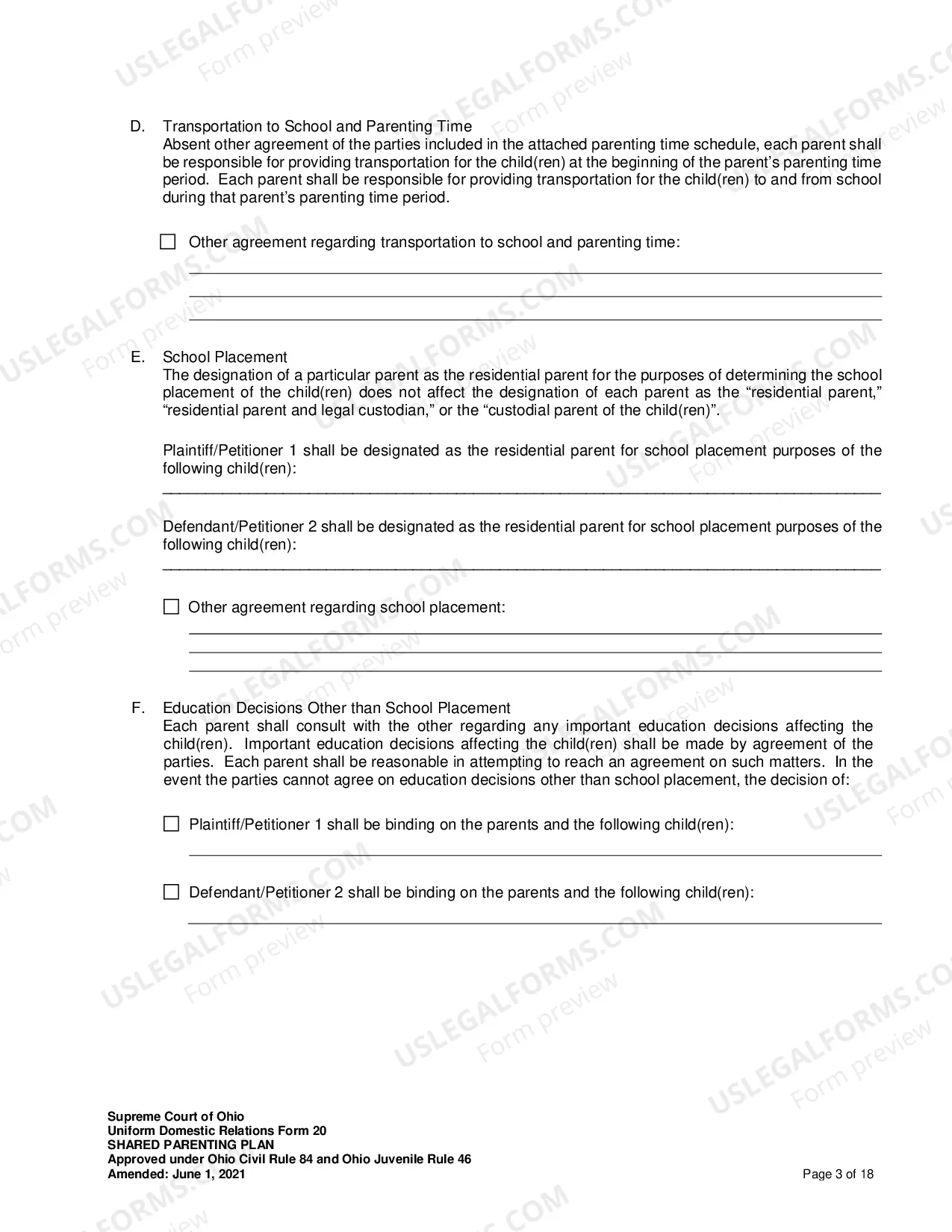
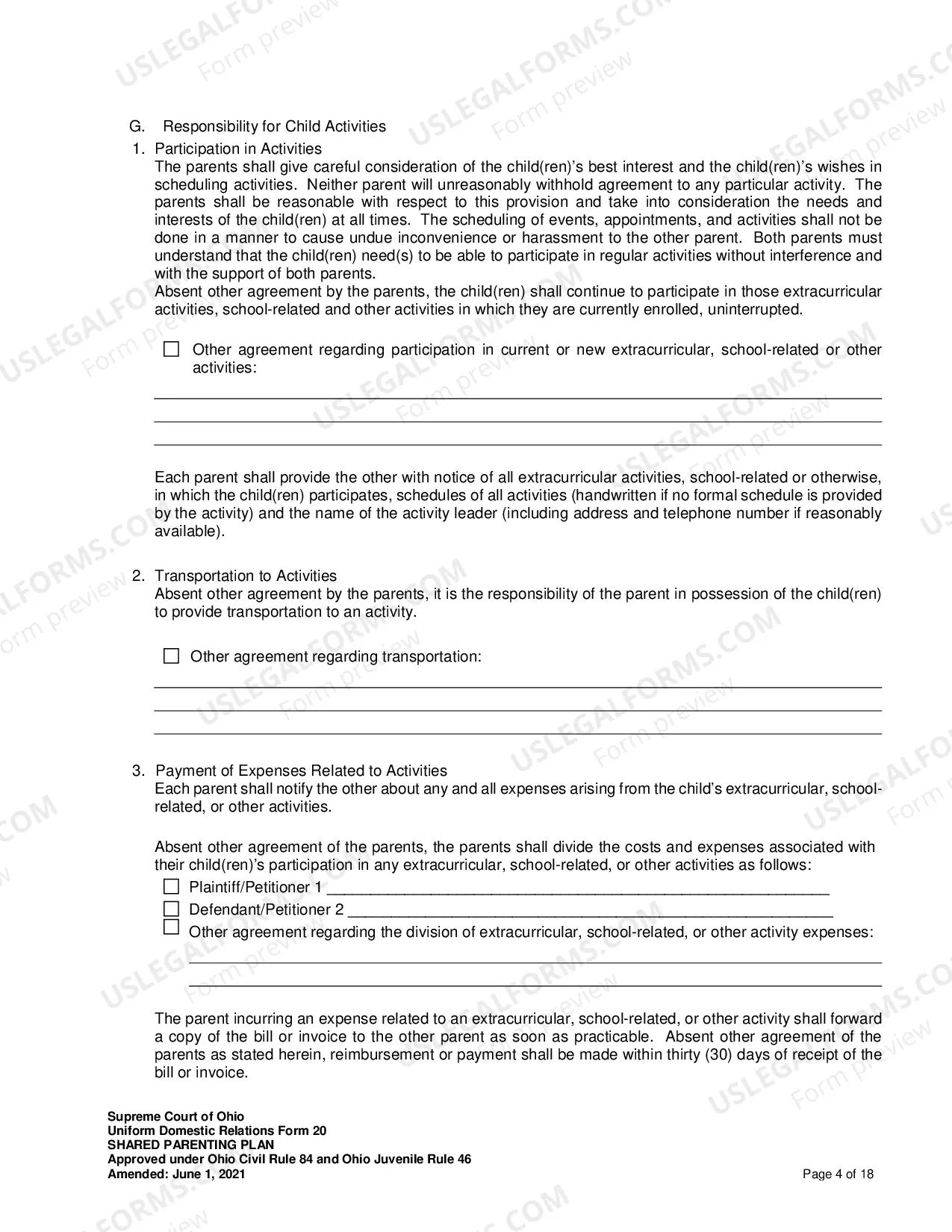
Ohio Parenting Plan Template With Court Order
Description
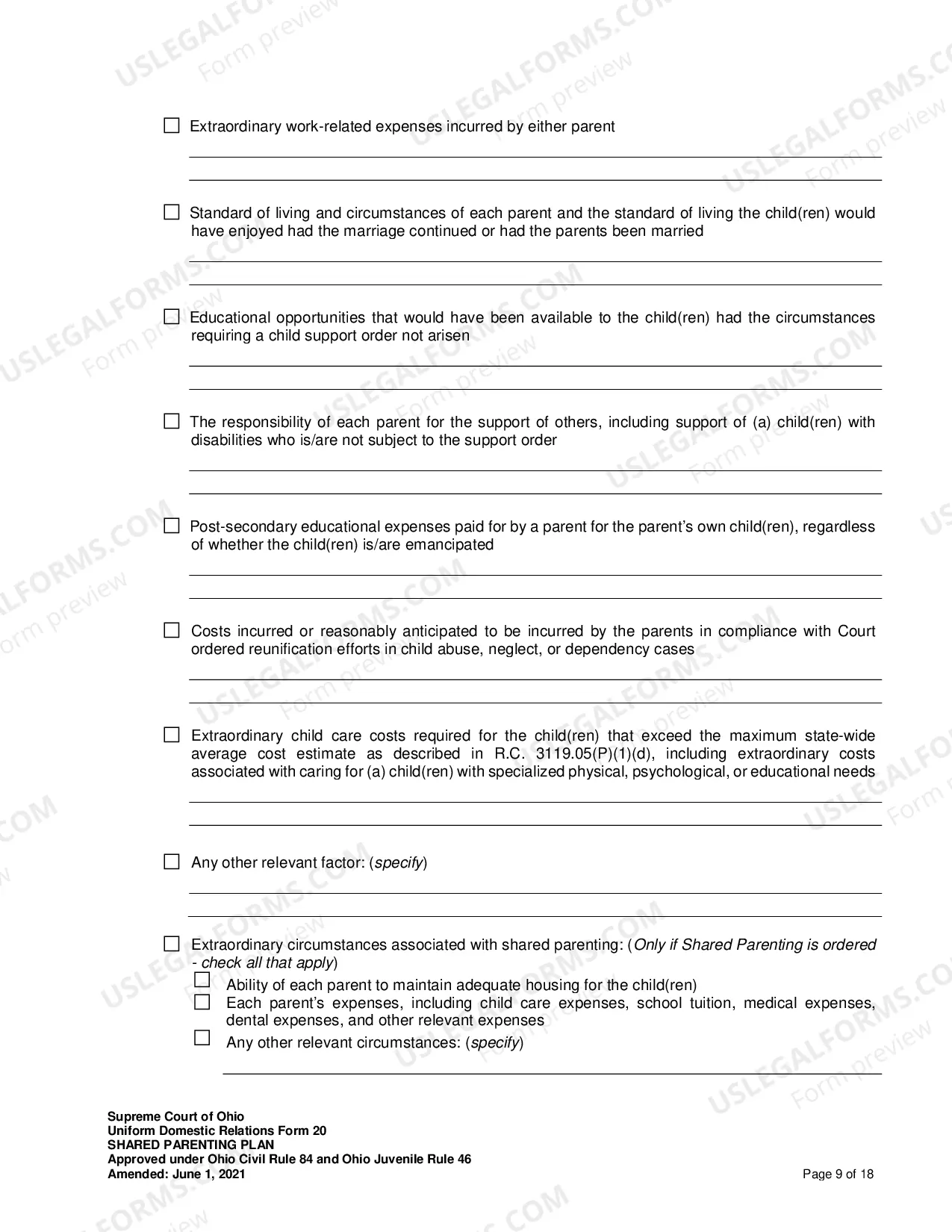
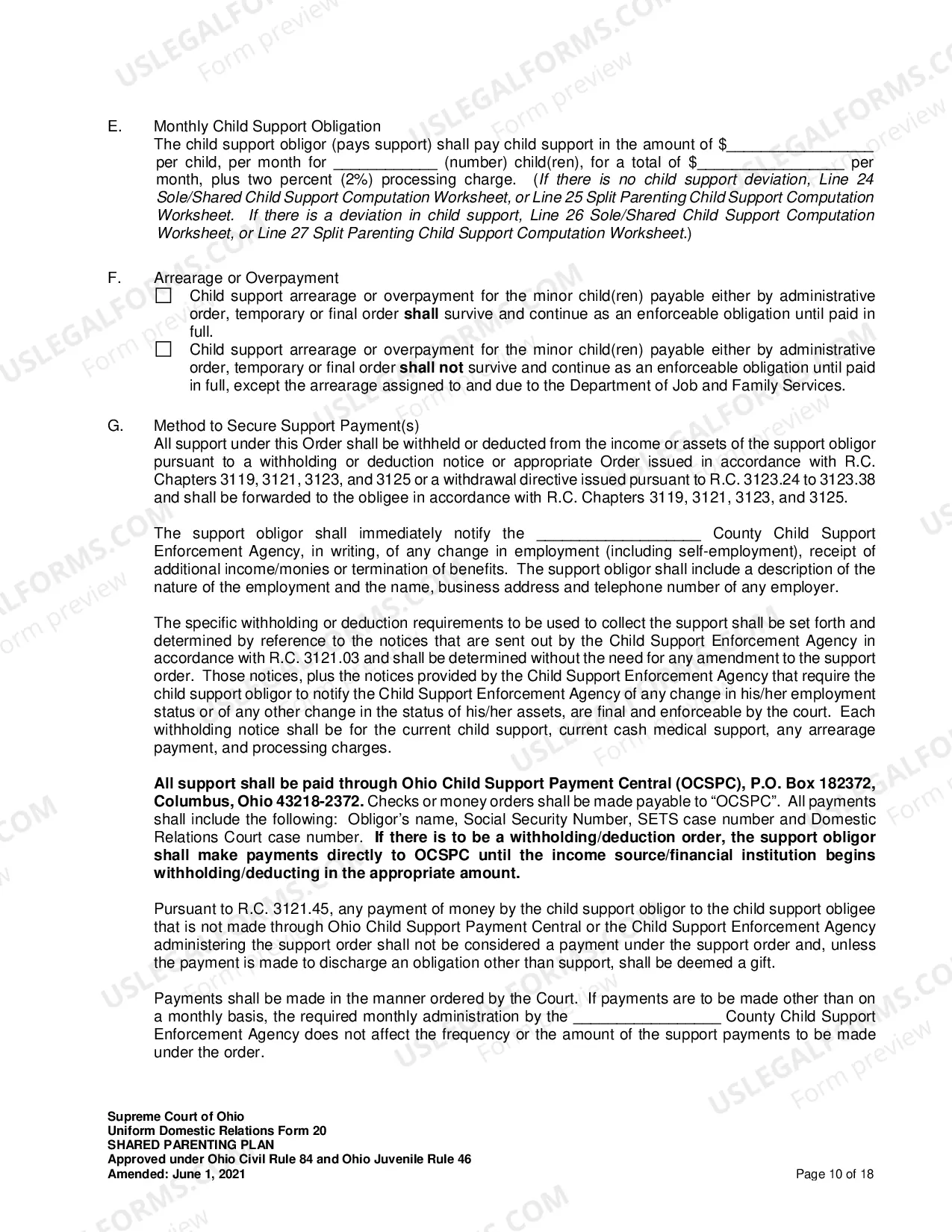

Get your form ready online
Our built-in tools help you complete, sign, share, and store your documents in one place.
Make edits, fill in missing information, and update formatting in US Legal Forms—just like you would in MS Word.
Download a copy, print it, send it by email, or mail it via USPS—whatever works best for your next step.
Sign and collect signatures with our SignNow integration. Send to multiple recipients, set reminders, and more. Go Premium to unlock E-Sign.
If this form requires notarization, complete it online through a secure video call—no need to meet a notary in person or wait for an appointment.
We protect your documents and personal data by following strict security and privacy standards.

Make edits, fill in missing information, and update formatting in US Legal Forms—just like you would in MS Word.

Download a copy, print it, send it by email, or mail it via USPS—whatever works best for your next step.

Sign and collect signatures with our SignNow integration. Send to multiple recipients, set reminders, and more. Go Premium to unlock E-Sign.

If this form requires notarization, complete it online through a secure video call—no need to meet a notary in person or wait for an appointment.

We protect your documents and personal data by following strict security and privacy standards.
Looking for another form?








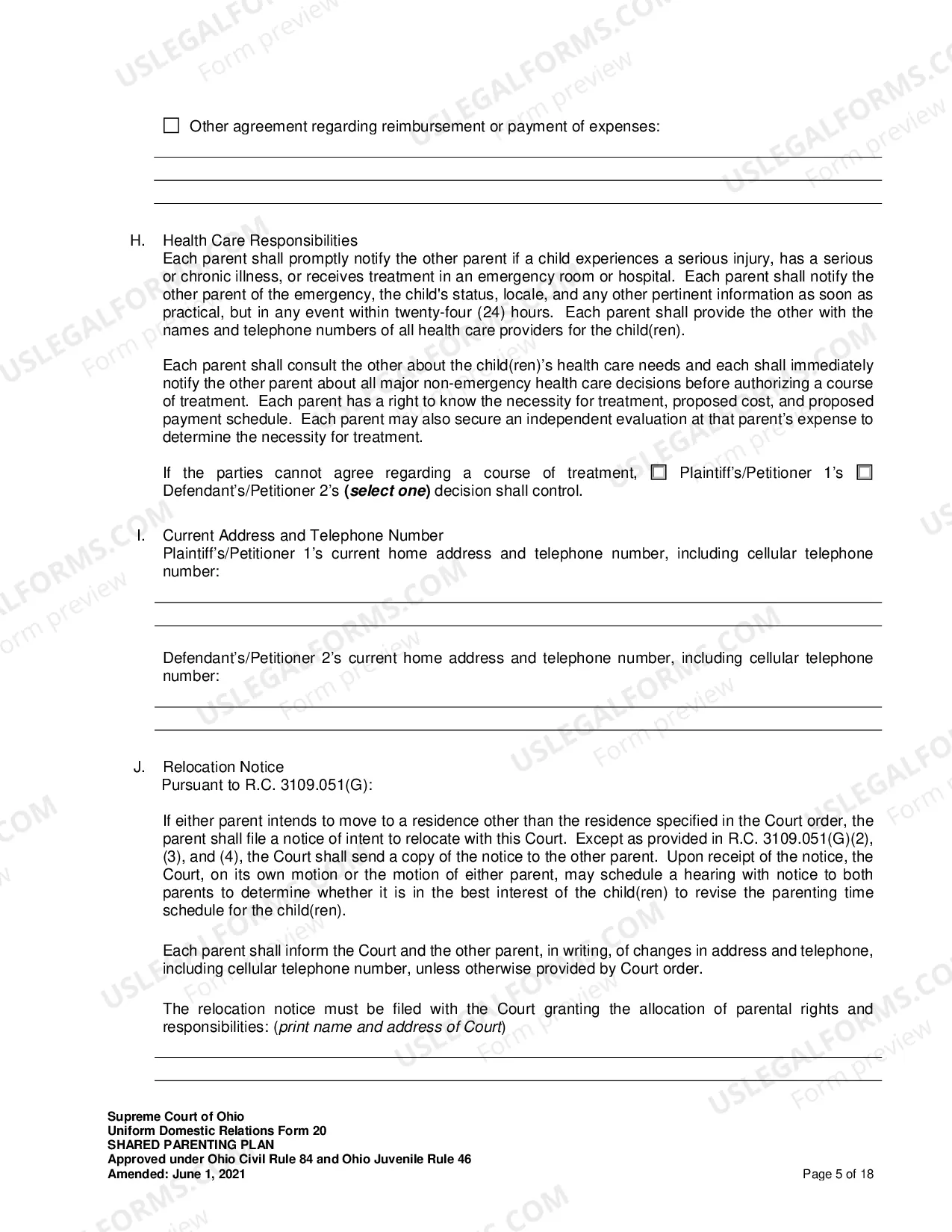
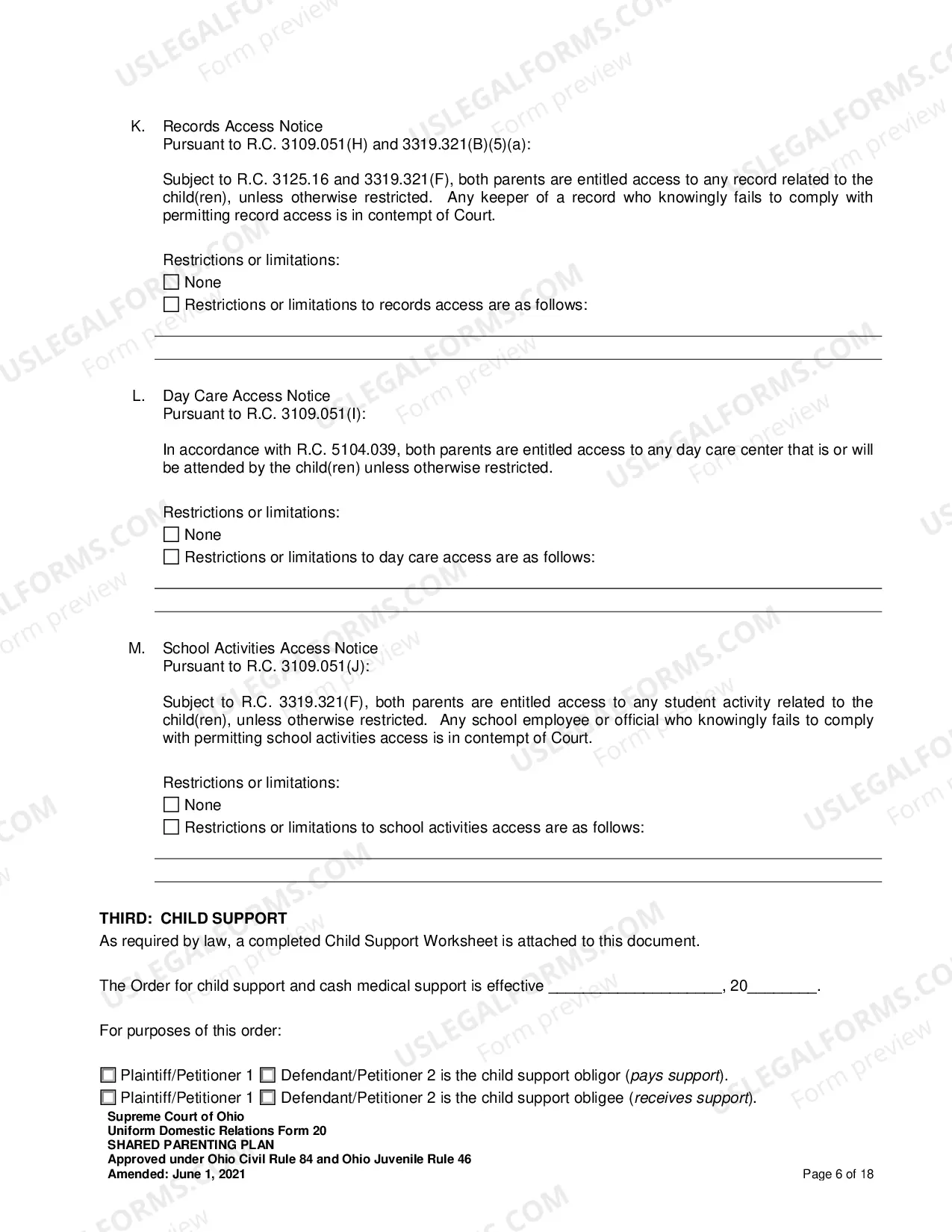
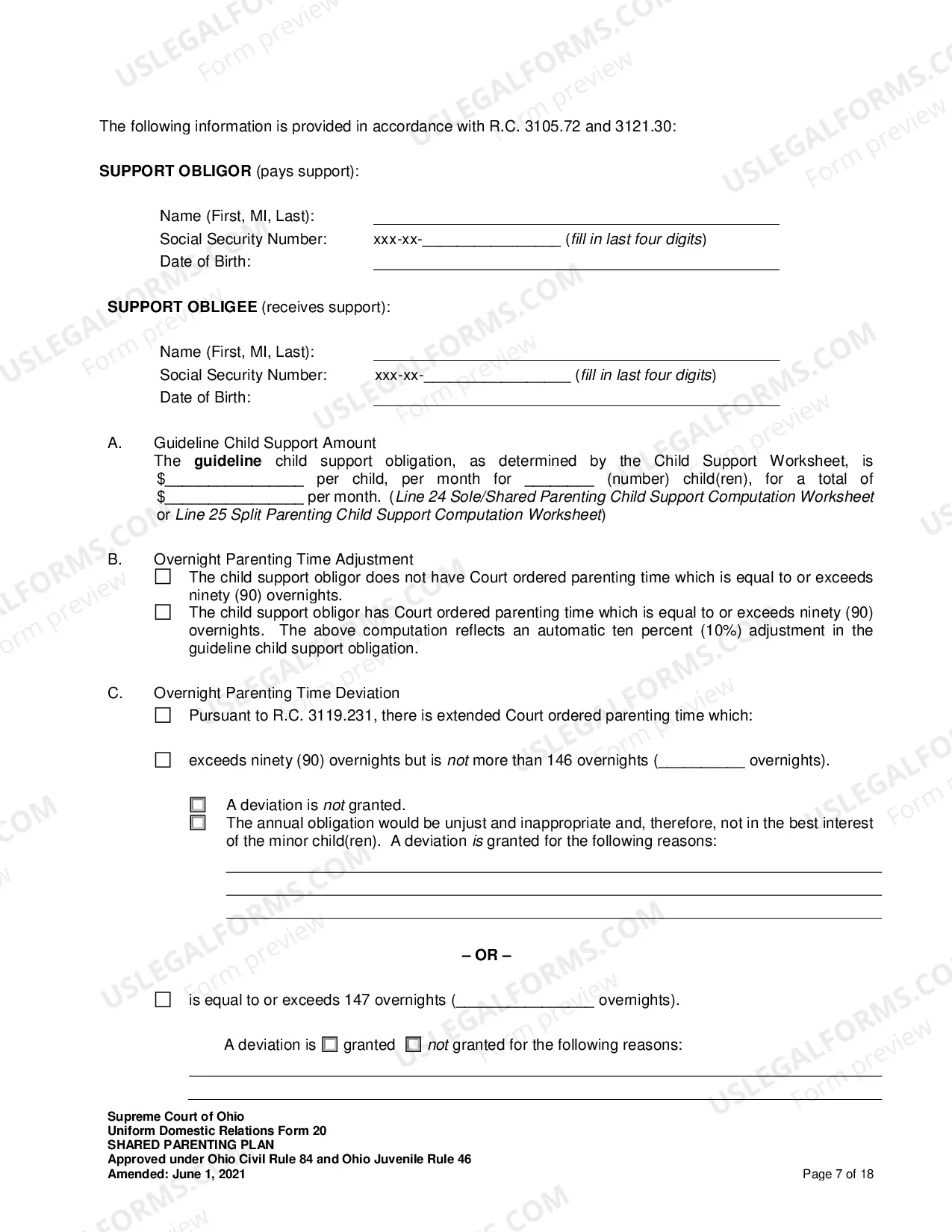
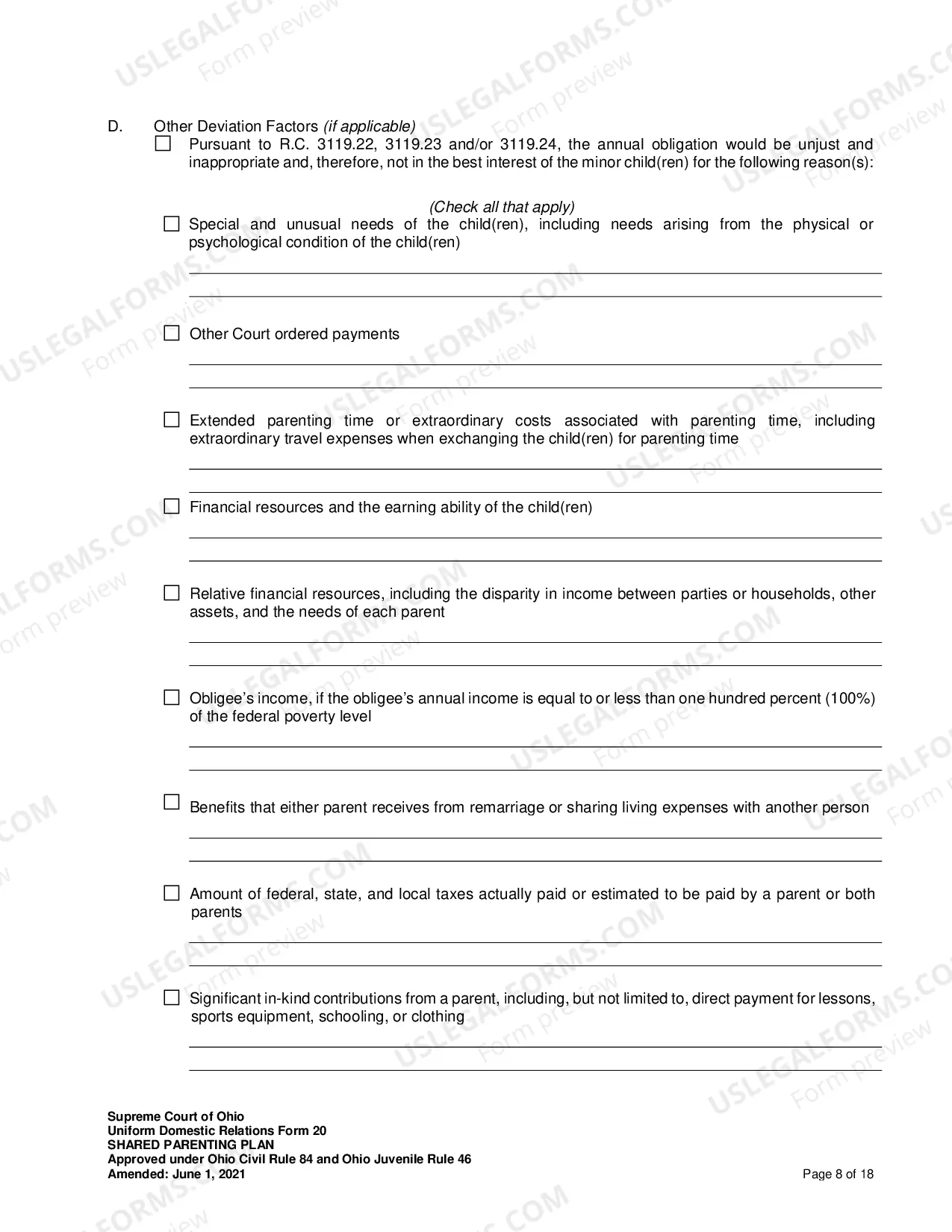
How to fill out Ohio Shared Parenting Plan?
The Ohio Parenting Plan Template With Court Directive you encounter on this page is a reusable legal document crafted by experienced attorneys in accordance with national and local laws.
For over 25 years, US Legal Forms has supplied individuals, businesses, and legal experts with more than 85,000 confirmed, state-specific documents for any commercial and personal situation. It’s the quickest, simplest, and most trustworthy method to acquire the forms you require, as the service ensures bank-level data safety and anti-malware safeguards.
Choose the format you desire for your Ohio Parenting Plan Template With Court Directive (PDF, DOCX, RTF) and download the sample to your device. Fill out and sign the documents. Print the template to fill it out by hand. Alternatively, use an online multifunctional PDF editor to quickly and accurately complete and sign your form with an eSignature. Download your documents again as needed. Use the same document again when required. Access the My documents tab in your profile to redownload any previously downloaded forms. Register for US Legal Forms to have authenticated legal templates for all of life’s circumstances at your fingertips.
- Search for the document you require and examine it.
- Browse through the file you looked for and preview it or check the form description to confirm it meets your needs. If it doesn’t, utilize the search bar to find the appropriate one. Click Buy Now once you have located the template you require.
- Select and Log In.
- Pick the pricing plan that fits you and set up an account. Use PayPal or a credit card to make a swift payment. If you already possess an account, Log In and check your subscription to proceed.
- Acquire the editable template.
Form popularity
FAQ
In an 80/20 custody arrangement, the parent with primary custody typically has the child for about 292 overnights per year, while the other parent has around 73 overnights. This distribution can influence various factors, including child support calculations. To formalize this arrangement, consider utilizing an Ohio parenting plan template with court order, which can clearly outline the custody schedule.
The 80/20 rule for custody refers to a situation where one parent has the child 80% of the time, while the other parent has 20%. This arrangement can affect child support obligations and parenting time. If you are navigating such a situation, an Ohio parenting plan template with court order can assist in documenting the custody arrangement and ensuring both parents understand their rights.
A parenting plan in Ohio outlines how parents will work together to raise their child, detailing custody agreements, visitation schedules, and decision-making responsibilities. A shared parenting plan, on the other hand, emphasizes shared responsibilities and equal involvement from both parents. Using an Ohio parenting plan template with court order can help clarify these roles and create a solid foundation for co-parenting.
One of the biggest mistakes in a custody battle is failing to prioritize the child's well-being. Parents may become overly focused on their own desires, which can negatively impact their case. To avoid this, consider using an Ohio parenting plan template with court order to ensure that the child's needs are front and center in your strategy.
Child custody in Nebraska is determined based on the best interests of the child. Courts consider various factors, including each parent's ability to provide for the child's needs and the child's relationship with both parents. If you are creating a custody arrangement, utilizing an Ohio parenting plan template with court order can provide a structured approach to presenting your case.
To prove parental manipulation in court, you should gather evidence that demonstrates the other parent's behavior. This can include documented communications, witness testimonies, and any relevant incidents that illustrate manipulation. Using an Ohio parenting plan template with court order can help outline expectations and responsibilities, making it easier to identify any violations.
Despite the state's preference for joint custody, courts do award sole custody when it's best for the children, or when parents agree on it.
Complete a "Complaint for Parentage, Allocation of Parental Rights and Responsibilities (Custody), Parenting Time (Companionship and Visitation)" form. This form is available at supremecourt.ohio.gov. By filling out this form, you can request a parenting plan and child support obligation from the court.
In Ohio, ?allocation of parental rights,? commonly called custody, is the legal right and responsibility to care for and make decisions for a child. If you have an existing custody order, you have to go through the court to change it.
Joint legal custody is the most common custody arrangement granted by courts. Why is that? One of the most significant advantages of joint custody is that a child will grow up with influence and input from both parents.