Ohio Parenting Plan Template For Interview
Description
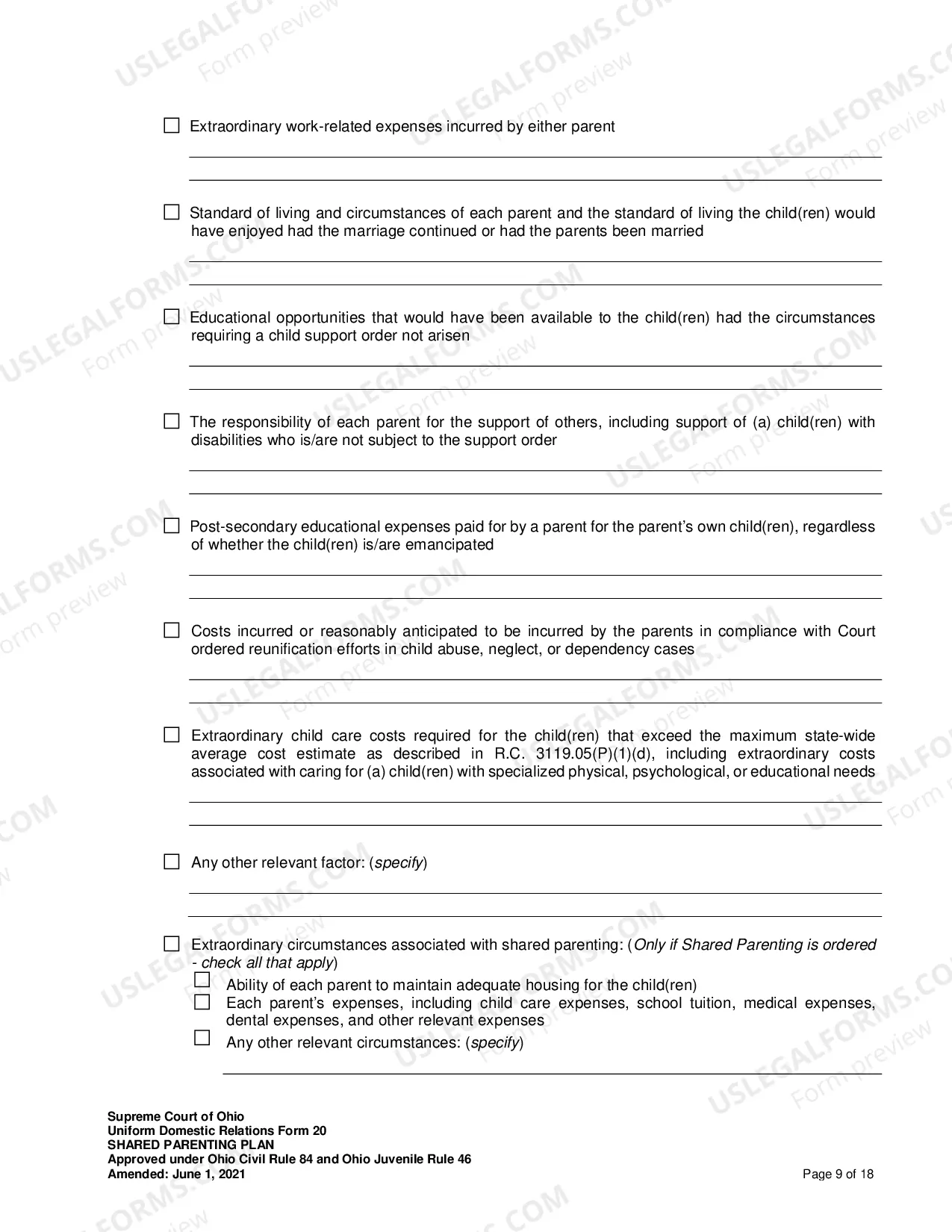
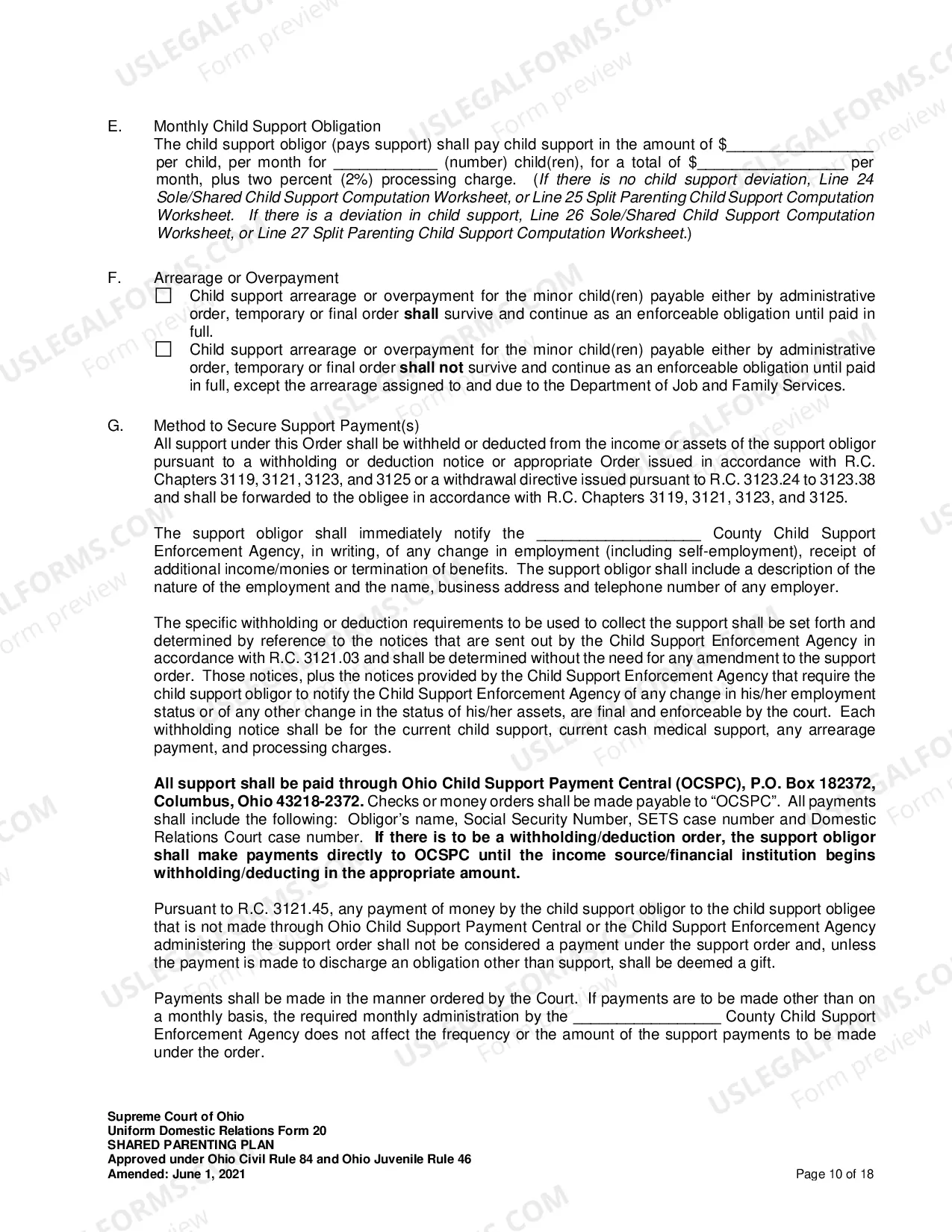

Get your form ready online
Our built-in tools help you complete, sign, share, and store your documents in one place.
Make edits, fill in missing information, and update formatting in US Legal Forms—just like you would in MS Word.
Download a copy, print it, send it by email, or mail it via USPS—whatever works best for your next step.
Sign and collect signatures with our SignNow integration. Send to multiple recipients, set reminders, and more. Go Premium to unlock E-Sign.
If this form requires notarization, complete it online through a secure video call—no need to meet a notary in person or wait for an appointment.
We protect your documents and personal data by following strict security and privacy standards.

Make edits, fill in missing information, and update formatting in US Legal Forms—just like you would in MS Word.

Download a copy, print it, send it by email, or mail it via USPS—whatever works best for your next step.

Sign and collect signatures with our SignNow integration. Send to multiple recipients, set reminders, and more. Go Premium to unlock E-Sign.

If this form requires notarization, complete it online through a secure video call—no need to meet a notary in person or wait for an appointment.

We protect your documents and personal data by following strict security and privacy standards.
Looking for another form?




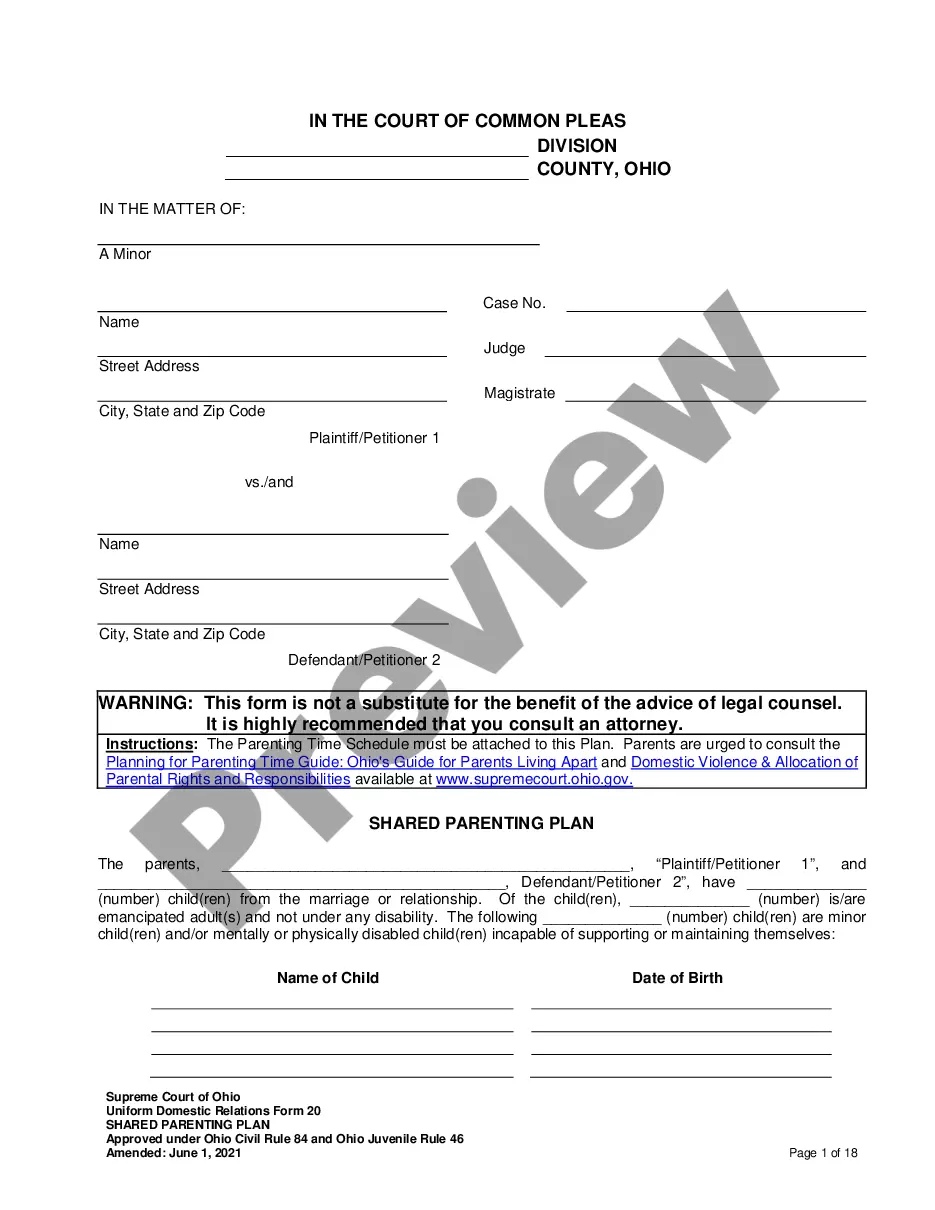
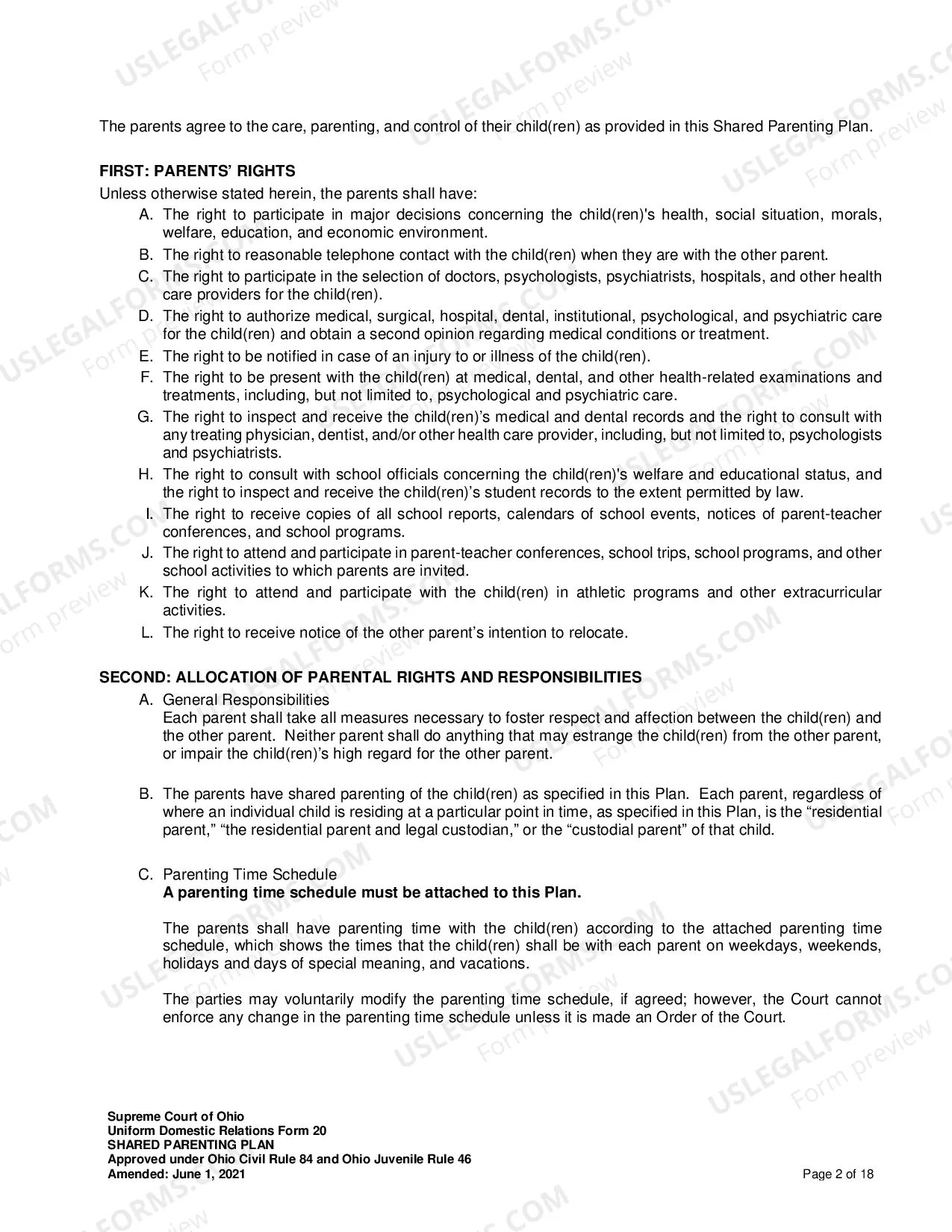
How to fill out Ohio Shared Parenting Plan?
Obtaining a reliable location to access the most up-to-date and suitable legal templates is a significant part of dealing with bureaucracy. Locating the correct legal documents requires precision and carefulness, which is why it is crucial to obtain examples of the Ohio Parenting Plan Template For Interview exclusively from reputable sources, such as US Legal Forms. An incorrect template will consume your time and hinder the process you are facing. With US Legal Forms, you have minimal concerns. You can view and understand all the specifics about the document’s application and relevance for your situation and in your state or locality.
Follow these steps to complete your Ohio Parenting Plan Template For Interview.
Once you have the form on your device, you may edit it with the editor or print it and fill it out manually. Eliminate the stress that comes with your legal paperwork. Explore the extensive US Legal Forms collection where you can find legal templates, assess their applicability to your situation, and download them instantly.
- Utilize the library navigation or search bar to find your example.
- Review the form’s description to verify if it aligns with the requirements of your state and region.
- Examine the form preview, if accessible, to ensure the template is indeed the one you seek.
- Return to the search and find the correct template if the Ohio Parenting Plan Template For Interview does not meet your needs.
- When you are confident about the form’s relevance, download it.
- If you are a registered user, click Log in to verify and access your chosen forms in My documents.
- If you do not yet have an account, click Buy now to acquire the form.
- Choose the pricing plan that fits your requirements.
- Proceed to the registration to complete your purchase.
- Complete your purchase by selecting a payment method (credit card or PayPal).
- Choose the document format for downloading Ohio Parenting Plan Template For Interview.
Form popularity
FAQ
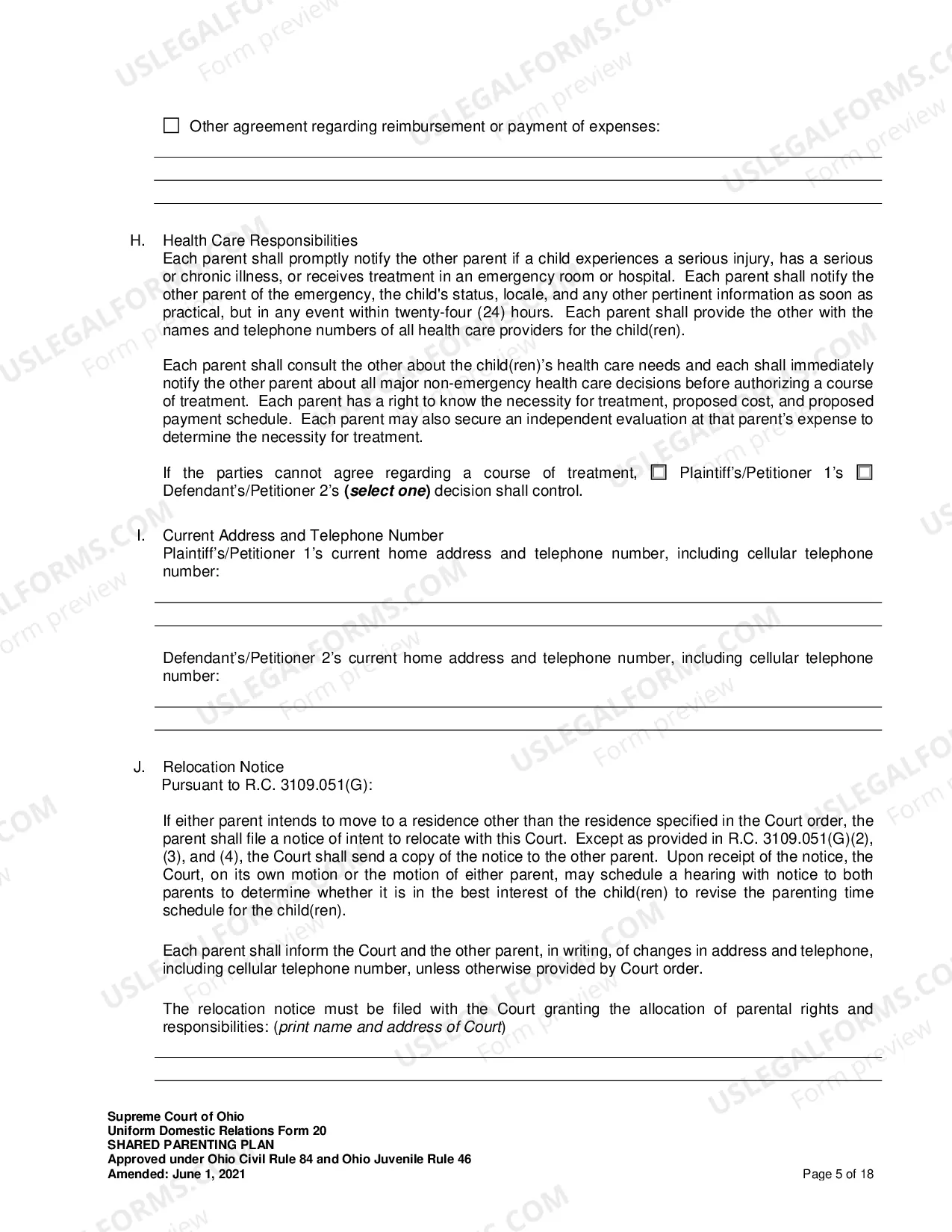
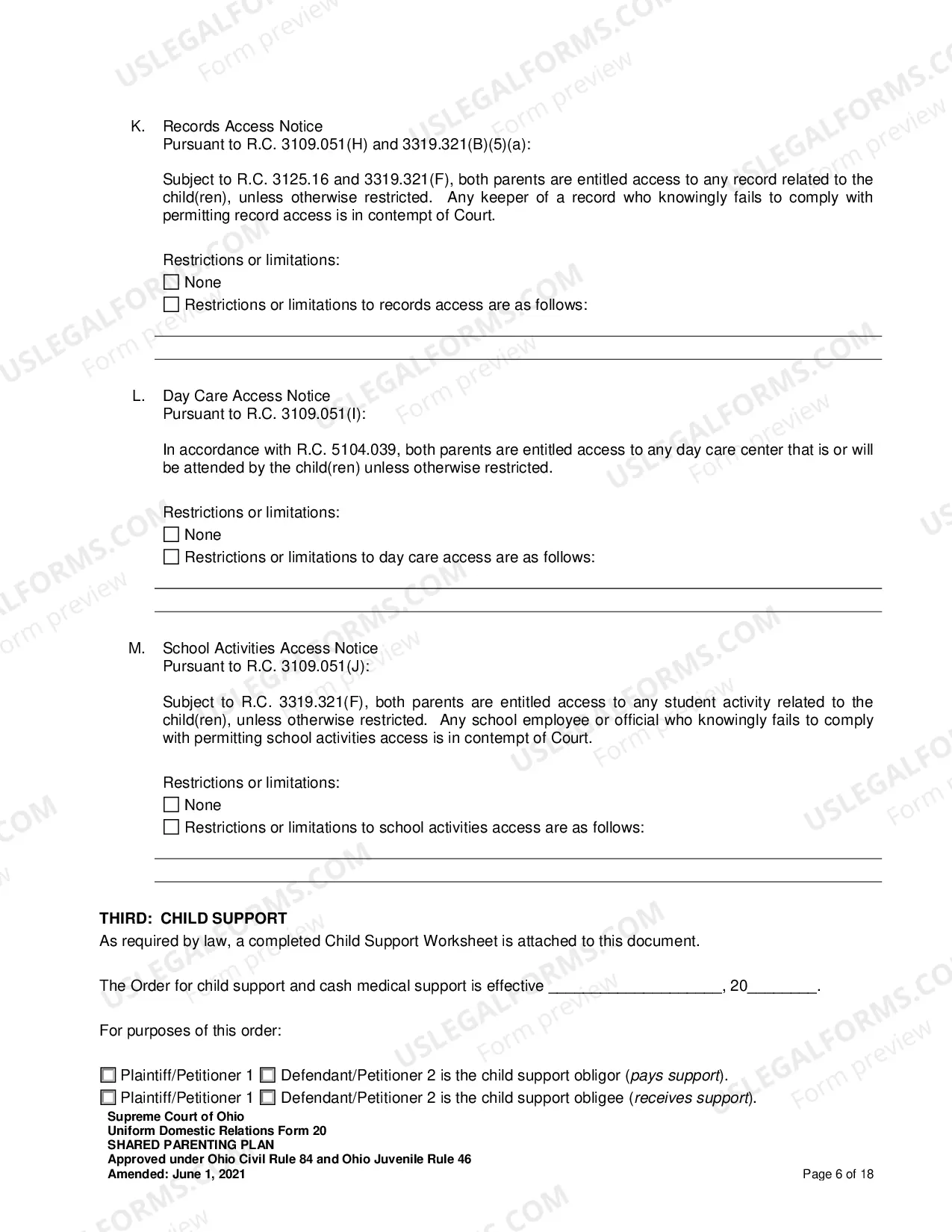
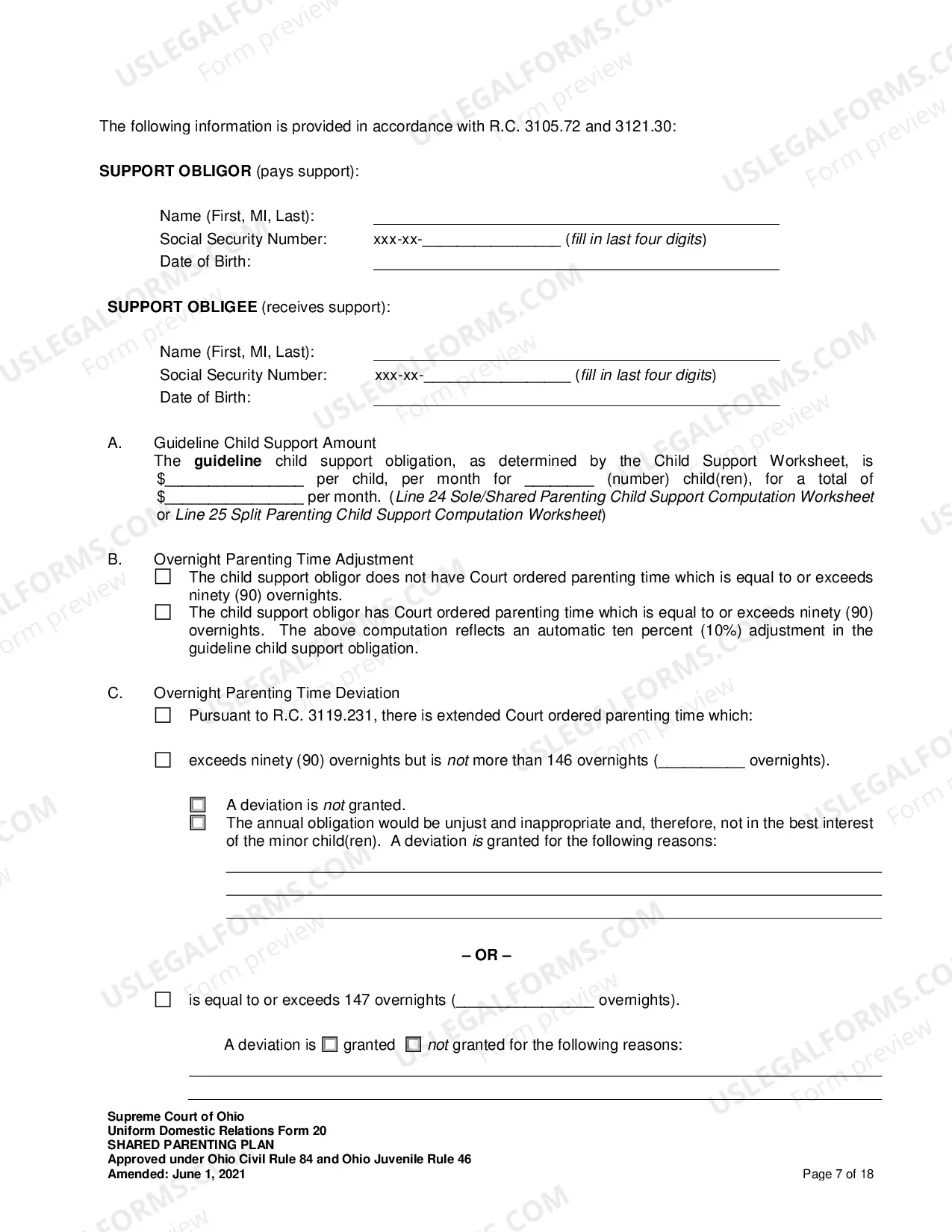
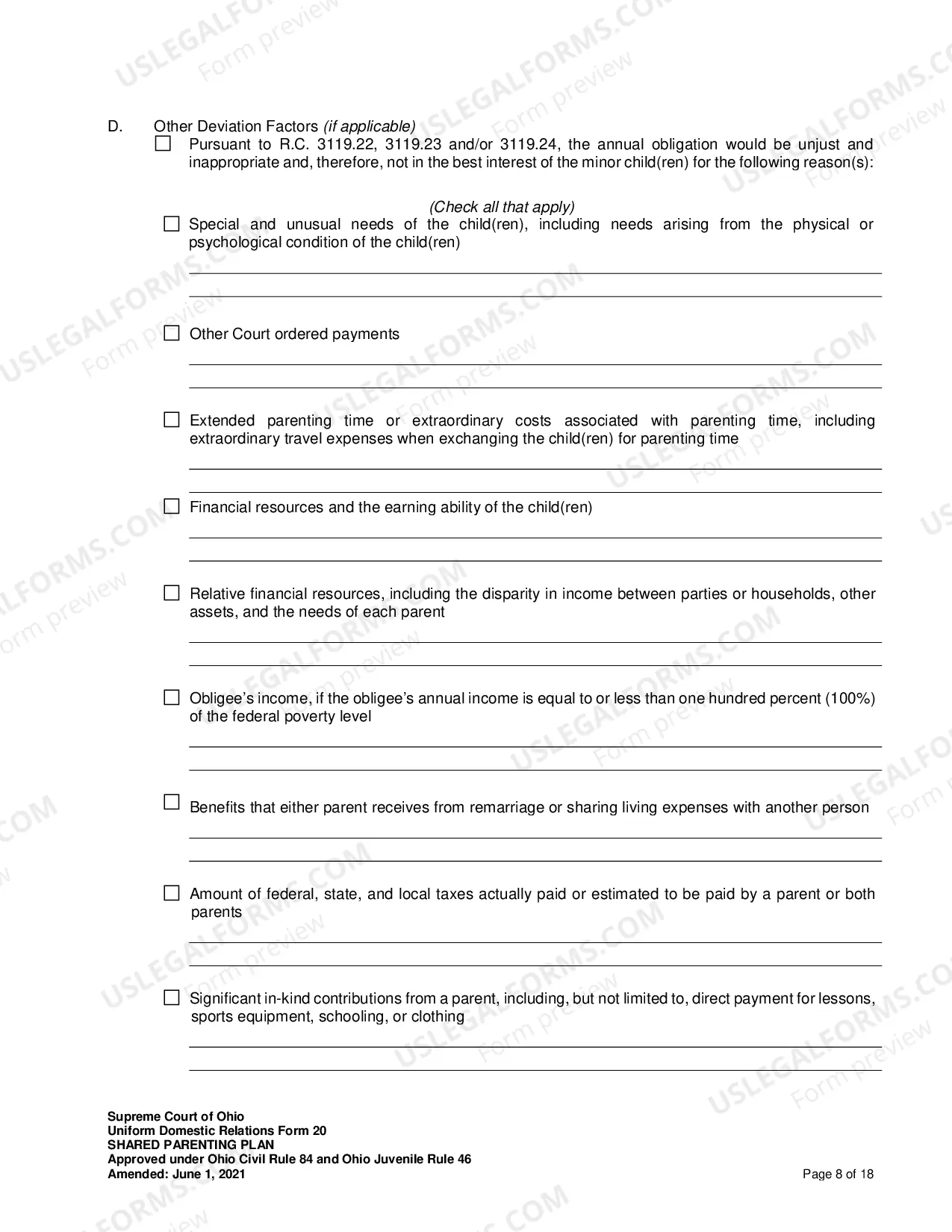
Completing a parenting plan involves outlining your parenting goals, schedules, and responsibilities. Start by discussing important topics with your co-parent, such as education, healthcare, and visitation. Utilize an Ohio parenting plan template for interview to guide you through the process, ensuring you cover all necessary aspects. Once you finalize your plan, review it together to confirm that it meets the needs of your children and both parents.
The 70 30 rule in parenting refers to a guideline used to determine the division of parenting time between two parents. Under this rule, one parent typically has the child for 70% of the time, while the other parent has 30%. This arrangement can offer stability for children while still allowing meaningful time with both parents. When creating your Ohio parenting plan template for interview, consider how this rule may fit your unique situation.
The 322 parenting plan is a specific template used in Ohio that outlines how parents will share responsibilities and time with their children. It typically details a three-day on, two-day off schedule, allowing both parents to maintain involvement in their child's life. If you're looking to establish a structured yet flexible arrangement, consider using an Ohio parenting plan template for interview for guidance. This can help you create a plan that suits your family dynamics while ensuring the child's well-being.
Writing a parenting plan involves outlining your parenting goals, schedules, and responsibilities clearly. Start by using an Ohio parenting plan template for interview, which provides a structured format to guide you. Be sure to address key topics such as visitation, education, and healthcare. It’s important to be realistic and flexible, as your plan should adapt to your child's changing needs.
When creating your parenting plan template, consider including specific details about communication methods between parents, schedules for holidays, and decision-making processes regarding your child's education and health. Also, think about including provisions for conflict resolution and adjustments for changes in circumstances. Using an Ohio parenting plan template for interview can help you cover all essential areas, ensuring a comprehensive plan that serves your family's needs.
To file for shared parenting in Ohio, start by completing the necessary forms, including the Ohio parenting plan template for interview. You will then need to file these forms with the court in your county. Additionally, you should submit any required documentation that supports your parenting plan. It’s advisable to consult a legal expert or use resources from uslegalforms to ensure your application is complete and accurate.
A judge will also look at each parent's physical and mental health, the parents' wishes regarding custody, each parent's earning ability, and each parent's willingness to foster a relationship between the child and the other parent.
In most cases, Ohio family court judges prefer shared parenting over sole custody. However, the burden is on the parents and their child custody lawyer to prove to the court that joint custody is in the best interest of the child. That's not always easy.
At 12 years old, your child can have a say in who they would prefer to live with going forward. This measure is sometimes called ?teenage discretion.? The idea is that a child can make logical decisions about how much time they want to spend with each parent.
Trying to earn full custody of your children can be difficult. When you are looking to do what is best for your children, sometimes it can mean having them live with you full-time. Unfortunately, Ohio custody laws do not grant full custody to everyone who applies for it.