Ohio Transfer On Death Affidavit To Trust
Description

Get your form ready online
Our built-in tools help you complete, sign, share, and store your documents in one place.
Make edits, fill in missing information, and update formatting in US Legal Forms—just like you would in MS Word.
Download a copy, print it, send it by email, or mail it via USPS—whatever works best for your next step.
Sign and collect signatures with our SignNow integration. Send to multiple recipients, set reminders, and more. Go Premium to unlock E-Sign.
If this form requires notarization, complete it online through a secure video call—no need to meet a notary in person or wait for an appointment.
We protect your documents and personal data by following strict security and privacy standards.

Make edits, fill in missing information, and update formatting in US Legal Forms—just like you would in MS Word.

Download a copy, print it, send it by email, or mail it via USPS—whatever works best for your next step.

Sign and collect signatures with our SignNow integration. Send to multiple recipients, set reminders, and more. Go Premium to unlock E-Sign.

If this form requires notarization, complete it online through a secure video call—no need to meet a notary in person or wait for an appointment.

We protect your documents and personal data by following strict security and privacy standards.
Looking for another form?


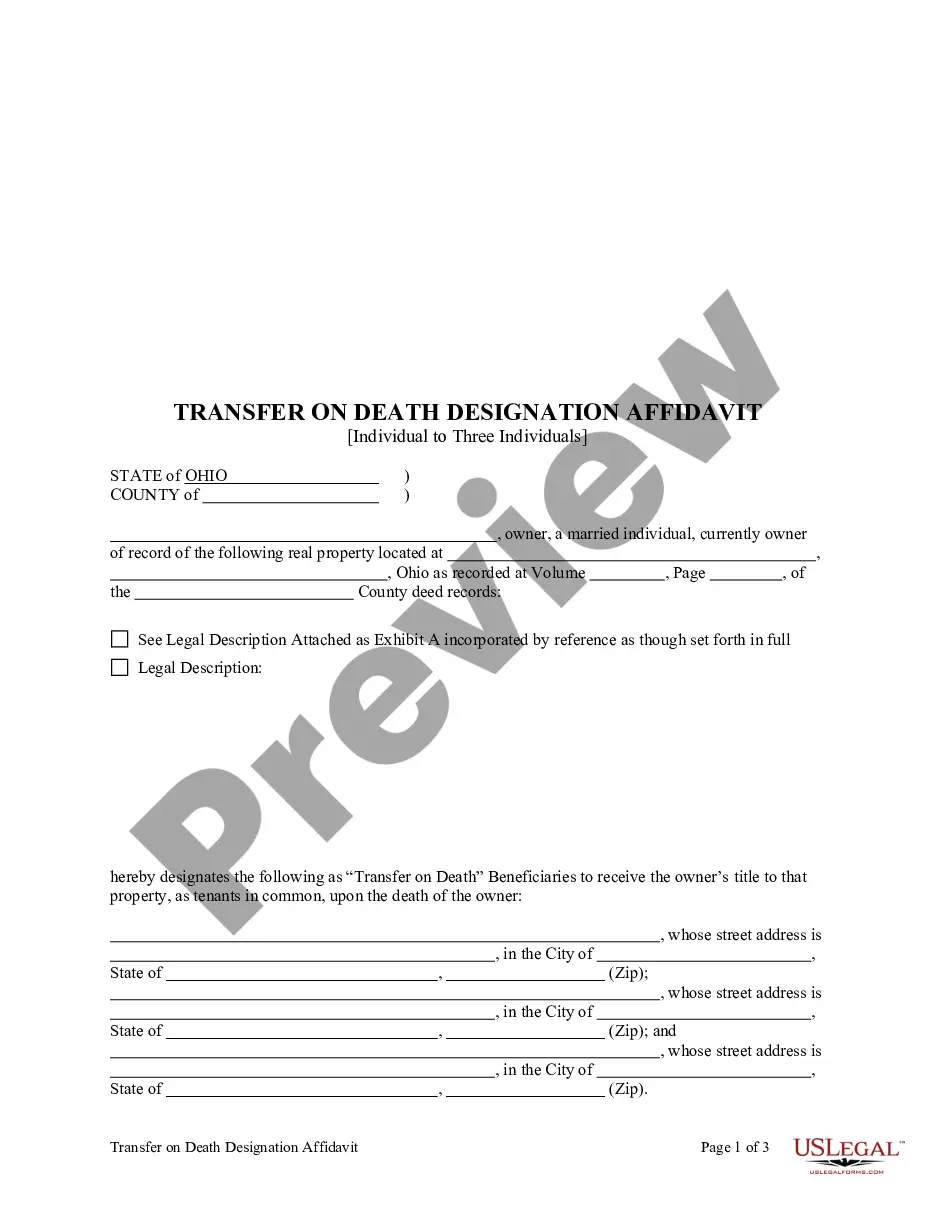
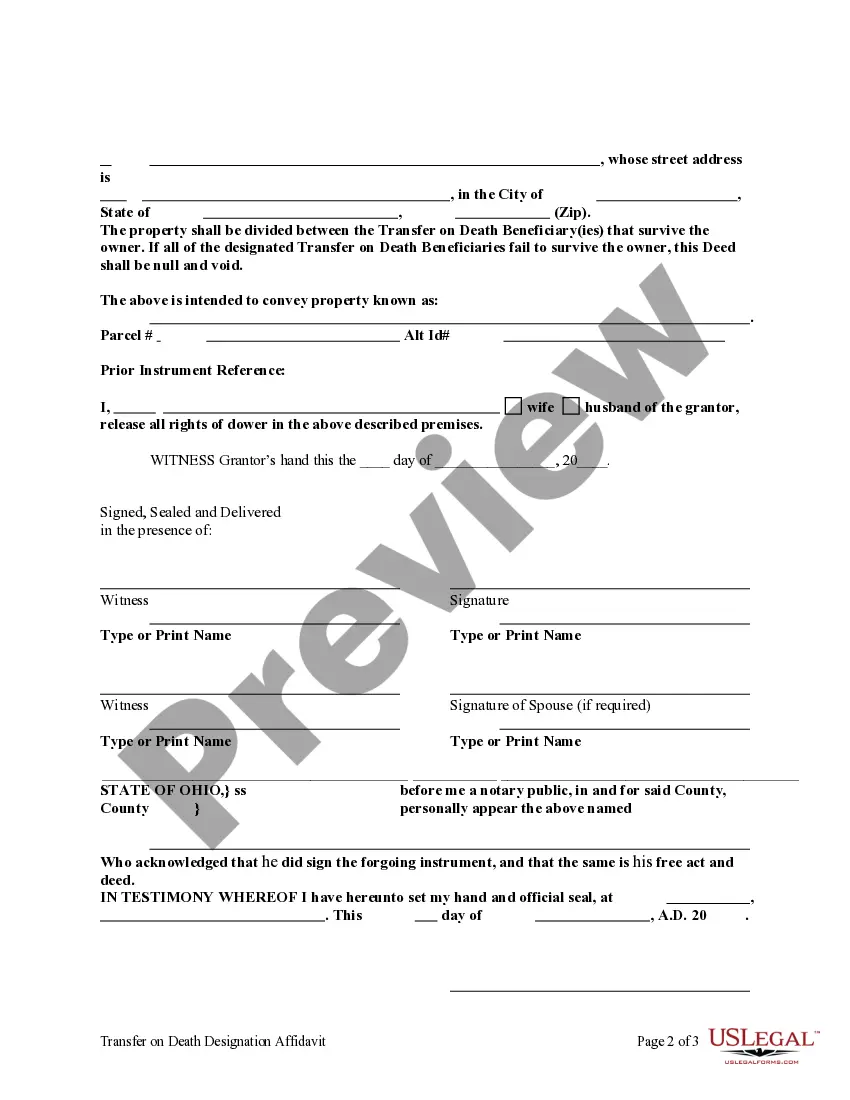
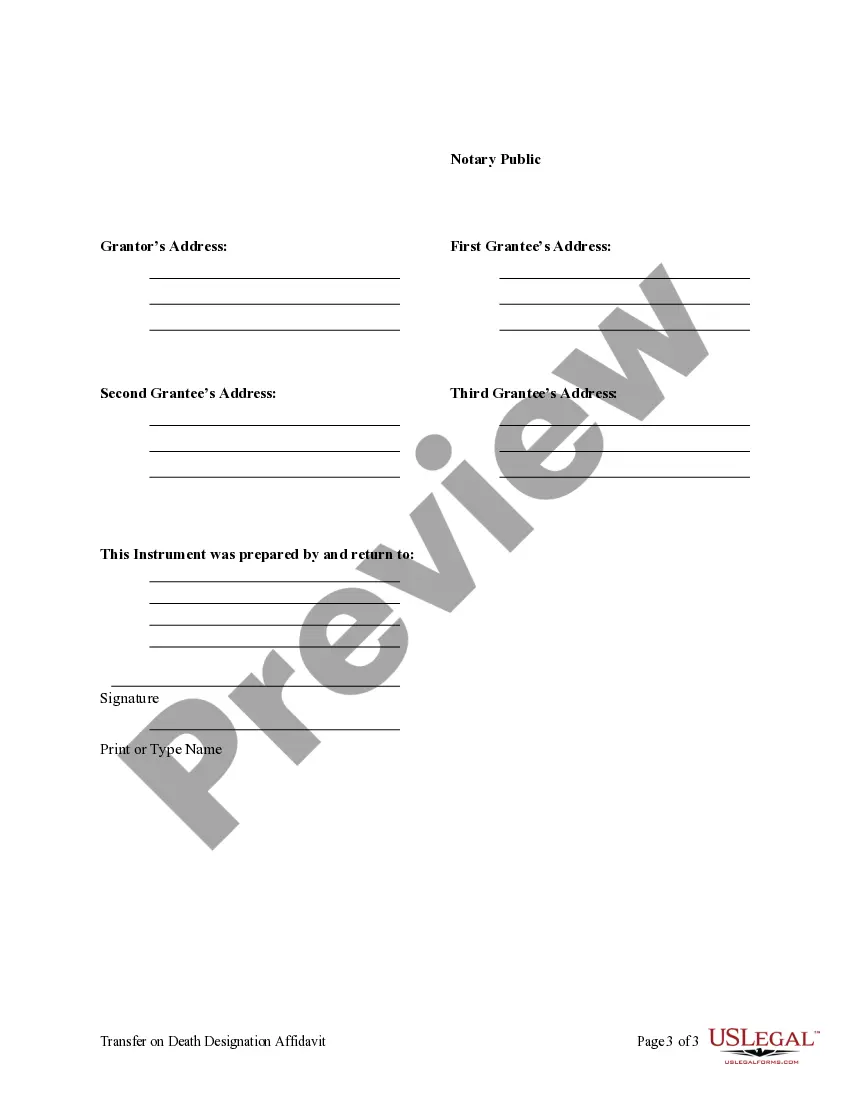
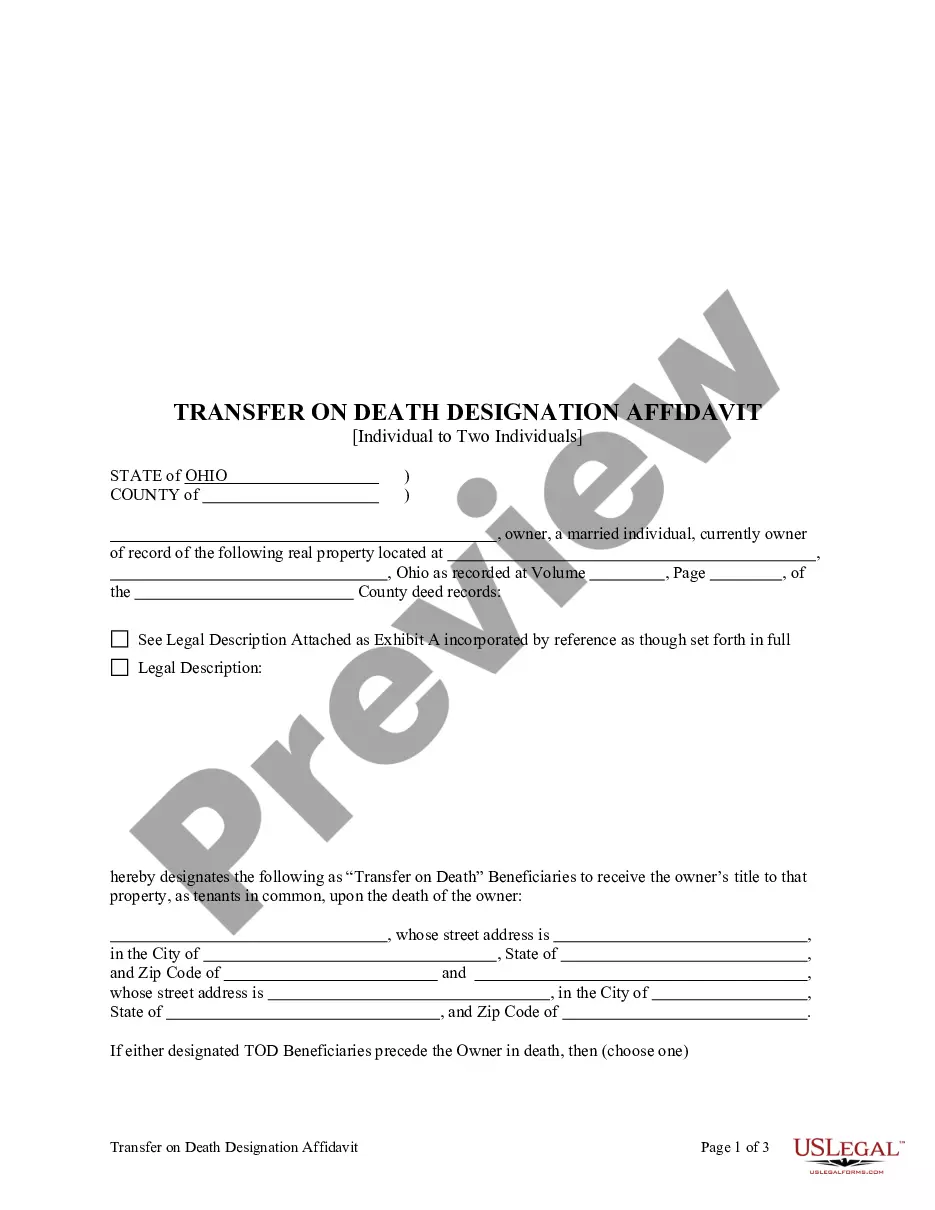
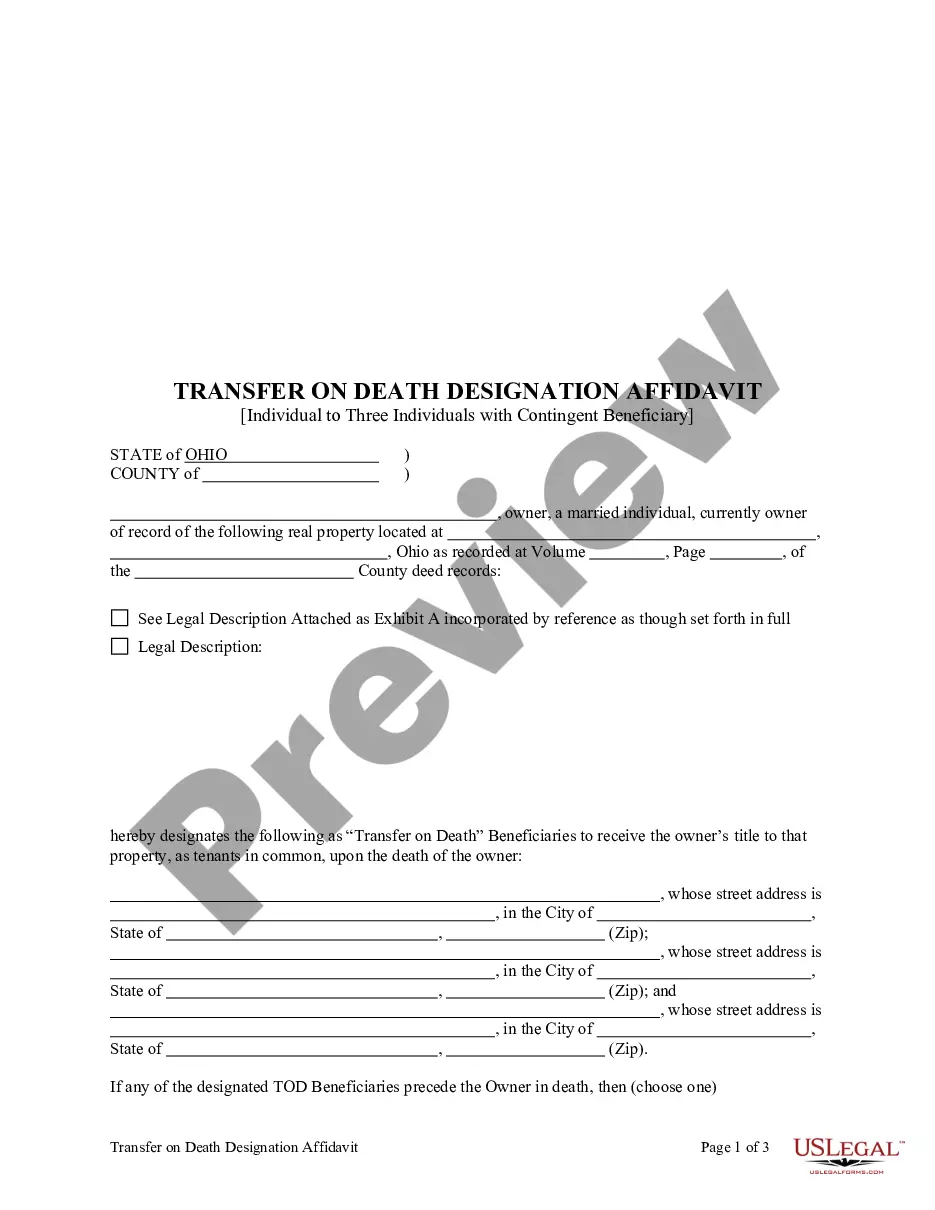
How to fill out Ohio Transfer On Death Designation Affidavit - TOD From Individual To Three Individuals?
When you are required to file the Ohio Transfer On Death Affidavit To Trust to comply with your local state's statutes, there could be several alternatives available to select from.
There is no necessity to verify every document to ensure it meets all the legal requirements if you are a subscriber to US Legal Forms.
It is a reliable source that can assist you in obtaining a reusable and current template on any subject.
Acquiring expertly crafted official documents becomes easy with US Legal Forms. Furthermore, Premium users can also benefit from the robust integrated tools for online document editing and signing. Give it a go today!
- US Legal Forms is the most extensive online database with a collection of over 85,000 ready-to-use documents for business and personal legal situations.
- Each template is verified to comply with the regulations of every state.
- Thus, when you download the Ohio Transfer On Death Affidavit To Trust from our site, you can be assured that you possess a valid and current document.
- Accessing the necessary sample from our platform is incredibly simple.
- If you already have an account, just Log In to the system, confirm that your subscription is active, and save the selected file.
- In the future, you can visit the My documents section in your profile and keep access to the Ohio Transfer On Death Affidavit To Trust at any time.
- If this is your initial experience with our library, please follow the instructions below.
- Browse the suggested page and verify it for compliance with your needs.
Form popularity
FAQ
Yes. Ohio law allows individuals who do not need the estate administration benefits of a trust agreement to avoid Probate on the transfer of real property by executing a legal document called a Transfer-On-Death (TOD) Designation Affidavit. What is a TOD Designation Affidavit?
How to create a Transfer on Death for your homeChoose your recipients. You can choose one or more people to become owner of any home or land that you own.Find a copy of your deed.Complete the TOD for real estate form.Take the form to a notary .Submit the form at your County Recorder's Office.
A TOD designation supersedes a will. For bank accounts, you can set up a similar account known as payable-on-death, sometimes referred to as a Totten trust. Your beneficiaries can't touch the account while you're alive, and you're free to change beneficiaries or close the accounts at any time.
How to create a Transfer on Death for your homeChoose your recipients. You can choose one or more people to become owner of any home or land that you own.Find a copy of your deed.Complete the TOD for real estate form.Take the form to a notary .Submit the form at your County Recorder's Office.
In fact, transfer on death accounts are exposed to all the same income and capital gains taxes when the account owner is alive, as well as estate and inheritance taxes upon the owner's death. Before setting-up a transfer on death account, you should review the tax implications of these accounts.