Divorce With Property With Community
Description


Get your form ready online
Our built-in tools help you complete, sign, share, and store your documents in one place.
Make edits, fill in missing information, and update formatting in US Legal Forms—just like you would in MS Word.
Download a copy, print it, send it by email, or mail it via USPS—whatever works best for your next step.
Sign and collect signatures with our SignNow integration. Send to multiple recipients, set reminders, and more. Go Premium to unlock E-Sign.
If this form requires notarization, complete it online through a secure video call—no need to meet a notary in person or wait for an appointment.
We protect your documents and personal data by following strict security and privacy standards.

Make edits, fill in missing information, and update formatting in US Legal Forms—just like you would in MS Word.

Download a copy, print it, send it by email, or mail it via USPS—whatever works best for your next step.

Sign and collect signatures with our SignNow integration. Send to multiple recipients, set reminders, and more. Go Premium to unlock E-Sign.

If this form requires notarization, complete it online through a secure video call—no need to meet a notary in person or wait for an appointment.

We protect your documents and personal data by following strict security and privacy standards.
Looking for another form?







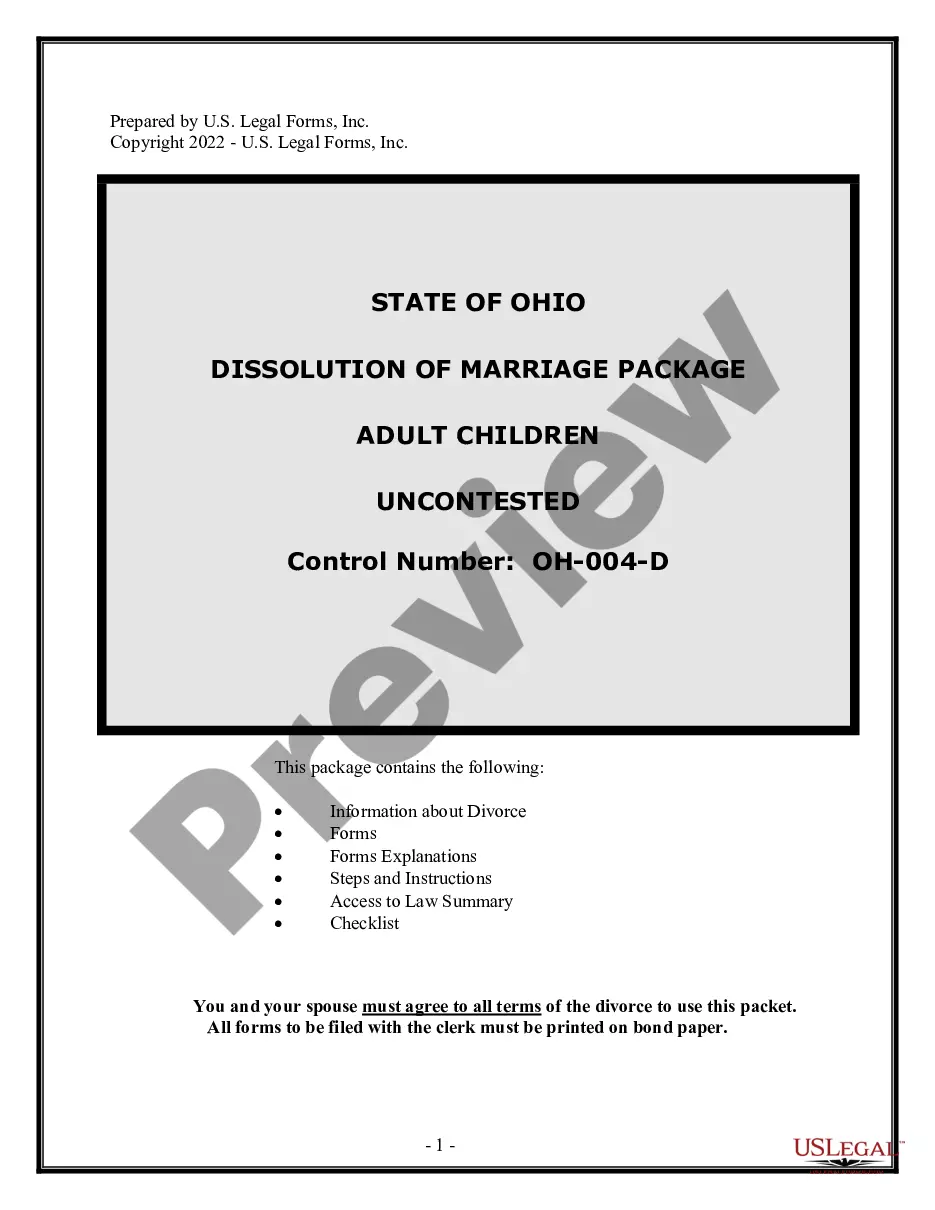
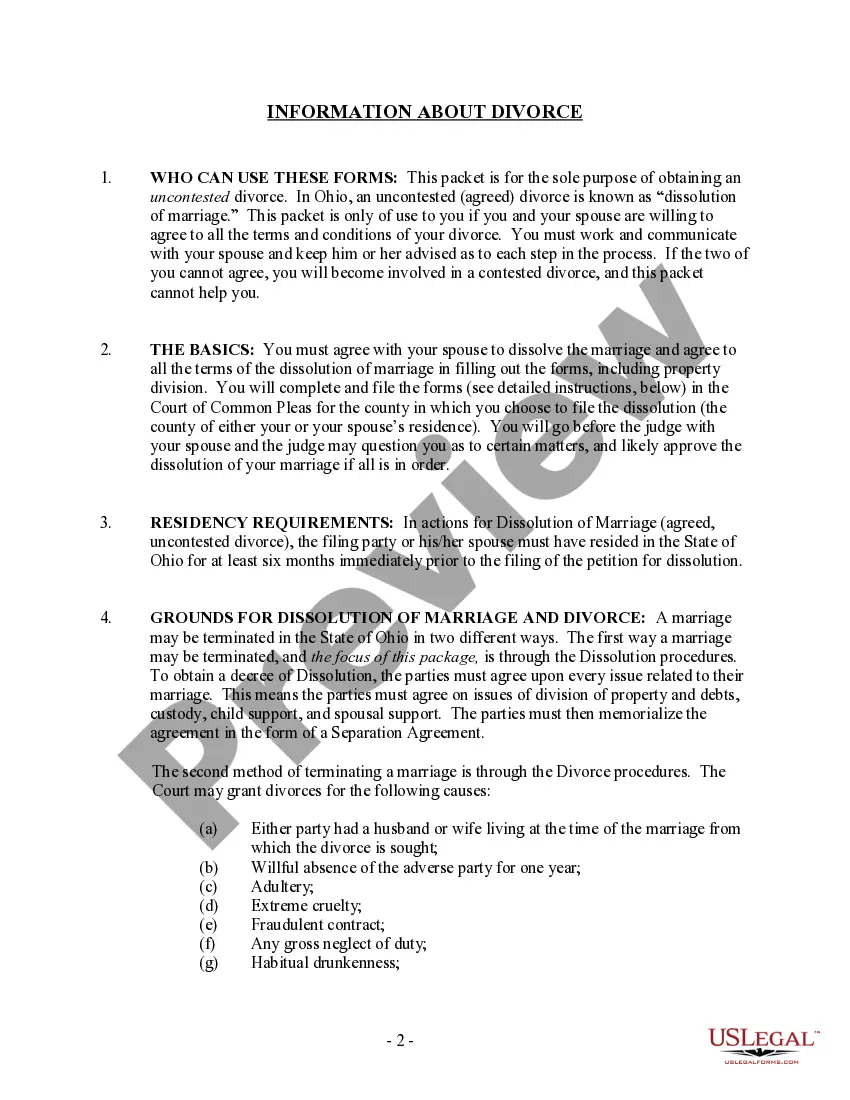
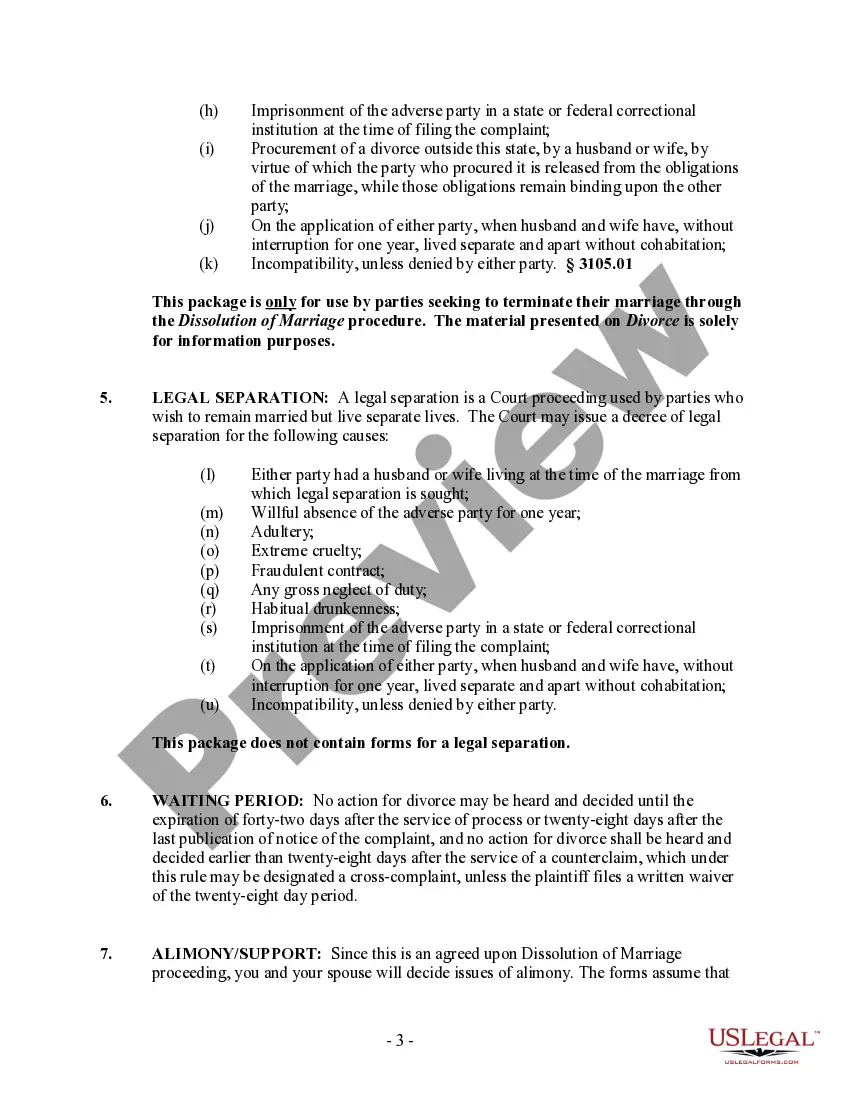
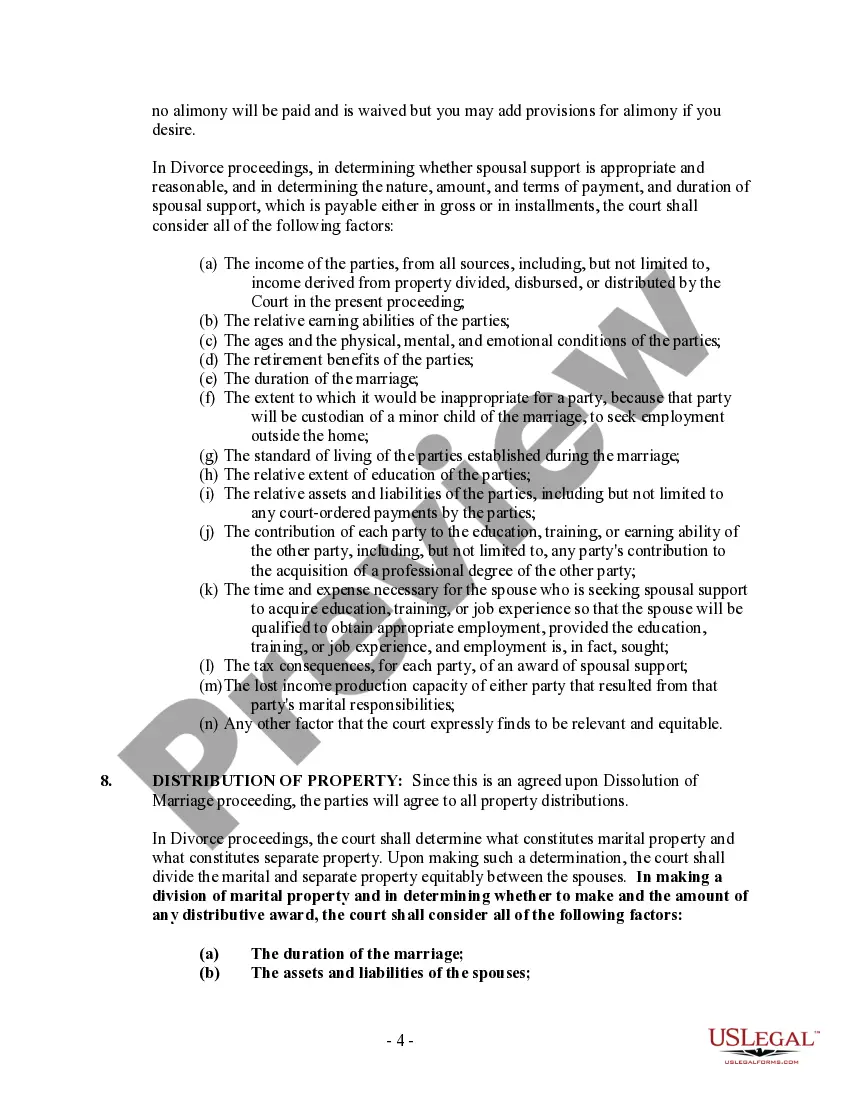
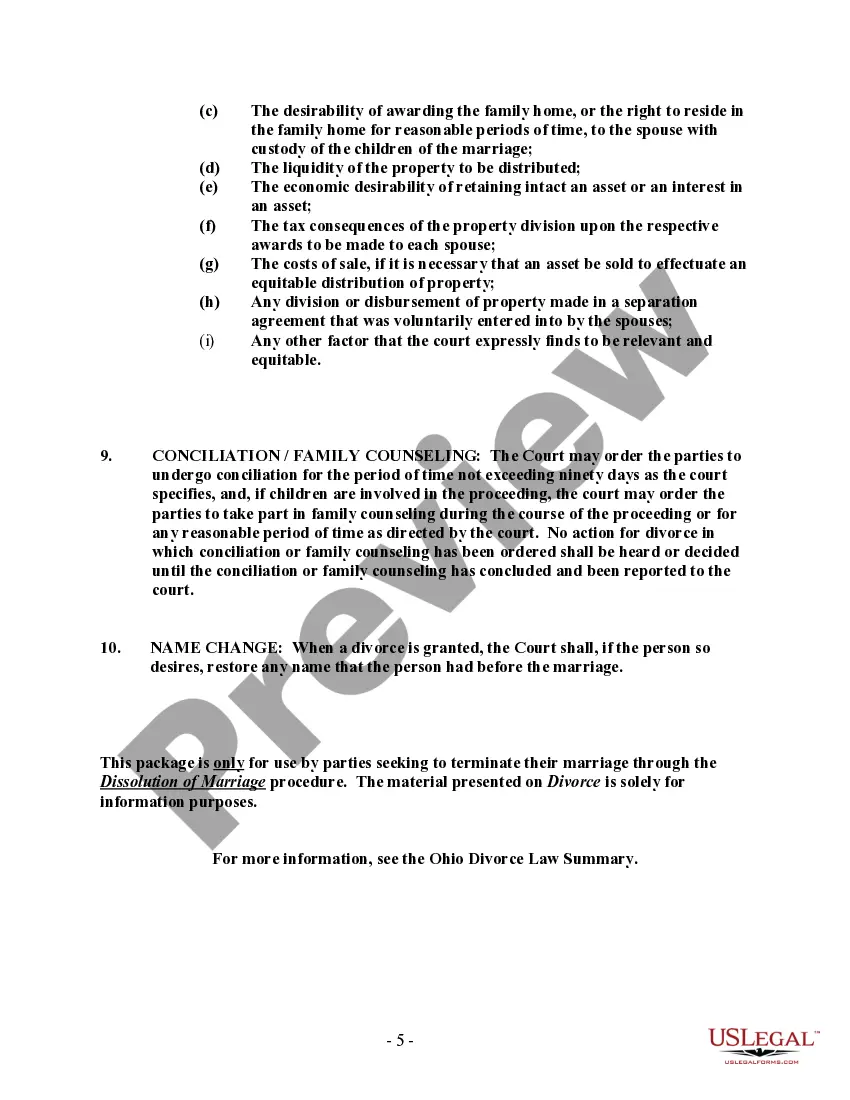
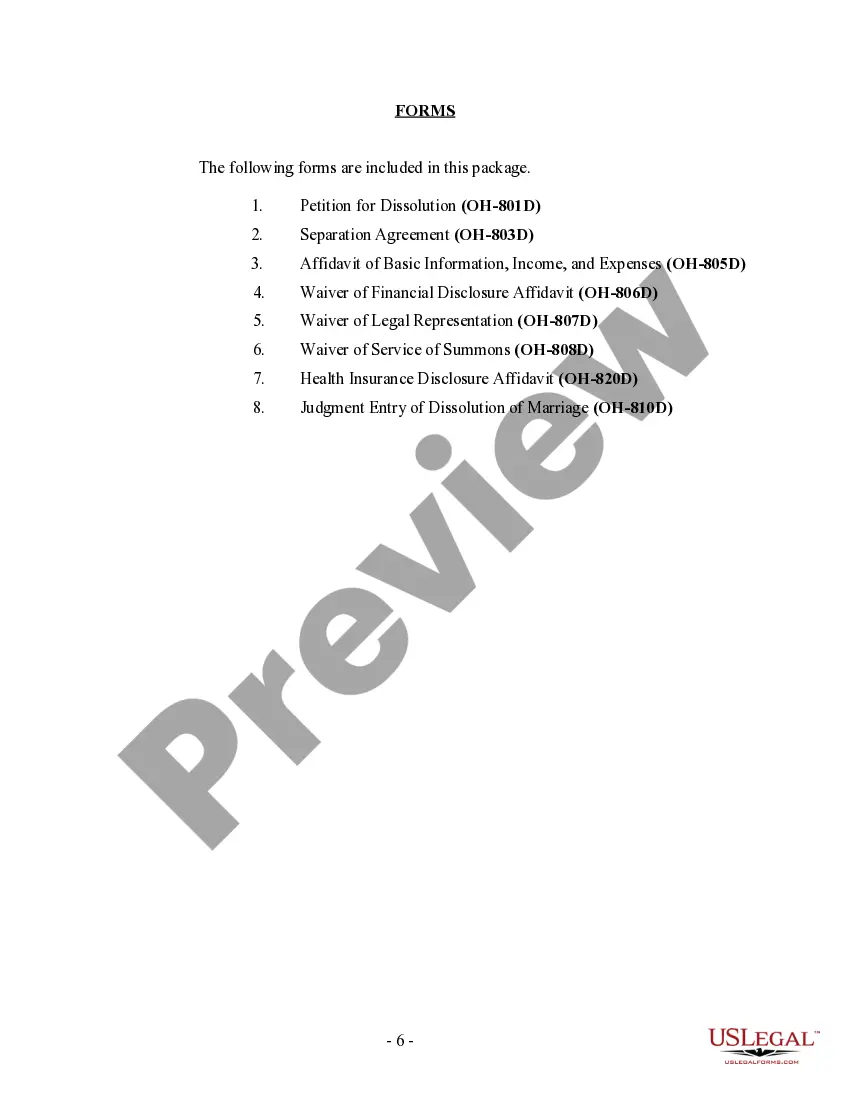
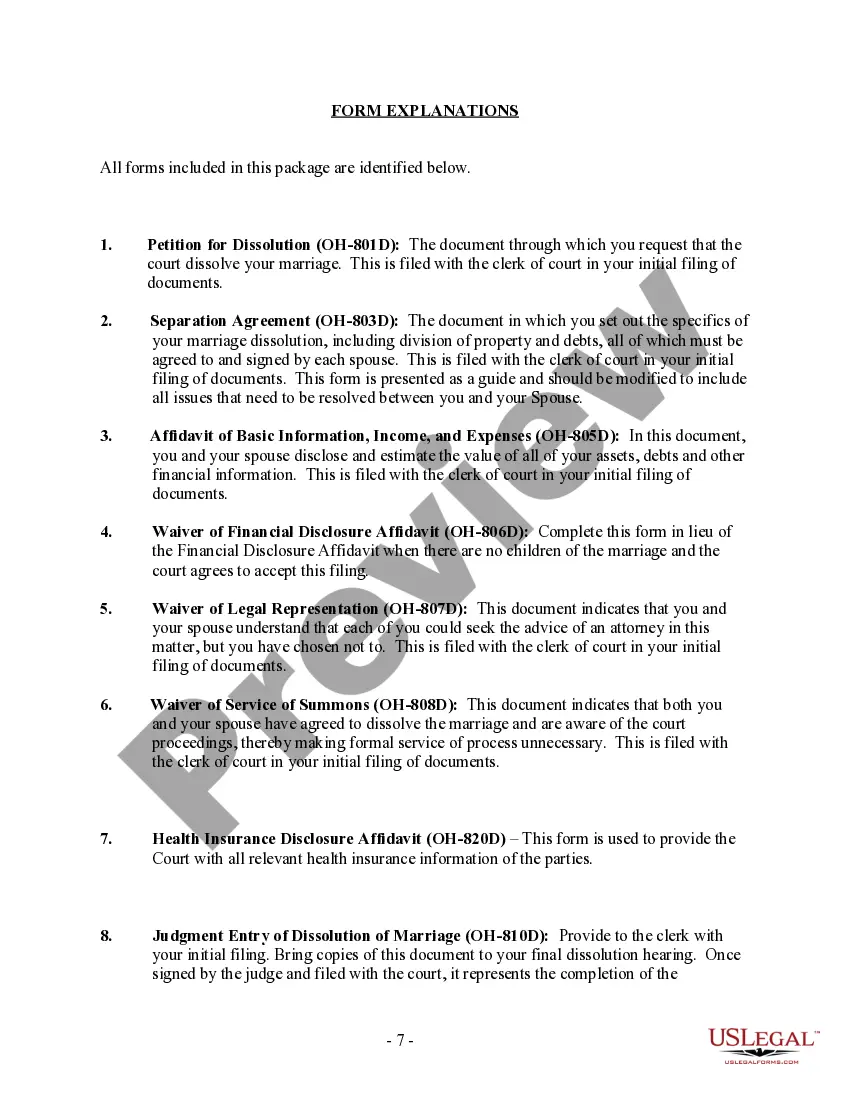
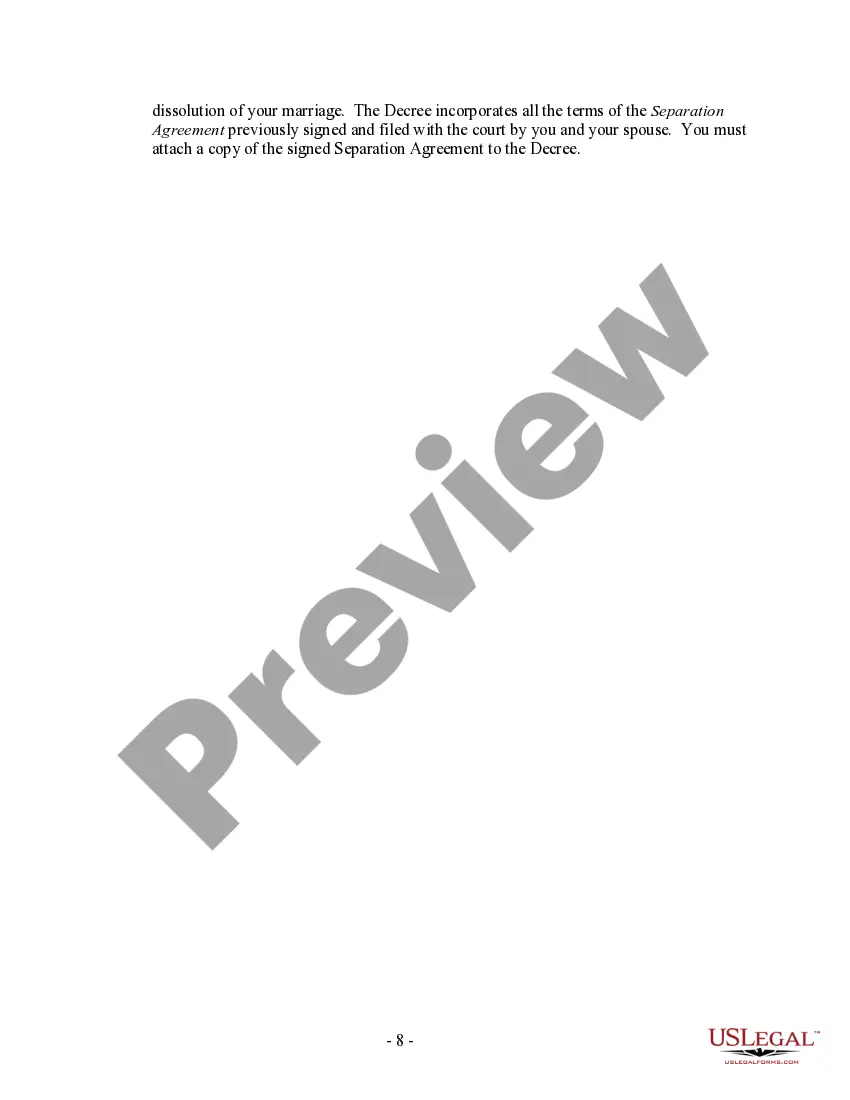
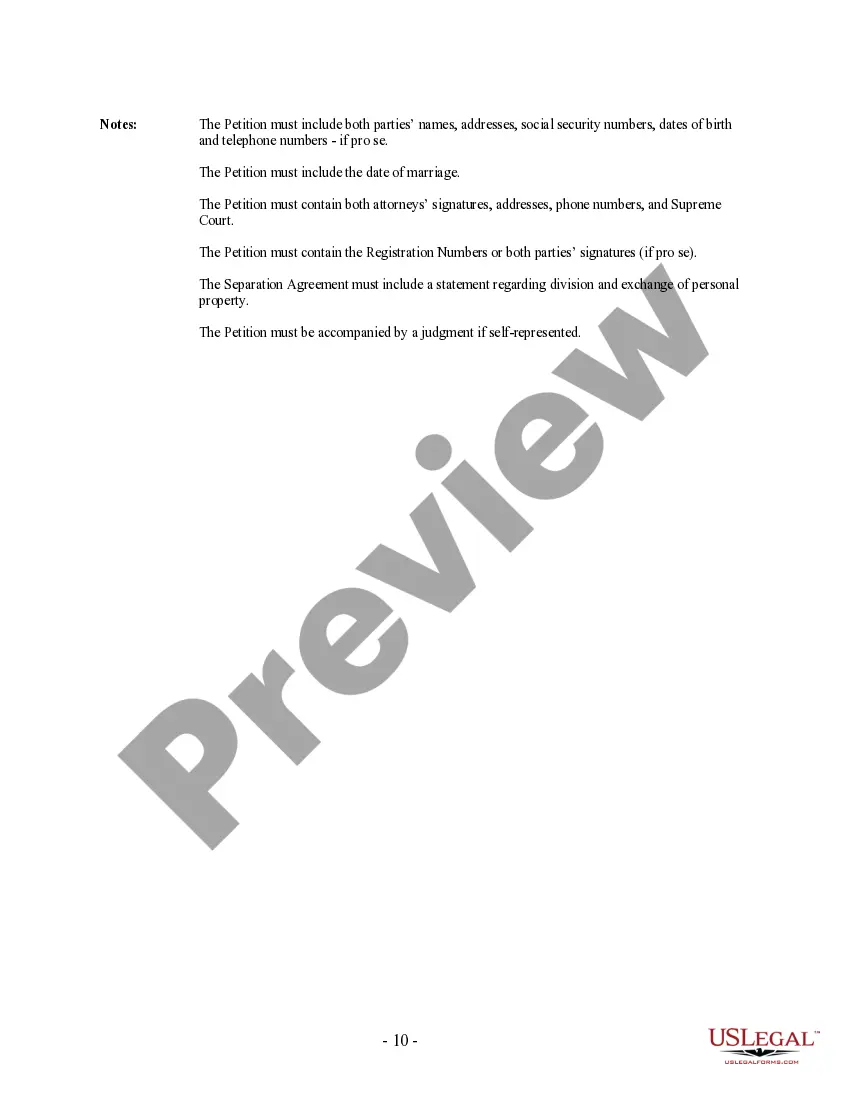
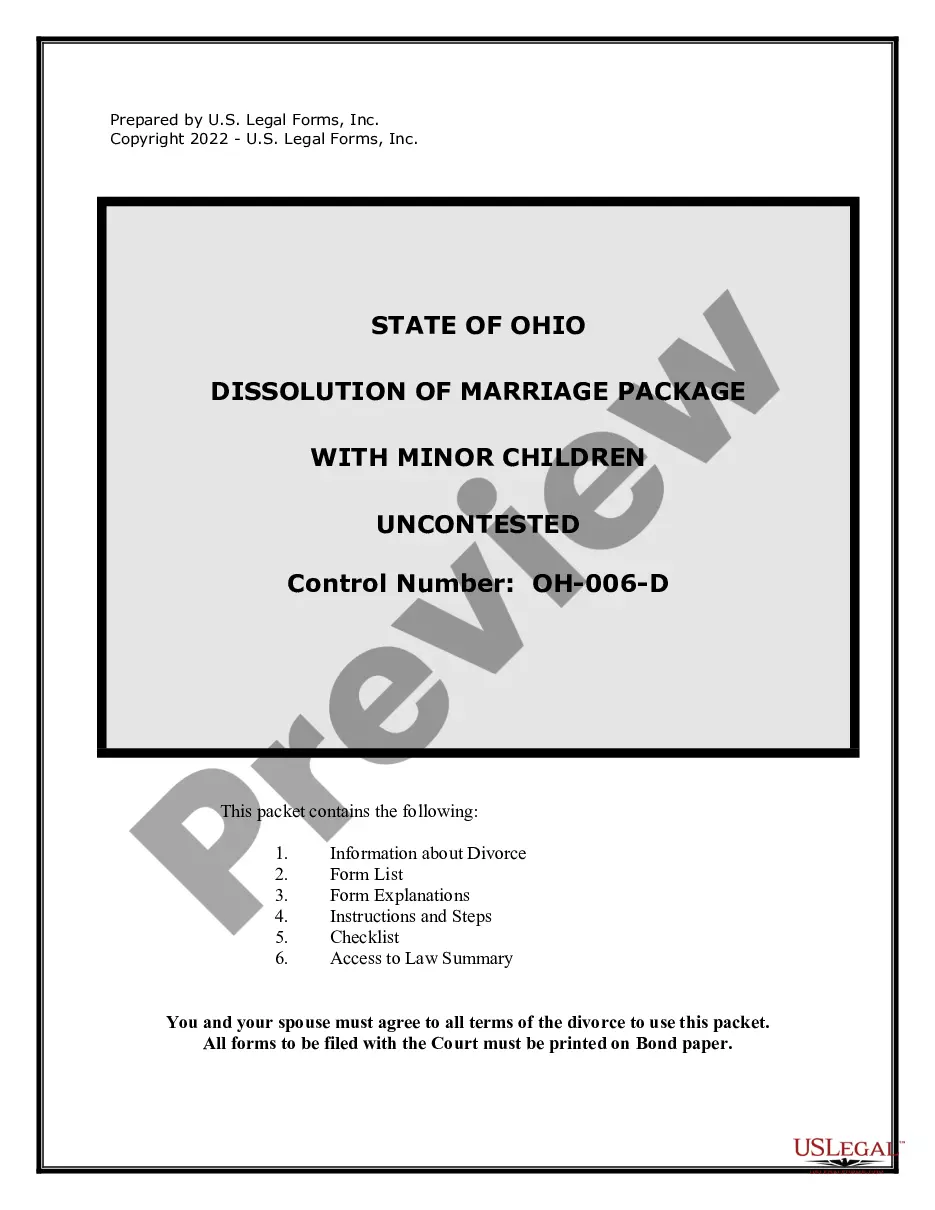
How to fill out Ohio No-Fault Uncontested Agreed Divorce Package For Dissolution Of Marriage With Adult Children And With Or Without Property And Debts?
Creating legal documents from the ground up can frequently be intimidating.
Certain cases may necessitate extensive research and significant financial investment.
If you’re seeking a simpler and more economical method of preparing Divorce With Property With Community or any other documents without the hassle, US Legal Forms is always accessible.
Our online collection of over 85,000 current legal documents covers nearly every aspect of your financial, legal, and personal matters.
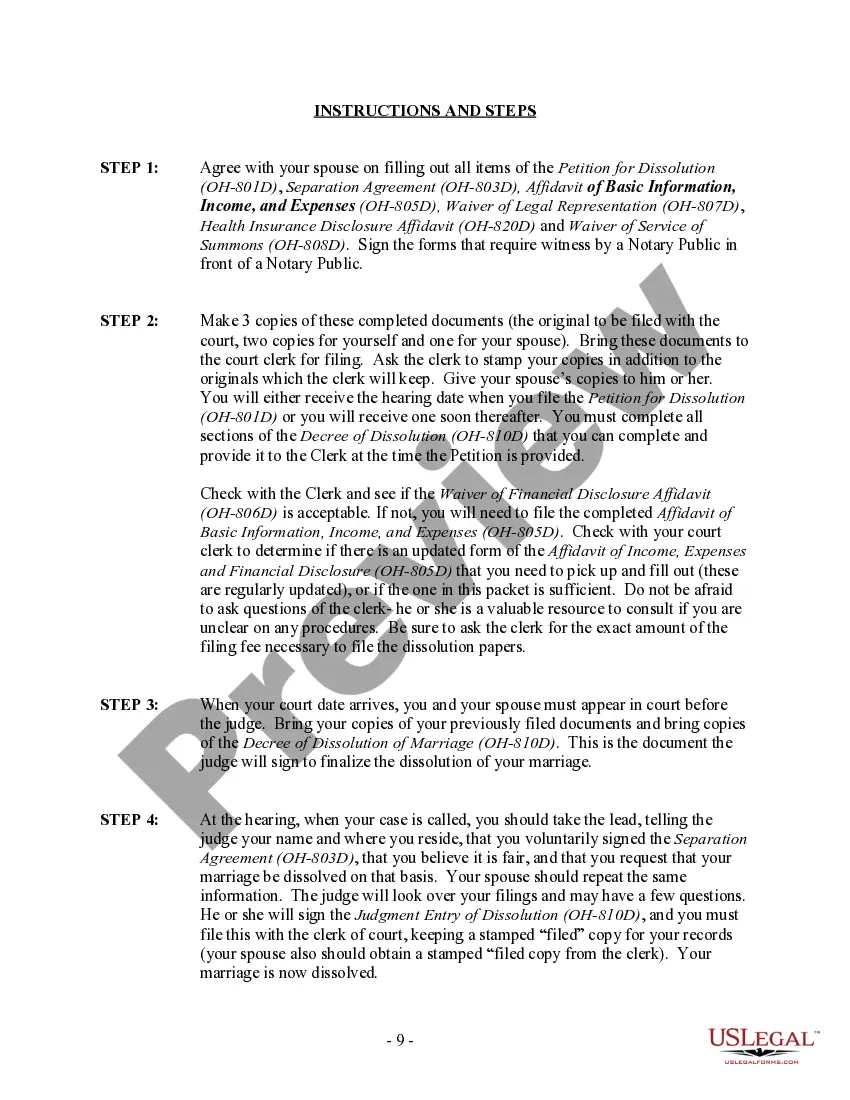
Examine the document preview and descriptions to confirm that you are on the correct form you need. Ensure the form you select complies with the regulations of your state and county. Choose the most appropriate subscription option to acquire the Divorce With Property With Community. Download the file, then complete, validate, and print it out. US Legal Forms has a strong reputation and over 25 years of expertise. Join us today and make document completion a straightforward and efficient process!
- With just a few clicks, you can swiftly obtain state- and county-specific templates meticulously prepared by our legal experts.
- Utilize our website whenever you require a dependable and trustworthy service through which you can effortlessly locate and download the Divorce With Property With Community.
- If you’re familiar with our services and have previously created an account with us, simply Log In to your account, choose the template, and download it or re-download it anytime via the My documents section.
- Not have an account? No problem. It takes minimal time to register and explore the library.
- However, before proceeding to download Divorce With Property With Community, adhere to these guidelines.
Form popularity
FAQ
Marriage in the community of property carries certain disadvantages, particularly concerning asset division. Both spouses share ownership of all assets and debts, which can lead to disputes during a divorce. Furthermore, one partner's financial irresponsibility can negatively impact the other's credit and financial standing. Understanding these implications is essential, and resources from uslegalforms can provide clarity and guidance.
In a divorce with property with community, often, the lower-earning spouse experiences the most financial strain. This can happen due to the loss of shared income and increased living expenses. Additionally, if children are involved, the custodial parent may face additional financial challenges. Utilizing tools and resources, like those from uslegalforms, can help navigate these financial complexities.
In a divorce with property with community, certain assets are typically excluded from division. For instance, assets acquired before the marriage, gifts received from third parties, and inheritances generally remain with the original owner. Understanding these exclusions can help you manage expectations during the divorce process. Consulting legal resources can clarify these distinctions effectively.
One of the biggest mistakes in divorce with property with community is failing to understand the division of assets. Many individuals overlook the importance of documenting all marital assets, which can lead to unfair settlements. Additionally, not seeking professional advice can complicate the process further. It is crucial to approach this situation with a clear understanding and a well-defined strategy.
In the context of divorce with property with community, certain assets may be considered untouchable. Generally, assets acquired before the marriage, inheritances, and gifts specifically given to one spouse often remain separate. However, it’s crucial to understand your state’s laws regarding property division, as they can vary widely. Using a platform like US Legal Forms can help clarify your rights and guide you through the complexities of asset division in your divorce.
Moving out during a divorce can complicate your situation, especially when dealing with divorce with property with community. By leaving the marital home, you may inadvertently give up your claim to that property, as courts often view the home as a shared asset. Additionally, being absent can weaken your position in negotiations regarding custody and support. Staying put allows you to maintain your rights and actively participate in the proceedings.
Couples going through a divorce in California must decide how to divide their property and debts?or ask a court to do it for them. Under California's laws, assets and debts spouses acquire during marriage belong equally to both of them, and they must divide them equally in a divorce.
Lenders usually have liens on houses. So if the spouse whose name is on the mortgage does not pay, the bank can foreclose to recover their money. Since your name is in the deed after the house owes you money, it will not matter if your name appears on the deed or not.
When a marriage ends, each spouse is entitled to half the value of the property acquired during the marriage, not to half the property itself. Property is divided by calculating the Net Family Property (NFP) of each spouse and the spouse with the higher NFP paying half the difference to the other spouse.
In conclusion, the financial responsibilities during divorce can vary depending on the unique circumstances of each case. Until the divorce is officially finalized, both spouses may still have shared financial obligations, but temporary agreements or court orders may determine the specific financial arrangements.