Life Estate Deed With Full Powers
Description
Get your form ready online
Our built-in tools help you complete, sign, share, and store your documents in one place.
Make edits, fill in missing information, and update formatting in US Legal Forms—just like you would in MS Word.
Download a copy, print it, send it by email, or mail it via USPS—whatever works best for your next step.
Sign and collect signatures with our SignNow integration. Send to multiple recipients, set reminders, and more. Go Premium to unlock E-Sign.
If this form requires notarization, complete it online through a secure video call—no need to meet a notary in person or wait for an appointment.
We protect your documents and personal data by following strict security and privacy standards.

Make edits, fill in missing information, and update formatting in US Legal Forms—just like you would in MS Word.

Download a copy, print it, send it by email, or mail it via USPS—whatever works best for your next step.

Sign and collect signatures with our SignNow integration. Send to multiple recipients, set reminders, and more. Go Premium to unlock E-Sign.

If this form requires notarization, complete it online through a secure video call—no need to meet a notary in person or wait for an appointment.

We protect your documents and personal data by following strict security and privacy standards.
Looking for another form?
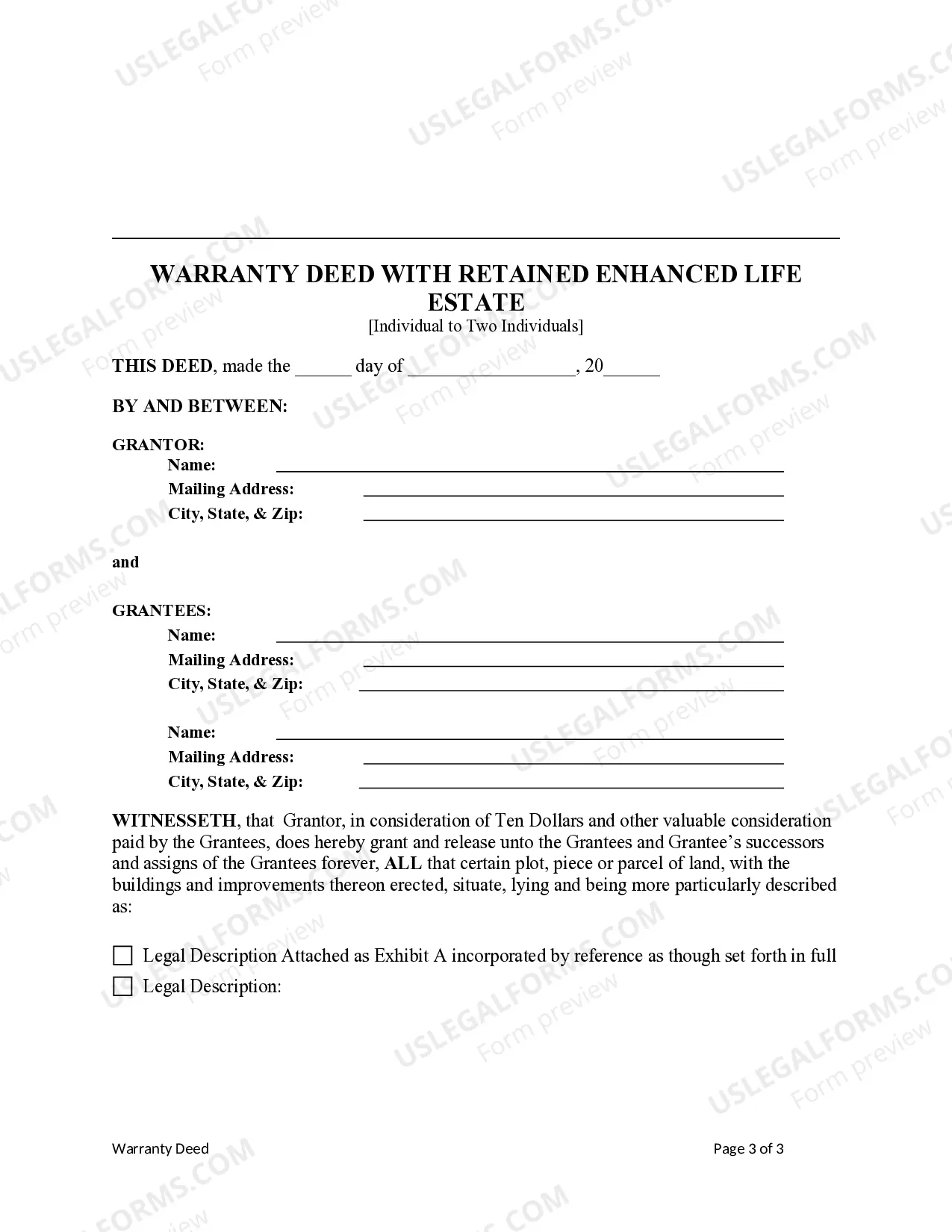
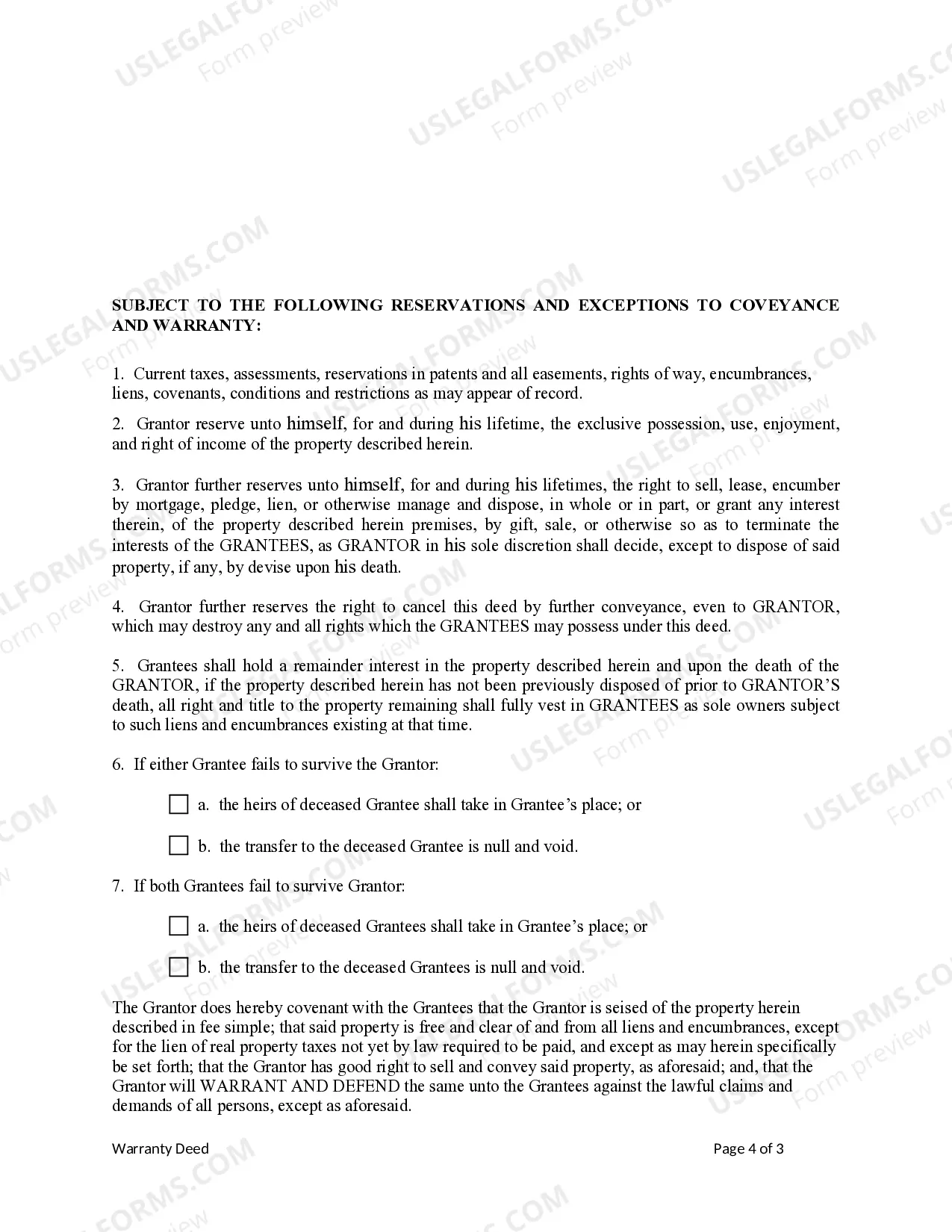
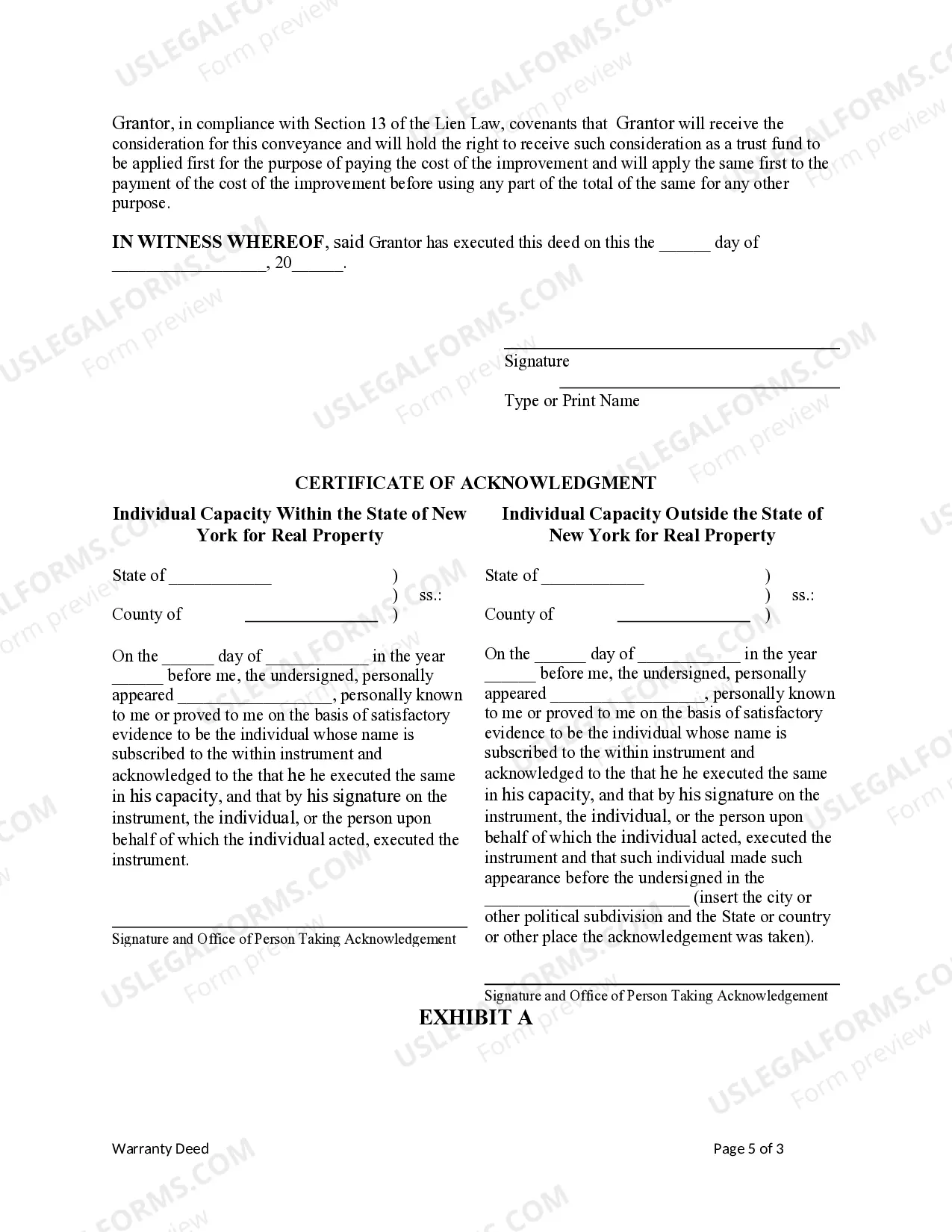
How to fill out New York Enhanced Life Estate Or Lady Bird Warranty Deed From Individual To Two Individuals?
- Log in to your US Legal Forms account if you're a returning user. Ensure your subscription is active to access the document.
- If you're new, start by browsing the preview mode to find the appropriate life estate deed that meets your jurisdiction's requirements.
- Should you find discrepancies, utilize the search feature to locate the correct form tailored to your needs.
- Purchase the chosen document by clicking on the 'Buy Now' button, and select the subscription plan that works for you.
- Complete your transaction by entering your payment details via credit card or PayPal.
- Once purchased, download your life estate deed and save it on your device. You can access it anytime from the 'My Forms' section of your profile.
By following these steps, you ensure that you have a legally sound and precisely tailored life estate deed with full powers. The vast library and expert assistance from US Legal Forms make the process efficient and stress-free.
Start your journey today by visiting US Legal Forms and obtaining your necessary legal documents!
Form popularity
FAQ
A life estate deed with full powers can have various tax implications. Generally, the property may not receive a step-up in basis at the time of the owner's death, which could lead to capital gains taxes if the heirs sell the property. Furthermore, it is essential to consider local tax laws, which can vary, and seeking professional advice can help navigate these complexities.
While a life estate deed with full powers offers numerous benefits, it does come with some drawbacks. One significant concern is that you cannot easily alter or sell the property without the consent of the remainder beneficiaries. Additionally, if the property incurs debts, creditors can still pursue the asset, which may burden the current owner.
People often create a life estate deed with full powers to retain control over their property while ensuring a secure transfer of ownership to their heirs after passing. This arrangement allows individuals to enjoy their property rights without fear of losing the asset to creditors. Moreover, it simplifies the estate planning process by avoiding probate, making the transfer quicker and more efficient.
Selling a house in a life estate requires careful consideration of the rights granted by the life estate deed with full powers. The life tenant has the legal ability to sell the property, but they generally must involve the remainderman in any sale. This collaborative approach ensures all parties are protected and informed. If you need help with this process, uslegalforms can provide the necessary documentation and support.
Getting around a life estate deed with full powers typically involves working with both the life tenant and the remainderman. One option is for the life tenant to voluntarily transfer their rights to the remainderman, thus effectively extinguishing the life estate. Alternatively, legal pathways, such as creating a new estate plan, may be explored. Using resources like uslegalforms can assist in understanding these processes and ensuring legality.
You can sell a house that is in a life estate, but there are specific conditions to consider. The life tenant has the authority to sell the property, but they may need to obtain consent from the remainderman to do so. This restriction can make the selling process more complex compared to other forms of property ownership. If you are uncertain about navigating this process, consulting uslegalforms can provide clarity and guidance.
One disadvantage of a life estate deed with full powers is that it limits the life tenant's ability to sell or mortgage the property without the consent of the remainderman. This restriction can create complications in financial planning and asset management. Additionally, upon the death of the life tenant, the property automatically transfers to the remainderman, potentially bypassing other heirs. Understanding these limitations can help in making informed decisions about property ownership.
In general, a will does not override a life estate. A life estate deed with full powers grants the life tenant the right to use the property during their lifetime, regardless of any subsequent wills. If the property is in a life estate, it typically passes according to the terms of that deed upon the tenant's passing, not by the will. This setup ensures that the intentions of the life estate are prioritized.
Yes, you can undo a life estate deed with full powers, but the process can be complex. To revoke the deed, you often need to file a new document that officially terminates the life estate. Engaging with experts, such as those at USLegalForms, can provide the necessary documentation and guidance to make this process smoother and ensure compliance with legal standards.
A life estate deed with full powers offers significant advantages, such as avoiding probate and providing clear property succession. It allows the life tenant to retain certain rights to the property while ensuring that it passes directly to the designated beneficiary after their death. Additionally, this type of deed can serve as a valuable estate planning tool, helping to protect the property from potential claims by creditors.