Trust Account For Real Estate
Description
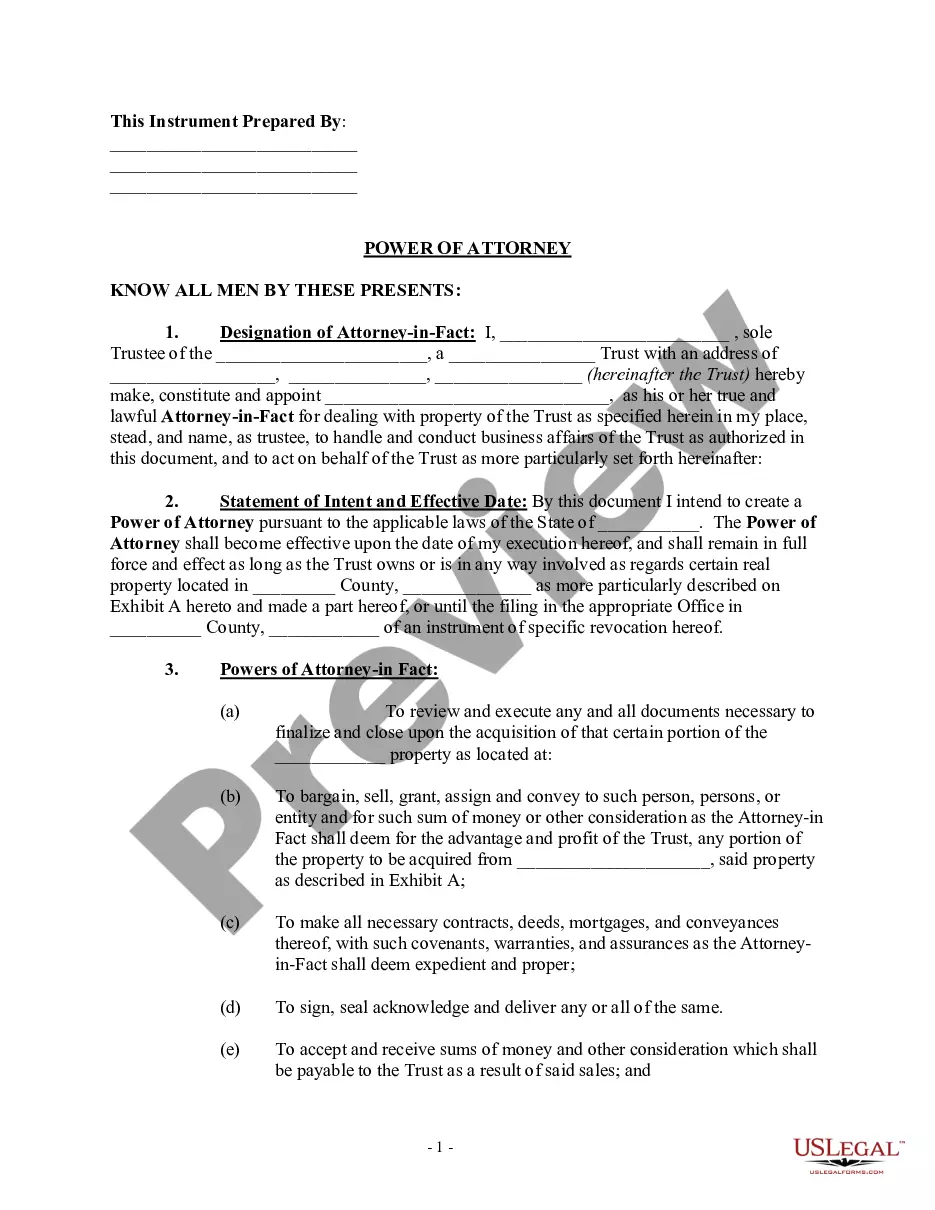
Get your form ready online
Our built-in tools help you complete, sign, share, and store your documents in one place.
Make edits, fill in missing information, and update formatting in US Legal Forms—just like you would in MS Word.
Download a copy, print it, send it by email, or mail it via USPS—whatever works best for your next step.
Sign and collect signatures with our SignNow integration. Send to multiple recipients, set reminders, and more. Go Premium to unlock E-Sign.
If this form requires notarization, complete it online through a secure video call—no need to meet a notary in person or wait for an appointment.
We protect your documents and personal data by following strict security and privacy standards.

Make edits, fill in missing information, and update formatting in US Legal Forms—just like you would in MS Word.

Download a copy, print it, send it by email, or mail it via USPS—whatever works best for your next step.

Sign and collect signatures with our SignNow integration. Send to multiple recipients, set reminders, and more. Go Premium to unlock E-Sign.

If this form requires notarization, complete it online through a secure video call—no need to meet a notary in person or wait for an appointment.

We protect your documents and personal data by following strict security and privacy standards.
Looking for another form?









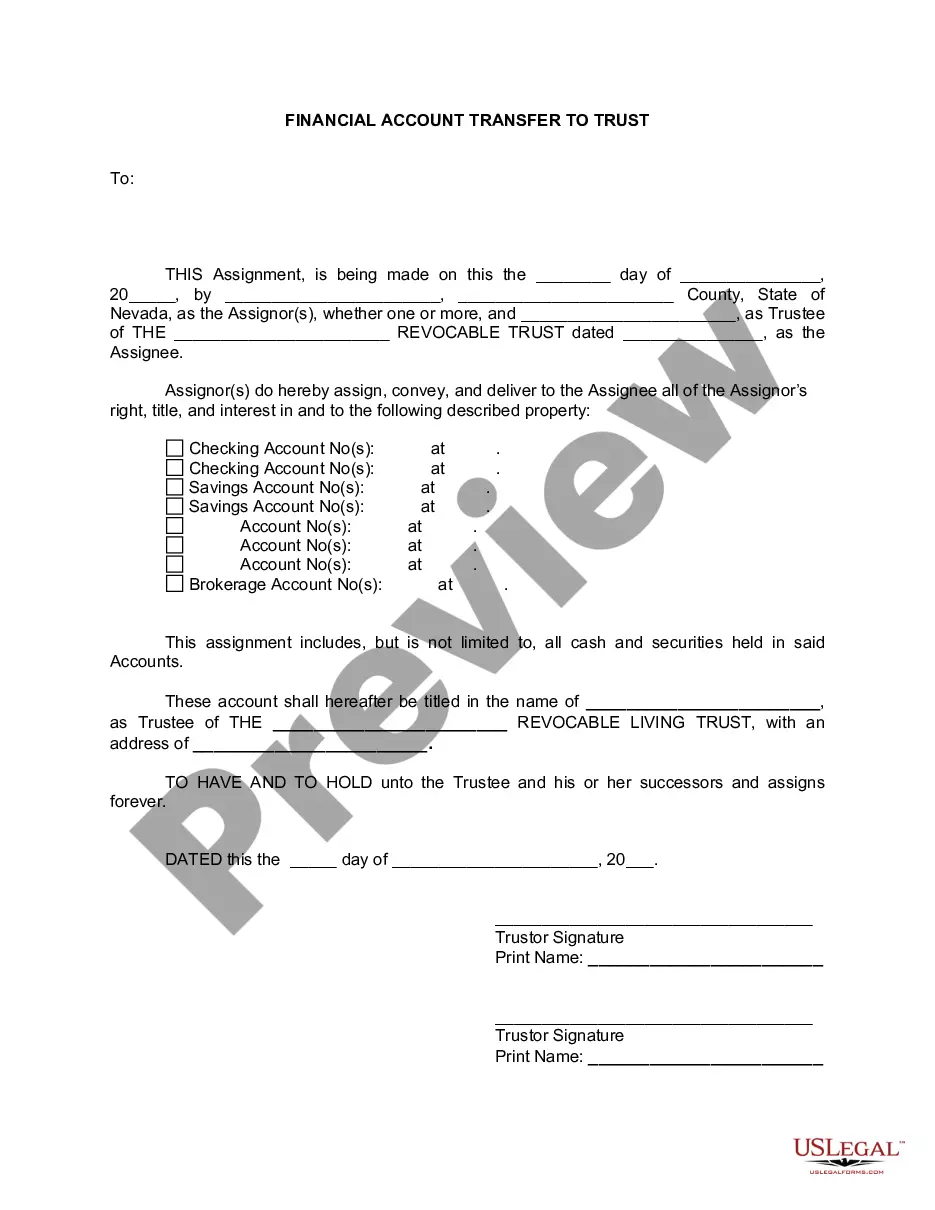
How to fill out Nevada Financial Account Transfer To Living Trust?
- If you are a returning user, log in to download your required trust account form by clicking the Download button. Ensure your subscription is active, or renew it if necessary.
- For first-time users, start by checking the form's Preview mode and description to verify its suitability for your needs and compliance with local regulations.
- If adjustments are needed, use the Search tab to find another template that meets your specific requirements.
- Once you find the correct document, click on the Buy Now button, choose a subscription plan, and create your account to access the extensive library.
- Complete your purchase by entering your credit card information or selecting your PayPal option.
- Download your trust account form, and access it anytime through the My Forms section in your profile.
In conclusion, using US Legal Forms allows you to navigate the complexities of legal document preparation effortlessly. Their robust collection and expert assistance ensure you have everything you need to maintain compliance while managing client funds effectively.
Explore US Legal Forms today to streamline your legal document needs!
Form popularity
FAQ
Opening a trust account for your property involves several key steps. First, gather necessary documentation including your property deeds, trust agreement, and identification. Next, approach your preferred bank and inquire about their specific requirements for opening a trust account for real estate. Alternatively, consider using US Legal Forms, which can guide you through the process and provide the necessary templates to simplify your experience.
When choosing a bank for your trust account for real estate, consider factors like fees, customer service, and online access. Many individuals find local banks or credit unions offer personalized support and better rates. It's essential to compare different banks' policies on trust accounts, as they can vary significantly. Ultimately, select a bank that aligns with your financial goals and makes managing your real estate funds easier.
When it comes to real estate, filing your trust as an estate may often depend on how you manage your assets. A trust account for real estate can help you segregate personal and business funds, simplifying your financial management. It’s crucial to consider whether your trust operates as an independent entity or in conjunction with your estate. If you are unsure, consulting with a professional can provide clarity on the best approach tailored to your specific needs.
An example of a trust account in real estate would be a property held in a revocable living trust. In this scenario, the individual transfers the title of their home into the trust, allowing them to manage the property during their lifetime and simplifying the transfer process to heirs. This ensures a smoother transition and minimizes potential legal hurdles.
One major mistake parents make is failing to properly fund the trust. Simply creating a trust without transferring assets into it can render it ineffective. To ensure your trust account for real estate functions as intended, be diligent in transferring the necessary assets and regularly reviewing the trust to adapt to changes in your situation.
Choosing the right bank for a trust account for real estate depends on various factors, including fees, services, and customer support. Look for banks that have a strong reputation for handling trust accounts and can provide personalized service. Research different options and consider consulting a financial advisor for recommendations.
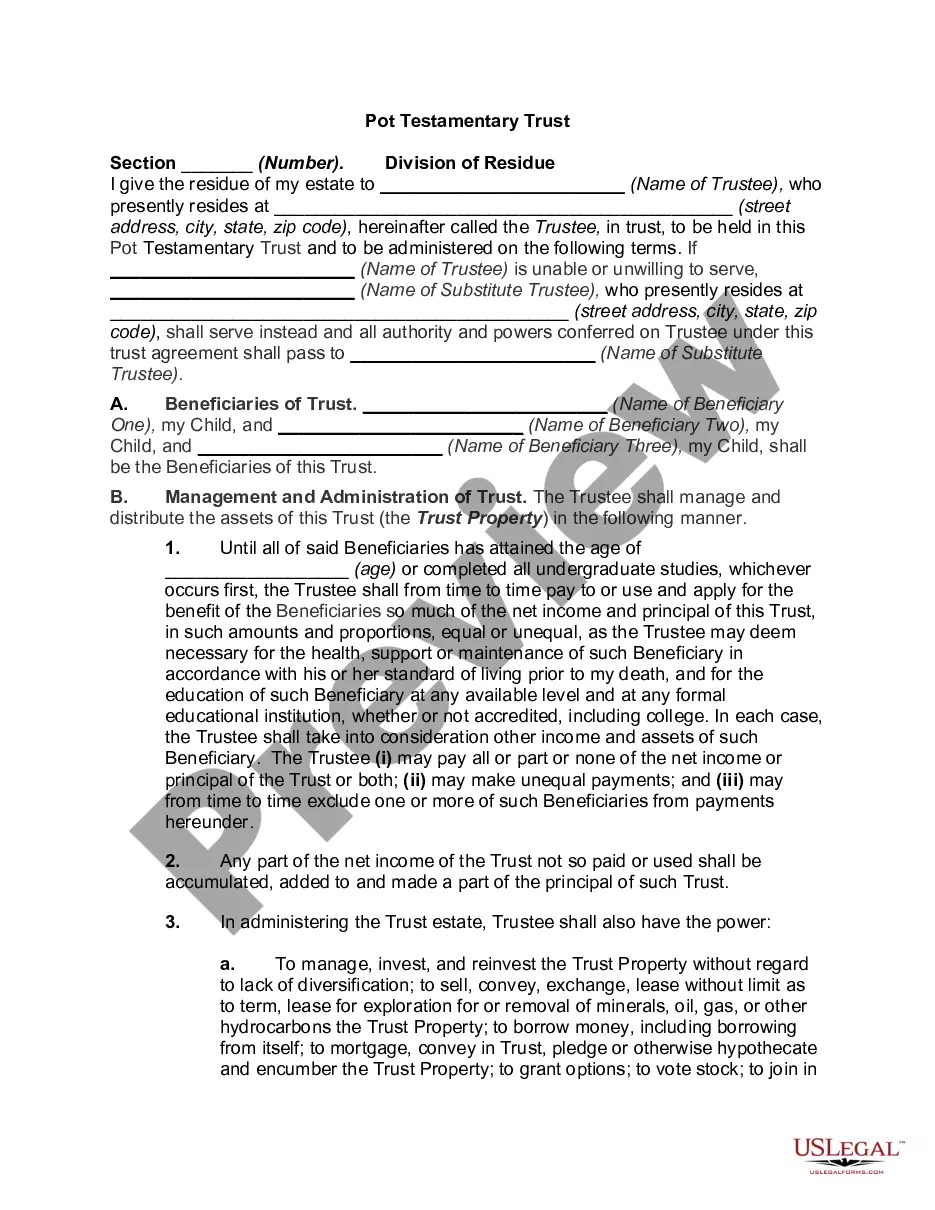
Setting up a trust account for an estate involves several steps, including choosing the right type of trust and selecting a trustee. You will need to draft the trust document, specifying how assets will be managed and distributed. Using services like US Legal Forms can simplify this process, providing templates and guidance to ensure compliance.
One significant disadvantage of an estate trust is the potential for added complexity during the administration process. It may require more detailed record-keeping and could incur higher legal fees. When establishing a trust account for real estate, these factors could impact your decision on which type of trust to use.
A trust generally refers to any arrangement where assets are held by one party for the benefit of another. An estate trust specifically deals with assets transferred at the time of a person's death. When setting up a trust account for real estate, understanding this difference is crucial for proper estate planning.
When considering a trust account for real estate, a revocable living trust is often the best option. This type of trust allows you to maintain control over your property while providing flexibility for future changes. Additionally, it helps in avoiding probate, ensuring a smoother transition of assets to your beneficiaries.