Notice To Enter Tenant Unit
Description

Get your form ready online
Our built-in tools help you complete, sign, share, and store your documents in one place.
Make edits, fill in missing information, and update formatting in US Legal Forms—just like you would in MS Word.
Download a copy, print it, send it by email, or mail it via USPS—whatever works best for your next step.
Sign and collect signatures with our SignNow integration. Send to multiple recipients, set reminders, and more. Go Premium to unlock E-Sign.
If this form requires notarization, complete it online through a secure video call—no need to meet a notary in person or wait for an appointment.
We protect your documents and personal data by following strict security and privacy standards.

Make edits, fill in missing information, and update formatting in US Legal Forms—just like you would in MS Word.

Download a copy, print it, send it by email, or mail it via USPS—whatever works best for your next step.

Sign and collect signatures with our SignNow integration. Send to multiple recipients, set reminders, and more. Go Premium to unlock E-Sign.

If this form requires notarization, complete it online through a secure video call—no need to meet a notary in person or wait for an appointment.

We protect your documents and personal data by following strict security and privacy standards.
Looking for another form?
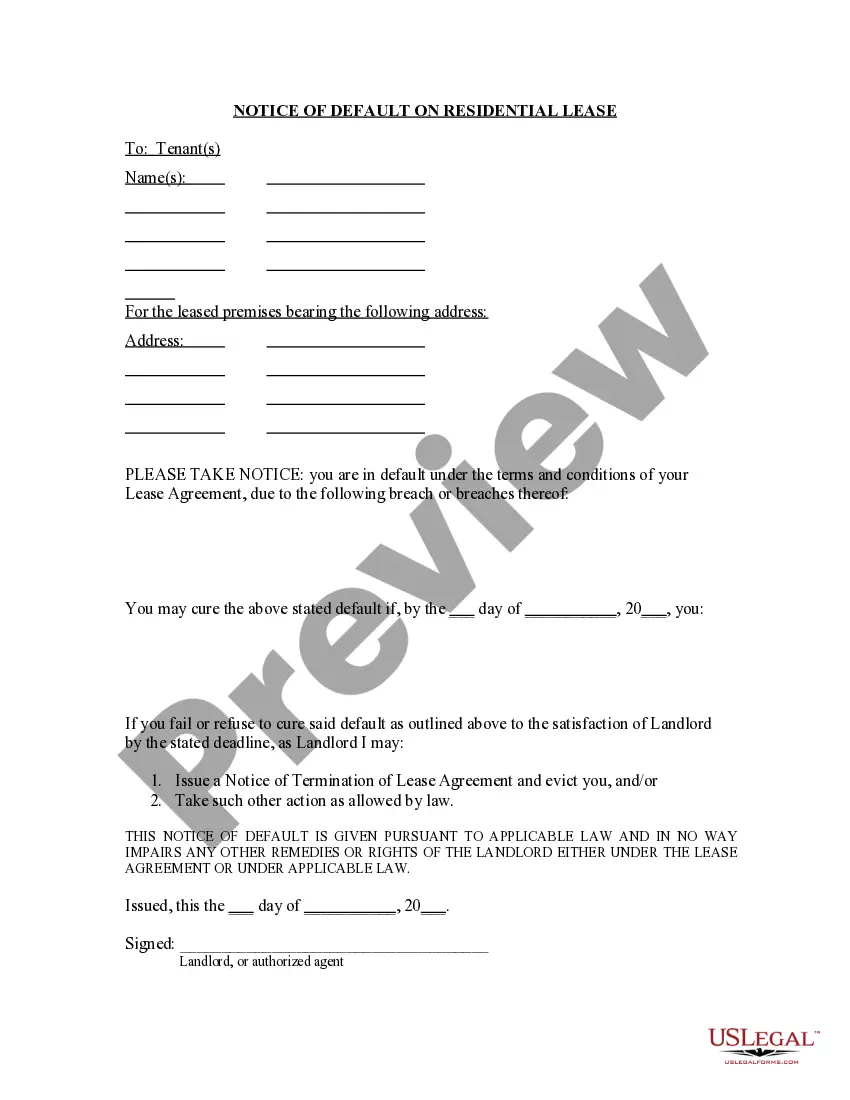








How to fill out Nebraska 1 Day Notice Of Intention To Enter Dwelling For Residential From Landlord To Tenant?
- If you are a returning user, log in to your account and select the notice template you need. Verify that your subscription is active and renew if necessary.
- If you are new to US Legal Forms, start by reviewing the available templates. Utilize the Preview mode to ensure the selected form suits your needs and aligns with local regulations.
- If the template you need isn't available, use the Search tab to find the correct document that fits your requirements. Make sure it matches your jurisdiction's legal standards before proceeding.
- Purchase your selected document by clicking the Buy Now button. Choose a subscription plan tailored to your needs and create an account to access the extensive library.
- Complete your purchase by entering your payment information, either using a credit card or PayPal for a secure transaction.
- Once your order is confirmed, download the notice to your device, allowing you to fill it out as needed. You can always revisit the document later through the My Forms section of your profile.
In conclusion, US Legal Forms offers an extensive collection of over 85,000 fillable legal templates, empowering both individuals and attorneys to create legally compliant documents efficiently. Not only does this save time, but it also ensures precision through access to expert assistance when needed.
Start leveraging the power of US Legal Forms today and streamline your legal document processes.
Form popularity
FAQ
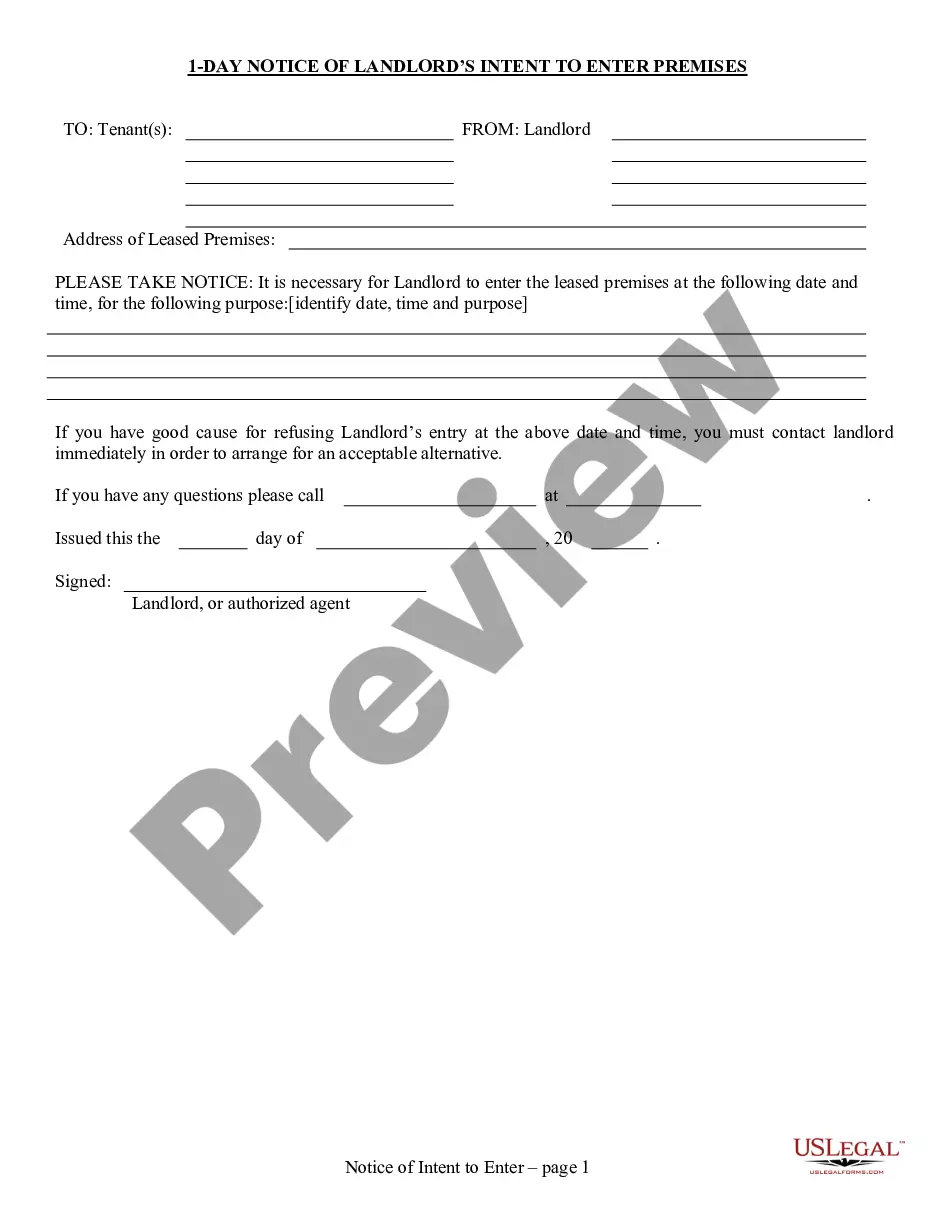
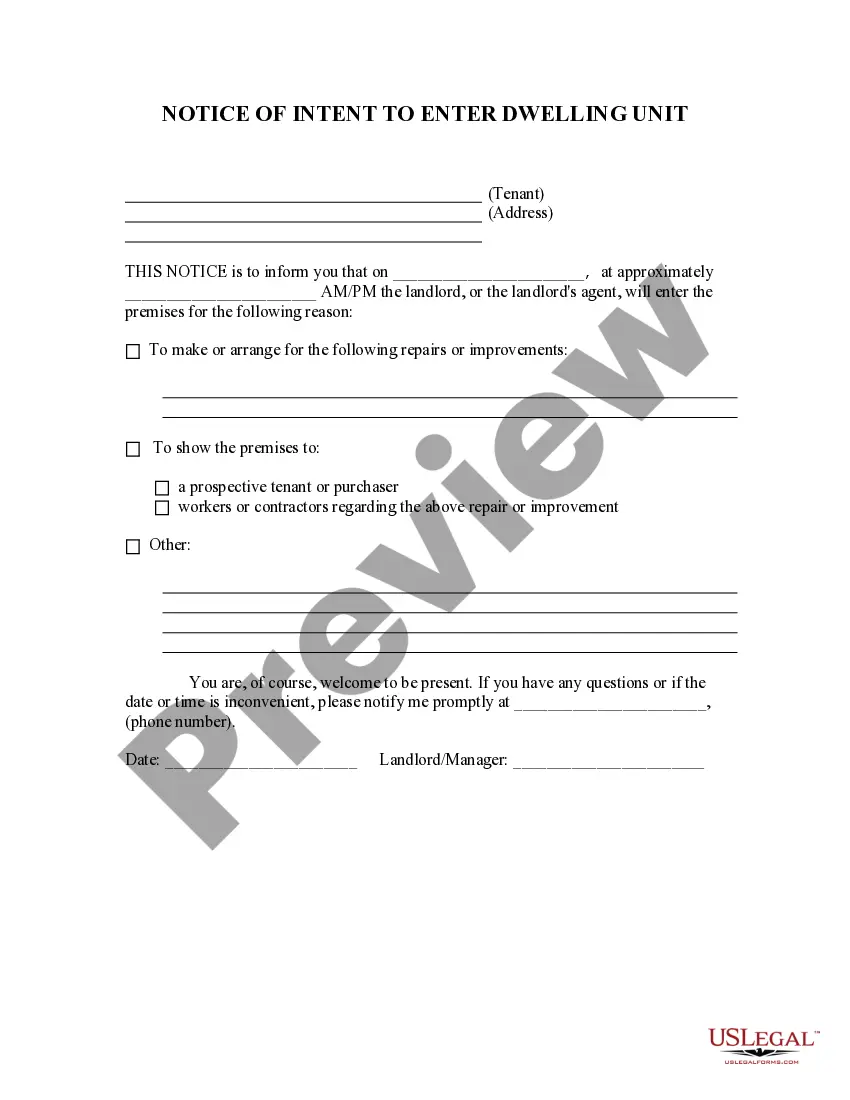
The purpose of a notice of intent is to inform tenants about a landlord's planned actions regarding their rental unit. This includes entry for repairs, inspections, or other necessary purposes. By providing this notice, landlords fulfill their legal obligations while respecting tenant privacy. Clear communication helps to build trust between landlords and tenants, which benefits both parties.
In Kentucky, landlords cannot enter a tenant's unit without proper notice, typically at least 24 hours in advance, unless in emergencies. They must also refrain from retaliating against tenants for reporting issues or requesting repairs. Additionally, landlords cannot change locks or evict tenants without following legal procedures. Understanding these restrictions helps tenants know their rights and fosters a healthy rental environment.
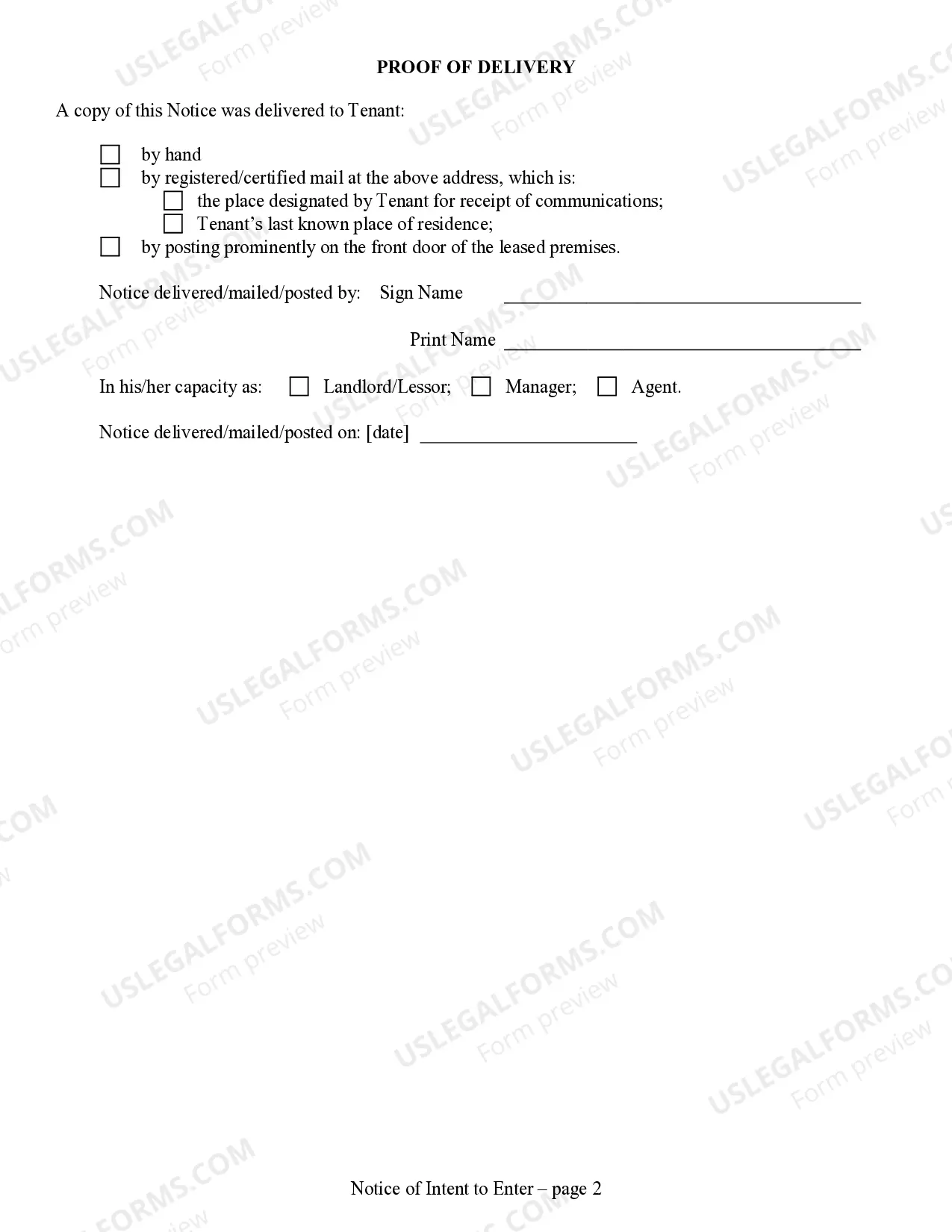
A notice of entry is a formal notification that a landlord sends to a tenant, informing them of their intention to enter the rental property. This notice typically includes the reason for the entry and helps to establish a clear timeline. By issuing a notice of entry, landlords show respect for their tenants' privacy while fulfilling legal requirements. This practice is essential for maintaining a good landlord-tenant relationship.
To write a notice letter to your tenant, begin by clearly stating your intention to enter the rented unit, along with the specific date and time. Include the reason for the entry, ensuring it complies with local laws. It's important to remain polite and professional in your phrasing, making sure your tenant understands their rights. Using resources like Uslegalforms can simplify the drafting process, providing templates and guidance for effective communication.
A Notice of intent from USCIS refers to an official communication indicating that the agency intends to deny a petition or application. This notice is not related to the notice to enter tenant unit but highlights the importance of following legal procedures. If you receive such a notice, you have the opportunity to address any issues or provide additional information. This can be a vital step in ensuring your application is properly evaluated.
Yes, you can refuse entry to your landlord under certain circumstances. If the landlord does not provide proper notice or if the request to enter is unreasonable, you may have grounds to deny access. It's important to be familiar with your rights concerning a notice to enter tenant unit, as laws can vary by state. Open communication with your landlord can often resolve misunderstandings before they escalate.
A notice of intent for entry is a formal communication from a landlord to a tenant, indicating the landlord's intention to enter the tenant's unit. This notice typically includes the date and time of the planned entry, along with the reason for it. By providing this notice, landlords fulfill their legal obligation to inform tenants ahead of time, ensuring transparency in the rental relationship. Understanding this process is essential for both parties to maintain a respectful living environment.
Yes, a tenant can refuse entry to a landlord in Texas if the landlord fails to provide proper notice or if there is no emergency. Communication is critical; ensure that your landlord is aware of your rights and preferences concerning entry. Always document conversations and notices. Understanding your rights means you can effectively manage any situation regarding access to your tenant unit.
To write a notice to a tenant, begin with a formal greeting and clearly state the purpose of the notice. Provide the tenant's name, apartment details, and the specific reasons for the notice, such as a lease violation or upcoming inspections. Ensure you mention any needed actions on their part, as this will help facilitate smooth communication regarding your notice to enter tenant unit.
In Texas, tenants have the right to refuse entry to their landlord under specific circumstances. A landlord typically must provide notice before entering, except in emergencies. If you have not received proper notice, you can legally prevent entry, thus protecting your privacy and peace at home. Remember, it's good to communicate openly with your landlord regarding any planned entry to your tenant unit.